Pubh 6011 Climate change and health
 Call Kai
 Learn
Learn Practice Test
 Spaced Repetition
 Match
Match Flashcards
 Knowt Play
1/55

There's no tags or description
Looks like no tags are added yet.
Name | Mastery | Learn | Test | Matching | Spaced | Call with Kai | Chat |
|---|
No analytics yet
Send a link to your students to track their progress
56 Terms
Ozone Health Effects
Airway reactivity is greatest in people with asthma
Effect is greatest 24-48 hours after exposure
Symptoms: Coughing, chest tightness, difficult breathing
Increased susceptibility to infection and allergens
Long term ozone exposure can lead to
Cardiovascular disease, lung disease, premature death
Some studies suggest association with cognitive decline and an increase in pre-term births
respiratory hospital admissions by daily maximum ozone layer graph
This graphic is from an epidemiology study by Burnett from Environment Canada
Vertical axis are respiratory hospital admissions; horizontal axis are ozone concentrations in ppm
Shows that hospital admissions for all respiratory causes were higher following days when ozone levels are high
Even though the total number of hospital admissions are small this illustrates the lack of a threshold for effects even at very low levels of ozone

ozone trends
Ozone has been coming down nationally over time but still lots of areas in non-attainment for ozone
ozone thinning culprit
Chlorofluorocarbons (CFC)
brand name: Freon
used in foam manufacturing, aerosol sprays, air conditioners, refrigerators
When were CFCs banned
With 180 countries signing the Montreal Protocol of 1987, the world banned CFCs
however, In 2018, it was discovered that someone in Eastern China started to illegally manufacture CFC-11 for insulating foam – it started back down again as soon as word got out
ozone hole in Antarctica shows
signs of repair and should be fully recovered by 2060
In reality, stratospheric ozone was thinning all over the planet
Ozone is naturally thinnest over the poles and thinning by CFC was most severe over Antarctica giving rise to the phrase “hole in the ozone layer”.
1987 Montreal Protocol Phases
phased out CFCs in several stages basically removing chlorine from the molecule
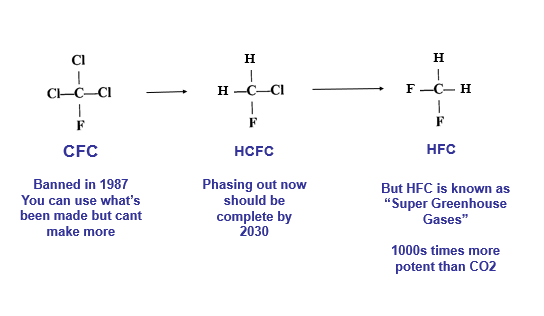
When was the AIM act passed and what did it do
In Dec 2020, Congress passed the AIM Act (American Innovation & Manufacturing) instructing EPA to phases down HFC production and maximize reclamation from equipment
Oxides of sulfur (SOx)
Comes almost entirely from coal
Acid rain - acidifies lakes – fish kills
Eats away at concrete buildings, statues etc.
Bad for agriculture
Irritant to lungs
Low sulfur coal, air scrubbers dramatically reduced SOx emissions
Carbon Monoxide
CO is result of inefficient combustion (should go to CO2)
CO binds very tightly with hemoglobin in red blood cells
Hemoglobin is what carries O2 to your tissues
CO blocks hemoglobin receptor sites and red blood cells cant carry O2
If concentration is high enough – chemical asphyxiation
Lead is a ___
Neurotoxin- especially bad for children/infants; there is no safe level of lead
US and Lead progress
US started adding lead to “premium” gasoline in 1922 – public health concerns were immediate but ignored
Powerful lobby group called Lead Industries Association was very active from 1920s to 1970s.
1970 – EPA was established
1977 - EPA phased in a ban on lead in gasoline
1978 - ban on lead in paint
1986 - lead in pipes was banned
1991 - requiring testing for lead at the tap
Note: until 2014, you could call a fixture “lead free” as long as it contained less than 8% lead by weight !
lead exposure has been associated with
violence, lower IQ, and many other health effects
SOx, CO and Lead trends
SOx reduction is dramatic. CO and Lead have also come down. Lead is still emitted with incinerators, coal plants etc.

Mercury
• Mercury (Hg) vapor —> from coal burning
• Bioaccumulates in organisms
• Biomagnifies up the food chain
Methyl Mercury (MeHg)
Age and size of the fish and the type of water body is key
Highest in shark, swordfish, marlin, walleye, LM Bass, Northern Pike
Readily crosses the blood-brain barrier and the placenta
Decreased IQ, language skills, memory and attention deficit
Higher risk of cardiovascular disease including heart attack
Minamata – horrific Hg poisoning of Japanese village
climate change facts
CO2 in the atmosphere warms a planet
We emit ~40 billion tons of CO2/year
Our planet is warming
Chemicals that are greenhouse gases
water vapor (we have little control over)
Nitrous Oxide (lasts 100 years in atmosphere
Methane (CH4) lasts 10-20 years in atmosphere
Carbon Dioxide (lasts 100s years in atmosphere)
in recent years, humans emit ___ tons of CO2 per year
40 billion
mostly comes from fossil fuels (coal, oil, natural gas)
CO2 concentration in atmosphere vs human CO2 emissions
both increasing; but oceans have absorbed a lot of CO2

best global CO2 measurements are taken where?
Mauna Loa, Hawaii because it is the highest point and very cold
CO2 at preindustrial age was ~300 ppm; today we’re near 420 ppm
the earth has warmed ___ degrees since preindustrial days
1.5 deg C; trying to keep it well below 2 deg C
preindustrial (before 1880 before burning of fossil fuels
how we measure climate and greenhouse gases
vostok ice core data
vostok, antartica ice core drilling begain in 70s
represents 440,000 years (4 ice age cycles)
gas bubbles in the ice tells us methane and CO2 concentration through time, but also tells us temperature of the earth
fossil fuels and CO2 levels
With fossil fuel we are pushing CO2 to levels never seen in the last 2 million years
gas hydrates forms when
when methane is present in cold water under high pressure – and there is a lot of it
methane (which is a greenhouse gas) released from arctic ocean could cause very abrupt climate change by getting into the atmosphere
As we lose global ice ___
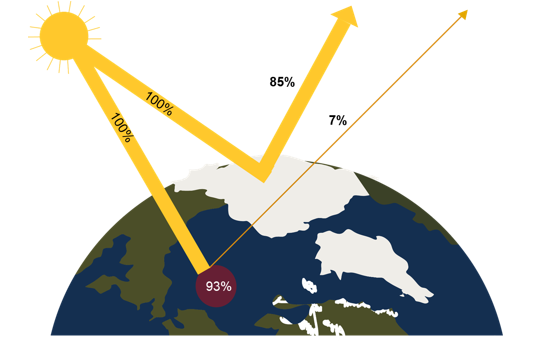
the earths albedo is reduced which means the earth absorbs more heat – warming is reinforced
as we lose ice, the white area reflects a lot of the suns energy, but a black ocean will absorb the energy; which reduces earths albedo
Feb 2014 climate disaster
You can have heatwaves in one location and extreme cold in another
Flooding in UK but Sochi winter olympics hits 65 degrees F
polar vortex
the reason why we are getting colder winter
the polar easterlies is held together by the jet stream created by temp difference between mid latitude cell (warmer) and polar cell (cold)
the jet stream keeps The polar vortex spinning, which is the extremely cold polar air spinning like a top at the North Pole
the spinning cell is getting slower because the polar cell is getting warmer
disruptive force in the arctic
arctic ice is melting more so on the one side of the Arctic setting up a humidified high pressure system on one side and a dry low pressure on the other – disrupting the spin of the polar vortex
health impacts of climate change
civil conflict
storms
disease transmission
illness, injury
food supply
heat
air pollution
Heatwaves mortality
Excessive heat kills more people each year than floods, lightning, tornadoes and hurricanes combined. (NOAA)
• Europe 2003 – 35,000 deaths, 14,000 in France alone
• Russia 2010 – 56,000 die from heat wave + smoke, smog inhalation
many occupations cannot escape heat waves
agricultural workers
construction
firefighters
police
biology of a heat wave
Metabolism – working hard increases internal heat
High Humidity – evaporation is compromised
Overweight – extra weight hurts the ability to het rid of heat
Age – older peoples circulation is less efficient – more vulnerable
Medications – certain meds, alcohol, smoking – more vulnerable
Protective clothing – (e.g. bullet proof vest) can add heat
Stresses the heart – extra blood diverts through skin to cool
How greenhouse gasses work
incoming radiation from the sun
a lot of UV gets blocked
visible light gets through
outgoing radiation from the earth
gets sent back out to space
but all the chemicals that make up the atmosphere blocks a little of it and traps it into the earth
the temperature and CO2 concentration cap agreed to in the 2015 Paris Agreement and the structure of the Paris Agreement
well below 2-degree Celsius
heat exhaustion vs heat stroke
heat exhaustion:
faint or dizzy, excessive sweating, pale skin, nausea or vomiting, rapid and weak pulse, muscle cramps
get to an air conditioned spaced, drink water if fully conscious, take a cool shower
heat stroke
throbbing headache, no sweating, body temp above 103, hot and dry skin, nausea or vomiting, rapid strong pulse, may lose consciousness
call 911
Dry season strategy
Three-step Energy Strategy:
Reduce Demand
Increase our energy efficiency and awareness of the need to reduce our energy consumption
Increase Supply
Research, test and certify new technologies, as well as renewable and sustainable resources in order to create new domestic sources of supply
Cultural Change
Create a culture where all Airmen make energy a consideration in everything we do. This strategy balances demand-side energy efficiency measures with a long-term commitment to supply-side alternative energy sources.
To accomplish our vision, the Air Force is working hand-in-hand on our energy strategy in partnership with other government agencies and the private sector.
Are droughts getting better or worse?
Droughts getting much more severe – concentrates bacteria and toxins in remaining water, more insect diseases, more PM exposure from dust
negative effects of droughts
Droughts increase wind blown dust – increases in Coccidioidomycosis has been observed (Valley Fever)
Drought and heat also weakens trees —> insect infestation
California is getting ___
CA is getting hotter AND drier in more recent years
dangers of wildfires
smoke inhalation
smoke is an air pollutant filled with particles, Carbon Dioxide, Nitrogen Dioxide, and Hydrocarbons
extreme fires kill growth crown and seed bank making it very difficult for the area to regrow
what are fire adapted trees
can withstand moderate forest fires
tree grows low to ground then quickly bolts to protect growth crown
thick bark to protect living tissue
resin on pine cone melts with mild fires to allow seeds to germinate
defensible space
The main idea: Removing flammable material and creating gaps around a home slows fire spread and improves the home’s chances of surviving a wildfire.
100-foot area around the house where vegetation and other flammable materials should be managed:
Cut dry grass: Dry grass burns easily. The slide recommends mowing during cool, moist conditions because mowers can start fires.
Space trees apart: This makes it harder for fire to spread from one tree to another.
Remove lower branches up to 10 feet: Low branches act as a “fire ladder,” allowing flames to climb from grass and shrubs into treetops.
Keep branches at least 10 feet from the roof and chimney: This reduces the chance of fire reaching the house.
Clean the roof and rain gutters: Dry leaves and needles can catch fire from windblown embers.
Space and maintain fire-resistant plants: Gaps between plants interrupt the path fire can follow. Fire-resistant plants can still burn.
climate impacts varying
Climate Impacts are highly varied depending on location. Preparing for climate change is a local/regional issue.
in 2023, there were 28 separate disasters in the U.S
Climate change and storms
superstorms are getting more violent
however, we have better warning systems and better buildings
Climate change and flooding
heavies rains are even heavier (from 1950-present)
warmer air means more rain, but it is not evenly distributed
negative health effects of flooding
Chemical/fuel released to surface waters
Unsafe drinking water
Waterborne diseases spike after floods
Minor Infections can become very serious
how does sea rise?
Sea rises from the expansion of seawater and melting ice on land
also rises from warming:
There is a high likelihood that Miami, FL and the Florida Keys will be under water before the end of the century.
How much of the US population live close to costal shorelines?
40%
causes of land subsidence
human activities, with groundwater withdrawals responsible for 80% of land subsidence
mostly in Chesapeake Bay region
ocean acidification
As more CO2 is dissolved in seawater – water gets more acidic
The acidity dissolves the calcium carbonate on shellfish and coral
Shellfish numbers are dropping – a major global food source
we get an ice age every ____ years
100,000 through orbital shifts when earth is further away from the sun
temperature and CO2 are well correlated
ocean temperatures can hold more CO2 when colder and release a lot when it warms up
record breaking cold
We are seeing more record breaking versus cold by 2:1 but we still see record cold
But we are also seeing more variability
slowing of the jet steam
in the northern hemisphere’s winter, the polar vortex naturally expands, but now we are seeing a slowing of the jet stream