Oral Boards - OB
 Call Kai
 Learn
 Practice Test
 Spaced Repetition
 Match
 Flashcards
 Knowt Play
1/105

There's no tags or description
Looks like no tags are added yet.
106 Terms
Risk of Major Aneuploidies in AMA

Risks of AMA
Maternal: HTN (2x >40), GDM (2-3x >40), CS/OVD, previa, abruption, labor dystocia, PPH, ICU, overall morbidity and mortality, SAB (2x), chromosomal abnormalities (2x >40), PPD, CVD
Fetal: Stillbirth (2x >40), LGA or SGA, PTB, low APGARs, NICU, hypoglycemia, multiples (?ART), but not really congenital anomalies
Management of AMA
>35: Counsel, LDA if another risk factor, first trimester US, offer genetic screening/testing, level 2 anatomy
>40: Third trimester GS, antenatal surveillance starting 32-36 weeks, delivery in 39th week

Baseline risk of a congenital or genetic anomaly in a pregnancy
2-3%
First trimester US/Serum Screening
Performed 10-13 weeks
Nuchal (11-14 weeks) + Pregnancy associated plasma protein A (PAPP-A) + bHCG
Detects 82-87% of T21
T21: Increased NT, low PAPP-A, high bHCG
T18: Increased NT, low PAPP-A, low bHCG
Second trimester serum screening
Performed at 15-22 weeks
AFP + bHCG + unconjugated estriol + inhibin A
Detects 81% T21
T21: Low AFP, high bHCG, low estriol, high inhibin A
T18: Low everything (inhibin A can be normal)
Open NT defect: High AFP (advantage over cfDNA)
cfDNA
Detects placental fragments starting at 9-10w, peak FF 10-21w
Highest sensitivity and lowest FP rate of all methods > now standard
T21 sens/spec >99%, T18/13 >90%
Cautions: Must confirm abnormal results with diagnostic test, PPV is lower in low-risk/young pts and for rare conditions, low FF (obesity, early GA, aneuploidies) can cause test failure or false results, expanded cfDNA has minimal validation
Carrier screening
ACOG: Offer to ALL pts (pregnant, TTC, considering), may decline
Includes CF, SMA, CBC, hemoglobinopathy testings
Ethnic-specific, pan-ethnic, or expanded also acceptable
Ancestry and family history based: Tay-Sachs (AJ, French-Canadian, Cajun), FX, hemoglobinopathies (African, Mediterranean, Southeast Asian, Middle Easter_, Ashkenazi expanded panel (Canavan, familial dysautonomia, Tay-Sachs
Invasive Diagnostic Testing
CVS: 10-13 weeks, samples chorionic villi, 98-99% accurate, 0.2% risk of pregnancy loss
Amniocentesis: >15 weeks (preferred unless earlier dx is needed), samples fetal cells in amniotic fluids, can also detect NT defects via AFP, 98-99% accurate, 0.05-0.1% risk of pregnancy loss
Can test karyotype, chromosomal microarray, FISH, gene panels, exam/genome sequencing
Don’t forget Rhogam!!
Discuss hemoglobinopathies vs thalassemias
Normal hemoglobin (HbA) has 2 alpha chains and 2 beta chains.
Thalassemias are quantitative defects: reduced production of structurally normal globin chains.
Structural hemoglobinopathies are qualitative defects: an amino acid substitution producing an abnormal globin chain.
Both groups are autosomal recessive and can overlap clinically.
Lung Physiology in Pregnancy + Asthma
Normal: Increased minute ventilation, chronic compensated respiratory alkalosis, elevated diaphragm
Not normal: Decline in FEV1/FVC ratio
Spirometry (to measure FEV1) or peak flow monitoring can be used to distinguish between physiologic SOB and asthma worsening (q4-6 weeks)
Risks of Uncontrolled Asthma in Pregnancy
Poor outcomes are driven by poor control of asthma, not the presence of the disease itself. Active asthma management reduces risk of PTB, neonatal hospitalization, and GDM. Risk of PTB and low birth weight rises after just one hospitalization!
Maternal: HTN, GDM, PTL/PTB, CS, exacerbations requiring hospitalization, oral steroid effects, PPH
Fetal: SGA/FGR, PTB, perinatal mortality, neonatal respiratory distress/transient tachypnea, NICU, seizures, hypoglycemia
Medications for Asthma in Pregnancy
Mirrors non-pregnant treatment. Albuterol is SABA of choice, Budesonide is the ICS with the most historical safety data in pregnancy.

Asthma Exacerbation in Pregnancy
Treat aggressively!
O2 with goal SpO2 >95%
SABA ± ipratropium
Early systemic corticosteroids
IV or inhaled Mag in severe cases
Hospital/ICU admission PRN
Intubate PRN: Resp failure, “normal” or rising PaCO2 (resp alkalosis should be compensated in pregnancy), respiratory muscle fatigue, AMS, hemodynamic collapse
How to dose RhoGam
Dose 300mcg at 28 weeks (not needed if paternity is known Rh neg)
Postpartum:
If infant is Rh neg, do nothing
If infant is Rh pos > rosette test > if positive, quantify with KB
Give within 72 hours
300mcg covers 30mL fetal whole blood (or 15mL fetal RBCs)
Volume of fetal blood = KB% x maternal blood volume (kg X 70)
8 vials max
Management of BPP
0/10: Deliver
2/10: Deliver
4/10: Deliver if >32 weeks, maximize surveillance and prepare for delivery if <32w
6/10: Deliver if >36-37w, repeat in 24h if <36-37w
8/10: All good (unless oligo >36w, then deliver)
10/10: All good
RSV Immunization
Only Pfizer vaccine is FDA approved in pregnancy
Pregnant women 32.0 to 36.6
Delivery not planned in next 2 weeks
No prior vaccination in previous pregnancy
RSV season 9/1-1/31
If no RSV vaccination in THIS pregnancy, baby should receive RSV mAb in their first flue season (first two seasons for high risk babies).
Cervical length screening and cerclage
Screening:
No PTB: Universal screening at anatomy scan
Prior PTB: q1-4 week screening from 16-24w
US-indicated: <25mm for prior PTB, <10mm for no prior PTB (can use VagP for 10-25mm with no prior PTB)
History-indicated: Prior cerclage or any second trimester loss attributed to cervical insufficient
Rescue/Exam-indicated: Painless cervical dilation with no labor/ROM/IAI/bleeding
Transabdominal cerclage: Prior failed vaginal cerclage or multiple 2T losses
Success rates: Elective 85-90% successful at preventing PTB/miscarriage, emergency 50-75% depending on multiple factors, TAC 90%
bASA for Pre-E prevention
Initiate between 12-28 weeks (ideally before 16w) and continue until delivery.
Give for 1 high-risk factor or 2 moderate-risk factors:
Moderate: Nullip, obesity, fam hx pre-E, black race, low income, AMA, IVF, prior poor pregnancy outcome, prior FGR, prior PTB, >10y inter-pregnancy interval
High: Hx pre-E, cHTN, multiples, pre-gestational DM, renal dz, autoimmune dz
Pre-Requisites for VAVD
Fully dilated cervix
Ruptured membranes
Engaged fetal head
Fetal head position is known
Fetal weight assessment performed
Pelvis is thought to be adequate
Adequate maternal anesthesia
Maternal bladder emptied
Maternal consent after discussion of risks/benefits
Ready to abandon attempt and proceed to CS if needed
Indications for VAVD
Prolonged second stage
Suspicion of immediate or impending fetal compromise
Shortening of second stage for maternal benefit
How to perform VAVD
Ensure pre-requisites are met
Feel for posterior fontanelle
Place cup 2cm anterior to fontanelle
Ensure maternal tissue is excluded prior to engaging suction
Pull with maternal effort, following the curve of the pelvis (avoid rocking motions)
No set number of pulls or pop-offs, but descent should be noted within first few pulls
Risks of VAVD
Maternal: Should be compared to second stage, which is difficult to assess compared to risks of of second stage, but biggest one is OASIS injury.
Fetal: Scalp lac, subgaleal hemorrhage (between aponeurosis and periosteum, large volume, cross suture lines), cephalohematoma (between bones and periosteum, small volume, does not cross suture lines), intracranial hemorrhage, retinal hemorrhage, hyperbilirubinemia, NICU stay, brachial plexus injury
Counseling patients with breech babies
3-4% of all babies at term, most common frank breech (65-70%)
Higher in septate/unicornuate/bicornuate uteri
Perform position check at 36 weeks
Options for delivery:
Planned vaginal delivery may be an option if they meets certain criteria, would need to be transferred to experienced provider. Possibly higher neonatal mortality than CS and higher short-term morbidity including low APGARs, intubation, and birth trauma (long-term outcomes less clear). Head entrapment is most feared complication.
ECV > VD is an option.
Planned primary CS has lowest neonatal mortality and short-term morbidity but higher risks for mom.
Criteria for breech vaginal delivery
GA >37 weeks
Must not be footling breech, other type OK
No fetal anomalies on ultrasound
EFW 2500-4000g with adequate maternal pelvis
Documented fetal head flexion
Adequate fluid (MVP >3)
No induction, spontaneous labor only with normal progress
Experienced provider and means for emergency CS if needed
How to perform breech delivery
Hands off the breech until umbilicus delivers, maternal expulsive effort drives delivery
Pinard maneuver (pressure on popliteal fossa) to deliver legs
Lovset maneuver (rotate fetal trunk, sweep arm) to deliver arms
Mariceau-Smellie-Veit maneuver with suprapubic pressure to flex chin and deliver head (or Pipers but I don’t do that)
If entrapment, consider Duhrssen incisions (2,6,10 o’clock), symphysiotomy, CS/abdominal rescue
Indications/Contraindications for ECV
Indication: All women with singletons who desire VD, >37 weeks in case of need for delivery
Absolute contraindications: Any situation in which VD is contraindicated.
Relative contraindications: Oligo/ROM, fetal anomaly, extended neck, FGR with abnormal dopplers, uterine malformation. Prior CS not a contraindication.
Success of ECV
50% successful ECV with 97% remaining cephalic at birth
Positive predictors: Multip, non-anterior placenta, abundant amniotic fluid, oblique lie, later GA, neuraxial anesthesia (NNT=5)
Negative predictors: High BMI
Risks and Benefits of ECV
Benefits: Reduces need for CS with no significant increase in maternal or fetal complications, cost-effective
Risks: Transient fetal bradycardia, abruption, PROM, cord accident, hemorrhage, PTL, need for emergency CS (0.2-0.7%, rare)
NYHA Heart Failure Classification
Mild/asymptomatic: No limitations
Mild: OK at rest, may have some impairment with activity
Moderate: OK at rest, but even light activity causes impairment
Severe: May be symptomatic at rest, no activity without symptoms
Indications for SBE PPX
High risk patients at time of VD: Prosthetic valve, hx infective endocarditis, unprepared CHD, repaired CHD within 6 months or with residual defects, cardiac tx recipient with valvulopathy
Also give for dental procedures. Not for CS.
Regimens: Amox 2g PO or ampicillin 2g IV preferred. Cephalexin, azithromycin, clarithromycin, or doxycycline if PCN-allergic
Cervical cancer in pregnancy
CIN3, CIS, or 1A1 cervical cancer (<3mm depth of invasion): Observe, repeat colpo q12-24 weeks in pregnancy (No ECC, biopsies with caution), VD OK
If more advanced: Need Gyn Onc, CS recommended to prevent tearing/hemorrhage/tumor dissemination
FFN Testing
Rule out tool for imminent preterm labor
NPV: >99% for PTL within 14 days
PPV: 9-46%, low
Classifications of Congenital Heart Disease
R>L shunt
Cyanotic
Deoxygenated blood bypasses the lungs or mixes with oxygenated blood, sending low-oxygen blood to the body, patients present with bluish tint
Examples: TOF, transposition of the great vessels, tricuspid atresia, pulmonary atresia, truncus arteriosus
L>R shunt
Non-cyanotic
Oxygen-rich blood recirculates through the lungs or normal oxygen levels reach the body, keeping patients generally pink-skinned at baseline
Examples: ASD, VSD, AVSD, PDA
Obstructive (no shunt)
Narrowing of heart valves or major blood vessels forces the heart to work much harder to pump blood
Examples: Coarctation, aortic/pulmonary stenosis
Mixed/Complex
Incompatible with normal postnatal circulation
Great vessels or heart chambers are completely reversed or single-ventricle variants that require mixing of blood
Examples: Hypoplastic left heart, total anomalous pulmonary venous return, transposition of the great arteries
Causes of CHD
Genetic: Chromosomal abnormalities, single gene defects, inherited mutations, microdeletions
Maternal conditions: DM, PKU
Infections: Rubella, other infections/fevers
Substances: Teratogenic medications (lithium, isotretinoin, AEDs, ACE-i), alcohol, smoking/nicotine
Fetal Circulation

Neonatal Circulation

1hr and 3hr GTT
1hr: 50g glucose, non-fasting, cutoff 140 (if >190, auto GDM)
3hr: 100g, fasting, cutoffs 95/180/155/140 (Carpenter-Coustan), need 2 abnormal
2hr: 75g, fasting, done as one-stop-shop or postpartum to evaluate for ongoing DM
White Classification
A1, A2: Gestational DM
Other categories: Non-gestational DM, depending on factors such as age of onset, duration of disease, comorbidities (neuropathy, retinopathy, nephropathy), or need for organ transplant
Management of DM in pregnancy
Ultrasounds:
T1DM, T2DM: Early anatomy and fetal echo
GS q4 weeks from 28 weeks if normal
NSTs:
T1DM, T2DM, poorly controlled GDM: 2x weekly NST at 32 weeks
Well-controlled GDMA2: 1x weekly NST at 32 weeks
GDMA1: Can consider past term
Delivery timing:
GDMA1: 39.0 to 40.6
GDMA2, well controlled: 39.0 to 39.6
GDMA2, poorly controlled: Individualized, 36.0 to 37.6
Pre-gestational, well controlled: 39.0 to 39.6
Pre-gestational, poorly controlled or with comorbidity: 36.0 to 38.6
Workup and diagnosis of ICP
Symptoms: Palms/soles pruritus, worse at night, no rash, jaundice uncommon
Total serum bile acids: >10umol/L
LFTs: Usually mild-moderate elevation
Severity of ICP
Low risk: 10-39
Moderate risk: 40-99
High risk: >100, this is where stillbirth rates rise exponentially
Treatment of ICP
UDCA 10-15mg/kg/day first line
Antenatal surveillance: Individualized, nothing reliably predicts IUFD in these pts
Low-moderate risk: Deliver 36.0 to 39.0
High risk: Deliver 36.0
Do not deliver preterm for clinical diagnosis without lab confirmation!
Liver disease in pregnancy DDX
ICP: 2nd tri onset, pruritus, elevated bile acids
HELLP: Usually 3rd tri onset
AFLP: Late 3rd tri onset, acute liver failure with hypoglycemia, hyperammonemia, and low plt/DIC
Treatment of DKA in Pregnancy
Continuous monitoring of mom and baby, hourly FS, q2-4h labs
Fluid resuscitation: 15-20cc/kg NS in the first hour, may need ½ normal based on corrected sodium levels
Potassium if needed:
<3.3: Give K then insulin
3.3 to 5.2: Give K and insulin together
>5.2: No K needed
Insulin drip, continue until anion gap closes
Add glucose when levels reach 200-250
Transition to SQ insulin 1-2 hours before discontinuing drip
Bicarb only with severe academia (pH <6.9)
Diagnosis of DVT/PE in pregnancy
Clinical assessment with YEARS criteria: Clinical signs of DVT, hemoptysis, whether PE is most likely diagnosis
D-Dimer: Cutoff 1000 if no YEARS criteria, 500 if at least 1 YEARS criteria
Start with compression duplex US > if positive, can skip to treatment
Chest imaging: CXR, then CTA if CXR abnormal or underlying pulmonary dz, V/Q scan if CXR normal
If clinical suspicion is high and evaluation is delayed or inconclusive, just treat
Treatment of DVT/PE in pregnancy
Start immediately!
Use therapeutic Lovenox (1mg/kg BID) or SQ heparin
Avoid DOACs, warfarin
Continue through 6 weeks PP or at least 3 months, whichever comes second
Can transition from Lovenox to heparin in third trimester for safer, more predictable window to discontinue in labor
Neuraxial OK after 12h ppnx and 24h therapeutic Lovenox > heparin 8 hours
Severe / Life-Threatening Cases: For massive PEs or acute limb-threatening DVTs causing hemodynamic compromise, advanced interventions such as systemic thrombolysis, percutaneous thrombectomy, surgical thrombectomy, or ECMO may be required.
Intermittent Auscultation
Used for low risk patients in spontaneous labor
Lower CD rate but higher neonatal seizures, no change in perinatal death
q15-30min in first/active stage and q5-15min in second stage
Check for baseline and screen for decals around CTX > switch to cEFM if concern
ARRIVE trial
IOL at 39.0 to 39.4 in nulliparous low risk women
Decreased CS, decreased HTN, no difference in neonatal outcomes
Bishops Score
Predicts the likeliness of VD within 24h
Dilation, position, effacement, station, consistency
Score 3-8: Consider cervical ripening prior to pitocin
Stages of labor and definitions
First stage: Onset of labor to full dilation, active phase starts at 6cm
Prolonged latent phase may be defined as >16 hours, bur no evidence based definition (may be longer in IOL)
Arrest of active phase: No progress with 4 hours of adequate UC or 6 hours of inadequate UC with pit
Protracted labor: <1cm dilation in 2 hours
Treatments: Pitocin, amniotomy, CS
Second stage: Pushing to delivery
2hrs of pushing in multip, or 3hrs for nullip
Some definitions add 1 hour for epidural (shared decision making)
Treatment: Manual rotation, OVD (97% success), CS
Failed IOL: Failure to reach active phase of labor (6cm with regular contractions) with 12-18 hours of pitocin after ROM
Methadone vs Buprenorphine

Risks of MJ in pregnancy
Maternal: gHTN and Pre-E, PTL/PTB
Fetal: FGR/low birth weight, risks of prematurity, long term developmental delay (including from breastmilk transmission)
Episiotomy

Risk factors for neonatal GBS infection
Maternal GBS colonization
No antibiotics in labor
Prolonged ROM >18 hours
Maternal fever
Preterm GA
Prior infant with GBS infection
Antibiotics for GBS ppx
GBS infection incidence 0.3-2% w/o abx, 0.1% with abx (3-4x risk reduction)
Regimens (need 4 hours for adequacy):
Ampicillin 2g then 1g q4h
Ancef 2g when 1g q8h (low risk PCN allergy)
Clindamycin 900mg q8h, needs +clinda and +erythro sensitivity documented (high risk PCN allergy)
Vancomycin pharmacy-dosed (not considered adequate by peds)
Who gets GBS ppx?
Any patient with positive screen (swab or bacteriuria)
Any patient with prior GBS infected neonate
Unknown GBS status and:
Preterm
ROM >18h
Maternal fever
Grandmultiparity Risks
Grand-multip = 5 births >20w
Great-grand-multip= 10 births >20w
Maternal risks: PPH/atony, placental abnormalities, GDM, HTN, uterine rupture, hysterectomy, shock (tough to distinguish these from AMA)
Fetal risks: Macrosomia, low APGAR, PTL, IUFD, meconium
HSV in pregnancy
Valtrex (DNA chain termination/inhibition) dosing:
Primary: 1g BID x10 days
Secondary: Valtrex 500mg BID x3 days
PPX: Valtrex 500mg BID from 36w
CS if:
Active genital lesion or prodromal sx at time of labor/ROM/delivery
Primary outbreak within 6 weeks of delivery, even if lesions have healed
HIV in pregnancy
HA-ART (triple regimen) either started in pregnancy or continue prior regimen, goal VL=U
Check VL every 2-4 weeks when adjusting dose or every 3m if stable
If VL <1000, ok for VD at term
If VL >1000, need CS around 38w + AZT
Also AZT for unknown VL, new dx in labor, adherence concerns
All babies need AZT
Breastfeeding generally OK with medication adherence and VL<50
Transmission <1% with adequate care
Transmission 15-40% without treatment, and additional 15-20% in breastfeeding
Causes of hydrops
Immune (10%)
Rh incompatibility
Other blood incompatabilities
Non-immune (90%)
Genetic/chromosomal disorders
Severe non-immune anemia
Congenital infections
TTTS
Structural tumors of lung/liver
Maternal factors (DM, SLE, hypothyroid)
Hypothyroidism in pregnancy
Levothyroxine preferred
Often need to increase 25-30% with UPT
Goal TSH <2.5
Check every 2-4 weeks in first half of pregnancy and at least 1 more time around 28 weeks
Check 6w PP to titrate down
Hyperthyroidism in pregnancy
95% Graves disease
Most neonates born to mothers with Graves’ disease are euthyroid. Transient hypothyroidism occurs in 10 to 20% of newborns of treated mothers. Transplacental passage of TSH receptor antibodies (TRAb's) causes hyperthyroidism in less than 5% of neonates. Maternal thyroid levels at delivery do not accurately predict neonatal Graves' disease.
PTU in first trimester
Can cause maternal hepatotoxicity, but methimazole can cause aplasia cutis and esophageal/choanal atresia in 1T
Switch to methimazole for 2T-3T
Monitor T4 levels every 2-4 weeks to ensure at/around ULN (~12)
Severe HTN meds
Give for sustained severe range BP over 15 min
Labetalol IV:
20/40/80/80 with 10min intervals > hydral
Max dose 220mg in 24h, hold for brady
Nifedipine IR PO:
10/20/40 with 20 min intervals
Hydralazine IV:
5/10/10 with 20min intervals > labetalol
Max dose 25mg in 24h, hold for brady
Mag and AEDs in pregnancy/eclampsia

PPH
Meds:
Pitocin: 10-40U IV infused over 10-30min or 10UIM or 10U IU
Misoprostol: 800-1000mcg PR
TXA: 1g IV, can give 1 additional dose if needed
Methergine: 0.2mg IM q2-4h, avoid with HTN
Hemabate: 0.25mg IM q15-90min, max 8 doses, avoid with asthma
Procedures: Uterine massage, manual evacuation, JADA, Bakri, B-Lynch, UAE, hysterectomy, blood transfusion
HepB in pregnancy
Test all pts for HepBsAg
Test for immunity in all pts without documented immunity or vaccination
Vaccinate in pregnancy if non-immune or grey zone (0,1,6 mo for Enegrix) - after 2 series, non-responder
Use anti-virals (tenofovir) to reduce viral load:
If HBeAg neg: Treat for maternal benefit if VL >2K and ALT >2x ULN
If HBeAg pos: Treat for maternal benefit if VL >200K and ALT >2x ULN
For reduction of vertical transmission, treat any pt with VL >200K
No evidence for avoiding invasive procedures or CS
Babies born to positive/unknown moms should get HepB IG and vaccine within 12 hours
No contraindication to breastfeeding
HepC in pregnancy
Screen all pts for HepCAb, reflex PCR if positive
No treatment in pregnancy, start after breastfeeding is completed
No interventions to reduce transmissions
Validated Mental Health Questionnaires
PHQ-2, PHQ-9
EDPS
10-14 mild, 15-19 mod, >19 severe
Anxiety: score of 5 or higher on the 3 anxiety Qs
GAD-7
MDQ to screen for bipolar
Mental Health Pharmacotherapy
Anxiety/Depression: First line SSRI (sertraline, escitalopram)
Neonatal risks: Persistent pulmonary hypertension (0.5-1% risk but 10-20% fatal), neonatal adaptation syndrome (10-30%)
Monitor for response with validated scale
Always screen for BPD before starting SSRI
PP psychosis
Very high risk with BPD
Prevention strategies: PP sertraline, PP lithium, sleep preservation
High transfer of lithium in breastmilk, not contraindicated but needs close monitoring
Acute: Haloperidol, olanzapine > call psych
Severe PPD: Zuranolone
For onset in 3T or within 4 weeks PP
2 week course
Can take with other SSRIs, SNRIs
Need contraception for 7 days after
Does pass into breast milk with low RID (<1) but no data on safety, consider pump and dump
Brexanalone no longer available
Differential for severe headache in pregnancy
Tension
Migraine
Cluster
Pre-E with SF
PRES (posterior reversible encephalopathy syndrome)
MRI shows occipital cerebral edema
Look for headache, vomiting, AMS, blurred vision, seizure
Lower BP, treat Pre-E, deliver, call neuro
RCVS (reversible encephalopathy vasoconstriction syndrome)
Abnormal CT angiography with diffuse segmental constrictions
Look for sudden headache, transient blindness, confusion, rapid improvement PP
Deliver!
CVST (central venous sinus thrombosis)
Can be in 3T or PP
Look for nonspecific headache with focal deficit and seizure
MRI venogram
Give heparin
Workup for thrombophilia and APLS
Epidural puncture headache
IIH
Intracranial hemorrhages/stroke
Who gets special anatomy scans?
Nuchal (11-14w): Generally offered to everyone, but esp if not doing cfDNA
Early anatomy (12-14w): Previous anomaly, sus current anomaly, AMA, DM, IVF, multiples, teratogens, enlarged nuchal, positive screening (cfDNA), BMI >30, abnormal placentation/implantation
Level 2 anatomy: Same as early anatomy + GDM
Fetal echo: Sus CHD, other anomalies, abnormal NT, genetic/chromosomal dx. multiples, pre-gestational DM, autoimmune, PKU, maternal infections, teratogen exposure, fam hx CHD
Antibiotics for wound/breast infections
CS infection:
Mild/superficial: Augmentin, keflex, clinda
Severe: Ancef, Vanc, Flagyl
Deep/abscess: Open, drain, pack + ABX
Perineal wound breakdown:
Mild: Augmentin, clinda, keflex/flagyl
Severe: IV ABX (cefotetan, cefoxitin)
Let heal by secondary intention!
Mastitis:
Mild: Dicloxacillin, keflex, clinda, Bactrim
Severe: Nafcillin, ancef, vancomycin
Abscess: Drain
How does the KB work?
The principle behind the Kleihauer-Betke test relies on the acid resistance of fetal hemoglobin (HbF) compared to adult hemoglobin (HbA). When a maternal blood smear is exposed to an acid solution, adult hemoglobin washes out of the cells, while fetal hemoglobin remains trapped inside, allowing fetal cells to stain dark pink and stand out under a microscope.
When can you skip RhoGAM?
Rh pos pt
Confirmed Rh neg father
Mom is already sensitized
Severe allergy
IgA deficiency
Under <12 weeks (debatable)
Direct vs Indirect Coombs testing
Direct: Detects Abs already attached to the RBC
Indirect: Detects free-floating Abs (this is what we use in a maternal Ab screen)
Hemolytic Disease of the Fetus and Newborn (HDFN)
Maternal IgG crosses placenta and binds fetal RBCs
Hemolysis
Anemia
Causes extramedullary hematopoiesis, high output cardiac failure, and immune hydrops (ascites, pericardial effusion, pleural effusion, edema)
Post-natally, causes hyperbilirubinemia and kernicterus
Comparison of Abs that can cause HDFN
RhD: Most common, only preventable cause, 16-17%>1% with Rhogam
Kell (anti-K): Extremely severe, anemia out of proportion to titers (must monitor MCA Dopplers), also suppresses erythropoeises
Rhc, RhE: Manage like RhD
ABO incompatibility: Can occur in primps due to preformed Abs, usually mild, treat with phototherapy
Kidd, Duffy, Anti-U: Less common, variable severity
**Lewis and I are IgM > do not cross placenta, no HDFN
Management of Isoimmunization
Test maternal ABO/RH and antibody screen
If screen positive, identify Ab
Test dad if possible > no antigen, no risk
Can test fetus for RhD, Kell, and Rhc with cfDNA, otherwise amnio
Monitor titers, if >1:16 then start MCA dopplers (much lower threshold for Kell, or any titer if previously affected pregnancy)
Monitor MCA Dopplers 16w to delivery
MCA-PSV >1.5MOM = anemia
Fetal transfusion possible, call MFM
Can also give mom IVIG, plasmapheresis, or nipocalimab
Delivery timing:
37-38 weeks if no transfusion, stable titers, normal MCA
If transfusion, 2-3 weeks after last one
Treatment for baby:
Cord blood testing for Hgb, bile, blood type, and direct Coombs
Phototherapy for hyperbilirubinemia
IVIG
Exchange transfusion
Use irradiated blood
CPD vs Inadequate Contractions

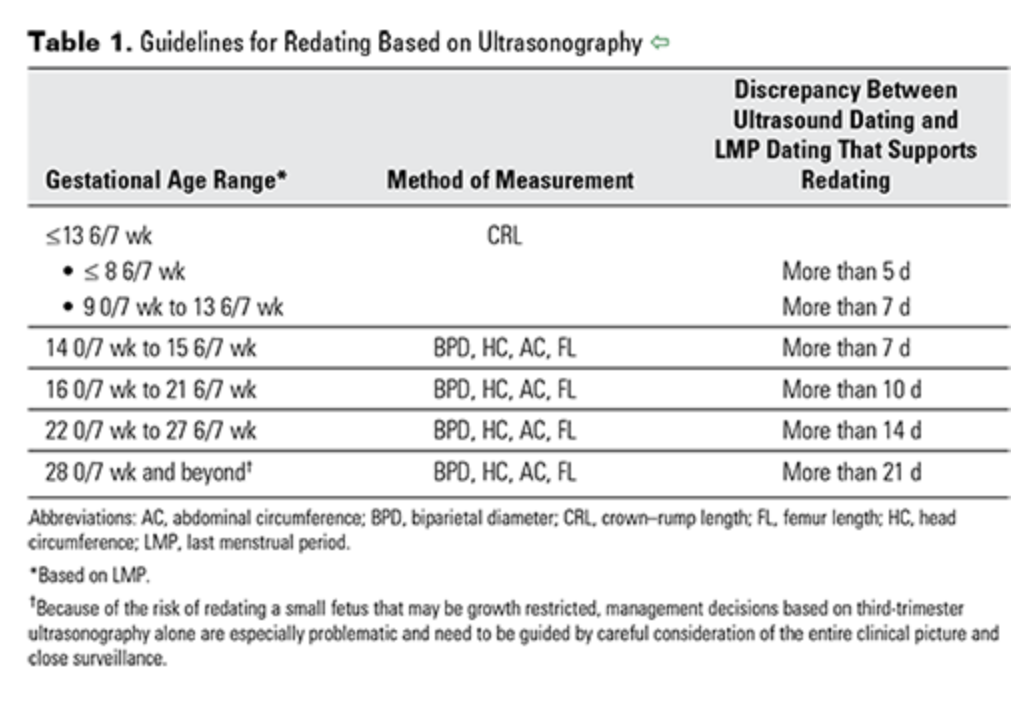
Ultrasound Redating
How accurate is US for EFW?

Risk of ONTD + Folic acid dose
General population: 1/2500
Prior ONTD: 1/25
Folic acid: 400-800mcg starting 1 month before conception
Folic acid (twins): 1mg starting 1 month before conception
Folic acid for prior ONTD or high risk factors (prior ONTD, fam hx, DM, AEDs, thalassemias/hemoglobinopathies): 4mg starting 3 months before conception
**Continue to at least 12w GA
Weight gain in pregnancy
BMI = lbs/in² x 703 or kg/cm²
Underweight (<18.5) = 28-40
Normal weight (18.5-24.9) = 25-35
Overweight (25-29.9) = 15-25
Obese (>30) = 11-20
Twins = 37-54
APGAR and Cord Gases
APGAR (0-2 points each): Appearance, pulse, grimace, activity respiration
7-10 = Great
4-6 = Needs some help
0-3 = Critical
Cord gases: Arterial pH 7.24-7.27, PaCO2 50, PaO2 30-40, Base deficit <11-12
Metabolic Acidosis: Low pH, high base deficit = usually due to tissue hypoxia
Respiratory Acidosis: High pCO2 and normal base deficit = acute, transient umbilical cord compression or nuchal cord during delivery
Mixed Acidosis: Low pH, high pCO2, significant base deficit = prolonged or severe impairment
Critical Cutoffs: pH < 7.00 paired with a high base deficit (≥ 12 to 16 mmol/L) increases the risk of neonatal encephalopathy and serves as a major criterion for considering therapeutic hypothermia
DKA calculations
Anion Gap: Na⁺ - (Cl⁻ + HCO₃⁻), usually between 8 to 12 mEq/L
Corrected sodium:
Add 1.6 mEq/dL for every 100 glucose over 100
If Glucose >400, add 2.4mEq/dL
Blood Transfusion Components
Packed rPBCs (1u = 300mL = 1u Hgb)
Plt (1 pack = 250-300mL = 25-50K plt)
FFP = many factors + vWF + antithrombin III (1u = 250mL)
Cryo = fibrinogen + F8/12 + vWF + fibronectin (1u = 100-200mL = 100 fibrinogen)
Transfusion goals in hemorrhage/surgery/OB: Hgb >7-8, Plt 50K, fib 2K
Fibrinogen very important for abruption, AFE, DIC
Massive transfusion protocol:
Mimics whole blood
1 pRBC : 1 FFP : 1 Plt
Types of Blood Testing
Type and screen: Determines ABO/Rh, screens for Abs
Type and cross: Incubates pt blood with donor blood to ensure crossmatch, this blood is then set aside for the pt
Use for pt hx or anticipate hemorrhage/transfusion needs
Quickspin does this same process in 15 min if Abs in pt blood are neg
New Ab screen required within 3 days for pregnant patient or non-pregnant pt with transfusion within 3 mo
Criteria for sIAI
Isolated maternal fever: 39C once or 38-39C x30min
sIAI: Maternal fever plus
Maternal leukocytosis
Purulent cervical drainage
Fetal tachycardia
Post-EDD Definitions
Post-dates: Unofficial term, usually post-EDD
Late term: 41.0 to 41.6
Post term: 42.0 or later
Monitoring Post-Dates Pregnancy
Continue weekly visits
Add NSTs 1-2x weekly with fluid check after 41weeks and recommend induction
After 42 weeks, strongly recommend delivery (IUFD rises to 3/1000)
Risks: IUFD, macrosomia, shoulder dystocia, meconium, postterm syndrome
PPD vs Baby Blues

Management of Cord Prolapse
Do not manipulate the cord
Elevate the fetal head
Maternal positioning: Hands and knees, Tberg
Don’t push, Terb if needed
If prolonged or need transport: Fill bladder, Sim’s position, keep cord warm and moist
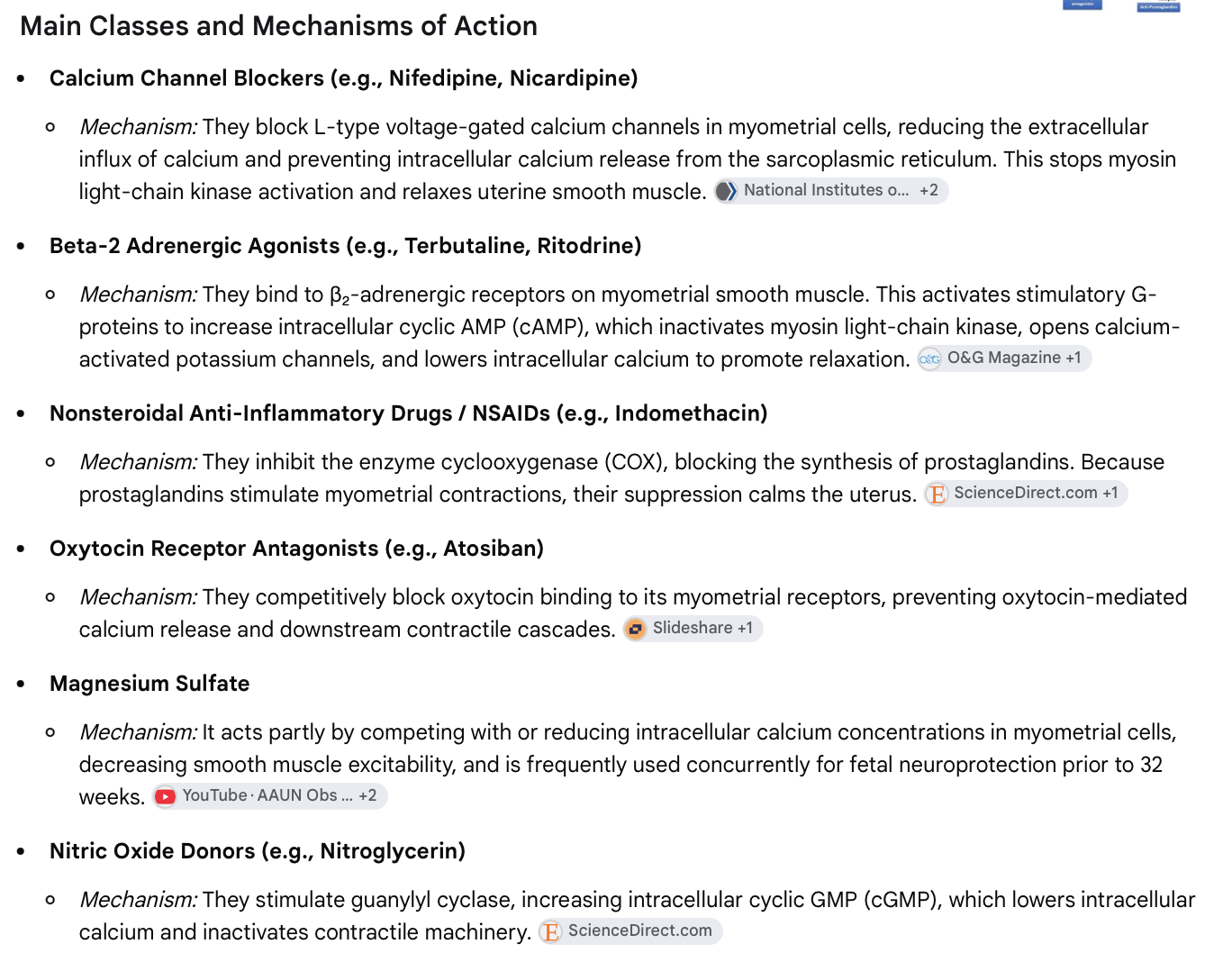
Tocolytic MOA
Contraindications, Side effects, Dosage of major Tocolytics
Nifedipine:
Loading dose: 20-10-10 q20min until ctx cease
Maintenance: 20mg q8h
Side effects N/V, flushing, dizziness. Causes hypotension, don’t use with heart conditions. Cannot combine with Mag.
Indomethacin:
50-100mg loading dose followed by 25mg q4-6h
Side effects: GI upset, hypertension, plt dysfunction, PDA closure, oligo, fetal renal dysfunction, NEC/IVH in very premature babies.
Avoid after 32 weeks. Contraindications include contraindications to NSAIDs.
Complications of Extreme Prematurity
Respiratory: RDS, bronchopulmonary dysplasia, apnea of prematurity
Neurological: IVH, periventricular leukomalacia, neurodevelopment deficits
CV: Patent PDA, hypotension, anemia, jaundice
GI: NEC, feeding intolerance, metabolic/endo issues
Immune: Sepsis
Sensory: Retinopathy of prematurity, hearing impairment
UTI/Pyelo Abx in preg
Most common bacterial: Proteus, E.Coli, Klebsiella
ASX Bacteriuria or UTI:
Macrobid - Avoid in 1T (suggested increase risk of birth defects) or pyelo
Keflex
Bactrim - Avoid in 1T (folic acid depletion, birth defects) and 3T (jaundice, kernicterus)
Fosfomycin - Avoid in pyelo
Amox - High resistance
Augementin - High resistance
If recurrent: Suppress with continuous or post-coital Macrobid or Keflex
Pyelo:
Amp+gent
CTX
Cefepime
Aztreonam
If not improving - kidney imaging.
After 24hr afebrile, transition to PO x2 weeks (not Macrobid or fosfomycin). Consider suppression and qT UCx for remainder of pregnancy.
Classic Triad of Neonatal Rubella
Sensorineural hearing loss
Cataracts, glaucoma, retinopathy
Patent PDA, pulmonary artery stenosis
Other: Low birth weight, microcephaly, intellectual disability, hepatosplenomegaly, and a "blueberry muffin" rash caused by extramedullary hematopoiesis
Wait 28 days after MMR to get pregnant (same as Varivax)!
AEDs in pregnancy
Best: Lamotrigine, levetiracetam
Also good: Oxcarbazepine, carbamazepine
No good: Valproate, topiramate, phenobarbital, phenytoin
Sickle cell gene
10% of African Americans, 0.3% of Caucasians