Gluconeogenesis
 Call Kai
 Learn
 Practice Test
 Spaced Repetition
 Match
 Flashcards
 Knowt Play
1/10

There's no tags or description
Looks like no tags are added yet.
11 Terms
Gluconeogenesis
The synthesis of glucose from non-carbohydrate precursors (pyruvate)
Gluconeogenesis in mammals
takes place in liver to supply glucose to other tissues via the bloodstream when there is not enough glucose
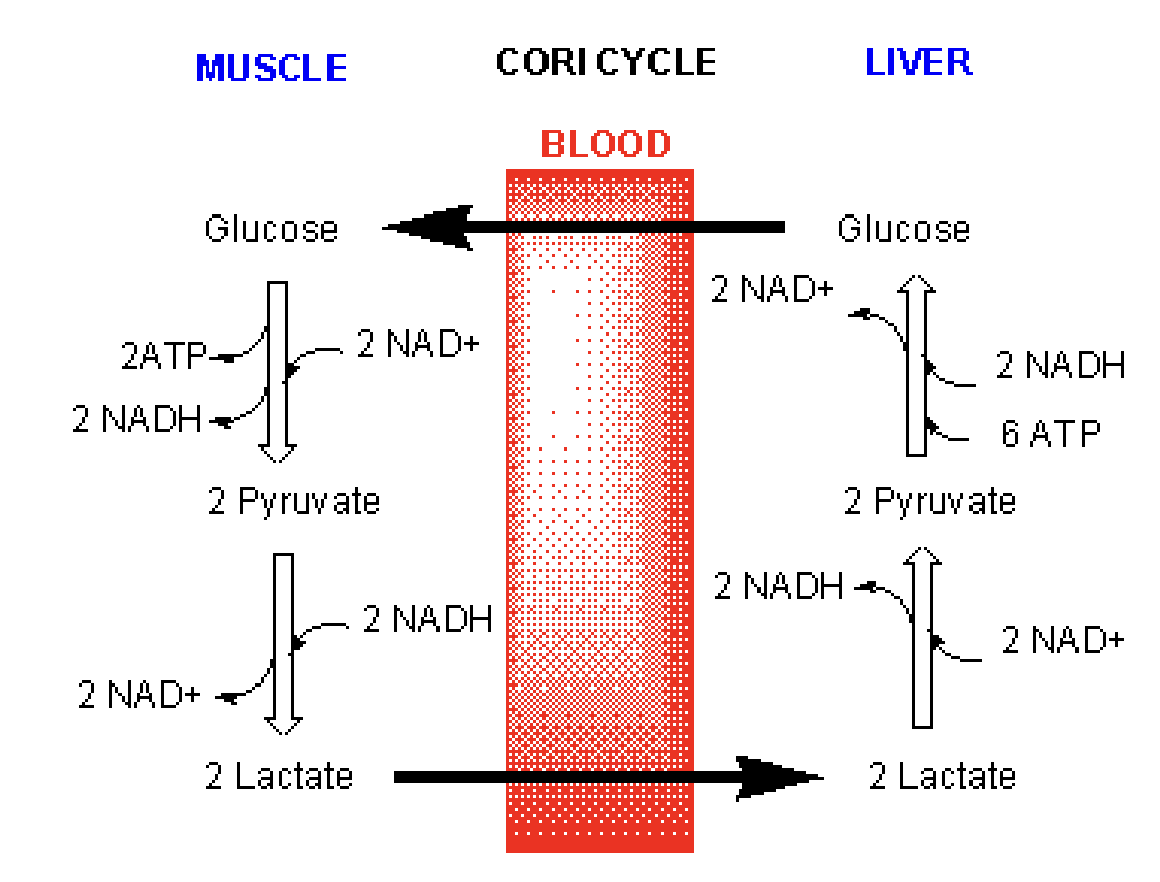
use lactate produced in skeletal muscle as a precursor
use glycerol from triacylglycerides or phospholipids
use amino acids
NOT from fatty acids
Bypass of Pyruvate Kinase
Carboxylation via an “activated” bicarbonate
Decarboxylation and Phosphorylation
slightly endergonic

Biotin
cofactor, coenzyme and prosthetic group
“activated bicarbonate”
Role of Biotin on one carbon metabolism
mechanism where pyruvate is carboxylated→ add one carbon in carboxylation
always requires ATP
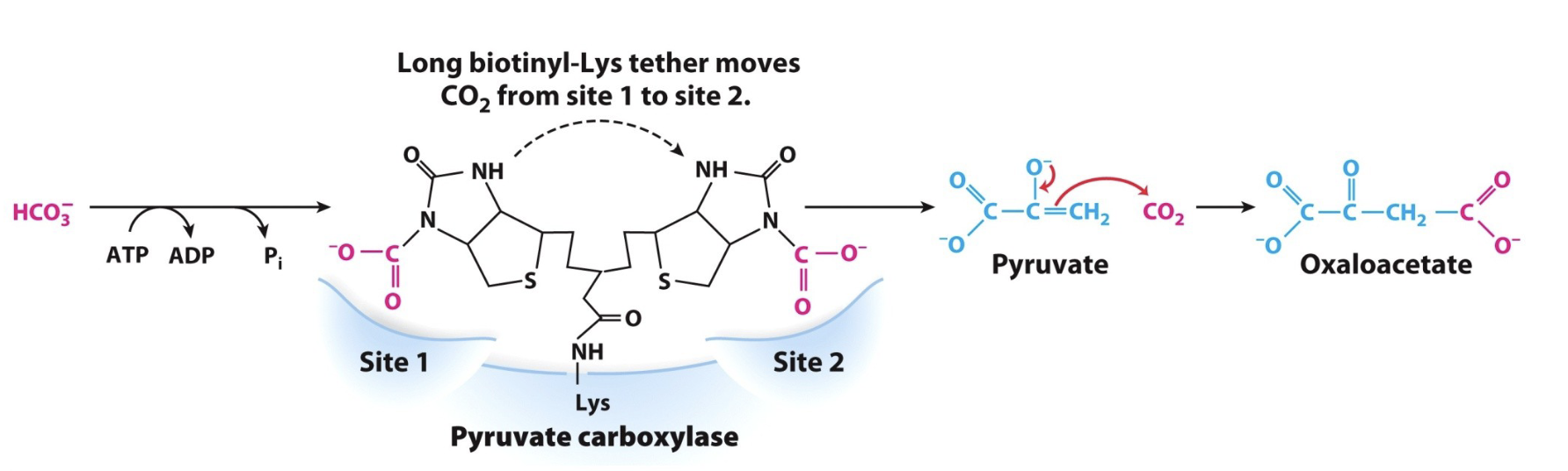
pyruvate carboxylase
(PC) Occurs in mitochondria
PEP carboxykinase
(PK) Occurs in mitochondria and cytoplasm, depends on what pathways are running
Movement of pyruvate
cytosol to mitochondria
carboxylation to oxaloacetate
Bypass of PFK-1 and Hexokinase
use phosphatases instead of a kinase
FPBase-1
G6Pase
reciprocal regulation
Gluconeogenesis control points
glucose -6 phosphatase
fructose 1,6 bisphospatase 1
pyruvate carboxylase
Cori Cycle
Links anaerobic glycolysis and gluconeogenesis in separate tissues