acetylcholine
 Call Kai
 Learn
 Practice Test
 Spaced Repetition
 Match
 Flashcards
 Knowt Play
1/36

There's no tags or description
Looks like no tags are added yet.
37 Terms
what type is it? synthesized?
classic/amine NT
synthesized in nerve terminals
ONLY excitatory
where is it released?
released in the PNS at the neuromuscular junction
involved in ALL muscle movement
imp role in…
arousal, attention, memory, motivation
what branches is it imp for?
both branches of ANS
always the 1st messenger
causes release of __ in sympathetic branch
norepinephrine
except in sweat glands
causes release of ACh in the ____ branch
ACh
slows HR, inc digestion
biosynthesis of ACh
choline and acetate
acetate attaches to coenzyme A
produced by mitochondria
forms acetyl-CoA
enzyme joins choline with acetyl-coA
ChAT
choline
essential AA found in eggs, broccoli, spinach, grapefruit, almonds
acetate
negatively charged two-carbon molecule, produced in the liver (from short-chain fatty acids like fiber),
can be added to foods as a spice (sodium acetate)
also found in solvents, oxidized from ethanol
shown to inc headaches, role in hangovers
biosynthesis drawn out

where is ChAT found
only in ACh neurons
no inhibitors for ChAT
is there a rate limiting step? what is rate controlled by?
no rate limiting step
rate controlled by availability of precursors and cell firing rates
where is ACh stored
in vesicles by vesicular acetylcholine transporters
VAChT
what do choline transporters do
bring acetate and choline into the cell
NT inactivation
no reuptake
broken down by acetylcholinesterase (AChE)
full synthesis pathway — with receptors and vesicles, etc

what does botox do
blocks ACh release causing paralysis
inhibits SNARE proteins (prevents vesicles from fusing with the membrane and bursting)
where is botulism toxin found
honey, dented cans
what is injected botox
localized, controlled, therapeutic paralysis
what is ingested botulinum toxin
systemic, uncontrolled paralysis, which can be fatal
where is ACh in the brain
dorsolateral pons
basal forebrain
basal nucleus of the amygdala
basal forebrain →
cerebral cortex, hippocampus, other limbic structures = cognitive effects of ACh for attn aspect
rats engaged in sustained attn tasks release more ACh
enhances sensory cues
dorsolateral pons →
projects to brainstem and thalamus (REM sleep, arousal, sensory processing)
excitatory effects on DA system (nicotine reward)
what do interneurons in the basal ganglia respond to?
important or prominent environmental cues to enhance DA
what are the ACh receptors
nicotinic
muscarinic
nicotinic R
nicotine agonist
ionotropic
Na+ and Ca2+ enter
muscarinic R
muscarine agonist
metabotropic
some are axoaxonic
describe nicotinic receptors subunits
contains 5 protein subunits
α, β, γ, δ, ε
10 types of alpha, 4 types of beta
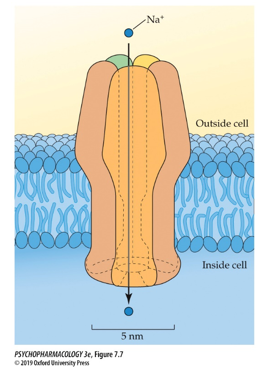
does ACh have to be bound to all sites on the nicotinic R for the R to open?
Whether two or five such sites are present, all must be occupied by ACh or another agonist such as nicotine for the receptor channel to open.
what does curare do?
blocks ACh binding → no depolarization → no muscle contraction
describe alpha-4-beta-2
nicotine has a high affinity for alpha-4-beta-2
bupropion is an antagonist (Wellbutrin)
can smoking stunt growth
yes
reduced GH secretion, lower sex hormones, decreased blood flow to bones, appetite suppression
what is the gene that codes for the alpha 4 subunit
CHRNA4
deficits in this gene cause a person to be 4 inches shorter and predisposed to obesity
receptor brain distribution and which is imp for drugs
alpha 4 beta 2 is imp

how many types of muscarinic R? what do they do?
5 types (M1-M5)
second messengers, some stimulate K+ channel opening
where are M5s found?
in hippocampus, hypothalamus, midbrain DA areas
likely related to rewarding/dependence effects of drugs
scopolamine
competitive antagonist M1-M5
reduces inner ear signaling (M1/M3)
side effects: “hot as a hare, dry as a bone, red as a beet, blind as a bat, mad as a hatter”
Hyperthermia (↓ sweating), dry mouth, flushed skin, blurred vision, confusion, hallucinations.