Lab Exam 2 - Invert Zoology
 Call Kai
 Learn
 Practice Test
 Spaced Repetition
 Match
 Flashcards
 Knowt Play
1/54

Earn XP
Description and Tags
Annelida, Nematoda,
55 Terms
Phylum Annelida
Have circular muscle and metanephridia, metamerism, bilaterally symmetric, coelomate
Class Clitellata
Characterized by clitellum and hermaphroditism, note the lack of parapodia
Earthworm
Phylum Annelida
Class Clitellata
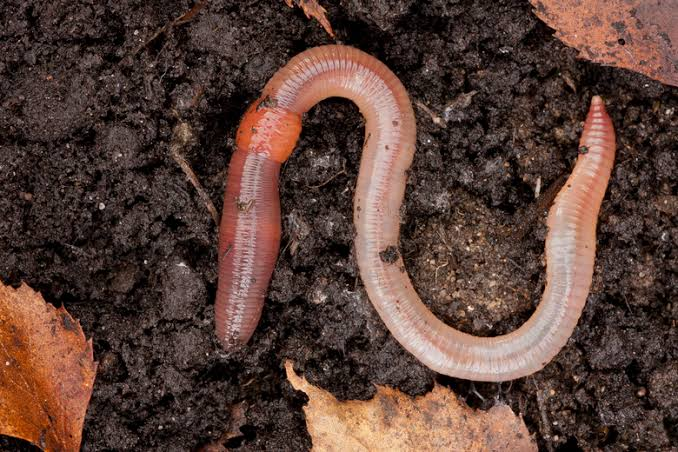
What side is the clitellum on, on an earthworm?
Dorsal side
Did the earthworms move faster on paper or plastic? Why?
Faster on paper, had more friction for the worms to grab onto to move forward.
Earthworm c.s.
Phylum Annelida
Class Clitellata

Horse leech
Phylum Annelida
Class Clitellata
Note the anterior and posterior suckers

Which sucker is larger on a horse leech?
Posterior sucker (tail)
Used for anchoring and leverage
Class Polychaeta
Characterized by having setae and parapodia (may be reduced)
Subclass Sedentaria
Sessile, sedentary, reduced head and parapodia
Sedentary Sabella sp.
Phylum Annelida
Class Polychaeta
Subclass Sedentaria
Radioles - ciliated feather-like tentacles

Lugworm
Phylum Annelida
Class Polychaeta
Subclass Sedentaria

Subclass Errantia
Active, well-developed head and parapodia
Scaleworm
Phylum Annelida
Class Polychaeta
Subclass Errantia

Alitta virens Sars c.s.
Phylum Annelida
Class Polychaeta
Subclass Errantia

Alitta virens dissection
Phylum Annelida
Class Polychaeta
Subclass Errantia

Phylum Playthelminthes
Bilaterally symmetric, duo-gland organs, acoelomate
Class Rhabditophora
free living, ciliated epidermis
Planaria
Phylum Plythelminthes
Class Rhabditophora

Planaria 3 regions
Notice mesenchyme that replaces a body cavity
Epidermis with rhabdoids (dark-staining rod-like structures)

What is the function of rhabdoids?
Mucous and slime production
Planaria Digestive Tract
Note the three branched digestive tract

Class Trematoda
Parasitic flukes with suckers for attachment
Blood Fluke MALE
Phylum Annelida
Class Trematoda
Note the oral sucker, testes, and simple digestive tract

Blood Fluke FEMALE
Phylum Annelida
Class Trematoda
Note the oral sucker, ovary, and simple digestive tract

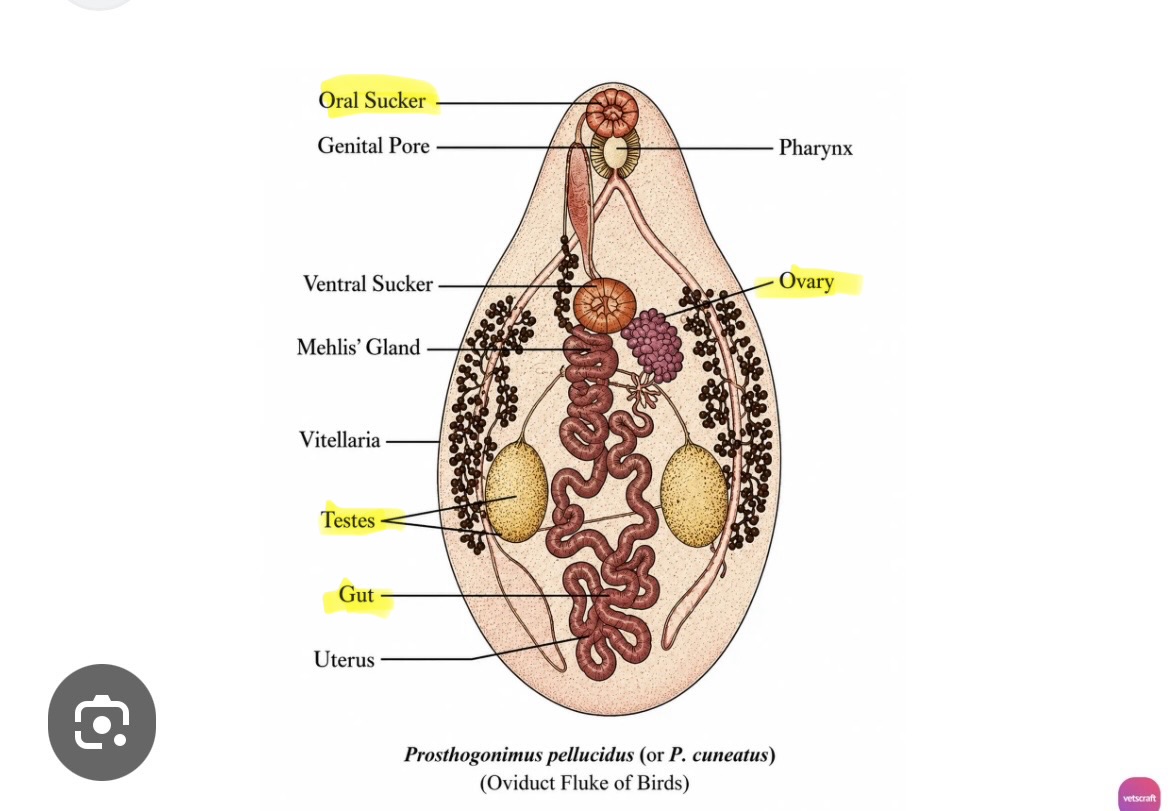
Avian oviduct fluke
Phylum Annelida
Class Trematoda
Note oral sucker, ovaries, testes, and simple digestive tract
Class Cestodea
Endoparasitic tapeworms with scolex and hooks for attachment
Common tapeworm
Phylum Annelida
Class Cestodea

Dog tapeworm
Phylum Annelida
Class Cestodea

How do Cestodeans get their nutrition without a digestive tract?
Diffusion of nutrients across the body wall from the hosts intestinal tract
Alitta virens
Phylum Annelida
Class Polychaeta
Subclass Errantia

What muscles do earthworms use for movement?
Oligochaetes, longitudinal muscles and circular muscles
What can blood flukes cause in humans?
Schistosomiasis
Diphyllobothrium latum (fish tapeworm)
Phylum Annelida
Class Cestodea

Phylum Nematoda
Lack circular muscles and nephridial structures, unsegmented, bilaterally symmetric
Forest Area Nematodes
Phylum Nematoda
Class Chromadorea

Wetland Area Nematodes
Phylum Nematoda
Class Chromadorea

Lake Area Nematodes
Phylum Nematoda
Class Chromadorea

How can you differentiate between male and female nematodes?
Body size, tail shape, presence of ovaries or testes
Why would a plant feeding nematode have a stylet rather than a species that feeds on microbes or animal tissue?
To mechanically pierce through the plant cell walls and inject digestive enzymes to suck out the host cytoplasm

Ascaris lumbricoides c.s. (human roundworm) - male
Phylum Nematoda
Class Chromadorea

Ascaris lumbricoides c.s. (human roundworm) - female
Phylum Nematoda
Class Chromadorea

Dirofilaria immitis (heartworm)
Phylum Nematoda
Class Chromadorea

Trichinella spiralis - male
Phylum Nematoda
Class Enoplea

Trichinella spiralis - female
Phylum Nematoda
Class Enoplea

What are the differences between male and female Trichinella spiralis?
Females are larger in size than males
Trichinella spiralis encysted
Phylum Nematoda
Class Enoplea

Trichuris trichura (whipworm)
Phylum Nematoda
Class Enoplea

What can Ascaris lumbricoides cause in humans?
Ascariasis
What can Dirofilaria immitis cause?
filariasis
What can Trichinella sprialis cause by encysting into muscles?
Trichinosis
What can Trichuris trichura cause?
Trichuriasias
Phylum Tardigrada
Lack circular muscle and nephridial structures, with modified segmentation, bilaterally symmetric, semi-aquatic habitats (terrestrial and freshwater)

Milnesium
Phylum Tardigrada
Class Eutardigrada

What is the lifestyle of a tardigrade (water bear)?
Have extreme survival dormancy, when water vanishes, they expel nearly all body moisture, pull in their head/legs, and roll into a dry, dormant ball. Slow-paced, aquatic dependent.