311 (Session 7) Anatomy of the tongue, salivary glands, pharynx, and esophagus
 Call Kai
 Learn
Learn Practice Test
 Spaced Repetition
 Match
Match Flashcards
 Knowt Play
1/77

There's no tags or description
Looks like no tags are added yet.
Name | Mastery | Learn | Test | Matching | Spaced | Call with Kai | Chat |
|---|
No analytics yet
Send a link to your students to track their progress
78 Terms
What CNs are responsible for general sensation of the tongue
Anterior 2/3 = CN V3
Posterior 1/3 = CN IX
What CNs are responsible for taste of the tongue
Anterior 2/3 = CN VII
Posterior 1/3 = CN IX
Which CN is the main motor innervation of the tongue
CN XII
Except Palatoglossus = CN X
What are the extrinsic muscles of the tongue
Genioglossus
Hypoglossus
Styloglossus
Palatoglossus

What are the intrinsic muscles of the tongue

Superior Longitudinal
Inferior longitudinal
Transverse
Vertical
Extrinsic muscles of tongue function
Protrude + Retract
Elevate + depress
intrinsic muscle tongue movement
Shorten / curl
Narrow / elongate
Flatten / broaden
What would result from a CN VII deficit in terms of tongue innnervaiton
Reduced / lost taste form anterior 2/3, but general sensation remains the same
What would result from a CN V3 deficit in terms of tongue innnervaiton
Reduced / lost general sensation from anterior 2/3 of tongue
What would result from a CN IX deficit in terms of tongue innnervaiton
Reduced/lost general sensation AND taste from posterior 1/3
What would result from a CN XII deficit in terms of tongue innnervaiton
Impaired tongue movement
What are the three main pairs of salivary glands
Parotid (biggest)
Submandibular
Sublingual

What is the function of salivary glands
Secrete saliva into oral cavity
Lubricates food
Starts digestion of starch
Which muscle does the parotid gland sit on
Masseter muscle
Retromandibular fossa (Most of it)
Extermal acoustic meatus

What sheath is the parotid gland surrounded by
Parotid Sheath
How does saliva get transfered from the parotid gland to the oral cavity
Parotid duct

What nerve innervates the parotid gland
CN 9
Which CN provides the parasympathetic / secretomotor supply to the motor gland
Glossopharyngeal nerve (CN 9)

What is the sympathetic innervation of the parotid gland
Sympathetic: Superior cervical ganglion → external carotid plexus

Compare and contrast parasympathetic vs sympathetic innervation FUNCTION on the parotid gland
Parasympathetic: stimulates saliva
Sympathetic: Reduces saliva
How is saliva transfered from the submandibular gland to the oral cavity
Submandibular duct
Which structure does the sublingual gland lie between
Mandible and the Genioglossus muscle

What structures does the sublingual duct work and communicate with
Submandibular duct
lingual nerve (Branch of CN V3)
What is the parasympathetic innervation the sublingual and submandibular glands
CN 7

What is the sympatetic innervation the sublingual and submandibular glands
Sympathetic: Superior Cervical ganglion → external carotid
What are the three layers of the cervical viscera
Endocrine layer: Thyroid & Parathyroid Glands
Respiratory layer: Larynx & Trachea
Alimentary layer: Pharynx & Esophagus

Which layer of the cervical viscera is this
Endocrine layer: Thyroid and Parathyroid

Which layer of the cervical viscera is this?
Respiratory Layer (larynx and trachea)

Which layer of the cervical viscera is this
Alimentary Layer: Pharynx and Esophagus
What are the three layers of the pharynx

What is the nasopharynx
1/3 of the pharynx
Posterior extension of the nasal cavity
Communicates with the nose through Choanae (two openings)
How does the nasopharynx communicate with the nose
Through two openings called Choanae

What structure connects the nasopharynx to the tympanic cavity
Pharyngotympanic tube


Name this structure and its funciton
Salpingopharyngeus
raises pharynx while swallowing
Opens pharyngeal orifice of pharyngotympanic tube
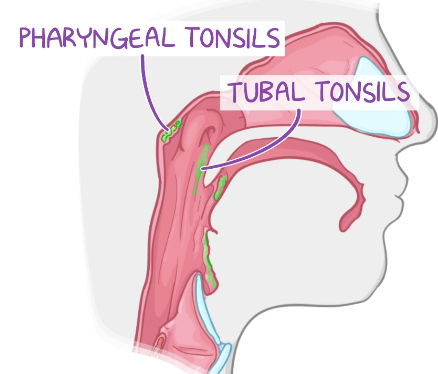
Pharynx contains lymphoid tissue called what
Tonsils

Name the following structures
What separates the oropharynx and the oral cavity
Palatoglossal Arch

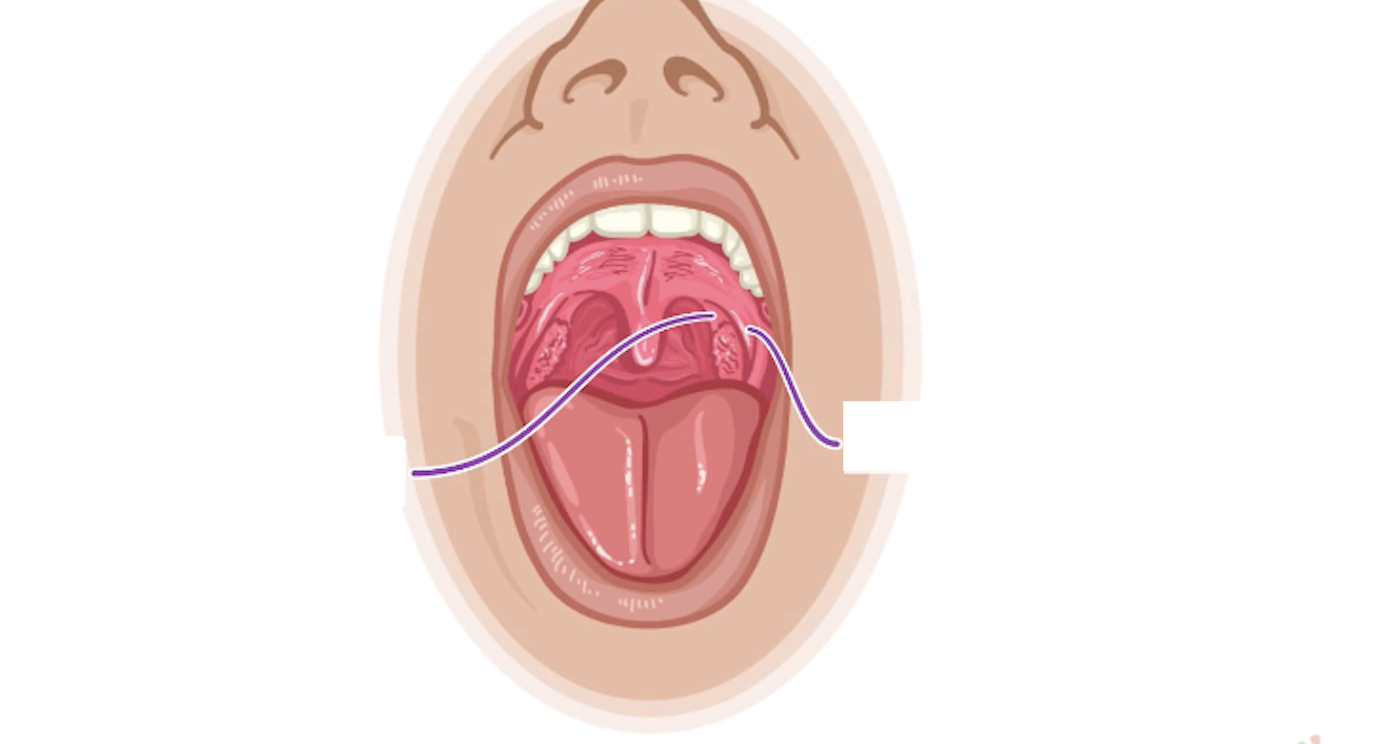
Name the following structures

Identify the following structures? and what do all these structures form


Which tonsils make up the anterior inferior part of the waldeyer ring
Lingual Tonsils

Which tonsils make up the LATERAL part of the waldeyer ring
Palatine and Tubal tonsils
Which tonsils make up the posterior inferior part of the waldeyer ring
Pharyngeal Tonsil
Laryngopharynx extends from ______ and _____ to ______
Extends form superior border of epiglottis and pharyngeoepiglottic folds to inferior border of cricoid cartilage

How does the laryngopharynx communicate with the larynx
Via the laryngeal inlet

Label
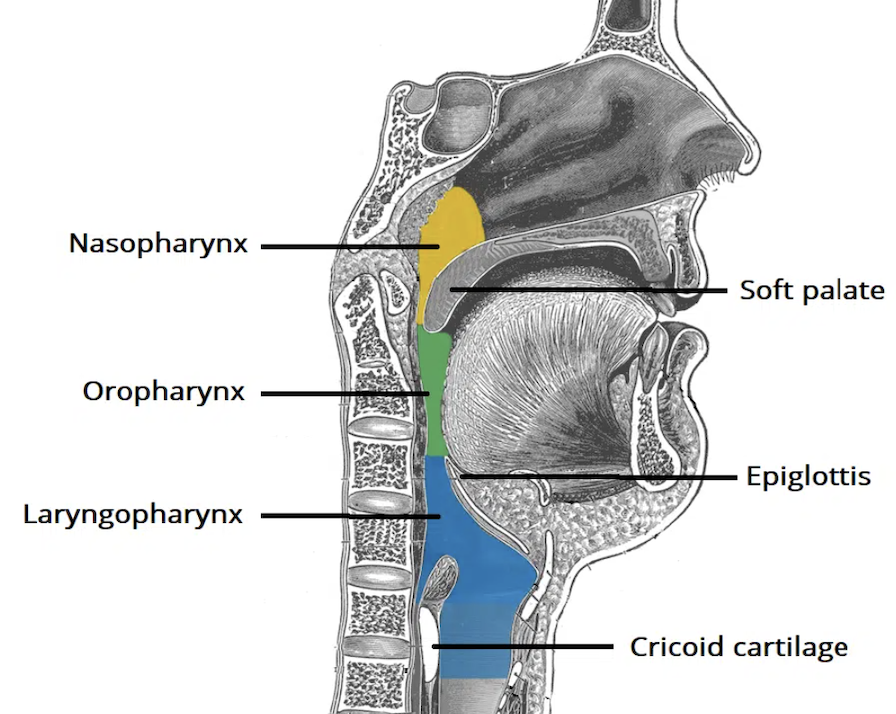
What must happen to the soft paalt during swallowing, and what would happen if it did not?
During swallong, the soft palate elevates superiorly and posteriorly to close off the nasopharynx, preventing food or liquid from moving superiorly into the nasal cavity. If it did not elevate preoperly, food or liquid could pass superiorly into the nasopharynx and nasal cavity, causing nasal regurgitation
What is the pahryngeal constirctors
Trio of circular skeletal muscle that form the outer msucular wall of the pharynx and contract to push food down into the esophagus


Superior consitrictor
Middle pharyngeal
Inferior pharyngeal
identify these structures

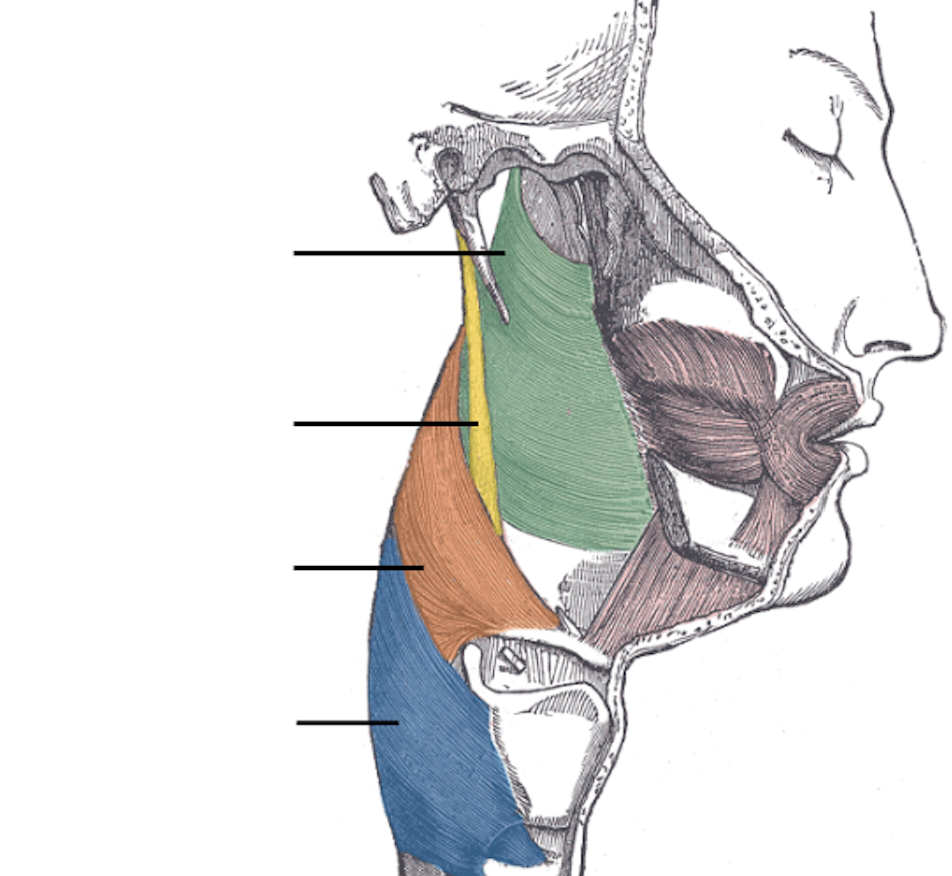


The Pharyngeal constirctors
How do the pharyngeal constrictors move a bolus?
The superior, middle, inferior pharyngeal constrictors contract sequentially, creating a wave that pushes the bolus inferiorly thorugh the pharynx toward the eosophagus
How do the suprahyoid and infrahyoid groups contribute to movement and stabilization of the hyoid–laryngeal complex during swallowing?
Suprahyoid muscle: Pull the hyoid and larynx superiorly and anteriorly during swallowing. This protects the airway and assists with opening the upper esophageal sphincter so the bolus can pass
Infrahyoid muscle: Mainly stabilize the hyoid and, after the swallow, help pull the hyoid and larynx back toward their resting position.
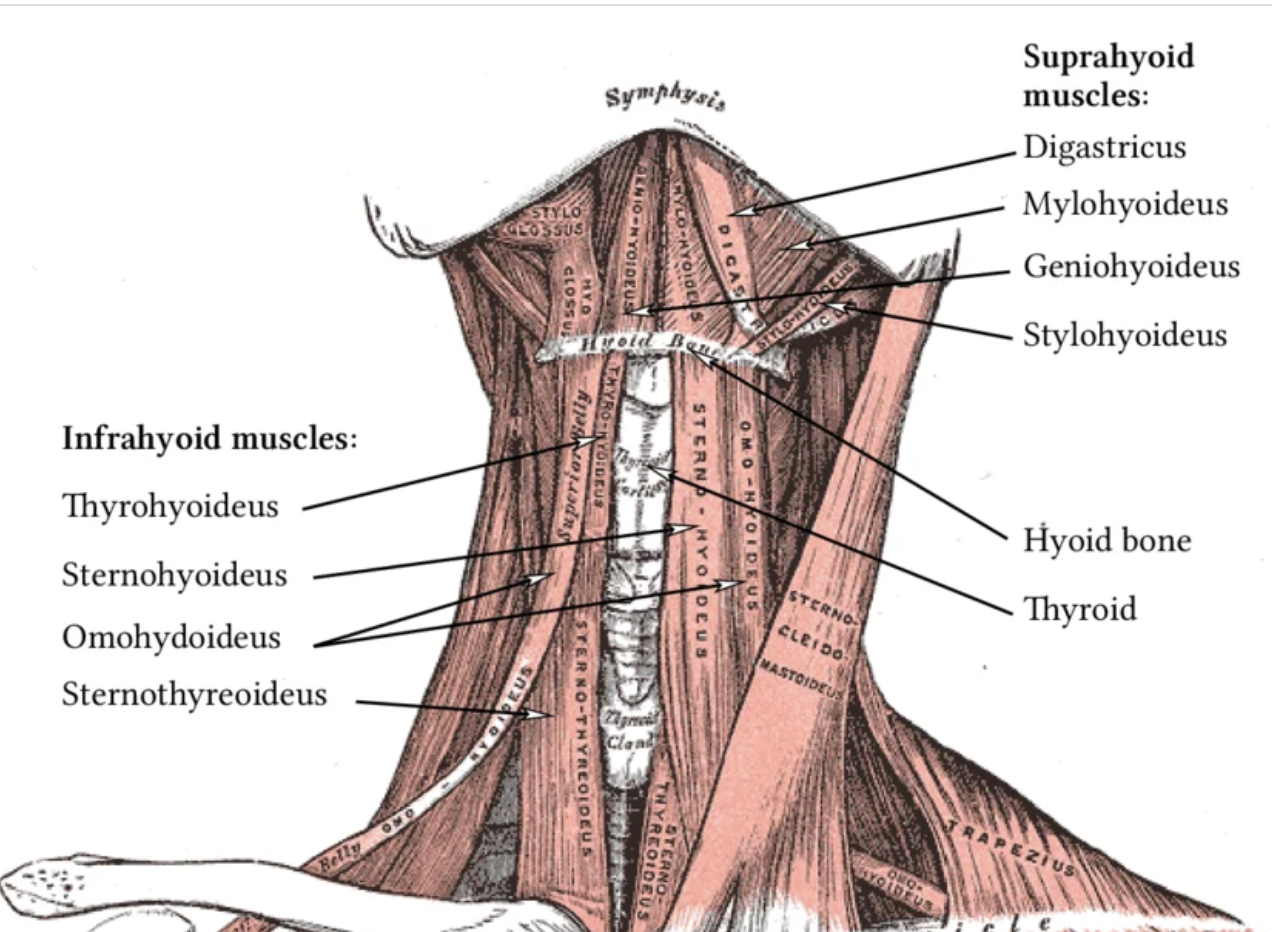
Label this diagram

What are the broad sesnory and motor roles of CN IX and X in this region for the pharynx during swallowing
CN IX: mainly sensory → detects touch/bolus in the oropharynx and helps trigger the swallowing reflex
CN X: mainly motor → provides motor innervation to most pharyngeal muscles (pharyngeal contrictors)
The nasopharynx extends from ____ to ____
what does it conduct
Tonsils present
Posterior nasal apertures → soft palate
Conducts ONLY air
Pharyngeal and tubal tonsils
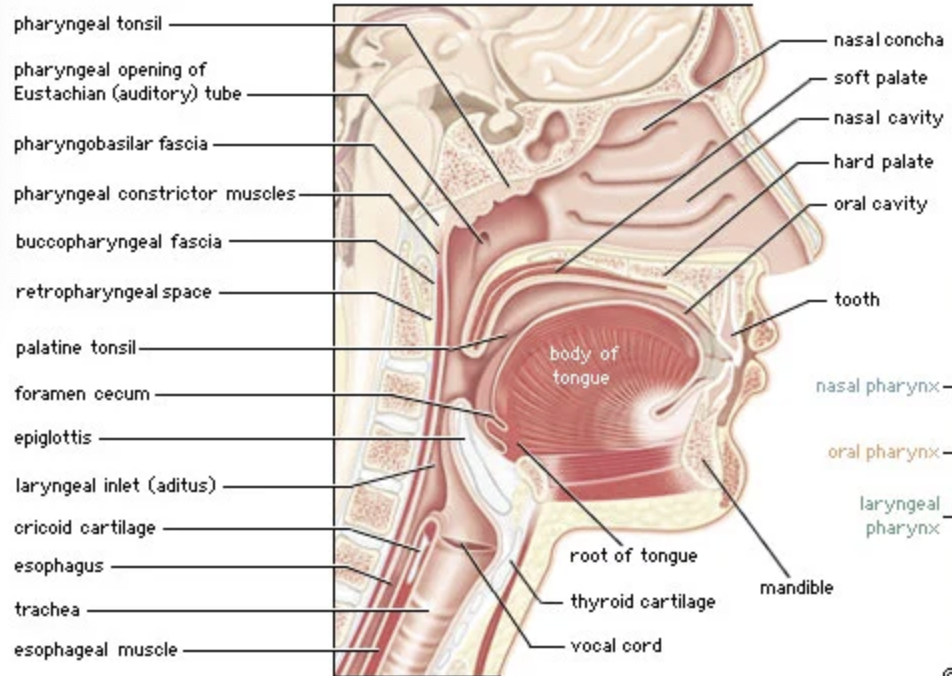
The oropharynx extends from ____ to ____
what does it conduct
Tonsils present
Superior border of soft palat to superior border of epiglottis
BOTH air, food/liquid
Palatine tonsils + Lingual tonsils
The Laryngopharynx extends from ____ to ____
what does it conduct
Tonsils present
Superior border of epiglottis and pharyngeoepiglottic folds to inferiorborder of circoid cartilage
Both air, food/liquid
None
What is the pathway of air through the pharynx
Nasal cavity → Nasopharynx → Oropharynx → Laryngopharynx → Larynx → Lower airway
What is the pathway of food/liquid through the pharynx
Oral cavity → oropharynx → laryngopharynx → oesophagus
What is the role of the epiglottic cartilage in the larynx
Leaf-shaped cartilage above the inlet; moves with the tongue base and hyoid-laryngeal complex to help close the entrance

What is the role of the thyroid cartilage in the larynx
Largest laryngeal cartilage; protects the vocal folds and provides attachment for laryngeal and ligaments
What is the role of the circoid cartilage in the larynx
Complete ring of cartilage inferior to the thyroid cartilage; supports the larynx and connects it to the trachea
What is the role of the arytenoid cartilage in the larynx
Paired cartilage that move and postion the vocal folds allowing them to open or close
What is the role of the laryngeal cartilage in the larynx
Suprior opening into the larynx; remains open for breathing and closes / protects the airway during swalloing
What is the role of the vestibular folds / false vocal cords in the larynx
False vocal folds located superior to the true vocal folds; help protect and close the airway during swallowing
What is the role of the true vocal folds in the larynx
Vibrate to produce soundl abduct for breathing and adduct for phonation and airway protection
What is the role of the rima glottidis in the larynx
Opening between the true vocal folds; widens during breathing and narrows/closes phonation and airway protection
How does vocal-fold position differ during quiet breathing and during phonation?
During quiet breathing, the true vocal fold are abducted (moved laterally), opening the rima glottidis so air can pass. During phonation, they adduct (move medially), narrowing the rima glottidis so airflow causes the vocal folds to vibrate and produce sound
How does elevation of the hyoid–laryngeal complex, together with the epiglottis, protect the airway during swallowing?
This movement, together with movement of the tongue base, helps the epiglottis fold posteriorly over the laryngeal inlet, directing the bolus away from the airway and toward the oesophagus.
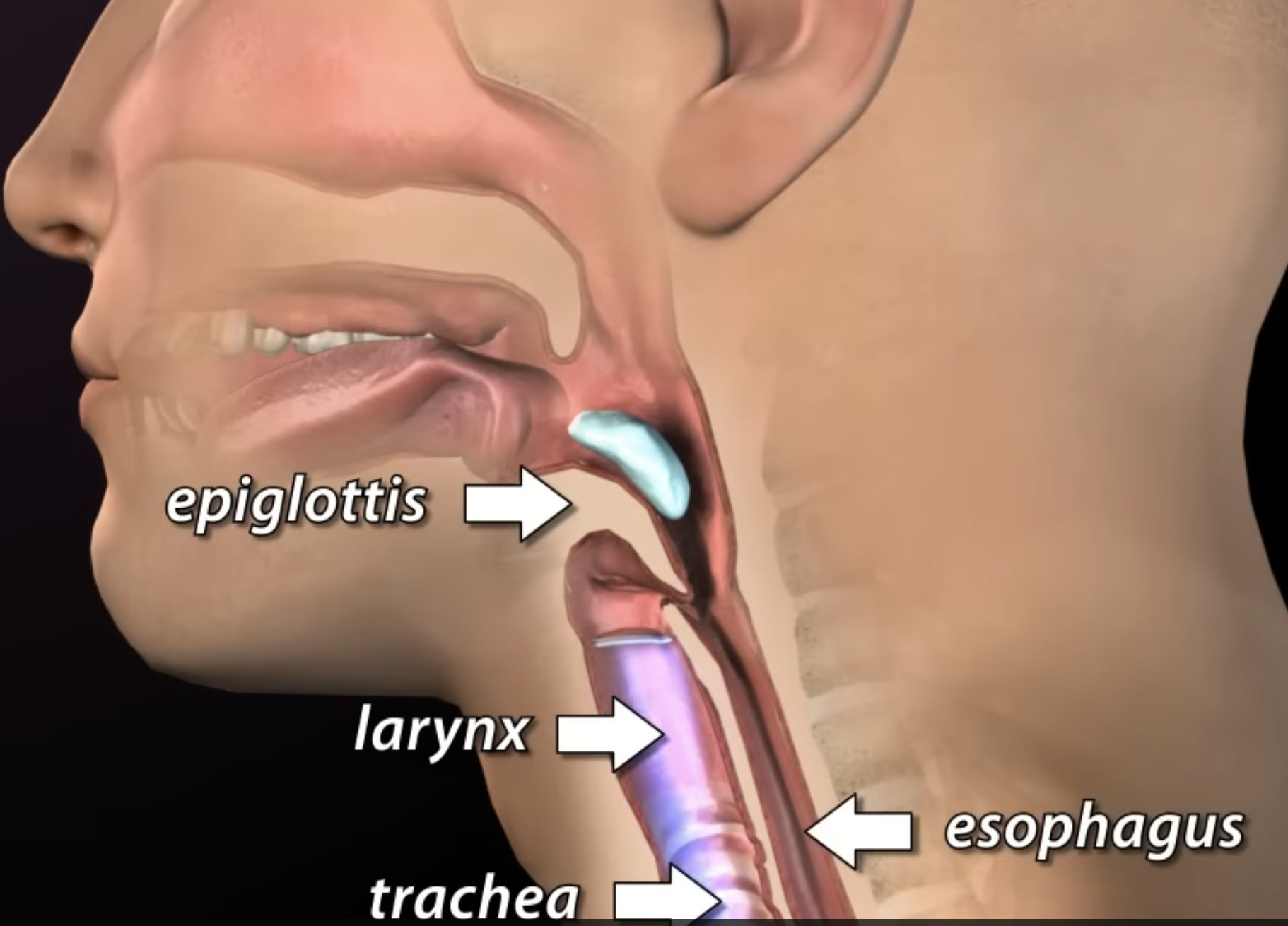
What broad roles do the suprahyoid and infrahyoid groups play in moving and stabilising the hyoid and larynx?
The suprahyoid muscles elevate and pull the hyoid–laryngeal complex anteriorly during swallowing. The infrahyoid muscles stabilize the hyoid and help return the hyoid and larynx inferiorly toward their resting position after swallowing.
Posterior circoarytenoid main action and vagal branch supplying it
Main action: main abductor of the vocal folds
Vagal branch: recurrent laryngeal nerve (Vagus nerve CN 10)
Circothyroid main action and vagal branch supplying it
Main action: increases tension of the vocal folds
Vagal branch: external laryngeal nerve
What are the two functional muscles of the tongue and their main function
Intrinsic muscles: mainly change the tongue shape
Extrinsic muscles: change tongue position
What cranial nerve is responsible for GENERAL SENSATION for the anterior 2/3 of tongue
CN V3
What cranial nerve is responsible for TASTE for the anterior 2/3 of tongue
CN VII (Chorda tympani)
What cranial nerve is responsible for GENERAL SENSATION and TATSE for the posterior 1/3 of tongue
CN IX
What cranial nerve is responsible for tongue movement
CN XII

Label
