AP BIO UNIT 2 REVIEW PART 1
 Call Kai
 Learn
 Practice Test
 Spaced Repetition
 Match
 Flashcards
 Knowt Play
1/52

There's no tags or description
Looks like no tags are added yet.
53 Terms
Prokaryote
Single celled organisms, such as bacteria and archea

Eukaryote
Cells with membrane bound organelles. Found in animals, plants, and fungi.

Similarities between Eukaryotic and Prokaryotic Cells
-Ribosomes, Cytoplasm, Cytoskeleton, Plasma Membrane
-DNA and RNA for cellular replication
Differences between Prokaryotes and Eukaryotes
-Ribosomes float freely in Cytoplasm in prokaryotes, not eukaryotes
-Prokaryotes don’t have a nucleus, unlike eukaryotes
-No membrane bound organelles in prokaryotes, unlike eukaryotes
-Singular circular DNA in nucleoid for prokaryotes, unlike eukaryote's many and linear DNA in nucleus and nucleolus
-Prokaryotes generate energy across outer plasma membrane, eukaryotes generate energy with mitochondria/chloroplast
Organelles
Structure bound in their membrane in eukaryotes
Endomembrane Organelles
Nuclear Envelope, ER, Golgi Complex, Lysosomes, Vesicules, Plasma membrane
Energy Organells
Mitochondria and Chiroplasts
Compartmentalization
Creates separate environments for separate organelles
What does compartmentalization do?
Increases surface area for reactions to occur; prevents interfering reactions in the same place
Which organelles are unique to plants?
Chloroplast, Central Vacuole, Cell Wall, and plasmadesmasta
Which organelles are unique to animals?
Lysosomes, Centrioles/Centrosones, Cilia/Flagella, and Cytoskeleton
Nucleus
Has chromosomes, enclosed by 2x membrane, pores

Nucleolus
Dense region of nucleus where ribosonal RNA (rRNA) which build ribosomes

Ribosomes
Synthesize proteins

Where can ribosomes be found?
In the cytosol, called "free ribosomes" or in the ER, where they can leave it through transport vesicles
Endoplasmatic Reticulum
Synthesizes membranes, separates proteins formed in Rough ER from ribosomes (enzymes)
What are the types of ER?
Rough and Smooth ER
What does the Rough ER do?
Contains ribosomes bonded to it, houses proteins to late be transported

What does Smooth ER do?
NO ribosomes, synthesizes lipids, detoxifies the cell, and breaks down carbohydrates in useful parts
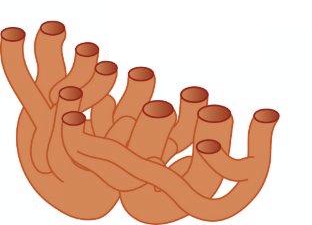
Describe the composition of the golgi body
Flattened separated membranous sacs called cistemane. Cis face at the front receiving vesicles from rough ER. Trans face at the end which sends vesicles into cytosol or plasma membrane for secretion

What is secretion?
Cells release their "goods" that are useful for the body and have a specific function, like proteins secreting enzymes
What are the functions of the Golgi apparatus?
Receives transport from Rough ER, modifies them and sorts them, adds molecular tags, and packages them in transport vesicles to exit the membrane via exocytosis
Lysosomes
Only in animals. Contains hydrolytic enzymes which hydrolize macromolecules, break down fats, and recycle molecules' goods for the body

Peroxisomes
Break down H2O2 into water

Types of Vacuoles
Food vacuoles, contractile vacuole (maintains water level), and central vacuoles only in plants that have water and is key to turgor pressure

What does the endosymbiont theory state?
A once small prokaryotic cell was engulfed by a large eukaryotic cell, becoming mitochondria/chloroplast and endosymbient, used to explain similarities of mithocondria and chloroplast compared to a prokaryote
Evidence for Endosymbiont Theory
double membrane, ribosomes, circular DNA, capable of functioning on their own
Mitochondria
Double membrane: outer smooth, inner has folds called cristae dividing it into internal compartments which increases SA, and intermembrane which separates outer and inner membrane

Functions of mitochondria
powerhouse of the cell; generates ATP through cellular respiration
Cells with high metabolic activity will have________________
more mitochondria
Chloroplast
Site of photosynthesis; contains chlorophyll

Structure of chloroplasts
Thylakoids, membranous sacs, that stacked are called grana, stroma in the fluid around thylakoids that has chloroplasts DNA, ribosomes and enzymes
Cytoskeleton
Networks of fibers through cytoplasm

Functions of cytoskeleton
-Structural and mechanical support
-Anchors organells
-Movement of vesicles, organelles and entire cells
-Anchors organells
-Movement of vesicles, organelles and entire cells
Cytoskeleston's Microtubules
Rod-like structure made of tubulin, provide structural support for organelle movement, assists in sepsration of chromosomes, and help cell movement through cilia or flagella

Cytoskeleton Microfilaments
Thin solid rods made of actin. Maintains shape in contractions and mobility, division of animal cells
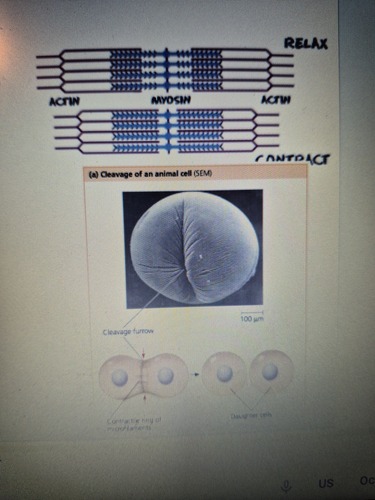
Cytoskeleton: Intermediate Filaments
Fiberous protein made of many subunits. Maintains cell shape, anchors nucleus and organelles, lines nuclear envelope.

Size of a cell will dictate_________________
The cell's function
Cells need a high________ to _________ exchange of materials through the plasma membrane
SA to Volume ration; efficiently

Which organelle is this?
It's the Nucleus

Which organelle is this
It's the Nucleolus

Which organelle is this
It's the Ribosomes
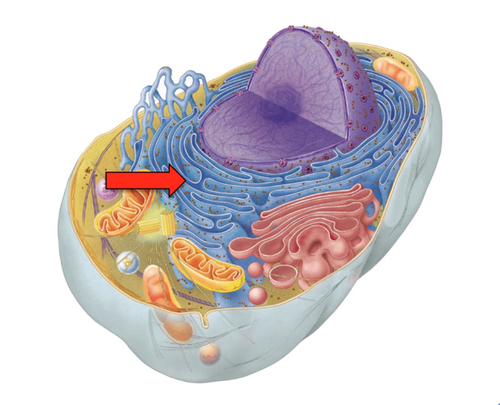
Which organelle is this
It's the Rough ER

Which organelle is this
It's the Smooth ER
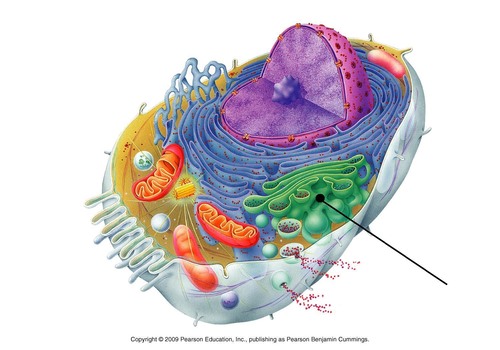
Which organelle is this
It's the Golgi Body

Which organelle is this
It's the Lysosomes

Which organelle is this
It's the Peroxisomes

It's the Vacuole

Which organelle is this
It's the Mitochondria

Which organelle is this
It's the Chloroplast

Which organelle is this
It's the Cytoskeleton