Managing patients at risk of bleeding
 Call Kai
 Learn
Learn Practice Test
 Spaced Repetition
 Match
Match Flashcards
 Knowt Play
1/53

There's no tags or description
Looks like no tags are added yet.
Name | Mastery | Learn | Test | Matching | Spaced | Call with Kai | Chat |
|---|
No analytics yet
Send a link to your students to track their progress
54 Terms
Risk assessment:
What histories are important?
who is responsible for undertaking these?
Medical and drug history will identify patients at risk and help you plan measures to reduce chances of a problem arising
Modifying planned tx or referral to hospital may be appropriate because of general health or for some dental procedures
History to be taken by the dental practitioner

What scoring system can be used to help with risk stratification?
ASA classification

What is the ASA classification?


Try to understand a bit more about their condition, e.g is it well-controlled?, under consultant care?
Name specific haematological disorders associated with increased risk of post-op haemorrhage? (5)
Leukaemia
Lymphoma
Bleeding disorders (Haemophilia A/B, VWD)
Anticoagulant therapy
Antiplatelet therapy
Leukaemia:
What are problems associated with leukaemia (acute and chronic) (9)
Oral infections, immunocompromising, anaemia, gingival swelling, ulceration, bleeding
May have hep B or C, HIV or be receiving Corticosteroid tx

Leukaemia:
Management of leukaemia (4)
Elective dental tx should be postponed until remission period
Infections treated aggressively with AB and AF (they are IM)
NSAIDs - can cause gastrointestinal bleeding
LA blocks should be avoided

Lymphoma:
How does it present?
Problems associated with lymphoma?
What are 2 complications following mediastinal irradiation?
Management similar to what?
Enlarged cervical lymph nodes
Oral infections, immunocompromised, bleeding, anaemia (similar to those with leukaemia)
Cardiac issues and impaired respiratory function
Similar as for leukaemia

Bleeding disorders:
haemostasis consists of 3 main things?
Vessel constriction, platelet plug formation and coagulation cascade
Defects of any component will be of significance in dentistry
Bleeding disorders:
What should you do with patients with bleeding disorders before attempting tx ideally in what setting?
Who could become involved with tx planning?
What should be avoided in terms of LA
Patients should be investigated and managed in the hospital setting even for tx under LA
Haematologist
Blocks should be avoided
Thrombocytopenia:
Patients with platelet count below what require a platelet transfusion?
50 × 10^9/L

What can be done with regards to specific coaguation defects?
Coagulation factor replacement is required
Emergency management of a bleeding patient may involve giving the patient what? (2)
Giving fresh frozen plasma and vitamin K

Anticoagulation therapy:
Anticoagulants may be used in the treatment of what? (4)
Preventing venous thrombosis and embolism in rheumatic heart disease and atrial fibrillation
Atrial fibrillation and valve heart disease
Tx and prophylaxis of deep vein thrombosis and pulmonary embolism
Stroke prophylaxis
Mechanical heart valves

What does warfarin inhibit?
Inhibits vitamin K dependent synthesis of clotting factors
Factors: 7,9,10,prothrombin 2
This affects the formation of fibrin clot

Anticoagulation therapy:
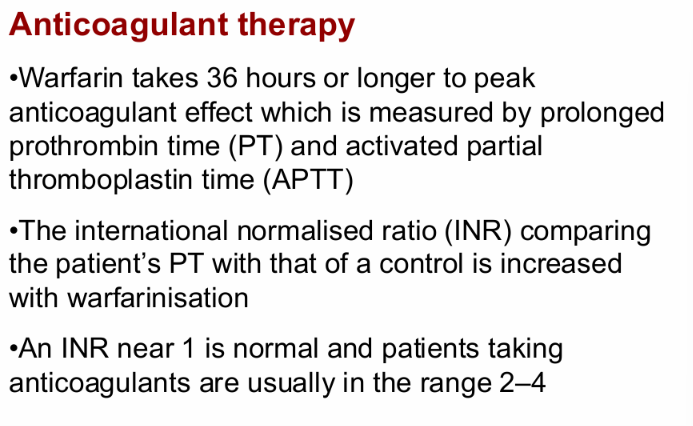
How long does it take for warfarin to get to peak anticoagulant effect?
warfarin’s anticoagulation effect can be measured using what ? (2)
What is the usual INR for patients taking anticoagulants compared to that of normal?
36 hours or longer
Prothrombin time (PT) and activated partial thromboplastin time (APTT)
2-4 in anticoagulated pt, INR of 1 is normal
Pts within normal range, do they require any changes to their warfarin dose?
When should the INR measurement be carried out?
May not require any change to their warfarin dose for minor surgery but should be warned that there is an increased risk of bleeding after surgery
Local measures for haemostasis are likely to be adequate
within 24 hours preferably on the day of surgery

What happens if a patient bleeds (on warfarin)?
transferred to hospital for haematological management - administration of vitamin K by slow IV injection or fresh frozen plasma
What type of injections and LA techniques should be avoided in all patients with a haemostatic disorder or on anticoagulants and alt (2) techniques?
Intramuscular injections
ID nerve block - infiltration or intraligamentary injections techniques used instead

What medications can interact with Warfarin?
Metronidazole, erythromycin, amoxycillin
Aspirin, NSAIDs
(azole antifungals - from prev lectures)

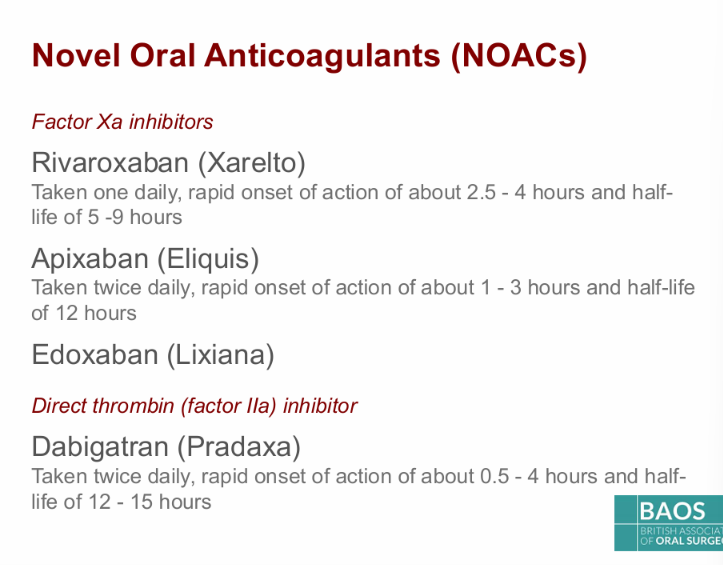
NOACs
name some, and what do they inhibit?
Rivaroxaban, apixaban, edoxaban, - Factor 10a
dabigatran - thrombin (factor 2a) INHIBITOR
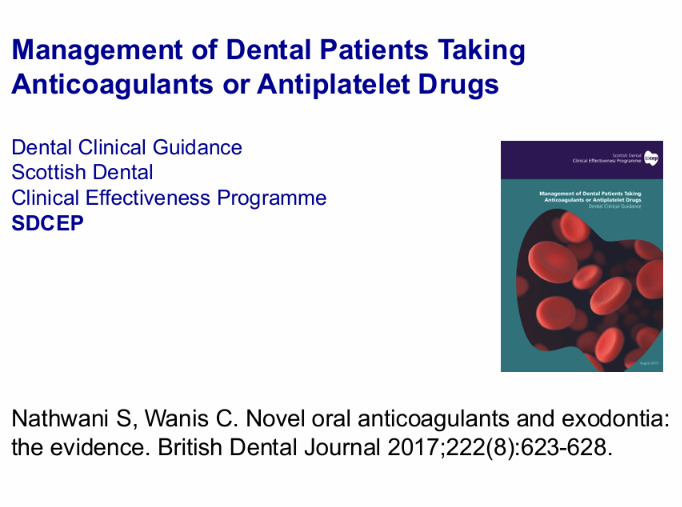
What can be used for guidance with regards to the NOACs?
SDCEP
Brief advice for NOACs?
Low risk of bleeding procedure - treat without interrupting their anticoagulant medications
High risk of bleeding procedure - advise to miss (DA)/delay(R) their morning dose on the day of their treatment

What should the patient be informed of if they are taking NOACs before dental treatment as part of the consent process?
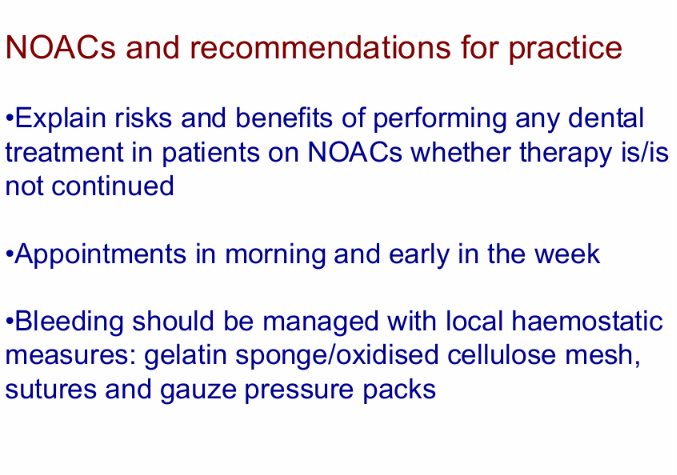
Appointments ideally at what times?
How is bleeding managed?
Risks and benefits
Morning and early in the week
Oxidised cellulose, sutures, gauze pressure packs
More recommendations for practice?
What do do with multiple extractions?
Certain drugs to avoid concomitant use of?
What if the patient is on a limited course of therapy or at the start of therapy (where initial doses may be higher)?
Staged
NSAIDs
Delay invasive dental procedures

Severe post op bleeding is managed how?
Application of mechanical pressure
Haemostatic measures
Maintenance of intravascular volume with fluid replacement

Antiplatelet therapy
Name some antiplatelet medications? (3)
Which will have more prolonged bleeding, is it a problem?
multiple extractions?
Aspirin, clopidogrel, dipyridamole,
Aspirin and dipyridamole - in minor surgery this may not be clinically significant
Staged - maximum of 3 per visit

Antiplatelet therapy:
Management?
In significant surgery what might be done?
What combination of antiplatelets should be referred to a specialist?
Haemostatic dressing placed in socket and sutured using resorbable material
Managed in hospital, antiplatelet therapy may be stopped before surgery
Aspirin + Clopidogrel

Hepatic disease:
Clotting dysfunction:
What should be arranged and confirmed before tx/surgery?
Why should these patients be managed in hospital?
Diagnosis and severity by arranging for coagulation screen
Patients may need vitamin or fresh frozen plasma to correct coagulation

Hepatic disease:
alcohol
What alcohol intake would warrant further investigations and what investigation would that be?
High number of units of alcohol
Liver function test

Hepatic disease:
Drugs
Name some drugs to be cautious of?
Any drug prescribing should include what?
Paracetamol, NSAIDs and sedatives
Reference to a drug formulary
Difficult to predict the impairment of a drug metabolism even when using liver function tests

Hepatic disease
can cause problems with production of what factors?
Fibrinogen (later converted to fibrin) and clotting factors 2,5,7,8,9,10,11,12,13
drug metabolism

What other hepatic disease can be an issue in terms of cross-infection?
Hepatitis

What is tranexamic acid?
Antifibrinolytic drug

What 2 procedures are high risk?
extractions and surgical extractions
Reduction of risk for extractions? (3)
Reduce number of extractions for high risk patients (staged)
Not Friday afternoon
Telephone at 24 hours

Surgical removal of teeth?
What vessel may be sacrificed if doing a flap on the palate?
Manage?
Incisive foramen vessels
Pressure with oxidized cellulose mesh
Bone wax - must be removed as not resorbable
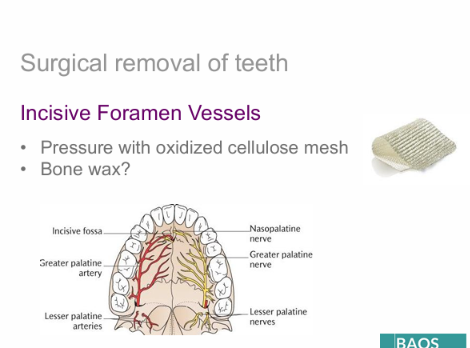
Surgical removal of teeth, what artery is at risk?
management?
palatal artery
pressure with oxidized cellulose mesh
suture with vicryl

Management of haemorrhage:
Post dental extraction
Bleeding usually stops x minutes after extraction
why might it prolong?
10 minutes
Mucosal tear or from the bone of the socket

Reactive haemorrhage:
What is it, how common is it?
After effects of the LA with adrenalin vasoconstriction has worn off
several hours after
not very common

Secondary haemorrhage:
caused by what? how common is it?
caused be secondary infection of clot
several days later
rare

Post dental extraction haemorrhage: what advise might you give patients?

How to measure blood lost if bleeding occured?
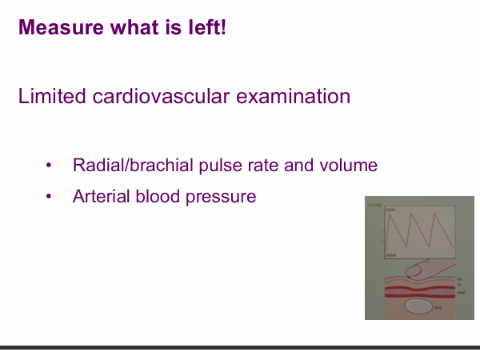
measure what is left
pulse rate and volume and arterial blood pressure
(loss of blood increases HR and decreases blood pressure due to reduction in blood volume)
How to take BP?

Boundaries for bradycardia and tachycardia?

Blood loss can cause what condition?
hypovolemic shock
Severity of the shock will depend on what?
Severity of the haemorrhage and length of time
What is shock and symptoms/signs? (5)
Inadequate tissue perfusion to meet tissue demands
hypotension, decreased urine, increased HR, restlessness, cyanosis of extremities

Mild vs moderate and severe shock?

Management of shock?

If pt comes to primary care with bleeding what should you do? 3 things to prepare
do what before to inform management?
(vomit of they swallowed blood as it can irritate the stomach)
Good light and suction
Appropriate clothing
Identify source of haemorrhage: socket, gingival margin, mucosal tear
Management if bleeding is from socket? (2 main)

Management if it is from gingival margin or mucosal tear?
Suturing

Summary