Hirschsprung’s Disease
 Call Kai
 Learn
 Practice Test
 Spaced Repetition
 Match
 Flashcards
 Knowt Play
1/6

There's no tags or description
Looks like no tags are added yet.
7 Terms
Hirschprung’s Disease
Hirschsprung’s disease is a congenital condition where ganglion cells of the enteric nervous system are absent in a distal portion of the bowel, most often the sigmoid colon and rectum.
Enteric Nervous System
The enteric nervous system (the brain of the gut) consists of two plexuses:
Myenteric plexus (Auerbach’s plexus), primarily responsible for peristalsis
Submucosal plexus (Meissner’s plexus), regulates fluid secretion, blood flow and absorption
Pathophysiology Of Hirschsprung’s Disease
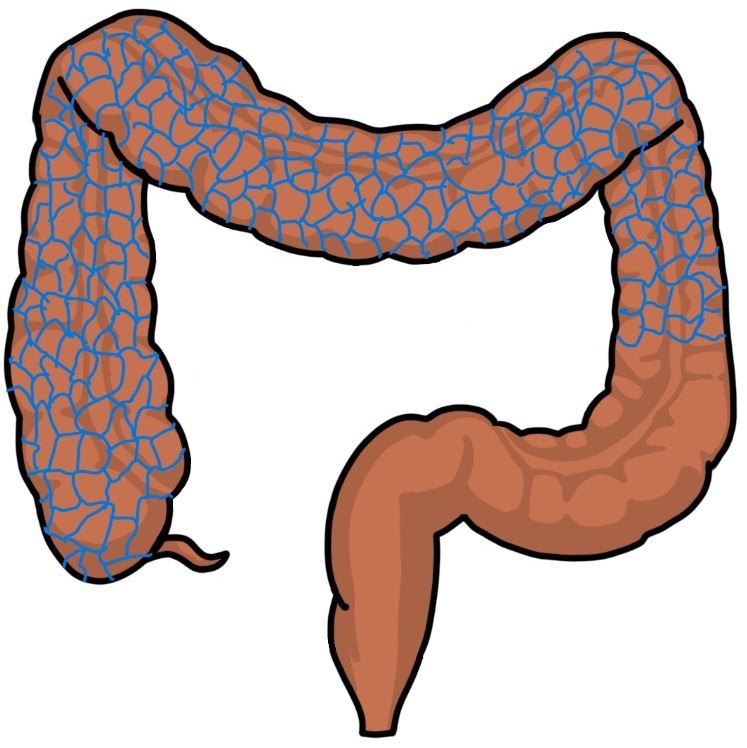
In Hirschsprung’s disease, the ganglion cells of the myenteric plexus and submucosal plexus are absent→ ganglion cells do not migrate down the colon so a section is not covered→ leads to constriction and bowel obstruction
Genetic Conditions Associated With Hirschsprung’s Disease
Down’s syndrome
Waardenburg syndrome (a genetic condition causing pale blue eyes, hearing loss and patches of white skin and hair)
Neurofibromatosis type 1
Multiple endocrine neoplasia type II
Presentation Of Hirschsprung’s Disease
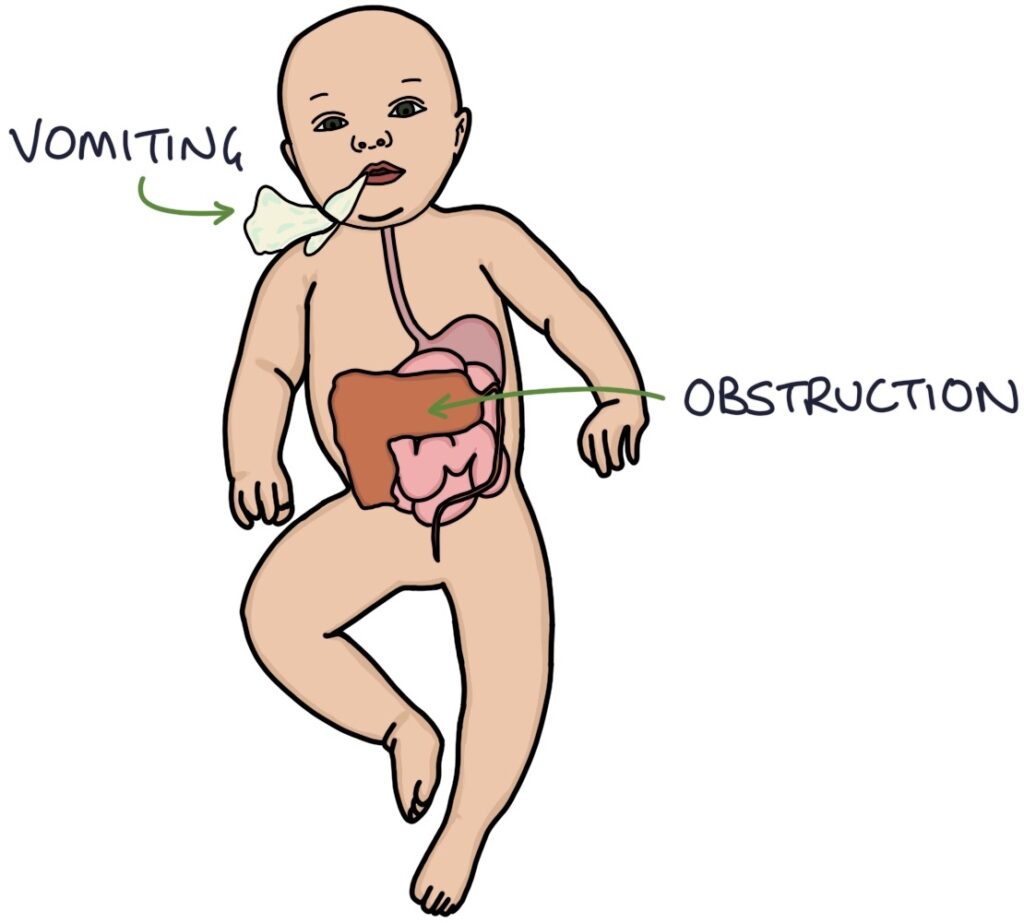
It can present shortly after birth with acute intestinal obstruction, with:
Absent meconium
Abdominal distension
Vomiting
Delay in passing meconium (more than 24 hours)
Chronic constipation (starting at birth)
Poor weight gain and failure to thrive
Management Of Hirschsprung’s Disease
Rectal biopsy to confirm diagnosis → absent ganglion cells
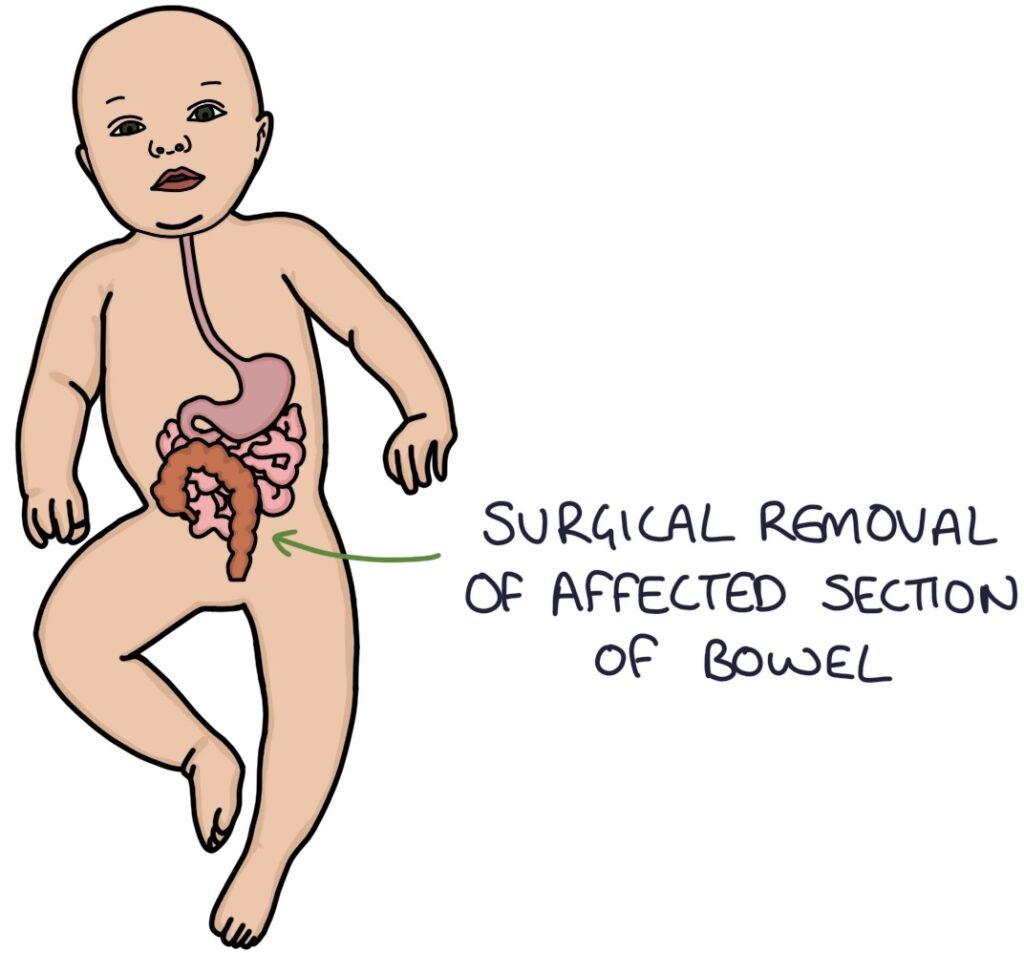
Surgical removal of aganglionic section of bowe
Hirschsprung-Associated Enterocolitis
Inflammation of intestine. It presents with:
Fever
Abdominal distension
Diarrhoea (often with blood)
Features of sepsis
HAEC is life-threatening and can lead to toxic megacolon and perforation of the bowel. It requires urgent antibiotics, fluid resuscitation and decompression of the obstructed bowel.