Chapter 11: Gene expression and epigenetics
 Call Kai
 Learn
 Practice Test
 Spaced Repetition
 Match
 Flashcards
 Knowt Play
1/16

There's no tags or description
Looks like no tags are added yet.
17 Terms
Transcriptome
collection of mRNA molecules in a cell

Single-cell transcriptomics
biotechnology used to identify all individual mRNAs in a cell at a given time n circumstance


Chromatin remodelling
adding/removing chemical groups to histones
stop/start gene expression

microRNAs
binds to certain mRNAs to block their translation into protein
21-22 bases long

Acetyl and phosphate groups
enables gene expression
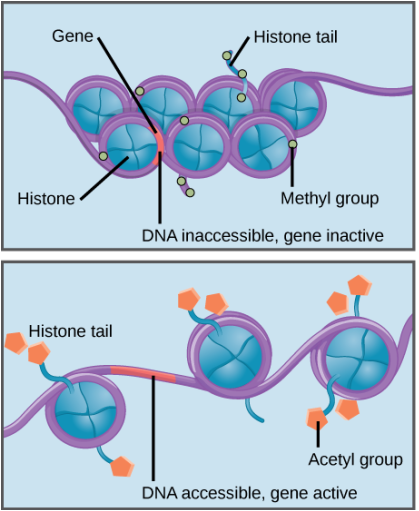
Methyl groups
STOPS gene expression
Microproteins
Fit into spaces of large proteins, affecting their folding and function
Gene expression as pancreas develops
Stem cell divides into a progenitor cell, forming endocrine and exocrine parts

Proteomics
Biotechnology measuring levels of proteins in many places and conditions

Alternative splicing
process where exons of a pre-mRNA are reconnected in multiple combinations
allows a single gene to code for multiple distinct proteins.
number of protein encoding genes in human genome vs how many end up produced
20,000 GENES create 100,000 PROTEINS

Post-translational cleavage
The process where a single large precursor protein is cut by enzymes into smaller, independent, functional proteins

Post-translational modifications
Chemical changes made to a protein after its synthesis altering its structure, function, or cellular destination.
evolutionary benefit to maximizing genetic info
keeps DNA database lightweight while allowing body to meet complex biological demands
Glycoprotein
A carbohydrate
added as a post-translational modification
chemically bonded to protein to change their function
Lipoprotein
Fat.
added as a post-translational modification
chemically bonded to protein to change their function

Introns vs Exons
In: discarded during splicing. does not code for protein
may act as exons to expand protein diversity
Ex: Coding sequences of DNA/RNA that are expressed and kept in the final mature mRNA.