Slides w2
 Call Kai
 Learn
Learn Practice Test
 Spaced Repetition
 Match
Match Flashcards
 Knowt Play
1/25

There's no tags or description
Looks like no tags are added yet.
Name | Mastery | Learn | Test | Matching | Spaced | Call with Kai | Chat |
|---|
No analytics yet
Send a link to your students to track their progress
26 Terms
Features
Feature-Based Supervised Learning
Features = attributes/properties of the object you want to classify
Classifiers rely on features encoded as dimensions in vectors (interpretable)
Logistic Regression is part of the family: Feature-Based classifiers
Reductionist Perspective
Feature Encoding
Reductionist Perspective
Explains the behavior of large structures through the combined actions of smaller primitives (e.g., matter → atoms; word meanings → semantic features).
Feature Encoding
manual selection
features can be very diverse and can combine different information
Feature Types (NLP example)

Feature-based ML algorithm
3 feature-based classifiers
Each feature-based ML algorithm uses features differently to learn “how to put things in different boxes”
We will look into 3 feature-based classifiers:
Decision Trees
Naïve Bayes
Support Vector Machines (SVM)
Feature-based classifiers
Decision Trees: Overview

Feature-based classifiers
Decision Trees: Training

Feature-based classifiers
Decision Trees: Properties

Feature-based classifiers
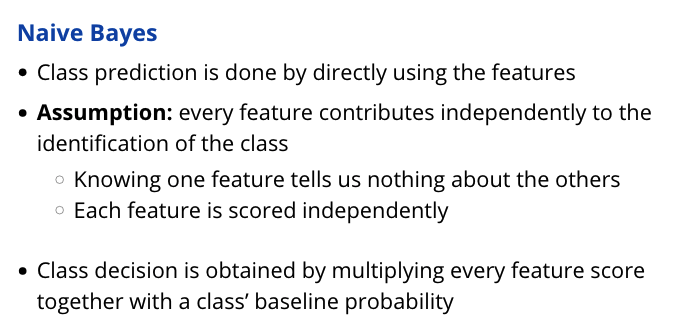
Naïve Bayes: Overview
Feature-based classifiers
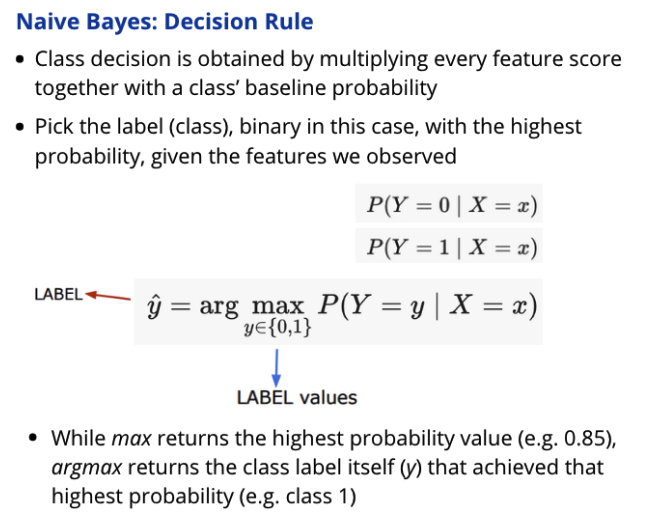
Naïve Bayes: Decision Rule
Feature-based classifiers
Naïve Bayes: Bayes Rule

Feature-based classifiers
Naïve Bayes: Properties & Differences wrt DT and LR

Feature-based classifiers
SVM: Overview

Feature-based classifiers
SVM: Support Vectors

Feature-based classifiers
SVM: Margins

Feature-based classifiers
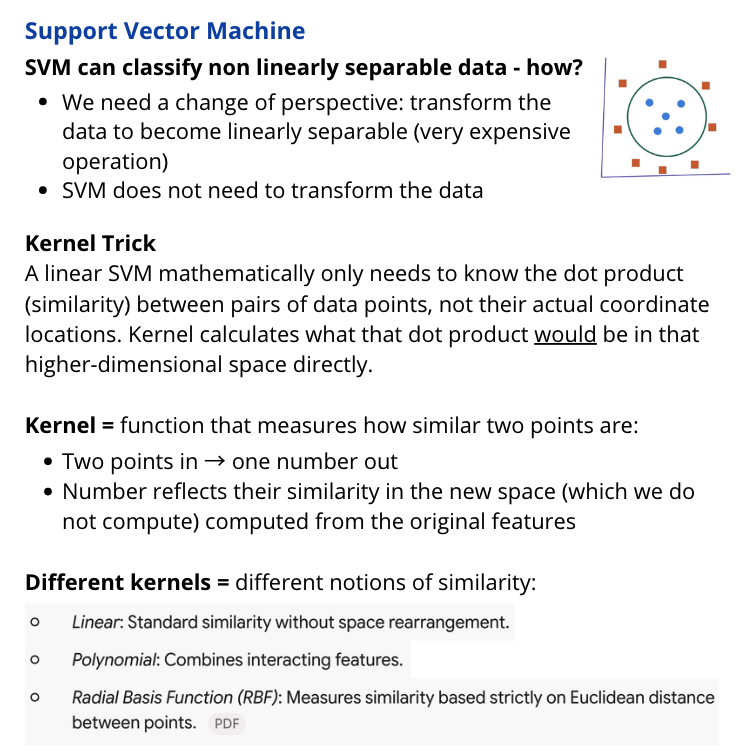
SVM: Non-linear
Unsupervised ML
Overview

Unsupervised ML
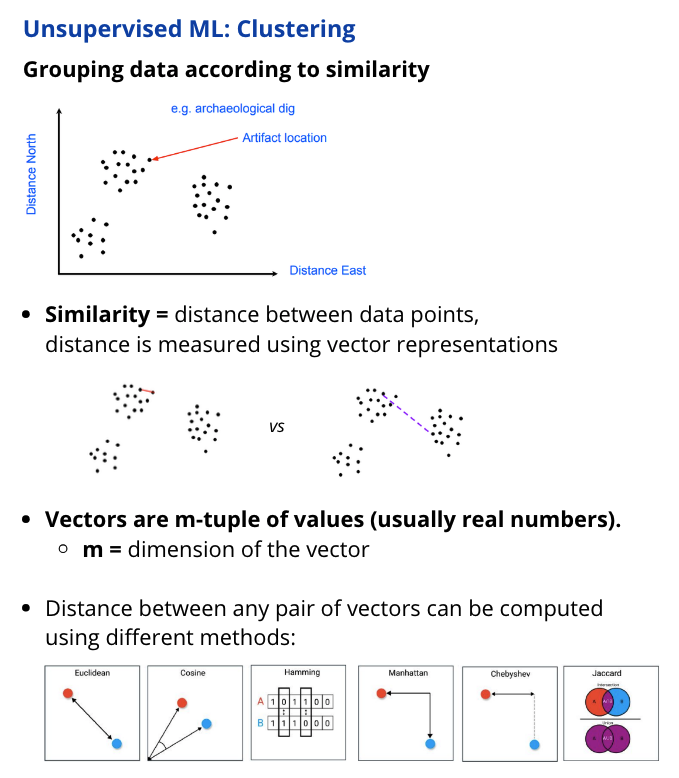
Clustering
Unsupervised ML
Clustering: K-means

Unsupervised ML
Clustering: K-means limitations & choosing K

Unsupervised ML
Evaluation

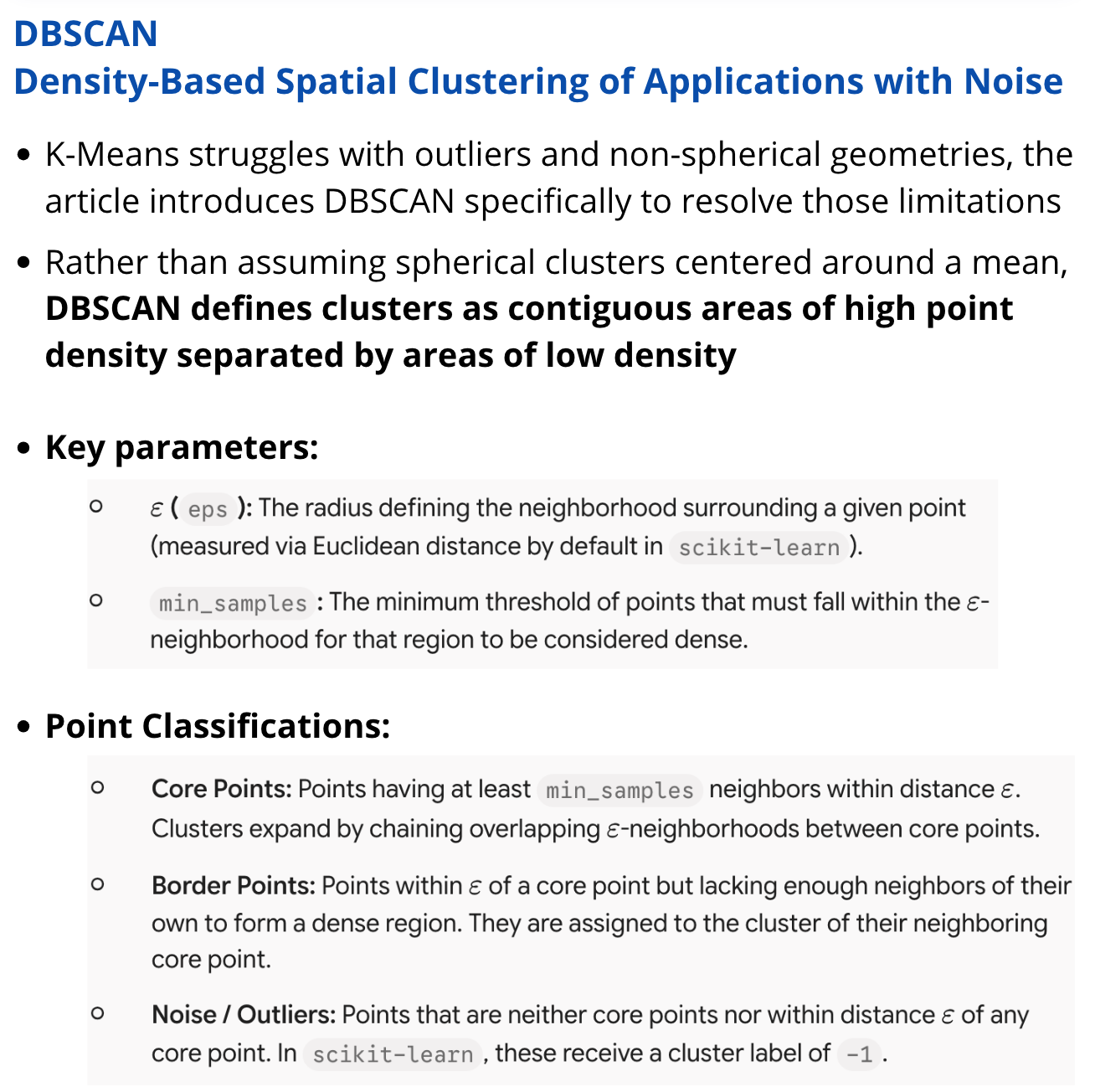
DBSCAN
Dimensionality Reduction via PCA
PCA (Principal Component Analysis) squashes those 13 dimensions down to just 2, while trying to keep the overall shape of the data.
Think of it as taking the most informative "photo" of the data from the best angle.

Kernel Trick vs PCA

Curse of dimensionality

K-means
Inertia
