Lesson 6 (Part 1) - Culture, Cognition, and Intellect: Thinking Through Cultures
 Call Kai
 Learn
Learn Practice Test
 Spaced Repetition
 Match
Match Flashcards
 Knowt Play
1/50

There's no tags or description
Looks like no tags are added yet.
Name | Mastery | Learn | Test | Matching | Spaced | Call with Kai | Chat |
|---|
No analytics yet
Send a link to your students to track their progress
51 Terms
Intelligence
It is defined as the capacity to learn from experience, think rationally, solve problems, and adapt effectively to new situations and the environment?
Sensation
It refers to the stimulation of sensory receptors
Perception
It refers to how we make sense of sensory information
Empiricism
It is the idea that all knowledge comes from our experiences
Rationalist
They acquire knowledge through thinking and logical analysis
Empiricist
They acquire knowledge via empirical evidence
Plato
Based on the discussion, he is the philosopher classified as Rationalist
Aristotle
Based on the discussion, he is the philosopher classified as Empiricist
Direct Realism
It suggests that our senses tell us all we need to know when perceiving real-world phenomena.
Perceptual Relativism
It dictates that we interpret objects and events, and are occasionally misled by them, courtesy of these experiences.
Nature
Genes and hereditary factors, physical appearance, and personality characteristics fall under the concept of ________.
Nurture
Environmental Variables, childhood experiences, how we were raised, social relationships, and surrounding culture fall under the concept of ________
Optical Illusions
These are pictures or objects that create false visual impressions.
Top-Down Processing
Which cognitive process uses prior knowledge, expectations, beliefs, and context to interpret and make sense of incoming sensory information?
Bottom-Up Processing
Which cognitive process builds perception starting directly from raw sensory data and individual stimulus features, moving upward to higher-level interpretation?
Environmental adaptation
According to Brunswik (1956), the development of diverse perceptual habits in response to diverse physical surroundings is a matter of ______?
Sensory information
Brunswik (1956) suggested that people living in visually distinct environments (forests, cities, open plains) necessarily perceive the world (and therefore visual illusions) in different ways because the ecology and architecture (or lack of it) in their surroundings prime them differently for dealing with incoming __________.
Carpentered world hypothesis
What hypothesis states that people who grow up in environments with rectangular walls, floors, and ceilings perceive the world differently from those whose environments have alternative ecologies?

Sander parallelogram illusion
Carpentered-world dwellers are likely to be more susceptible to which specific visual illusion involving 2D drawings of parallelograms?

Front-horizontal foreshortening hypothesis
Which hypothesis predicts that the physical environment we habitually experience affects how we perceive indicators of distance, such as vertical lines representing horizontal lines projected into the distance?

Horizontal-vertical illusion
According to front-horizontal foreshortening, these ecologically based differences in perception are likely to yield different responses to which visual illusion?

Open-space dwellers
According to the front-horizontal foreshortening hypothesis, which group of people will be most susceptible to the horizontal-vertical illusion?
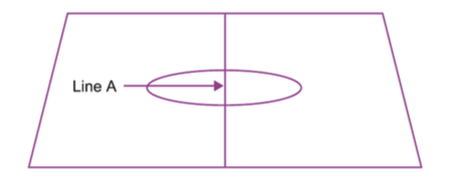
Cultural Background
Cross-cultural differences in mean illusion-susceptibility showed upon all three illusions, so the likelihood of being misled seemed to be related to _________
Westernized
On the Sander Parallelogram and the Muller-Lyer Illusion, ________ participants were most susceptible.

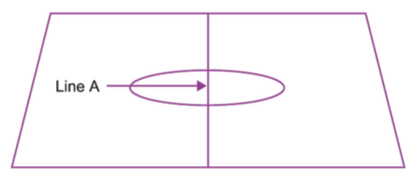
Banyankole
On the Horizontal-Vertical illusion, the ________ were more susceptible than westerners
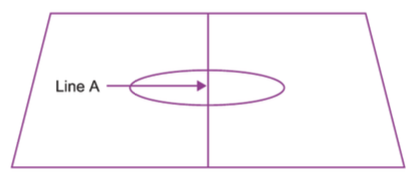
Bete
On the Horizontal-Vertical illusion, the ________ showed fewest illusion supported responses.
Carpentered world hypothesis
Westerners’ extra susceptibility to the Sandler parallelogram supports the predictions of which hypothesis?

Front-horizontal foreshortening hypothesis
On the horizontal-vertical illusion, the extra susceptibility of the open country dwelling Banyankole supports the predictions of the __________.

Front-horizontal foreshortening hypothesis
On the horizontal-vertical illusion, the lesser susceptibility of the forest dwelling Bete supports the predictions of the __________.

Ecologically Valid Inference Habits
Segall et al. (1990) concluded that findings on optical illusions accord well with a theory attributing perceptual tendencies to ______?
Age before ecology
Which limitation of Segall’s theory cites Stewart (1973) and Weaver (1974) to show that susceptibility to the Sander parallelogram and Müller-Lyer illusions declines with age?
Analytic sophistication
Which limitation of Segall’s theory suggests that as children grow older, the perceptual habit-forming effects of the environment are overridden by the acquisition of more sophisticated perceptual abilities?
Retinal pigmentation
Which physiological limitation affects the transmission of blue light (but not red), influencing visual perception independently of environmental habits?
Cultural Relativism
__________ in the portrayal of the three-dimensional world in two-dimensional pictures presumably reflects regional artistic conventions.
Schooling
Besides regional artistic conventions, what other factor has been linked to cultural differences in picture perception in general (and the use of depth cues in particular)?
Depth Cues
What devices are used by artists and illustrators to give their 2D drawings the impression of representing 3D objects and landscapes?
Familiar Size
Which depth cue is defined by objects that are far away being drawn smaller and those that are nearer being drawn larger?
Overlap
Which depth cue occurs when objects that are farther away are drawn as though they are obscured by those that are closer?
Convergence
Which depth cue involves two lines getting closer together to convey distance?
Density Gradient
Which depth cue occurs when drawing large numbers of homogeneous objects (such as bricks in a wall or books on a shelf) where those farther away are drawn smaller and closer ones are drawn larger?
3D Perceivers
Hudson's (1960) 3D perception study, participants who interpreted the picture as a man spearing the buck (rather than the elephant) were classified as ______?

Formal education
In Hudson's (1960) test for 3D perception, participants with a higher level of what factor were more frequently classed as 3D perceivers?

Deregowski's Trident Test
What test conducted on Zambian primary schoolchildren evaluated picture perception using a three-pronged figure illusion?

3D Perceivers
In Deregowski's trident test, which group of participants spent longer copying the illusion figure than the non-illusion figure because their perceptual ability made the task more difficult?

2D Perceivers
In Deregowski's trident test, participants classed as ______ spent the same amount of time copying both the trident illusion and the non-illusion picture.

Split-Style Drawing Test
What test conducted by Hudson (1960) deals with aesthetic (artistic) preference rather than 3D perceptual ability?

Split-Style
Drawing an object in a ______ typically shows more aspects of the object rather than a photographic representation.

Overlap
In Hudson's split-style drawing test, split-style preferences may appear unnatural to anyone accustomed to drawings that employ depth cues such as ______?

Culturally Relative
Hudson's study on drawing preferences suggests that aesthetic preferences may be ______?
Familiar Materials
Which limitation of Deregowski's work points out that certain features of the design, such as the way pictures were presented, are questionable?
Depth Cues
Which limitation of Deregowski's work questions the implicit view that utilizing pictorial depth indicators always illustrates a superior or preferred ability to perceive pictures?