Spinal cord & brainstem regional lesions POLLEV
 Call Kai
 Learn
 Practice Test
 Spaced Repetition
 Match
 Flashcards
 Knowt Play
1/17

There's no tags or description
Looks like no tags are added yet.
18 Terms
D. Choices A, B, & C
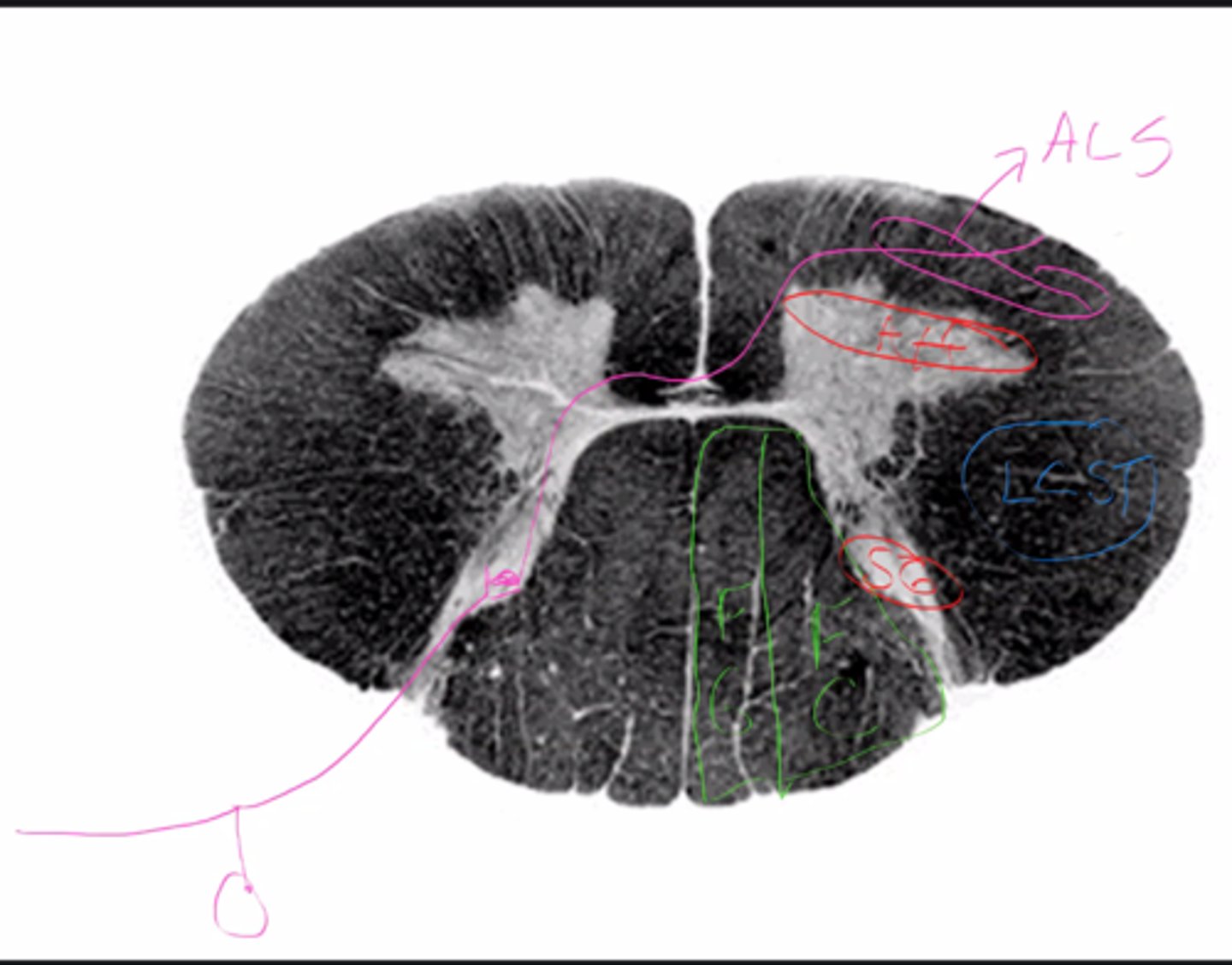
- Brown-sequard syndrome: rare spinal disorder that results from an injury to one side of the spinal cord in which the spinal cord is damaged but is not severed completely
If a patient has Brown-Sequard syndrome, a hemi-section of the cervical spinal cord, what would you expect to see in regards to signs/symptoms?
A. Ipsilateral spastic paresis to the body
B. Ipsilateral loss of discriminative touch to the body
C. Contralateral loss of pain and temperature to the body
D. Choices A, B, & C
E. none of the above
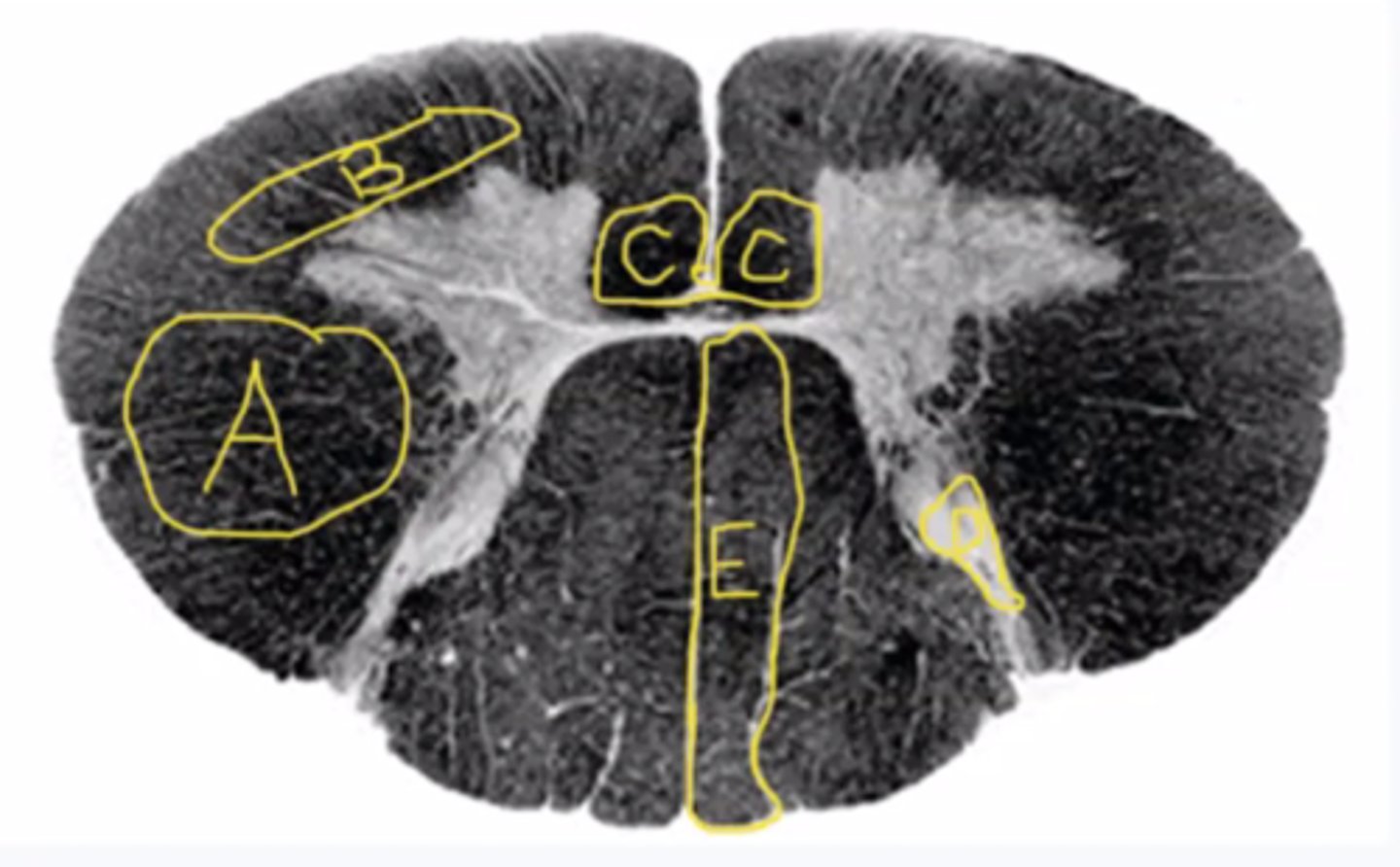
C: anterior white commissure
Lesion to anterior white commissure: syringomyelia
Which of the following spinal cord zones when lesioned will show bilateral loss of pain & temp at this cervical level
A
B
C
D
E
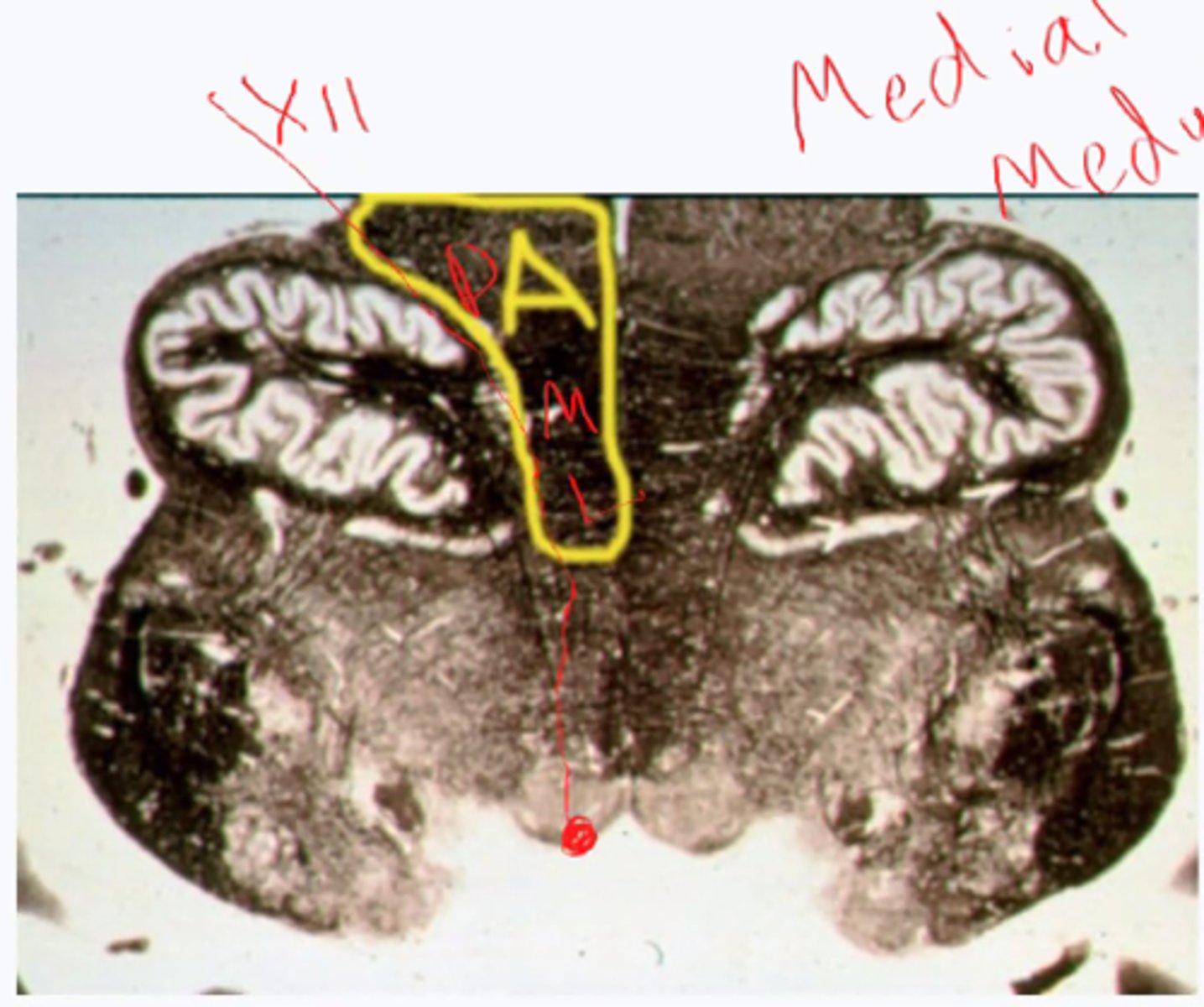
E. Answer choices A, B & C are correct
Medial medullary syndrome
Describe the sign/symptoms of a lesion to structures outlined & labeled "A"
A. Contralateral spastic paresis to the body
B. Contralateral loss of discriminative touch to the body
C. Ipsilateral atrophy of the tongue
D. Answer Choices A & B are correct
E. Answer choices A, B & C are correct
A.
Also called Lateral medullary syndrome
- dysarthria, dysphagia
- ALS +STT/STN : alternating hemianesthesia
Which zone when lesioned is called Wallenberg's syndrome or PICA syndrome ?
A
B
C
D
E
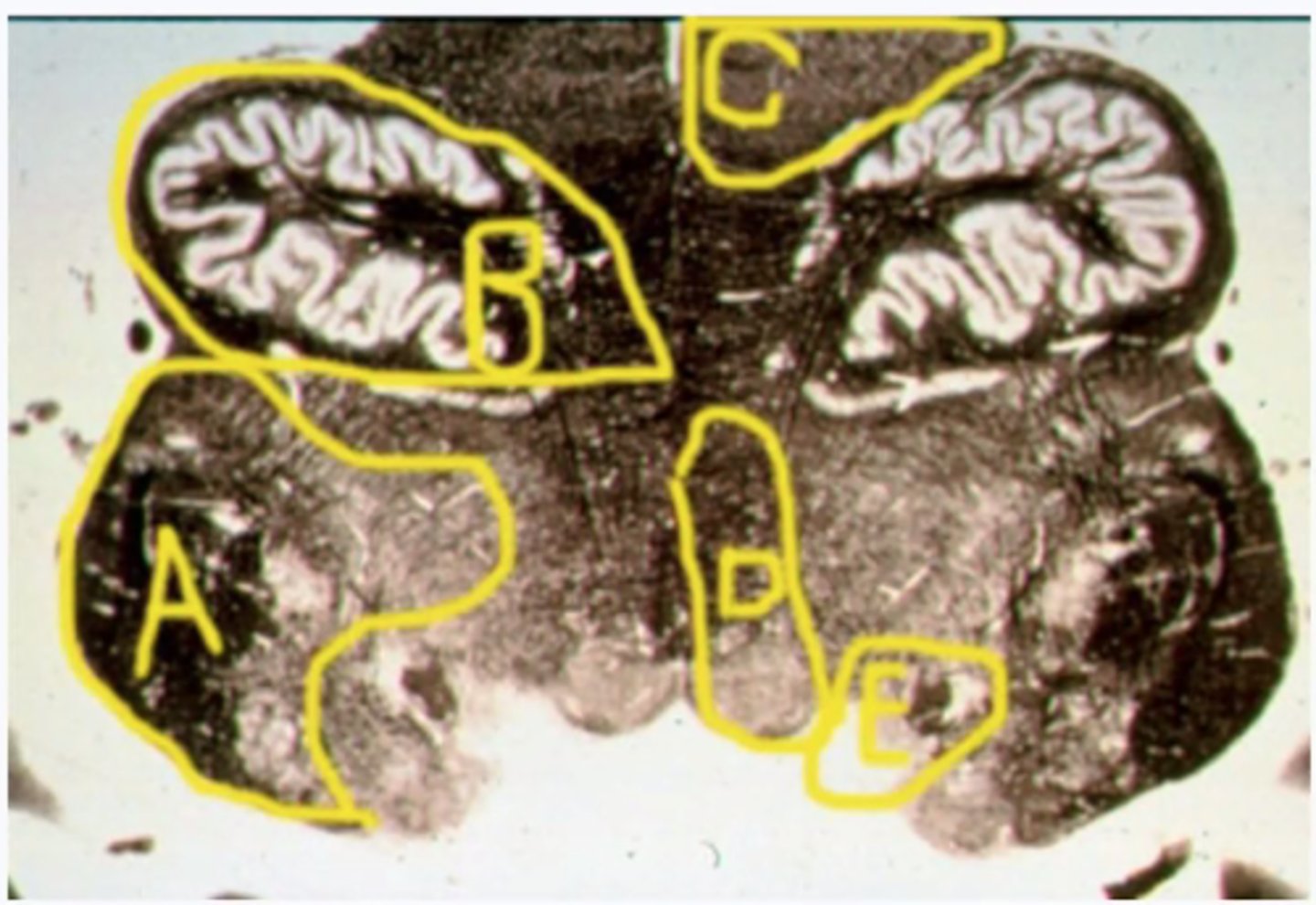
E. A&C are correct
Clinical name: Superior alternating hemiplegia
- CST lesioned
- CN III & CN VI
Choose the correct signs/symptoms if "A" is lesioned.
A. Contralateral spastic paresis of the body
B. Contralateral lateral starbismus
C. Ipsilateral strabismus
D. A&B are correct
E. A&C are correct
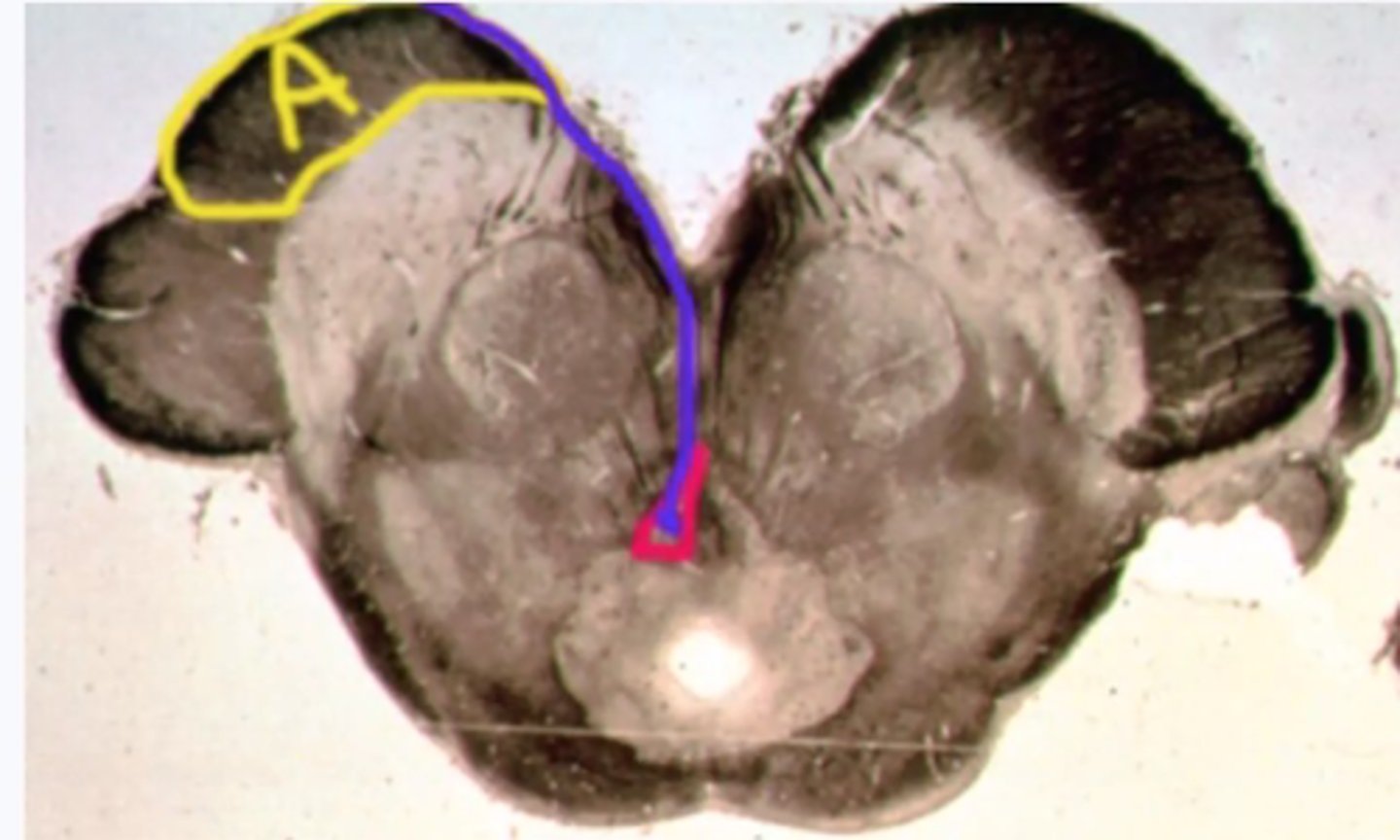
B. Middle alternating hemiplegia
Clinical name: Middle alternating hemiplegia
-CST lesioned: Contralateral spastic paresis
- CN VI lesioned: ipsilateral strabismus
What is the name of the lesion outlined & labeled "A."
A. Inferior alternating hemiplegia
B. Middle alternating hemiplegia
C. Superior alternating hemiplegia
D. PICA syndrome
E. Syringomyelia
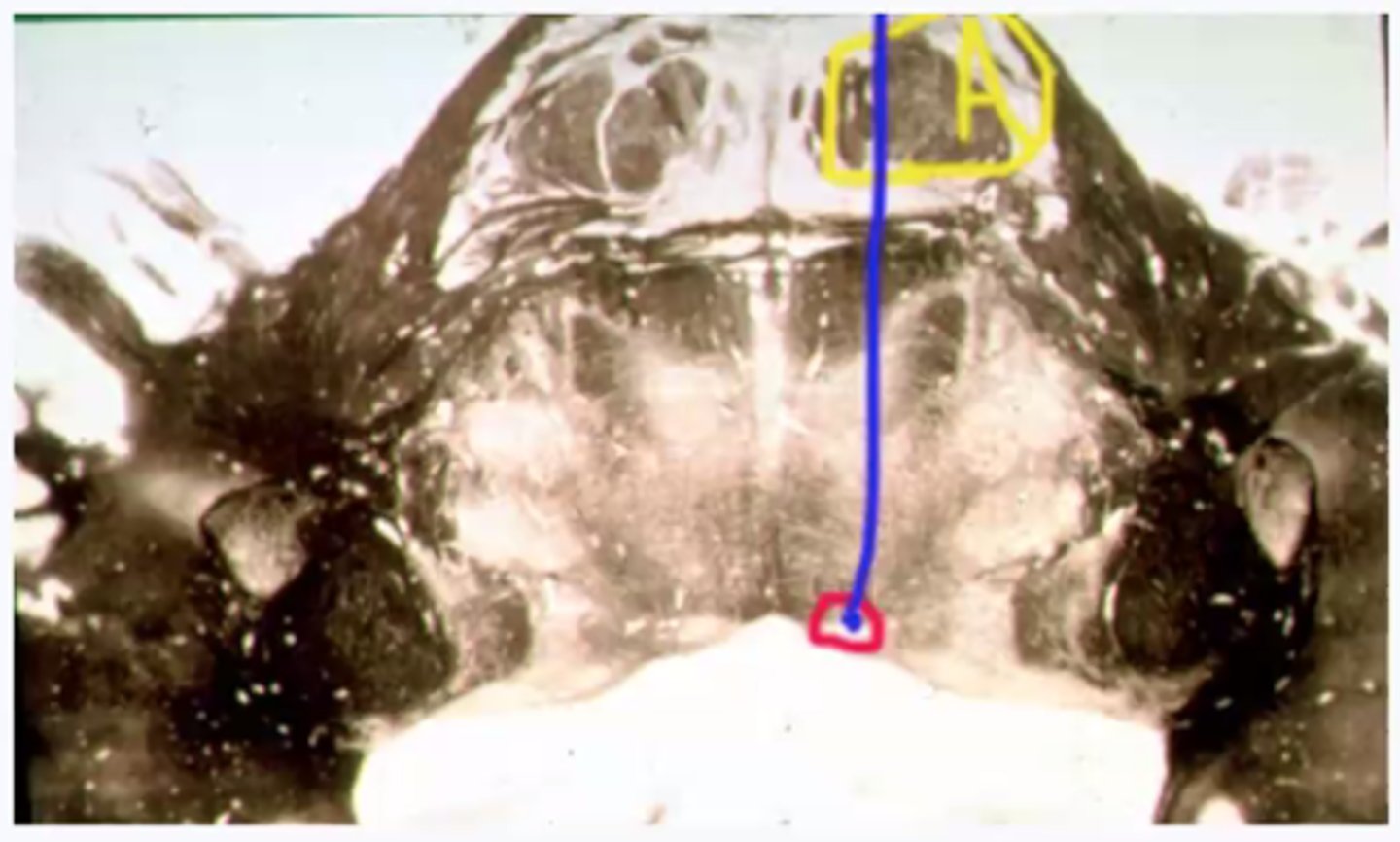
C. Hypoglossal nerve & pyramid
- occurs in the medulla
An interior alternating hemiplegia is a lesion to:
A. Pyramid & medial lemniscus
B. Medial lemniscus & hypoglossal nerve
C. Hypoglossal nerve & pyramid
D. Pyramid & abducens nerve
E. Nucleus ambiguous & dorsal motor nucleus of the vagus
Red nucleus
Identify the structure indicated by the outline and letter "A".
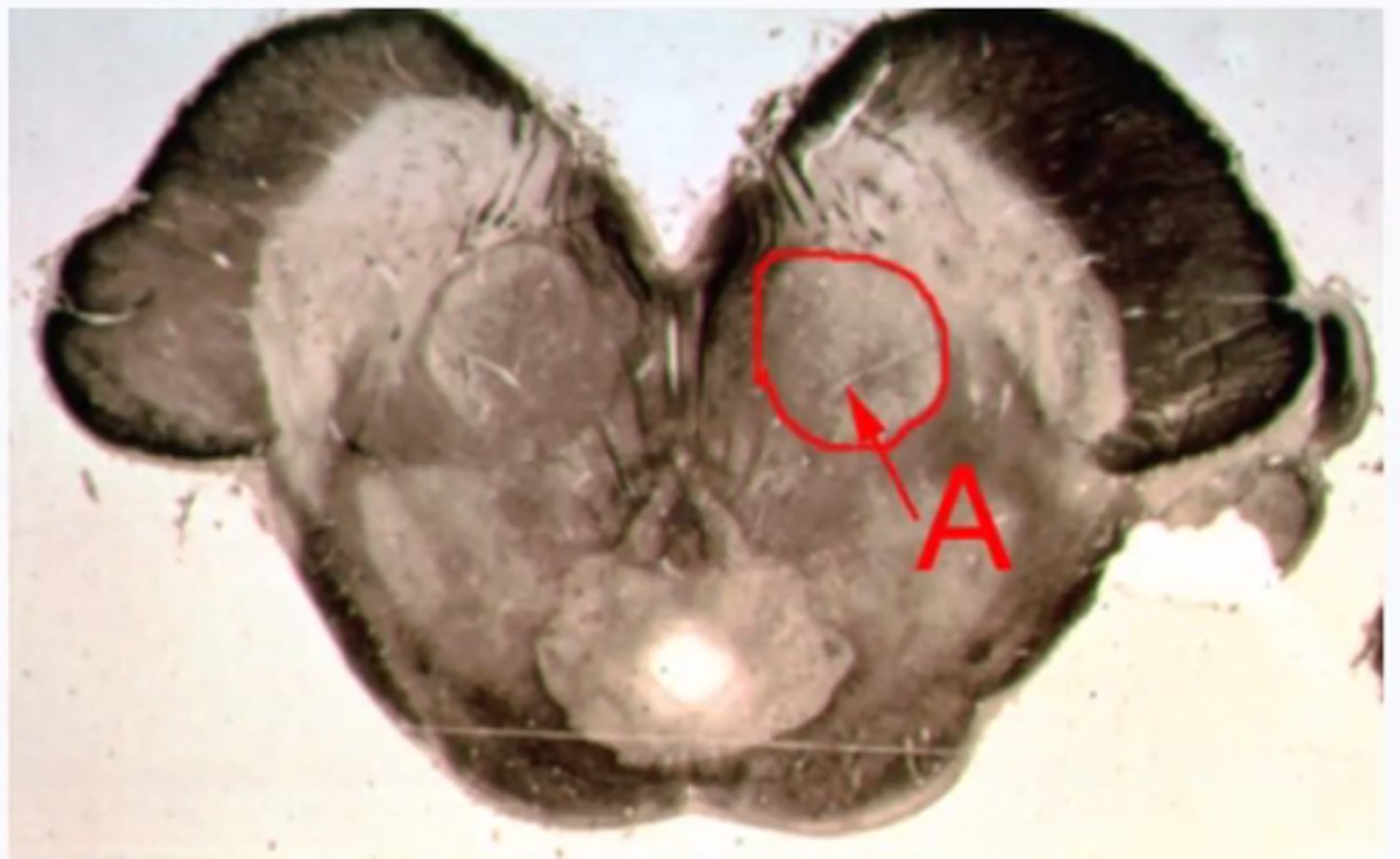
Preganglionic parasympathetic cell bodies
- In the mid medulla
- CN X cell bodies
- other place: sacral spinal cord
What type of neurons are within structure "A"?
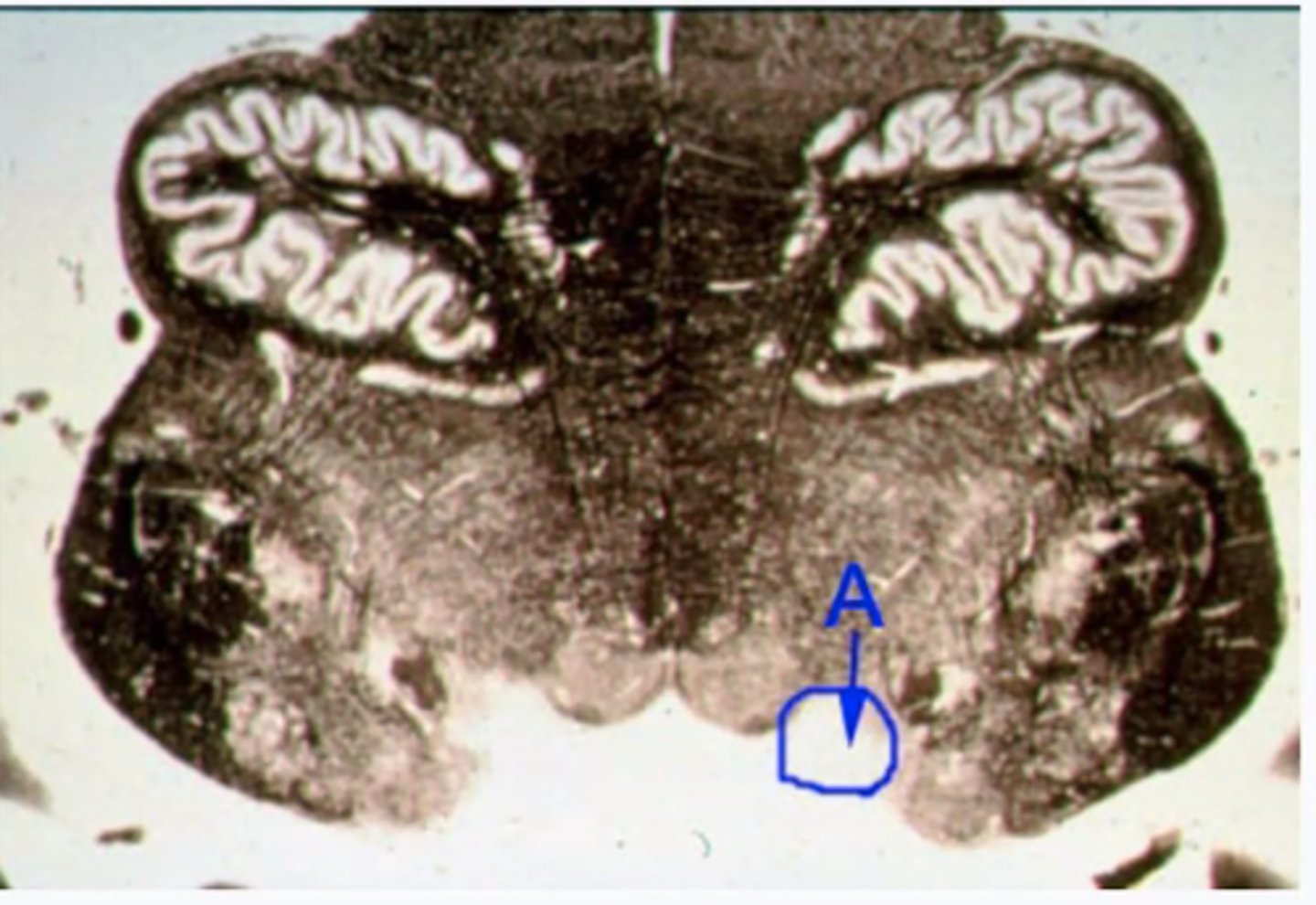
B. Ipsilateral atrophy of the tongue
Lesion CN XII
A lesion to structure "A" will result in:
A. Ipsilateral medial strabismus
B. Ipsilateral atrophy of the tongue
C. Ipsilateral paralysis of the muscles of facial expression
D. Ipsilateral paralysis of the muscles of mastication
E. Ipsilateral dysarthria & dysphagia
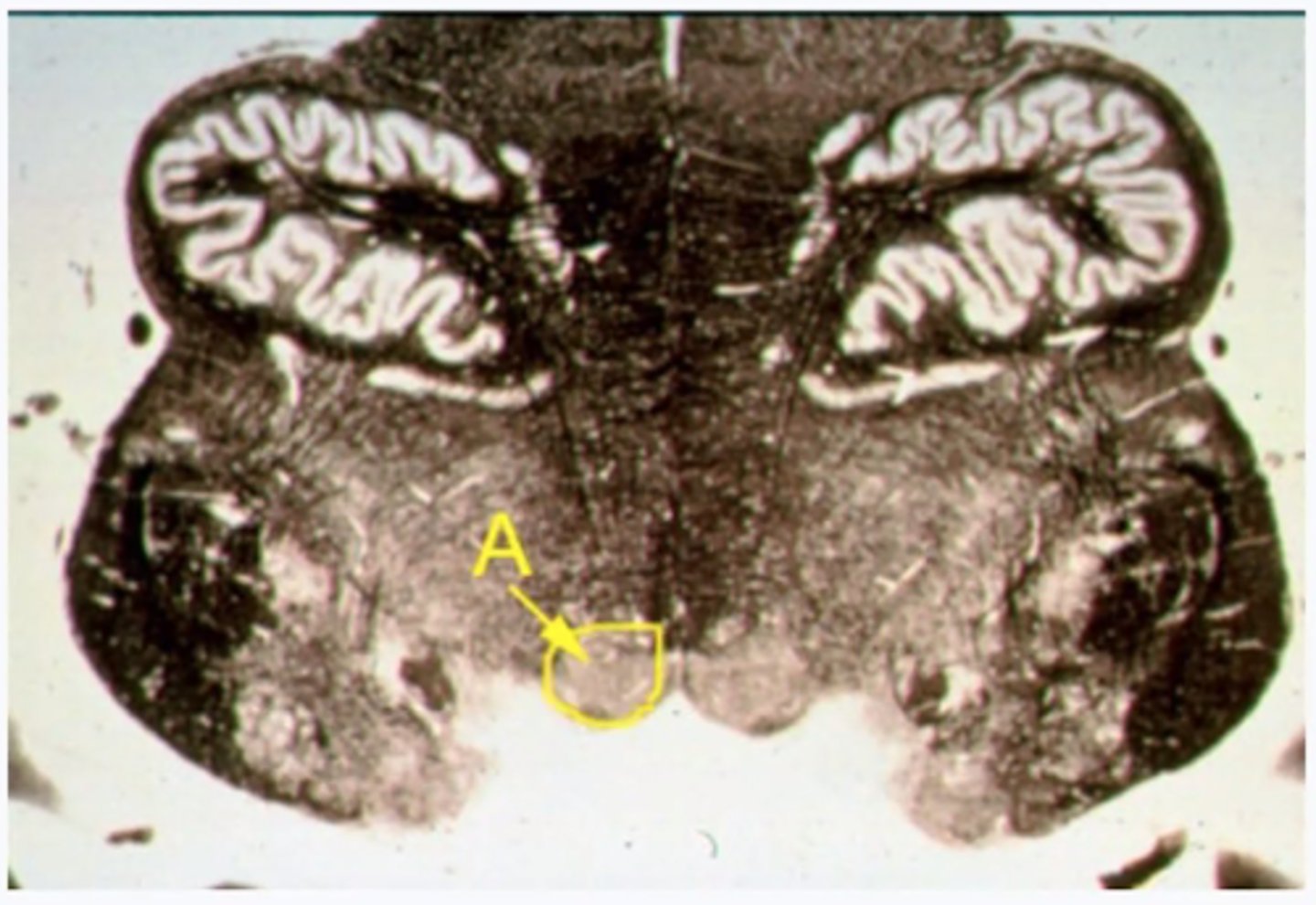
D. VII, IX, X
Which 3 CN synapses on structure "A"?
A. V, VII, IX
B. VII, VIII, IX
C. VI, VII, IX
D. VII, IX, X
E. VII, X, XII
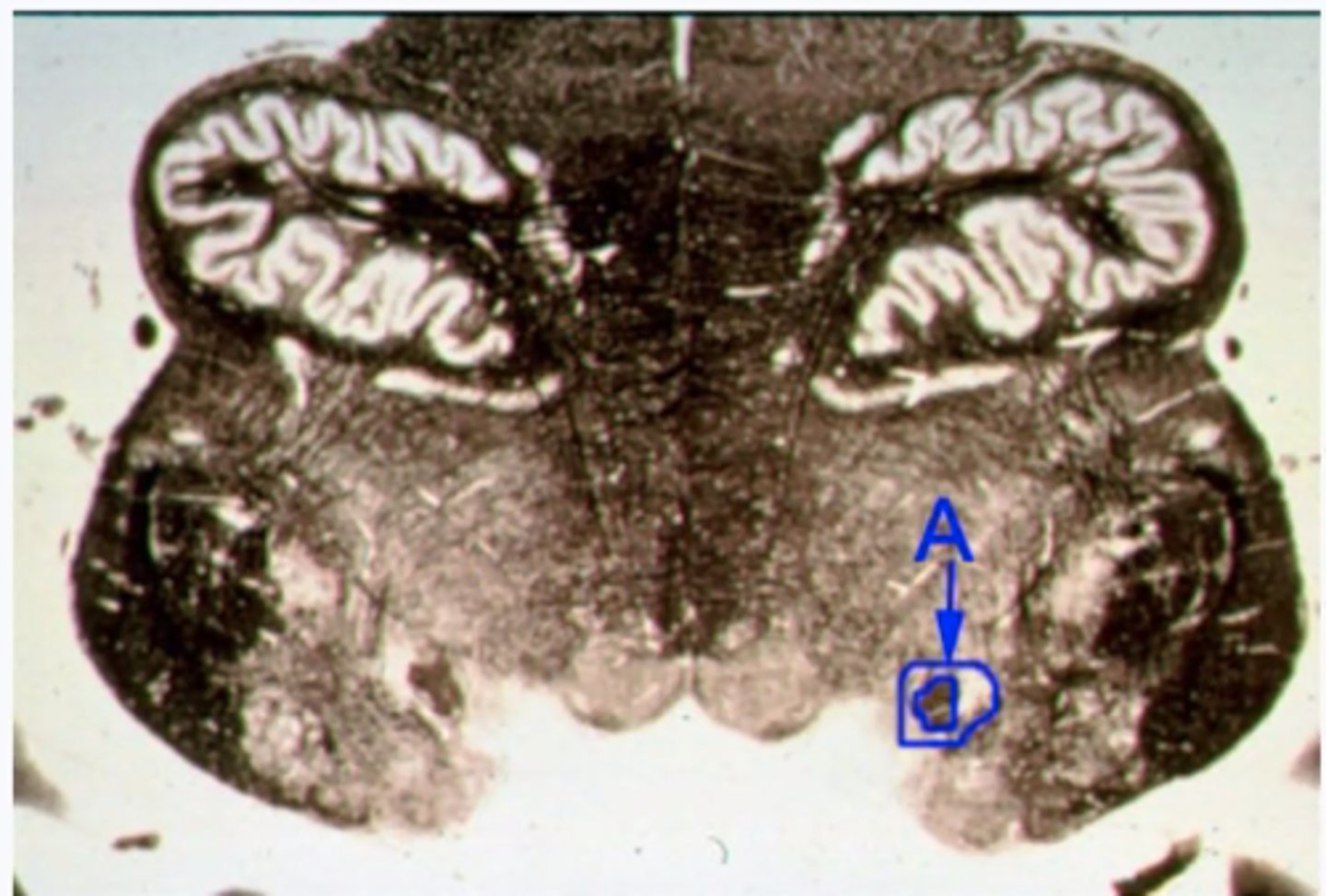
B. Ipsilateral dysarthria & dysphagia
in mid medulla
in nucleus ambiguous
CN IX & CN X
Describe the sign/symptoms if structure "A" is lesioned
A. Ipsilateral medial strabismus
B. Ipsilateral dysarthria & dysphagia
C. Ipsilateral atrophy of the tongue
D. Ipsilateral loss of parasympathetics
E. Ipsilateral spastic paresis to the body
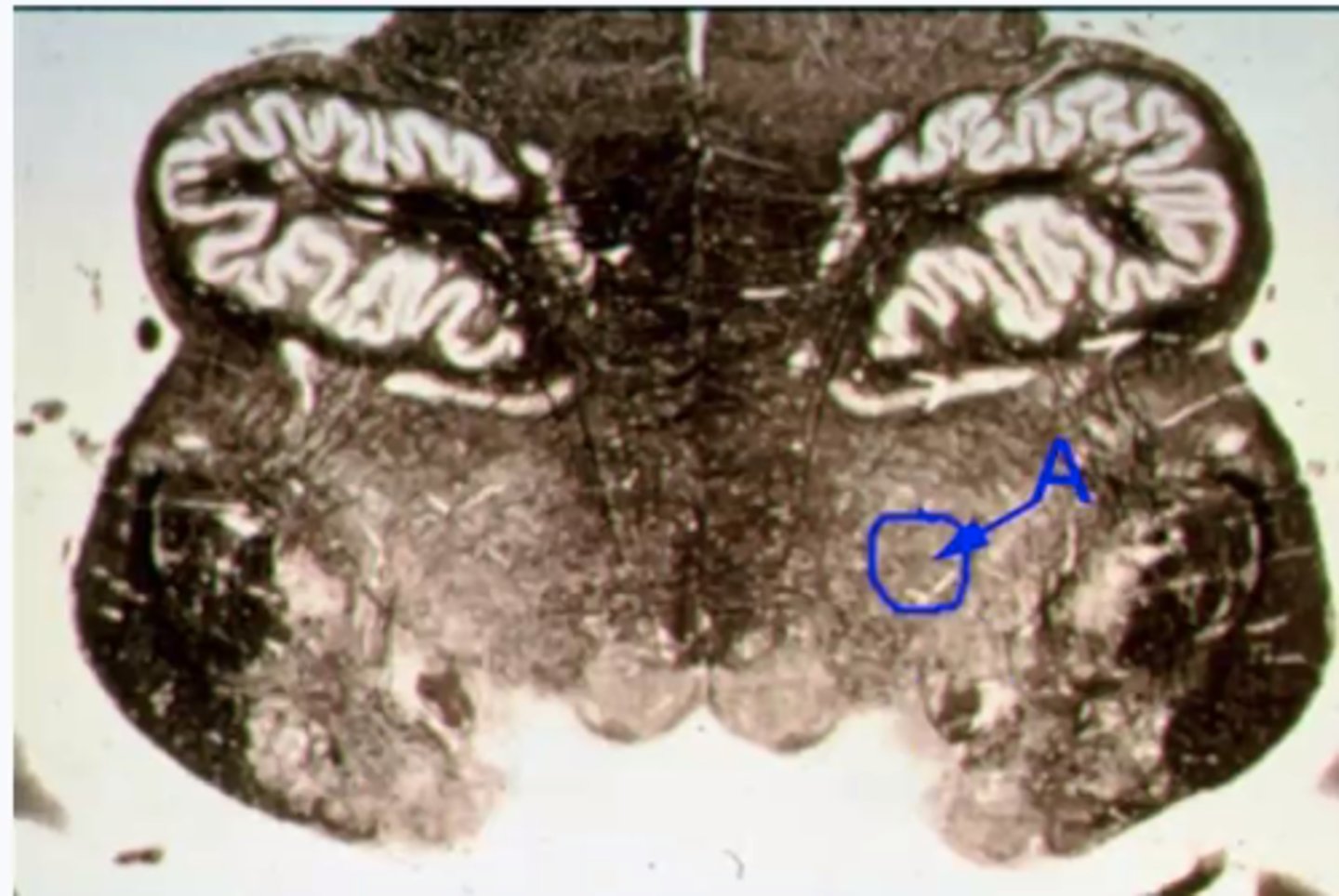
C. CN VII
-complete paralysis of all the facial muscles on the ipsilateral side
If a Pt has Bell Palsy, which CN has been lesioned?
A. CN V
B. CN VI
C. CN VII
D. CN VIII
E. CN IX
periaquaductal gray
Identify the structure indicated by the outline & letter "A".
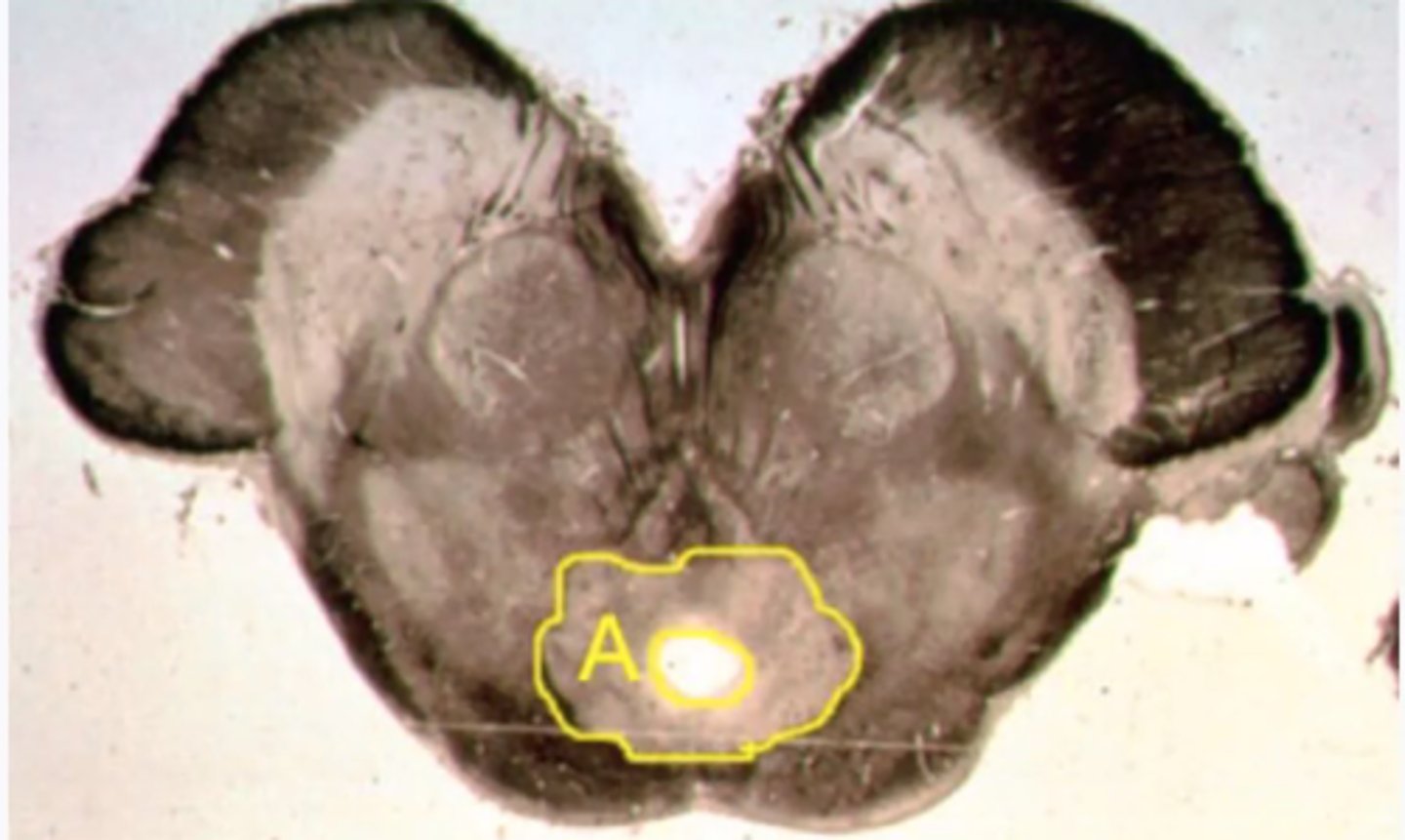
A. Contralateral loss of vibratory sense to the body
***on exam***
Describe the signs/symptoms if structure "A" is lesioned:
A. Contralateral loss of vibratory sense to the body
B. Contralateral spastic paresis to the body
C. Contralateral loss of pain/temp to the body
D. Ipsilateral flaccid paralysis to the body
E. Ipsilateral atrophy of the tongue
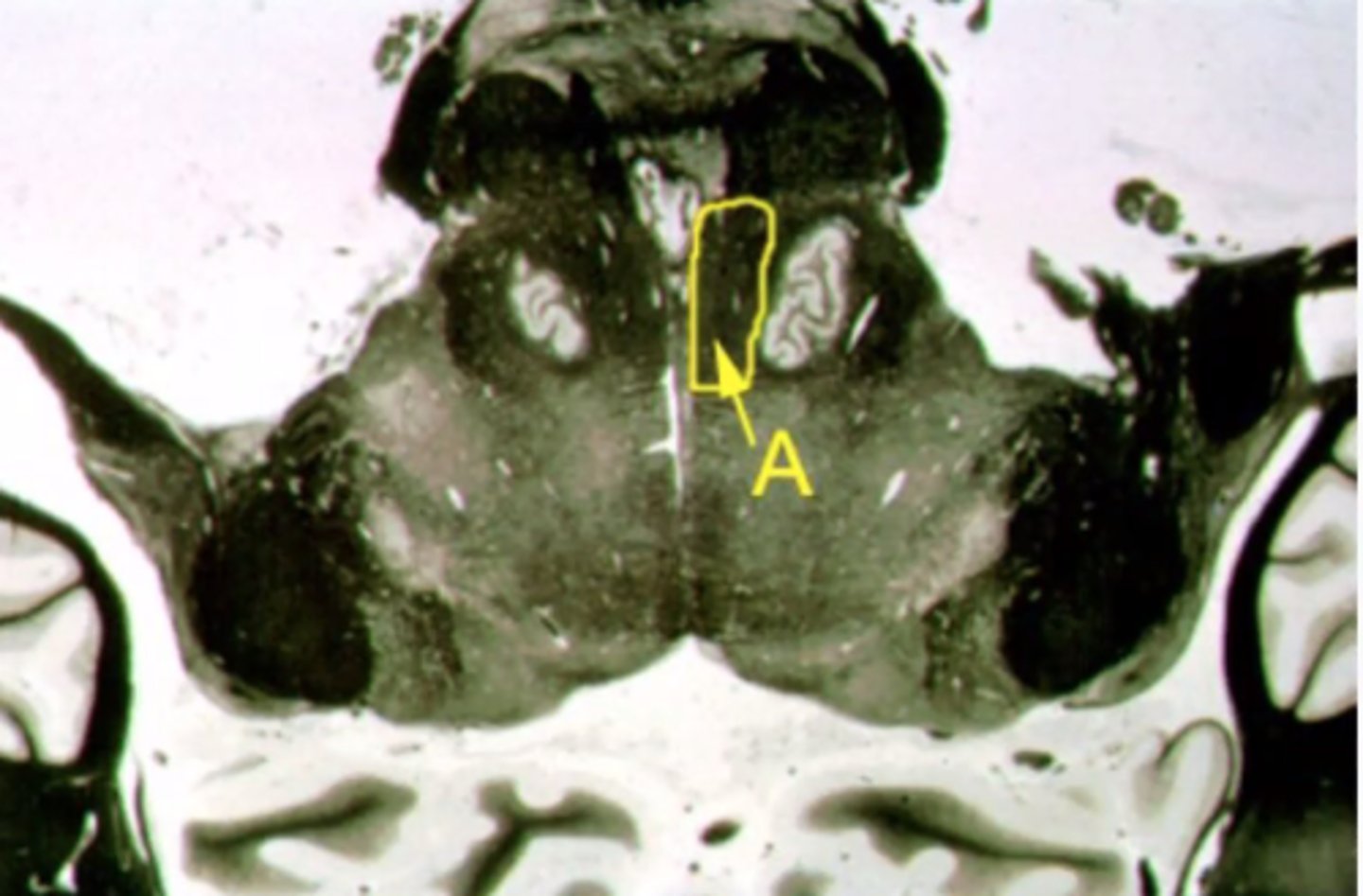
C. Trigeminal nerve mandibular division left side
- Trigeminal neuralgia
Your 61 y/o Pt is experiencing pn when a cotton swab is slightly pressed onto their left side lower jaw & chin area. Which CN is damaged?
A. Trigeminal nerve ophthalmic division left side
B. Trigeminal nerve maxillary division right side
C. Trigeminal nerve mandibular division left side
D. Facial nerve left side
E. Facial nerve right side
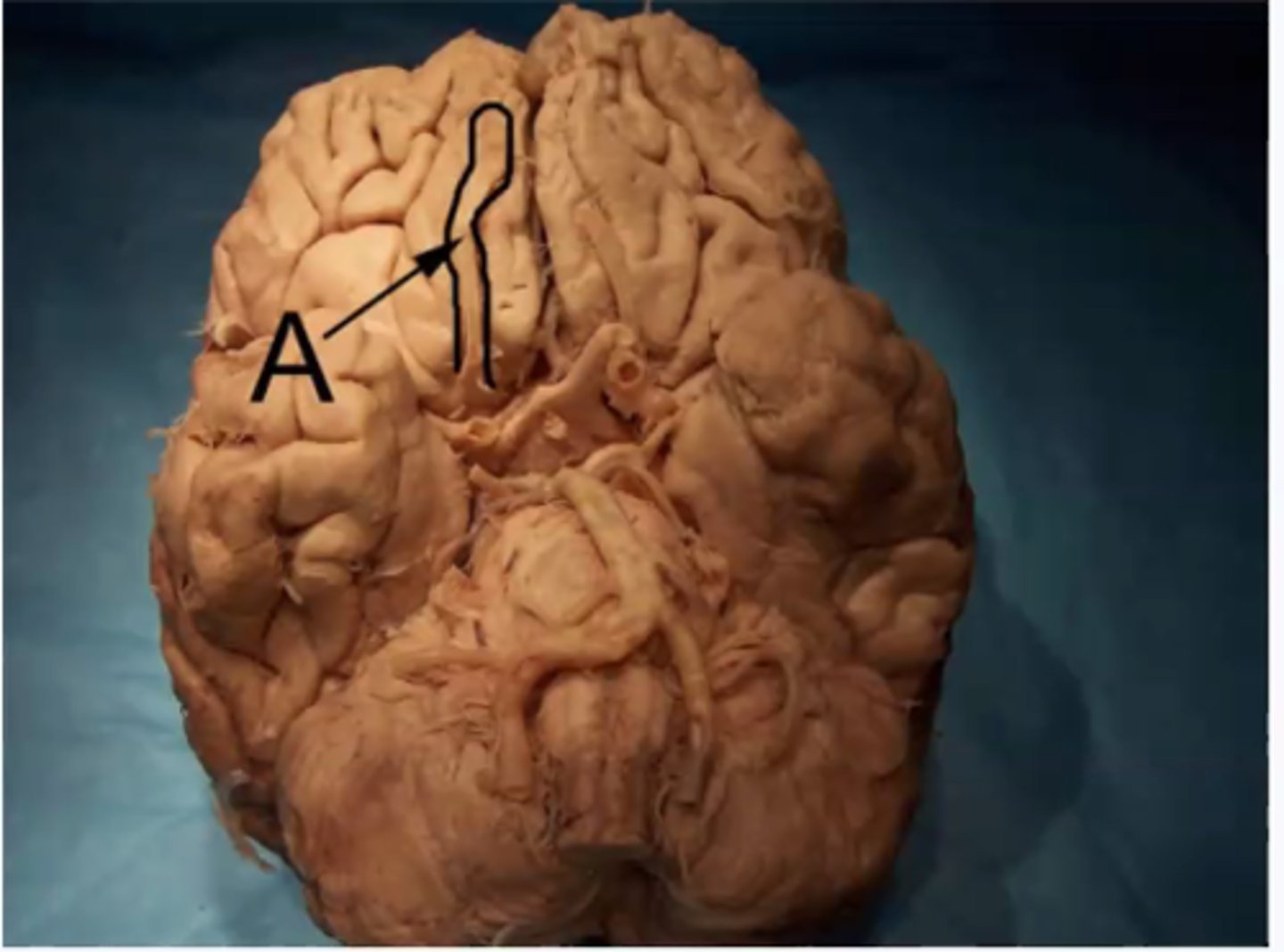
D. Ipsilateral blindness
If structure "A" is lesioned, describe the signs/symptoms.
A. Contralateral anosmia
B. Ipsilateral atrophy of the tongue
C. Contralateral of loss of pain & temp from the face
D. Ipsilateral blindness
E. Contralateral spastic paresis of the body
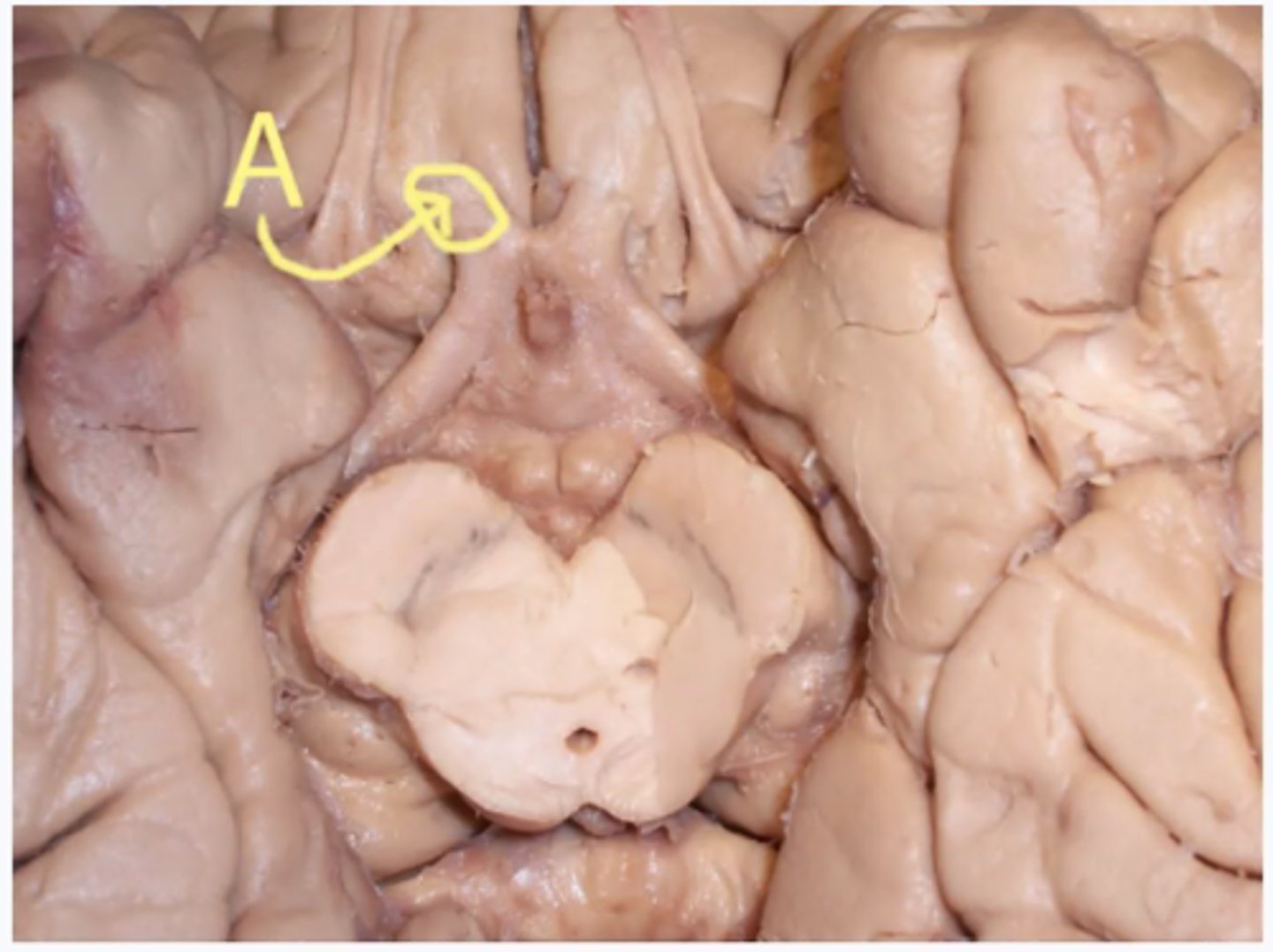
B. Ipsilateral anosmia
Describe the sign/symptoms if structure "A" is lesioned
A. Contralateral loss of touch from the face
B. Ipsilateral anosmia
C. Ipsilateral blindness
D. Ipsilateral spastic paresis to the body
E. Contralateral dysarthria & dysphagia