Flashcards PALEO 200 Midterm 1 Dinosaur Names
 Call Kai
 Learn
 Practice Test
 Spaced Repetition
 Match
 Flashcards
 Knowt Play
1/46

There's no tags or description
Looks like no tags are added yet.
47 Terms
Saurischian dinosaur
Lizard hipped, pubis points down
Ornithiscian dinosaurs
Bird hipped, pubis points forward
2 major types of saurischian dinosaurs
Sauropodomorphs and theropods
Sauropodomorphs
Large herbivores
with elongated necks and relatively
small heads (e.g., Massospondylus)
-2 types: prosauropods and sauropods

Prosauropods
Early group of
sauropodomorphs; first group of large-bodied herbivorous dinosaurs to evolve
Sauropods
Later group of
sauropodomorphs; attained
gigantic sizes and stood on
four robust and column-like
legs (e.g., Diplodocus)
-Vertebrae is filled with
complex air sacs to help reduce weight
-Teeth: simple and peg-like, used to nip off vegetation
-Huge rib cages that housed immense digestive organs

Theropods
Bipeds that shared carnivorous ancestors
-Many were carnivorous, some herbivorous
-Teeth: serrated, blade-like teeth (except theropod herbivores: some lacked teeth
altogether)
-Claws: sharp and hooked
-E.g., birds!
5 major groups of ornithiscian dinosaurs
1. Ornithopods
2. Pachycephalosaurs
3. Ceratopsians
4. Stegosaurs
5. Ankylosaurs
Ornithopods
Lacked armor, obligate or
facultative bipeds; mostly small, except
iguanodonts and hadrosaurs
edmontosaurus
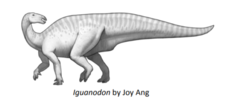
Iguanodonts
Large in size
-Claw: spike-shaped
-Facultative biped
Hadrosaurs
"duck-billed dinosaurs"
(e.g., Corythosaurus)
-Elaborate boney crests
-Strikingly large beaks in front
of mouths
-Teeth: dense, tightly packed
rows of small teeth in rear of
mouths -- dental batteries

Pachycephalosaurs
Bipedal with short arms,
unusually stout and strong tails, and armored
skulls
-Some have thick, domed skull roofs and backwards pointing horns
-Domed skulls: adaptations for
ritualized agonistic combat
(specifically, agonistic head-butting competitions)
-E.g., Stegoceras
-Teeth: sharp, conical in front of mouths and behind beaks; leaf-shaped in rear
(hypothesized to be omnivores due to
teeth arrangement)
Only group without scaly skin

Ceratopsians
Large parrot-like beaks and skulls
that greatly expand in rear (e.g., Triceratops)
-Most ceratopsian rear skull expansions
are extreme, creating a large bony frill or
"neck shield"
- Large horns
-Possess dental batteries
-Most large ceratopsians: quadrupeds with short tails
-E.g., Triceratops and Centrosaurus

Triceratops (ceratopsian)
horn to horn combat with other Triceratops; biggest ceratopsian?
Centrosaurus (ceratopsian)
a ceratopsian dinosaur with a large nasal horn and small orbital (brow) horns. Fewer healed frill injuries suggest less evidence of Triceratops-style horn combat, although it may have fought differently.
Stegosaurs
Quadrupeds with rows of projecting osteoderm plates down their backs and
long osteoderm spikes on tails
-Osteoderms: bones that develop within
skin -- common component of animal
armor
-Some have osteoderm spikes on backs
and over shoulders
-Front limbs much shorter than hind
limbs
-Heads: small relative to bodies
-Narrow snouts
-E.g., stegosaurus

Ankylosaurs
Most heavily armored dinosaurs
(e.g., Anodontosaurus)
-Quadrupeds with short legs and wide rib
cages
-Backs and skulls covered in spiky
protective osteoderms
-Some have large osteoderms on ends of their tails, forming a mace or "tail club"
-Short snouts and broader, rounded beaks
-Simple teeth used to nip off vegetation
-Huge rib cages that housed immense digestive organs

___________ specimens found in Wyoming in 1910: first mummified dinosaurs
-"Mummies": dinosaur specimens that include a lot of skin fossils
-Revealed ___________ were covered with scales -- also seen in ___________, ____________, ____________, ____________, and ______________
Hadrosaur, theropods, sauropods, ceratopsians, stegosaurs, and ankylosaurs
Sinosauropteryx (theropod)
First ever discovery of feathered dino in China in 1991
-Covering of simple, hair-like feathers
Yutyrannus (tyrannosaur, which is a theropod)
Feathers reported from large
tyrannosauroid -- largest known feathered
dinosaur

Psittacosaurus (ceratopsian)
Early ceratopsian with unusual
long, stiff, bristle-like structures on tail

Tianyulong
Primitive ornithischian from China (2009) covered in long filaments over most of its body (feathered?)
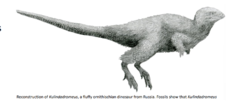
Kulindadromeus (ornithopods)
Early, primitive ornithischian from Russia with preserved simple, bristle-like
filaments and branching, feather-like structures
Anchiornis (theropod)
Black and white feather, with some
reddish-brown on head

Scipionyx (theropods)
small theropod from Italy that preserved
mineralized remains of trachea/windpipe in throat
and its intestines
-Keratinous sheaths over claws
Herbivorous theropods
1. Oviraptorosaurs: many lack teeth, and some have
small masses of little stones inside rib cages
(gastroliths)
2. Ornithomimids: many lack teeth, some have
gastroliths
Dromaeosaurs (theropod)
Group of theropod dinosaurs with thin tails
supported by special, rod-like projects of their caudal
vertebrae and chevrons (e.g., Velociraptor)
-Related to troodontids
-Teeth: serrated, blade-like
-Claws: large sickle-shaped claw on each hind foot, resembling retractable claws of modern
cats
Spinosaur (theropod)
Theropod group with skulls that strongly
resemble crocodiles'
-Piscivorous
-Teeth: conical, sharp tips, few/no serrations

Alvarezsaurs
Small theropods with short front limbs and
compact hands (e.g., Shuuvia)
-Insectivores
-Teeth: reduced and short
-Strong front limbs

Tyrannosaurs (theropod)
Theropods that have reduced front limbs and
robust skulls (e.g., Tyrannosaurus rex)
-Teeth: serrated edges, well-adapted for puncturing
and cutting flesh; blunt tips
-Attachment sites for jaw muscles indicate
capacity for tremendous biting force, indicating
potential capability of durophagy
-T. rex: most powerful bite of any animal (living or
extinct)
-another example of non-isometric ontogenetic changes: Juvenile tibia much longer than femur; adults = tibia and femur close to same length
partook in non lethal face biting
Sinocalliopteryx (theropod)
Wolf-sized theropod fossilized to contain gut contents (cololites) -- indicate their diet consisted of birds and small dromaeosaurs
Microraptor (theropod)
Dromaeosaur with diverse diet, evidently having eaten small mammals, birds, and
fish
Baryonyx (theropod)
Spinosaur with cololites containing fish bones,
indicating spinosaurs were at least partially piscivorous
Carnotaurus (theropod)
An example of a theropod that had the caudofemoralis muscle
Dilophosaurus (theropod)
Ichnofossil found from Utah, preserving the imprint of sitting/crouching
dinosaur -- resting trace
Tenontosaurus
Histological cross-section through
fossilized adult ulna, showing remodeled bone
Chasmosaurus (ceratopsian)
Ceratop that displayed non-isometric
ontogenetic changes
-Adult skull shows proportionately longer frill as compared to baby skull -- frill grows at
faster rate than rest of skull
-Baby lacks nasal horn -- nasal horn only appears later during growth
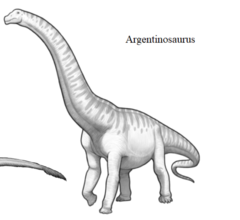
Argentinosaurus (sauropod)
HEAVIEST Sauropod that relied on its large size to
deter predators; obligate quadruped.
Euoplocephalus (ankylosaur)
Ankylosaur with
tail club -- finite element
analysis used on fossil to support
hypothesis that ankylosaur tail
clubs were used as weapons
Albertosaurus (tyrannosaurs)
Dry Island Buffalo Jump Provincial Park in Alberta held a monospecific bonebed
of these tyrannosaurid theropods, preserving remains of more than 20 individuals
-Suggests Albertosaurus lived in groups instead of solitary individuals
"Fighting Dinosaurs" from Mongolia
Preserves Velociraptor and Protoceratops interaction
-Velociraptor: predator in midst of killing Protoceratops, suggesting that this
dromaeosaurid theropod was a solitary hunter
Ornithomimus
Proportionately
long legs that allowed for fast
running
Centrosauruses (ceratopsian)
Ceratopsians found in large numbers of bones from many individuals in localized
areas in Dinosaur Provincial Park -- suggests these animals traveled in groups
Pinacosaurus (ankylosaur)
Juveniles found in China, where they lined up next to each other like they laid
down to sleep
-Juveniles traveled in groups
-Adult Pinacosaurus have not been found in groups nor
bonebeds, suggesting these juveniles were social dinosaurs, but the adults lived solitary
lives -- may be due to ontogenetic changes

Giraffatitan (brachiosaurus)
The tallest known dinosaur species, characterized by long necks and large bodies, adapted for reaching high vegetation.
Diplodocus and Seismosaurus
Longest dinosaur species, known for their elongated necks and tails, which allowed them to forage on vegetation at great heights.
Oviraptosaurs
Adults were discovered positioned directly over nests.
Their arms were spread around the eggs.
Their posture resembles that of modern brooding birds.
Interpretation: Strong direct evidence of adults attending and brooding their eggs. However, this does not establish how long they cared for babies after hatching.