OCR Microeconomics AS Level Flashcards | Quizlet
 Call Kai
 Learn
Learn Practice Test
 Spaced Repetition
 Match
Match Flashcards
 Knowt Play
1/25

There's no tags or description
Looks like no tags are added yet.
Name | Mastery | Learn | Test | Matching | Spaced | Call with Kai | Chat |
|---|
No analytics yet
Send a link to your students to track their progress
26 Terms
What science is economics?
Economics is a social science.
What are the economic agents in economics?
Consumers, producers and the government.
What is ceteris paribus?
All other things are equal (assuming all other variables do not change: eg consumer income or prices of substitutes).
What fundamental condition exists regarding economic agents' needs and wants versus economies' resources?
Economic agents have unlimited needs and wants, however economies have finite resources to meet these needs and wants.
What is the consequence of unlimited needs and wants combined with finite resources?
Choices must be made by economic units.
What are the four factors of production?
Land, Labour, Capital, Enterprise (aka risk).
In terms of factors of production, what characterizes the short run?
At least one factor of production is fixed (quantity cannot be changed).
In terms of factors of production, what characterizes the long run?
All factors of production are variable.
Resource wise, what does economics attempt to investigate?
How best to allocate these resources efficiently (minimizing wastage) and equitably (fairly).
What is a renewable resource?
A resource whose stock can be replenished naturally over time.
What is a non-renewable resource?
A resource whose stock cannot be replenished naturally over time and decreases as it is consumed.
What are the two types of goods?
Consumer goods and capital goods.
What are consumer goods?
Goods bought by consumer for immediate use.
What are capital goods?
An input to the production process to create other goods.
What three questions is economics the study of?
What? How? For whom?
What are positive statements?
Objective statements that can be tested or rejected by referring to the available evidence.
Example of a positive statement?
A rise in unemployment will lead to reduced sales for supermarkets.
What are normative statements?
Statements that express a value judgement about what ought to be.
An example of a normative statement?
Supermarket prices are too expensive.
What is utility?
The amount of satisfaction obtained from consuming a good or service.
What is the price mechanism?
The means by which decisions of customers and businesses interact to determine the allocation of resources.
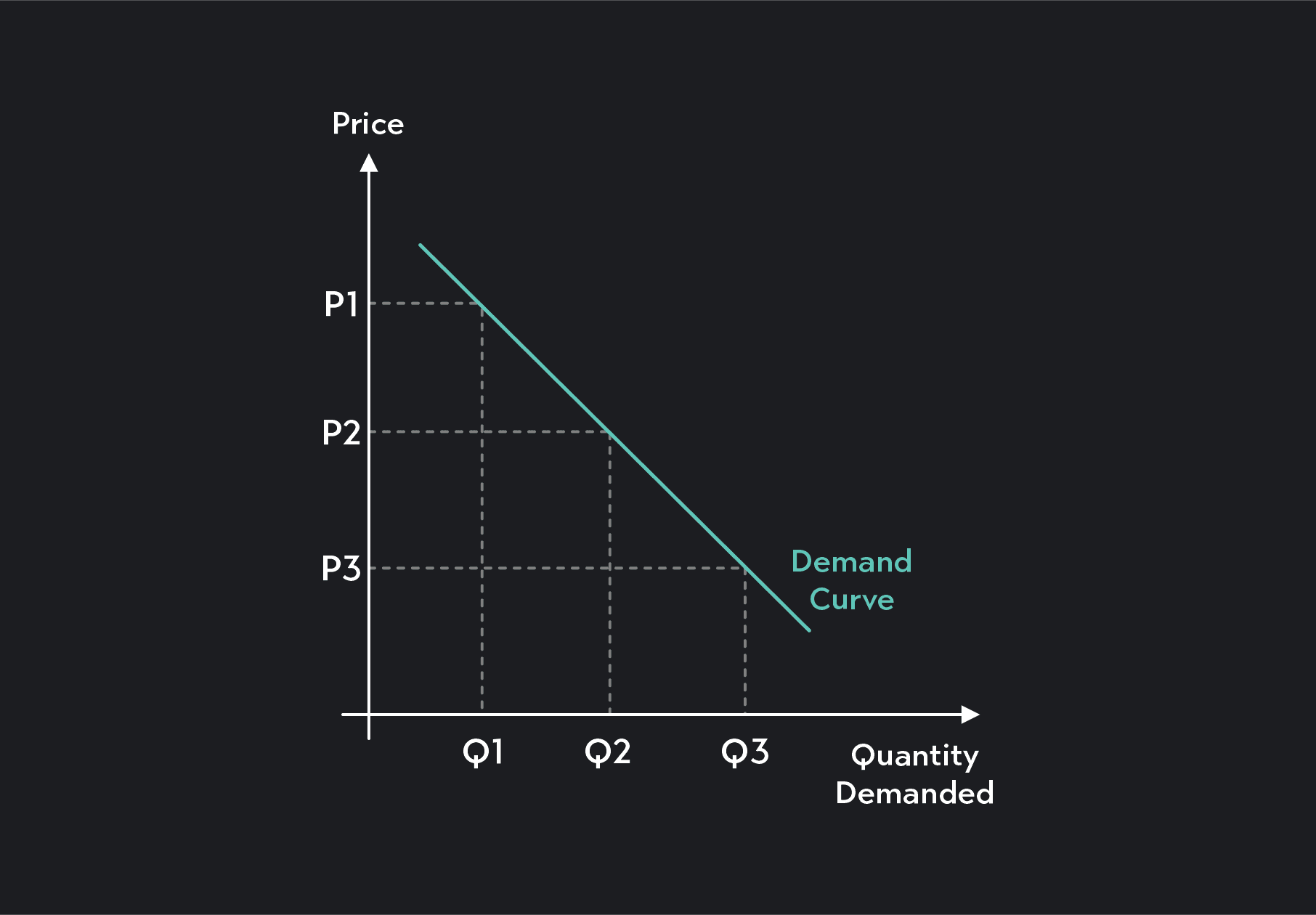
What is demand?
The quantity of goods or services that will be bought at any given price over a period of time.
Demand curve.
Shows the effective demand, ie: how much consumers can afford to buy and would buy at any given price.
Slopes downwards from left to right due to the law of demand. This inverse relationship between quantity demanded and price exists due to:
1. The substitution effect
-Impact of substitutes/competitors decisions e.g:pricing
2. The income effect
-Impact of proportion of income spent on goods/change in income
3. Diminishing marginal utility
-As successive units of a good are consumed, the utility (satisfaction amount) gained from each unit will fall
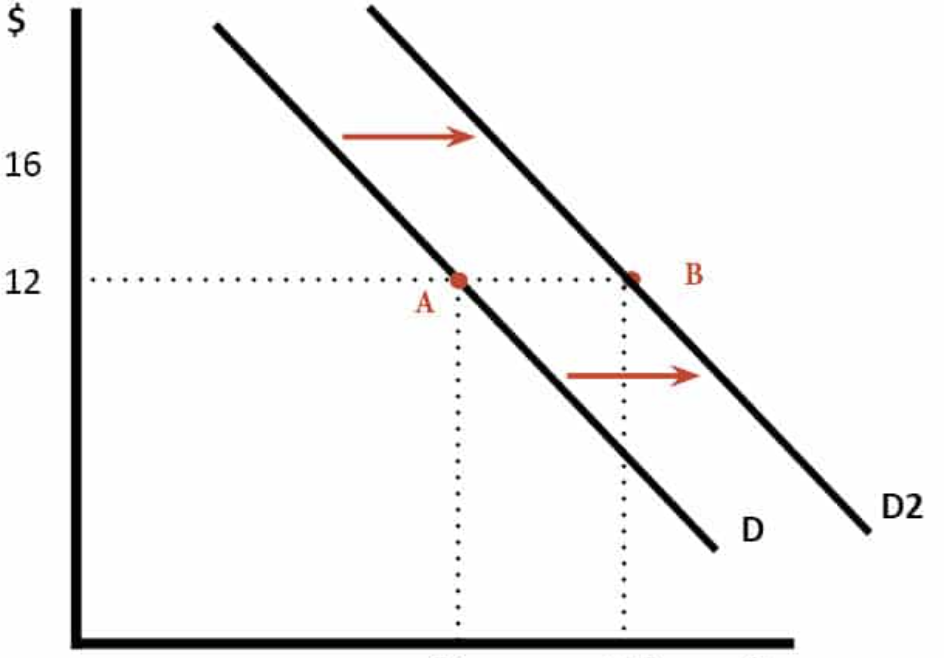
What causes a shift in the demand curve?
1.Income - For a normal good (e.g: clothes) demand increases when income rises, causing a shift in the demand curve.
(Inferior goods are the exception, as when income rises, demand decreases)
2.Price of other goods - eg: Decreased price of golf clubs causes increased demand for golf balls.
(Keep in mind not all changes in prices will affect the demand for a particular good)
3.Population
4.Fashion, tastes and preference.
5.Advertising.
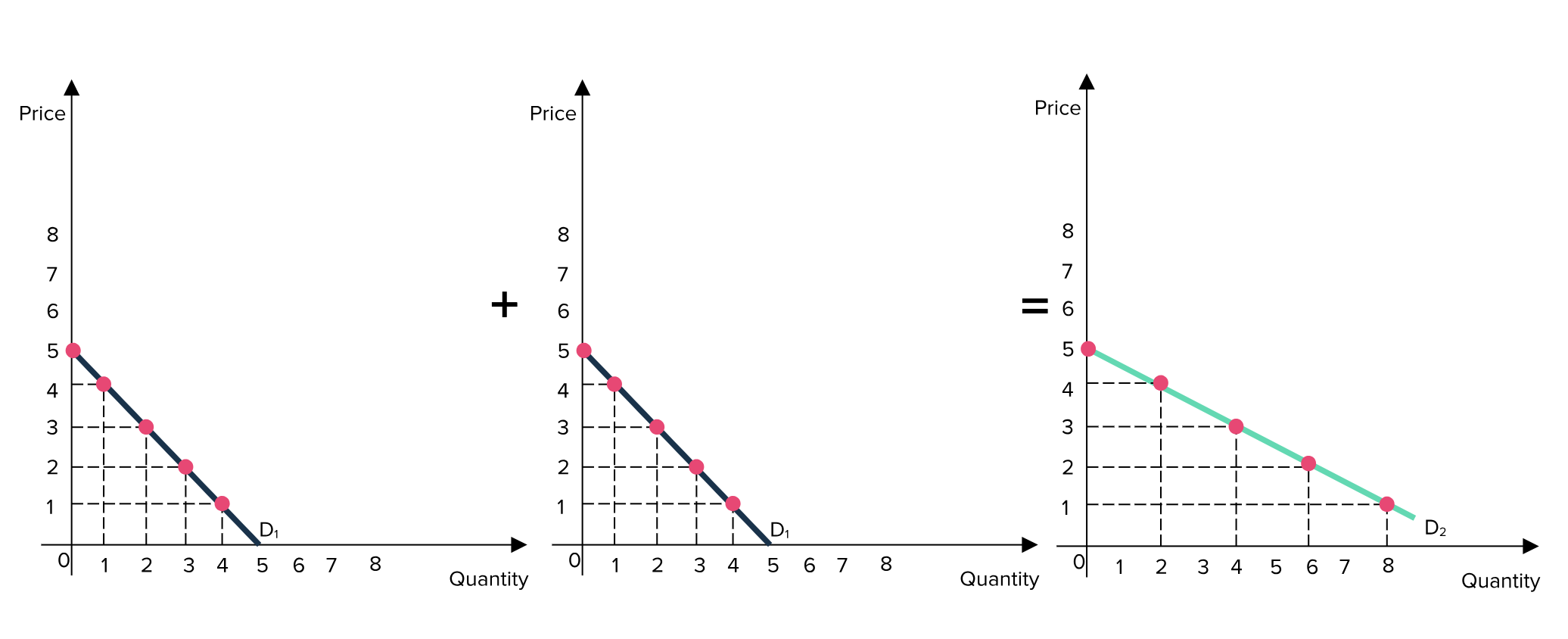
Individual vs Market Demand Curves
It is assumed that demand refers to demand for a product in a whole market (i.e:market demand).
However, it is possible to construct individual demand curves (the demand curve of an individual buyer) and find demand curves for them.
Consumer Surplus
The difference between how much buyers are prepared to pay for a good and what they actually pay.
