Physical Therapy Management of the Upper Extremity in Neurological Disorders
 Call Kai
 Learn
 Practice Test
 Spaced Repetition
 Match
 Flashcards
 Knowt Play
1/69

There's no tags or description
Looks like no tags are added yet.
70 Terms
What are the 3 UE Functional Changes Relative to Aging Regardless of Neuro Involvement?
Velocity
Reaction times
Hand steadiness during reaching

What should not change with age?
Accuracy

Changes result from?
Velocity - x4
Reaction times - slowing of __
Velocity - sensory, perceptual, motor, arousal changes
Reaction times - slowing of central processes
Time to make decision about movement sequence slows down

Why does grasp change with age?
Decreased __
Diminished __
Takes longer to adapt final grasp __
Decreased manual dexterity
Diminished sensation
Takes longer to adapt final grasp force

Decrease in manual dexterity is apparent in what activities above > 70 years old
tying shoelaces
fastening buttons

Diminished sensation with age often leads too?
greater grasp forces - not aware of how strongly they are holding onto object

Most individuals with CVA or other neuropathologies will experience additional difficulty with reaching, grasping and manipulation due to
Difficult __ locating the target and maintaining __ prior to reaching
Impaired?
What can be impaired unlike aging indiv. w/o neurologic injury
Delayed ___
__ impairments
Visually locating & maintaining gaze
Coordination, timing, trajectory of mvmts
ACCURACY
Delayed movement times
Sensory impairments
Which hemisphere governs motor programming?
L - Dominant
Which hemisphere processes visual feedback?
R
What is apraxia
Inability to develop motor plan

L hemisphere function: governs motor programming, __ and __ of movement - particularly related to __ component of reaching
Timing & sequencing - ballistic
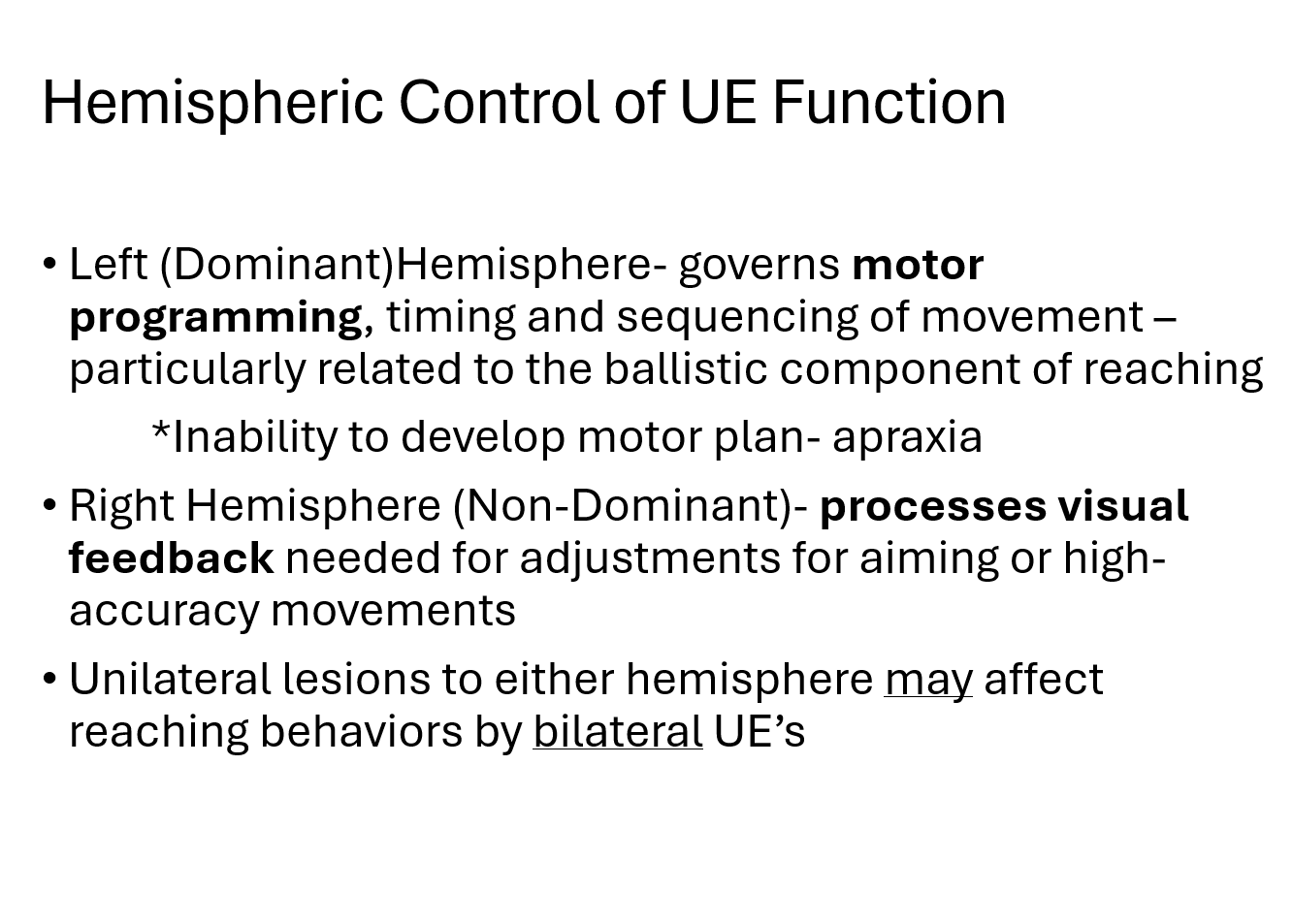
R hemisphere function - processes visual feedback needed for adjustments for __ and __ movements
timing or high-accuracy movements

Which hemisphere is dominant vs non-dominant
L is dominant
R is non-dominant
U/L damage to either hemisphere can affect reaching movements of one or both extremities?
Both - bilateral UE’s
Evaluation of the UE after CVA
Subjective interview should focus on?
__ which impact task performance
Patients __
Impact of UE functional loss on self-care, work, social role, leisure activities
Personal values
Primary concern

Examination of UE Dysfunction
Observe how the patient performs the task, not just whether they can complete it.
Identify any compensatory movement strategies being used.
Assess whether the patient can adapt their movements when task demands change.
Determine which impairments are limiting performance.
Cognitive deficits
Visual-perceptual deficits
Musculoskeletal impairments (strength, ROM, pain)
Sensory impairments
Other neurological impairments
Use findings to identify the underlying cause of UE dysfunction and guide treatment.

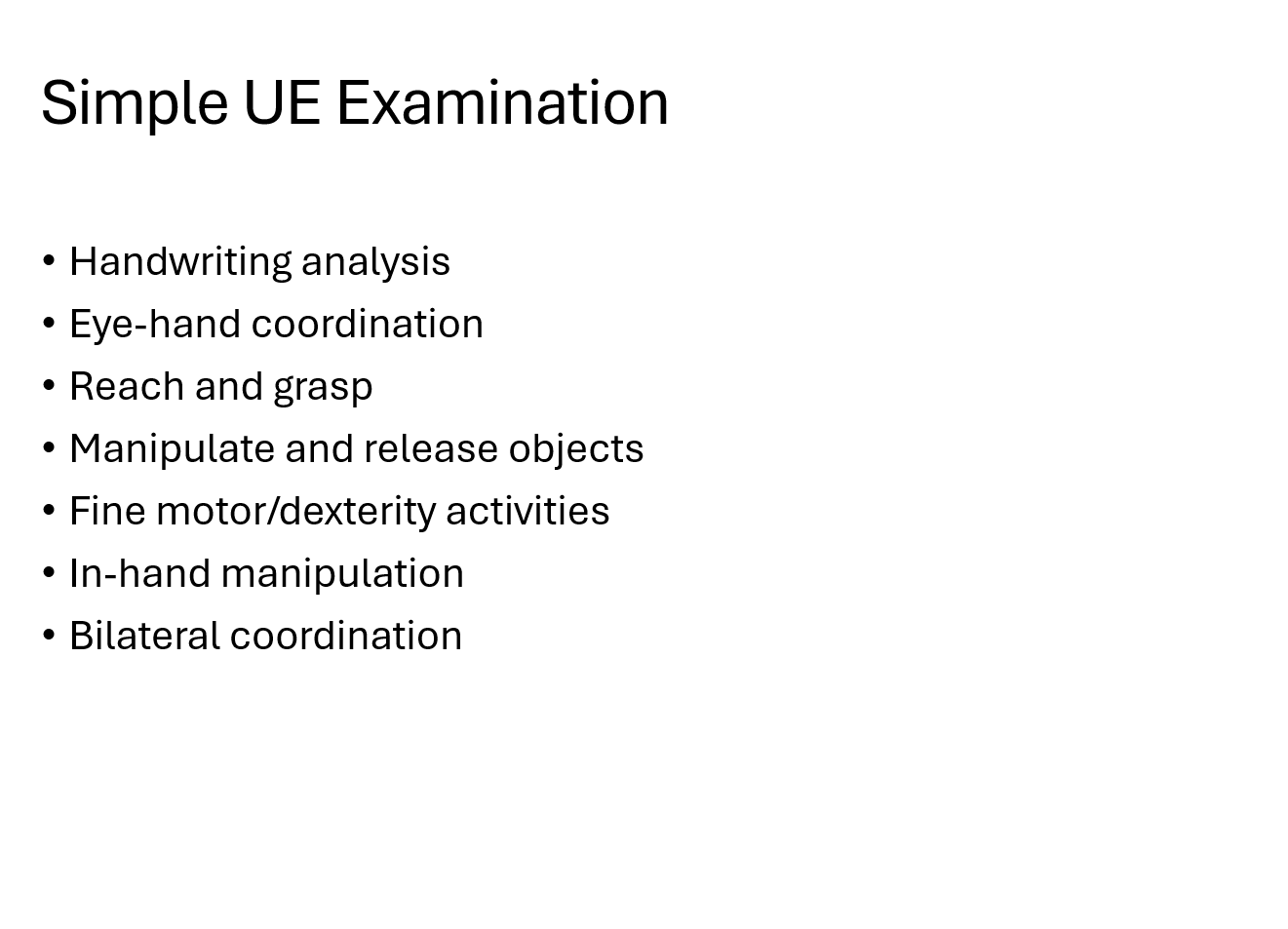
Which objective measure
Measures low level UE skills – basic ADL’s – has ceiling effect in stroke
Barthel, FIM, Section GG

Which objective measure
Measures higher level UE skills (IADLs) – using a phone, shopping, preparing meals, housework
Assessment of Motor and Process Skills (AMPS)

Which objective measure
Developed specifically to determine amount and quality of hemiparetic UE activity following stroke
Motor Activity Log

Which objective measure
Specific for CP UE function
Pediatric Scales - WeeFIM or SFA

Which objective measure
Simulates hand functions associated with ADL’s
Jebsen-Taylor

Which outcome meausre is most widely used?
Action Research Arm Test

Which outcome measure is a timed test for sub-acute stroke?
Wolf Motor Function Test
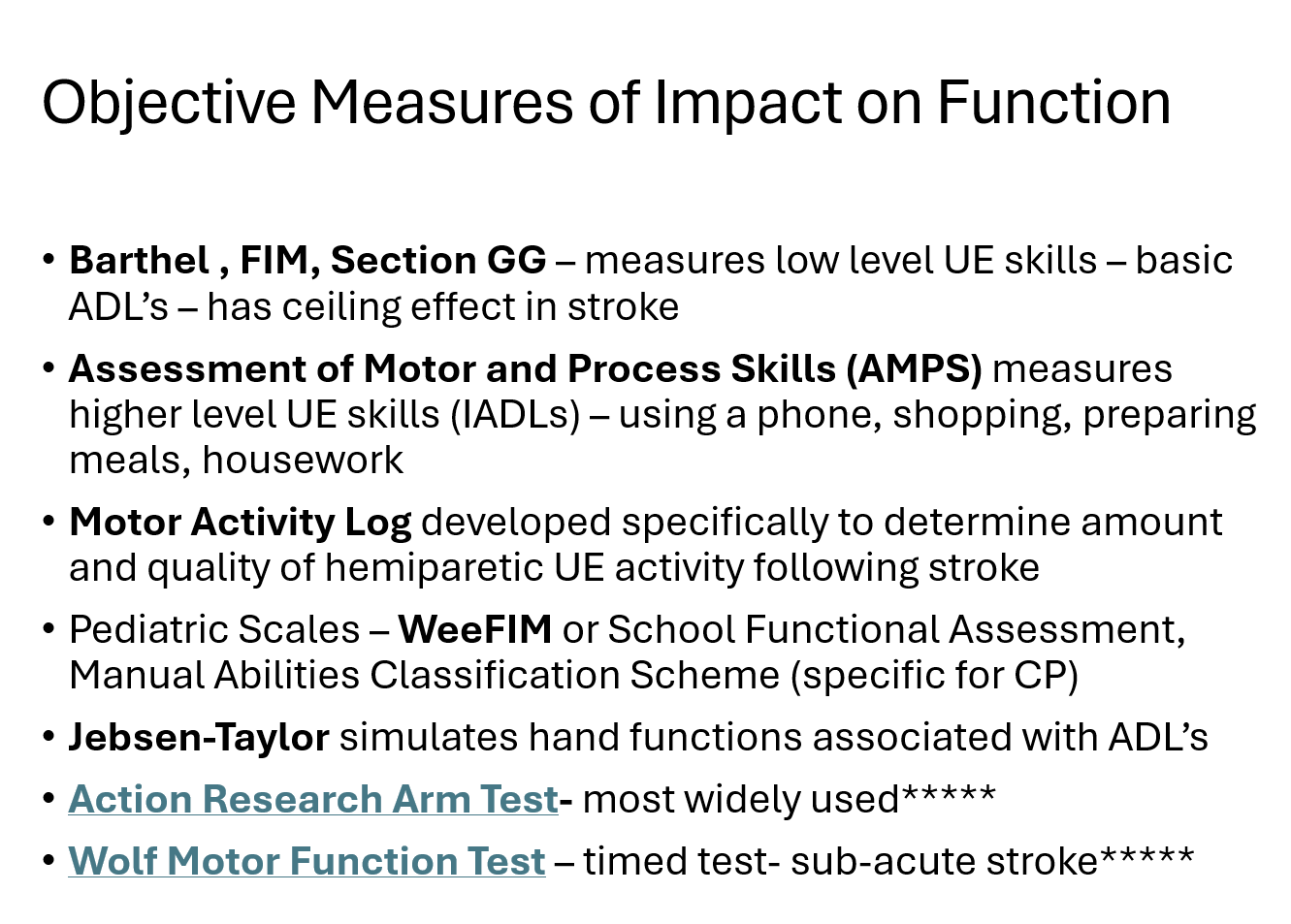
Simple UE Examination
__ analysis
__ coordination
__ and __
__ and __ objects
__ activities
__ manipulation
__ coordination
Handwriting analysis
Look at?
Ability to __ when writing
__
Writing __
Implement management like?
Look at wrist stabilization
Ability to secure paper when writting
Legibility
Writing speed
Need AD?

Eye-Hand Coordination
Assess what 2 things?
In which visual fields?
Test eye-hand coordination in what positions?
Saccades & smooth pursuits
Near/fear/central/peripheral visual fields
Sitting, standing, walking

Examining Reach & Grasp
Reach for objects how?
__ objects
Can use __ to quantify
Watch for?
Ipsi & contra
Randomize objects
Can use stopwatch to quantify
Watch for - increased mvmt time & inefficient hand trajectory

Examining Reach & Grasp
Not problems w/ grip __
what will you see?
Observe trunk for postural stability
Trunk __ in __ direction to GH __ & scapular __ to keep hand moving in straight path
formation
Examining Reach & Grasp
Watch for problems with anticipatory control
Repeated __
Contact objects with?
__ or __ lightweight objects after first grasp
Difficult __ heavy objects off table

Sollerman’s Grips Assessment
What does it test
How to administer

Pencil/Crayon Grip
What does it test
How to administer

Once object is grasped- can it be __ or __
movement of object in space or in reference to another object
manipulation
requires sustained isometric mm force to prevent object slippage

stablization
Modulation of grip force is impaired with neurological injury
how to asses it?
Fine Motor & Dexterity Tests
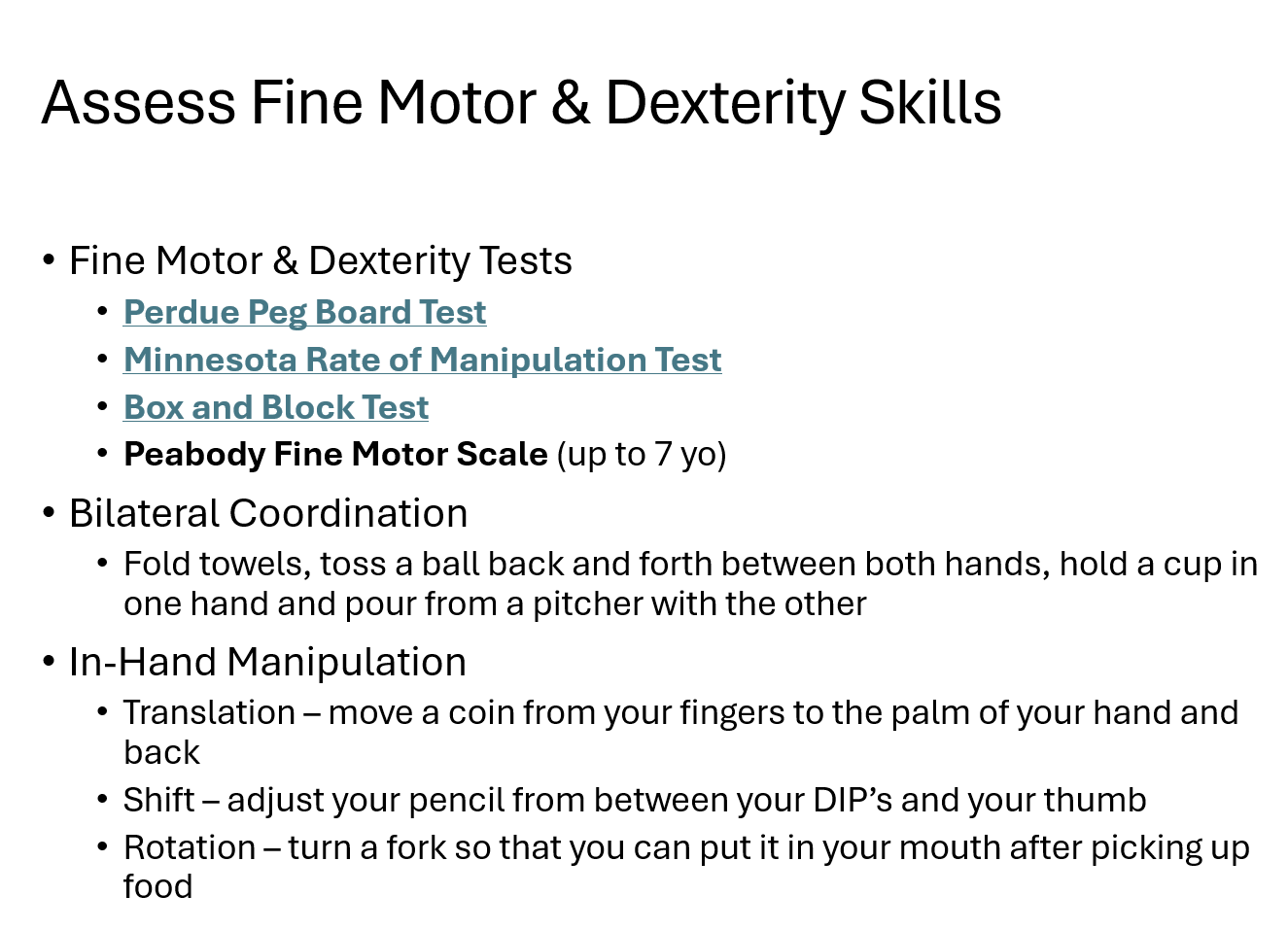
How to asses Bilateral Coordination
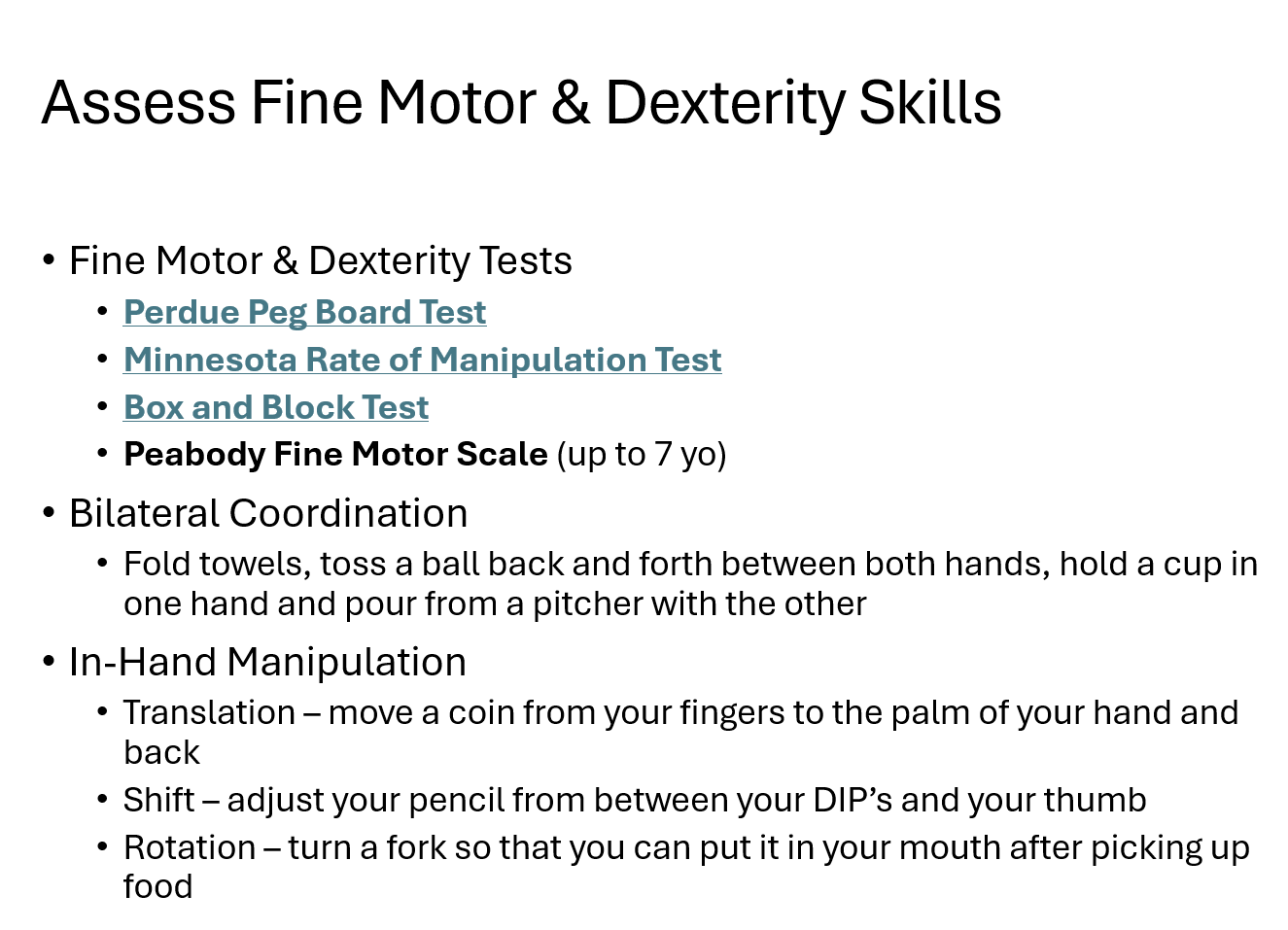
How to asses In-Hand manipulation
Translation -
Shift -
Rotation -

UE function can be affected by:

Perception/Cognition - does your patient have?

ROM impairments
Measure?
Look at total composite finger flexion - measure from where?

Grip Strength
Use what for grip and pinch strength?
Position?
Mean of how many trials?
Max strength at what position?

Edema Impact on UE Function in Neurological Conditions
Inefficient __
What impedes motion which leads to disuse?
Take what type of measurements?
In hemiplegia only…

Sensation
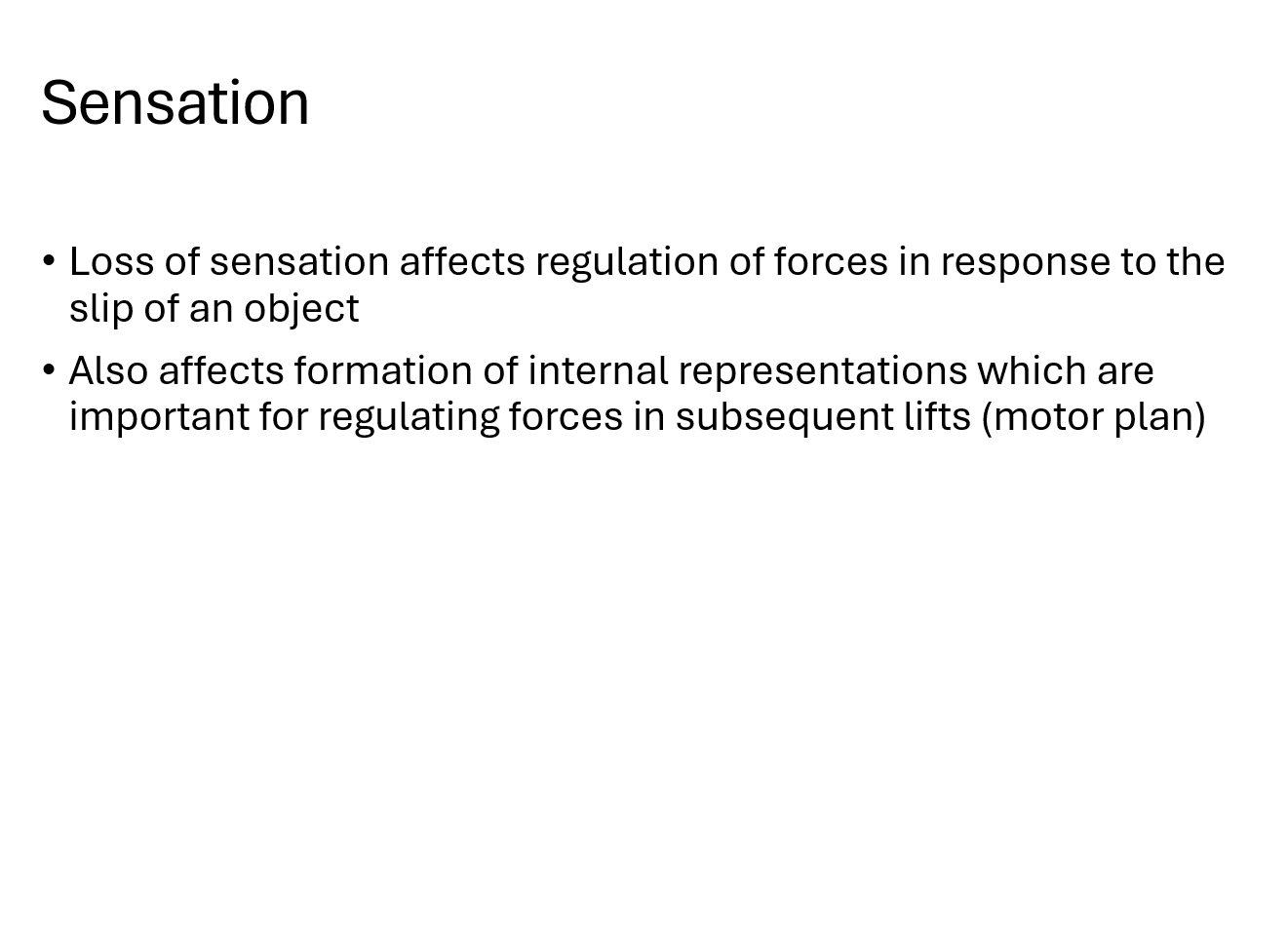
Loss of sensation affects __ of forces in response to the slip of an object
Also affects formation of ___ which are important for?
Recovery of UE function after stroke
Use what?
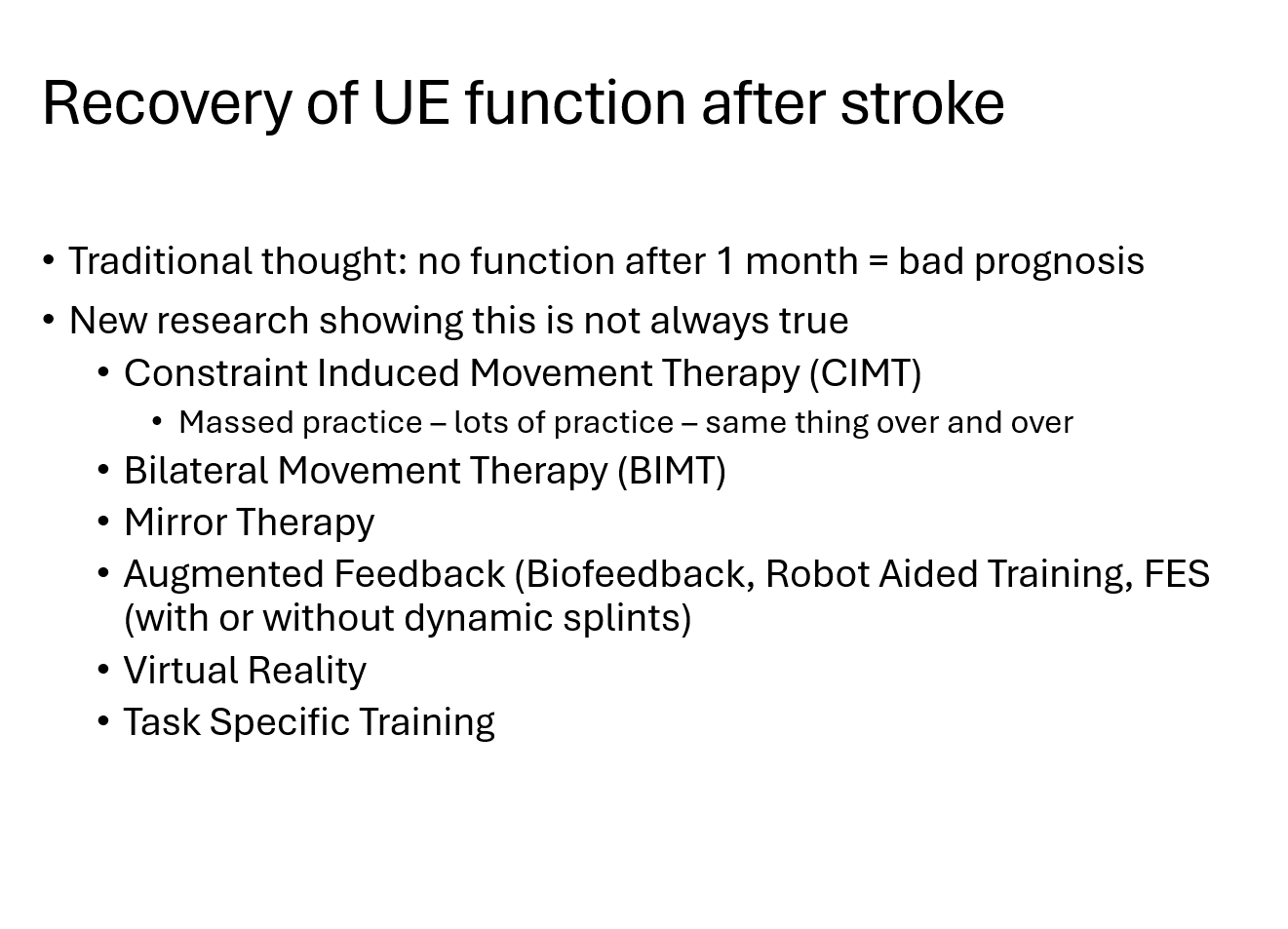
Constraint Induced Movement Therapy (CIMT)
Form of __ practice
Designed to improve function in hemiplegic UE by?
Reorganizes __ on affected side
Heavily researched in?

Protocol in CIMT
Place affected or unaffected UE in sling or mit?
How long
Adult?
Child?

Protocol in CIMT
Practice __ training with affected UE

Shaping
Performed in __ steps
Practiced in set of?
What type of feedback?

Task practice
Less __ than shaping
Perform a functional task for __ min s
__ feedback

Some Cautions With CIMT
Unable to use in pt’s with?
Most effective in persons __ years post stroke
Must be able to?
Best used for what patients

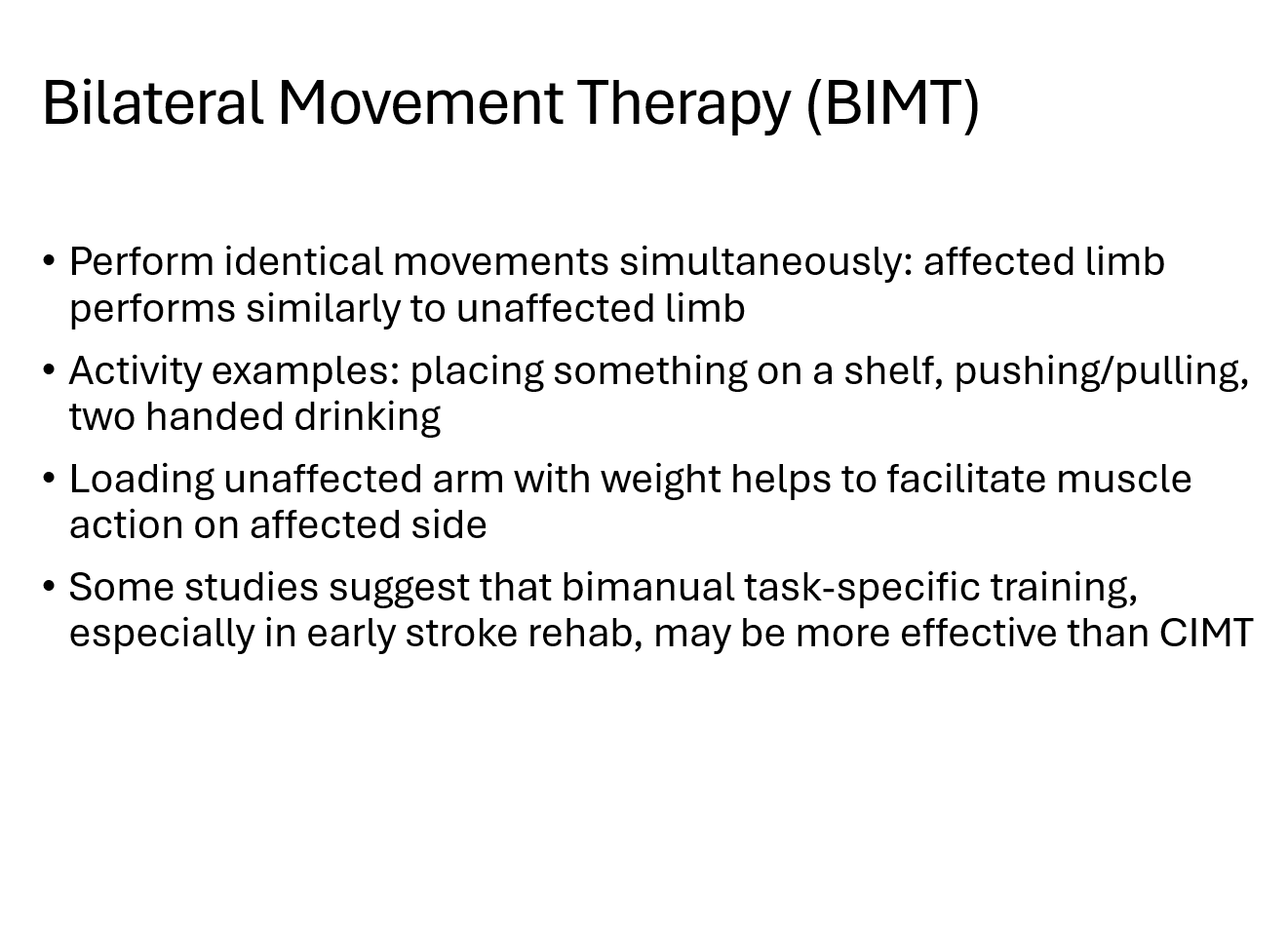
Bilateral Movement Therapy (BIMT)
What helps to facilitate muscle action on affected side?
Mirror therapy
Perform what tasks? can only see what arm?
Improve?

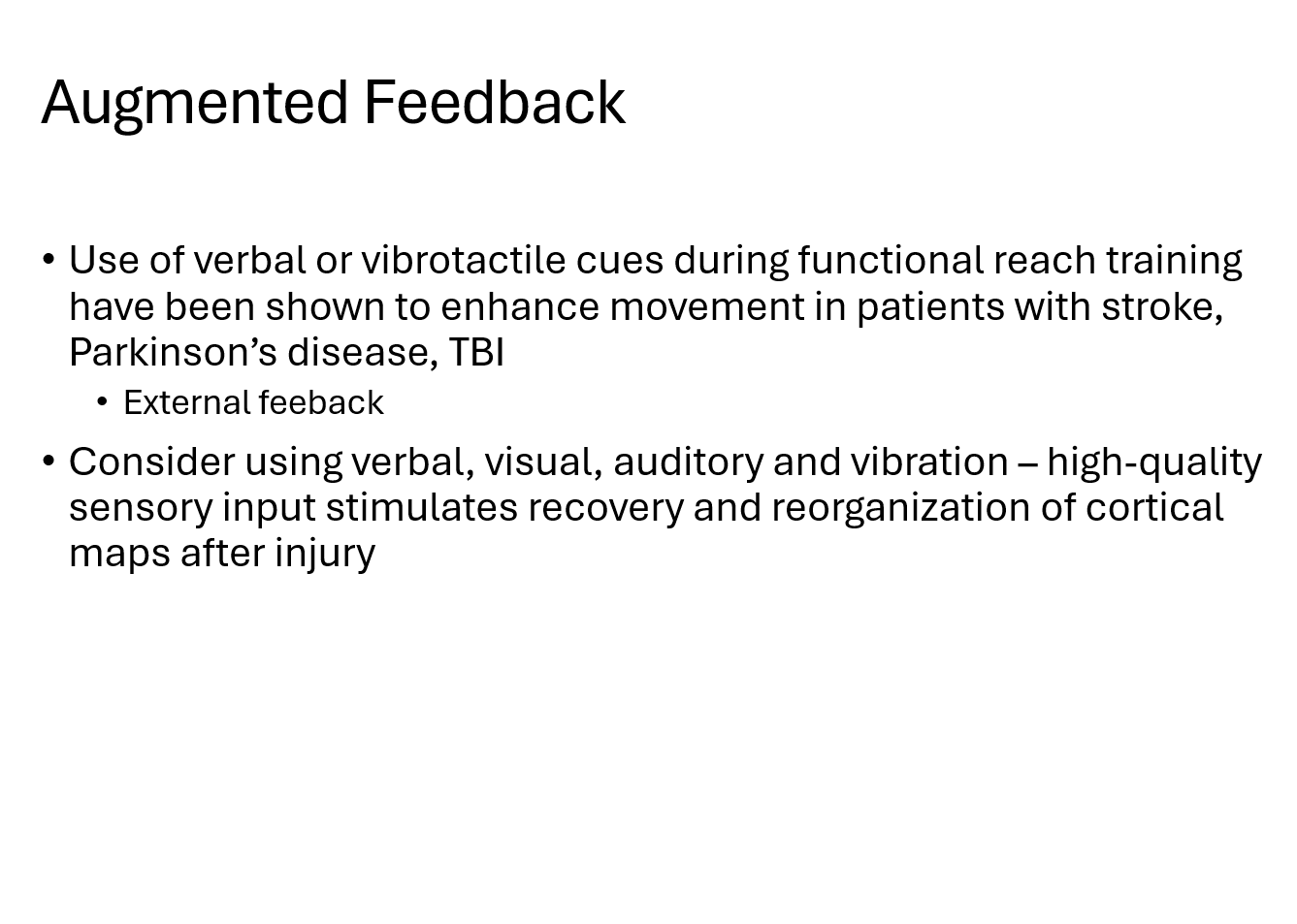
Augmented fee back
Use of __ or __ cues during functional reach training have been shown to enhance movement in patients with stroke, Parkinson’s disease, TBI
Consider using? Stimulates what of cortical maps after injury?
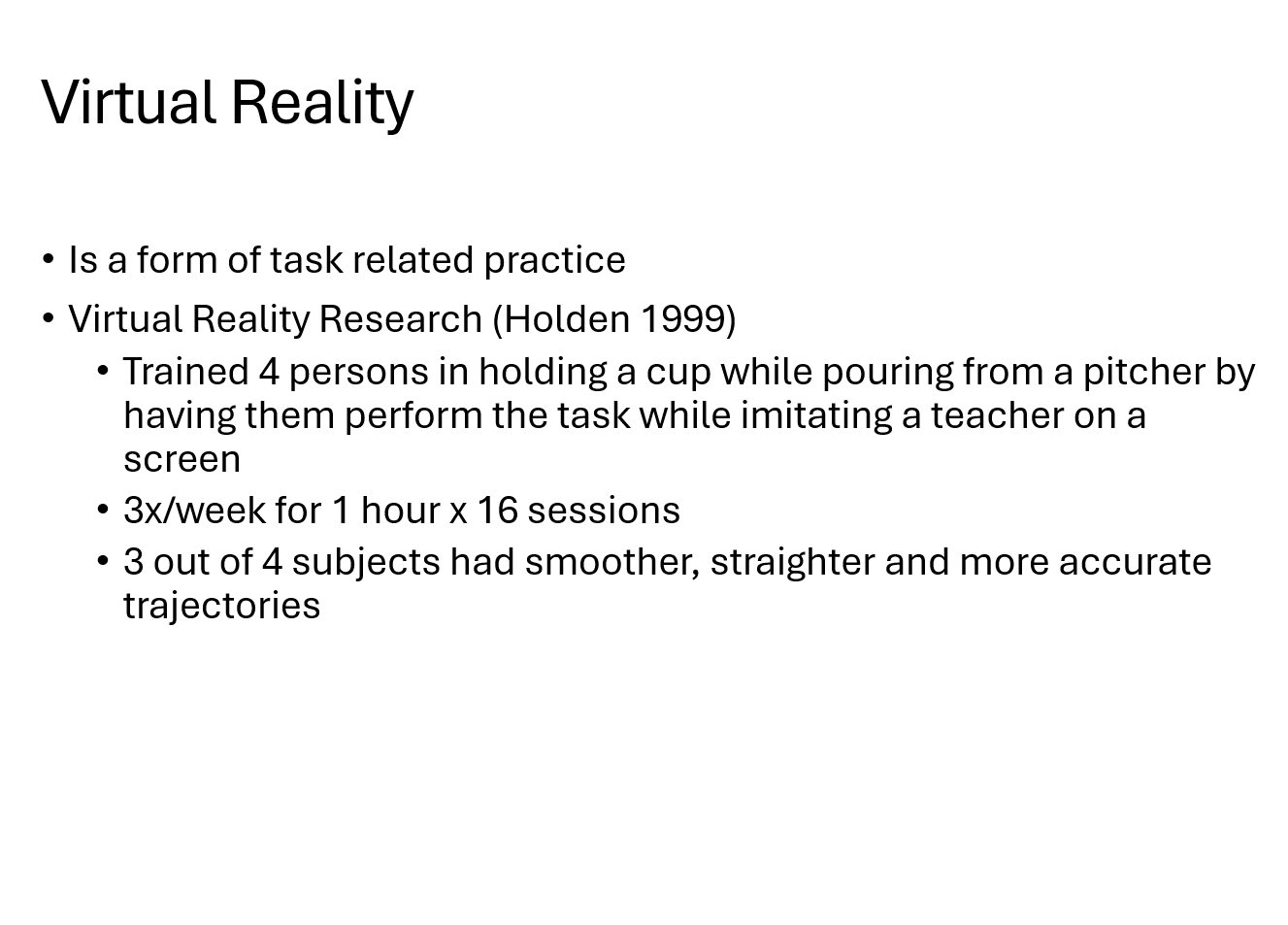
Virtual Reality
Is a form of?
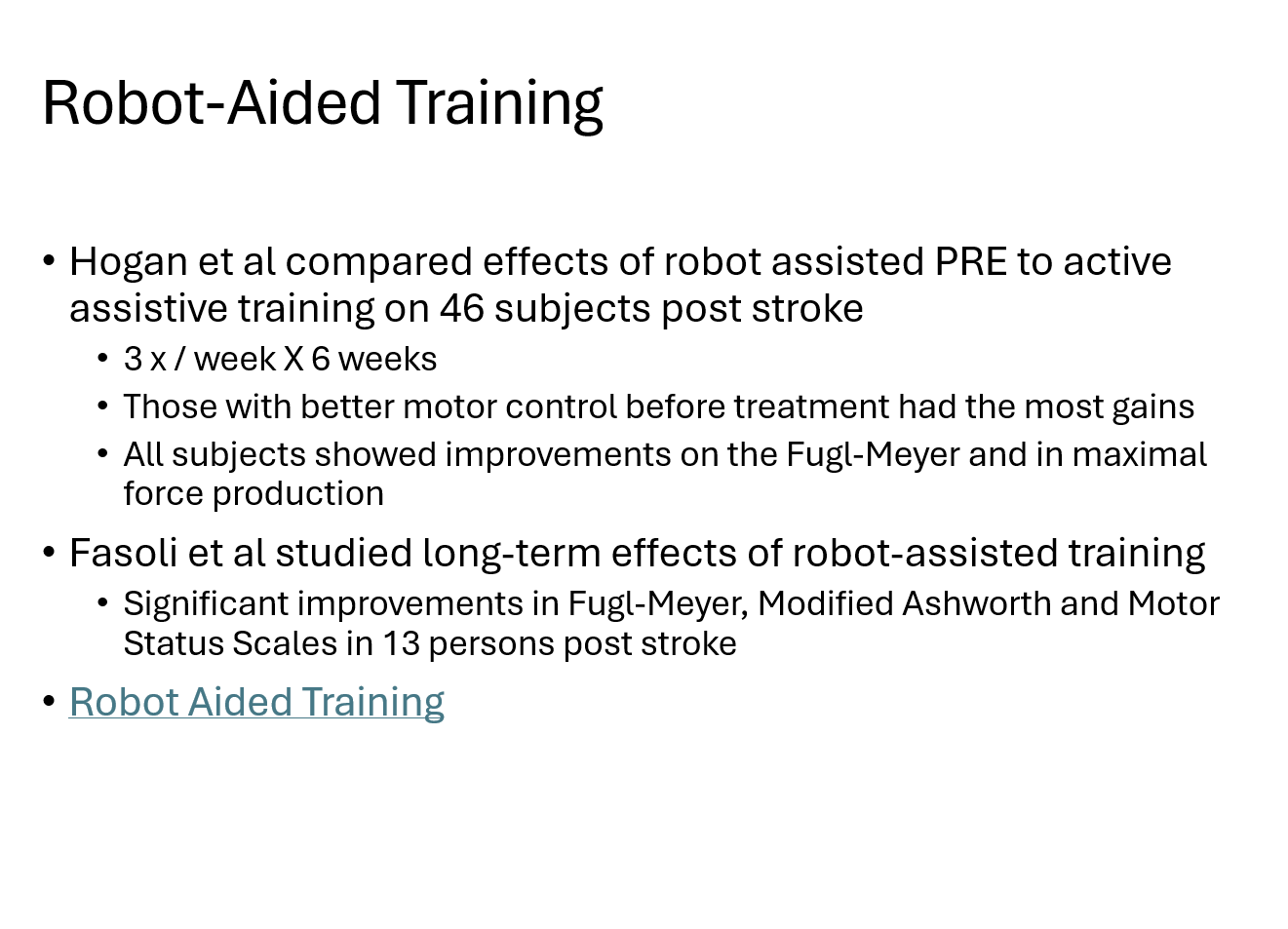
Robot-Aided Training
Who has the most gains?
All subjects showed improved in?
Functional Electrical Stimulation in UE Impairment
Showed improvements in?
May have better outcomes if FES is used with?
Protocol is?

For Patients with No Active Movement
___: may be necessary to initiate early motor recruitment prior to initiating a strengthening program
Combine with repeated ___ graded to patient’s ability to generate torque

Strengthening Protocol in Stroke
__ weeks at __% of __ rep max

Task Specific Training Research
Did task specific or PRE group show more improvements? in what?

Task-Specific Training
What enhanced neural plasticity?
May work on __ control, particularly of __ muscles, simultaneously with __ activities
Important to recognize value of hand dominance if it is on what side?
More on Task-Specific Training
Do what to enhance perception?

Treatment of the Hemiplegic Shoulder
Primary stability comes from?
__ is primary stabilizing ligament- limits displacement of humeral head away from glenoid fossa.
Hemiplegic Shoulder
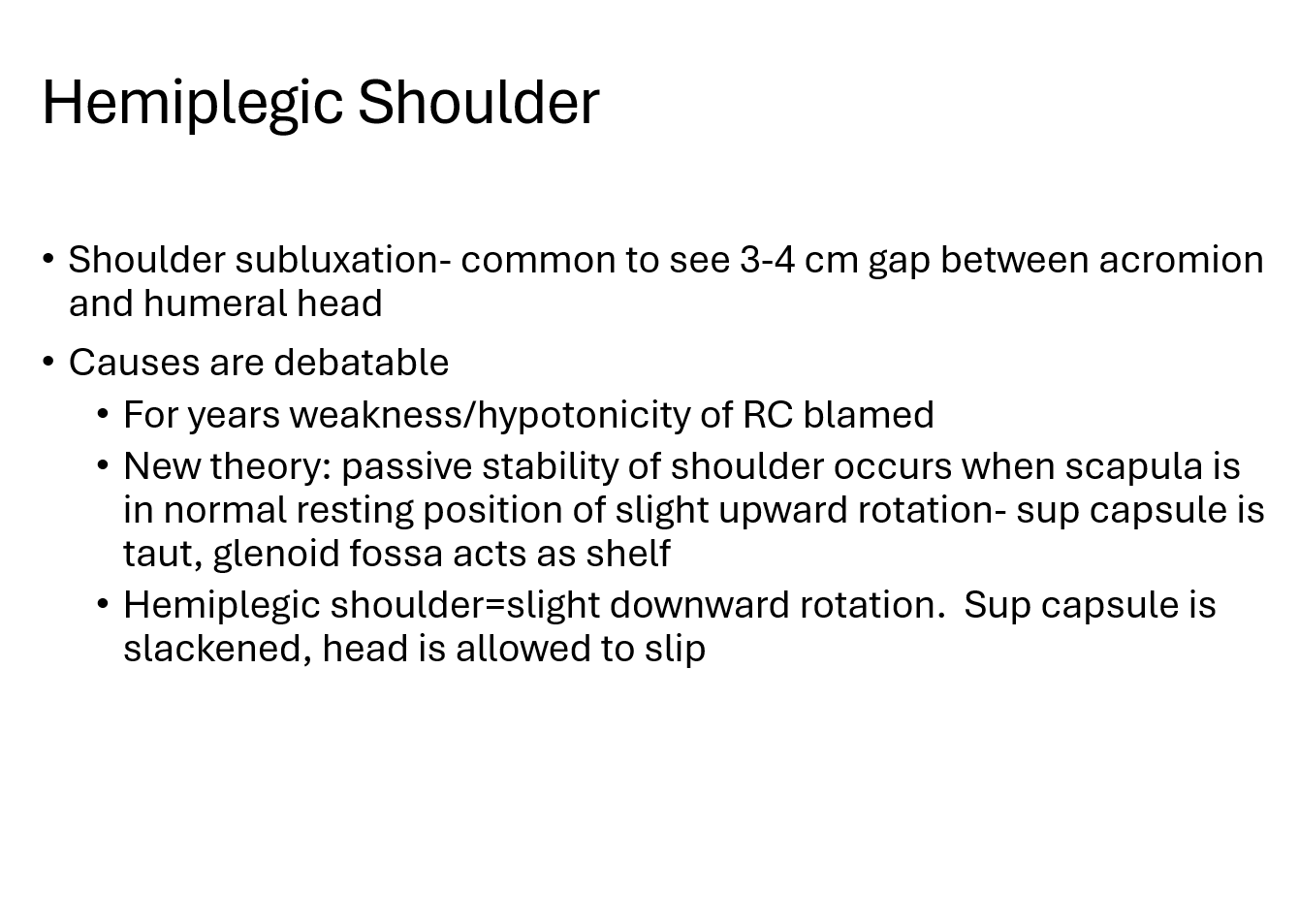
Shoulder subluxation- common to see __ cm gap between acromion and humeral head

New theory on shoulder subluxation
Passive stability of shoulder occurs when scapula is in what position?
what is taut? what acts as shelf?
Hemiplegic shoulder = slightly __ rotation
What is slacked? head allowed to slip
Subluxation - stages 0-4
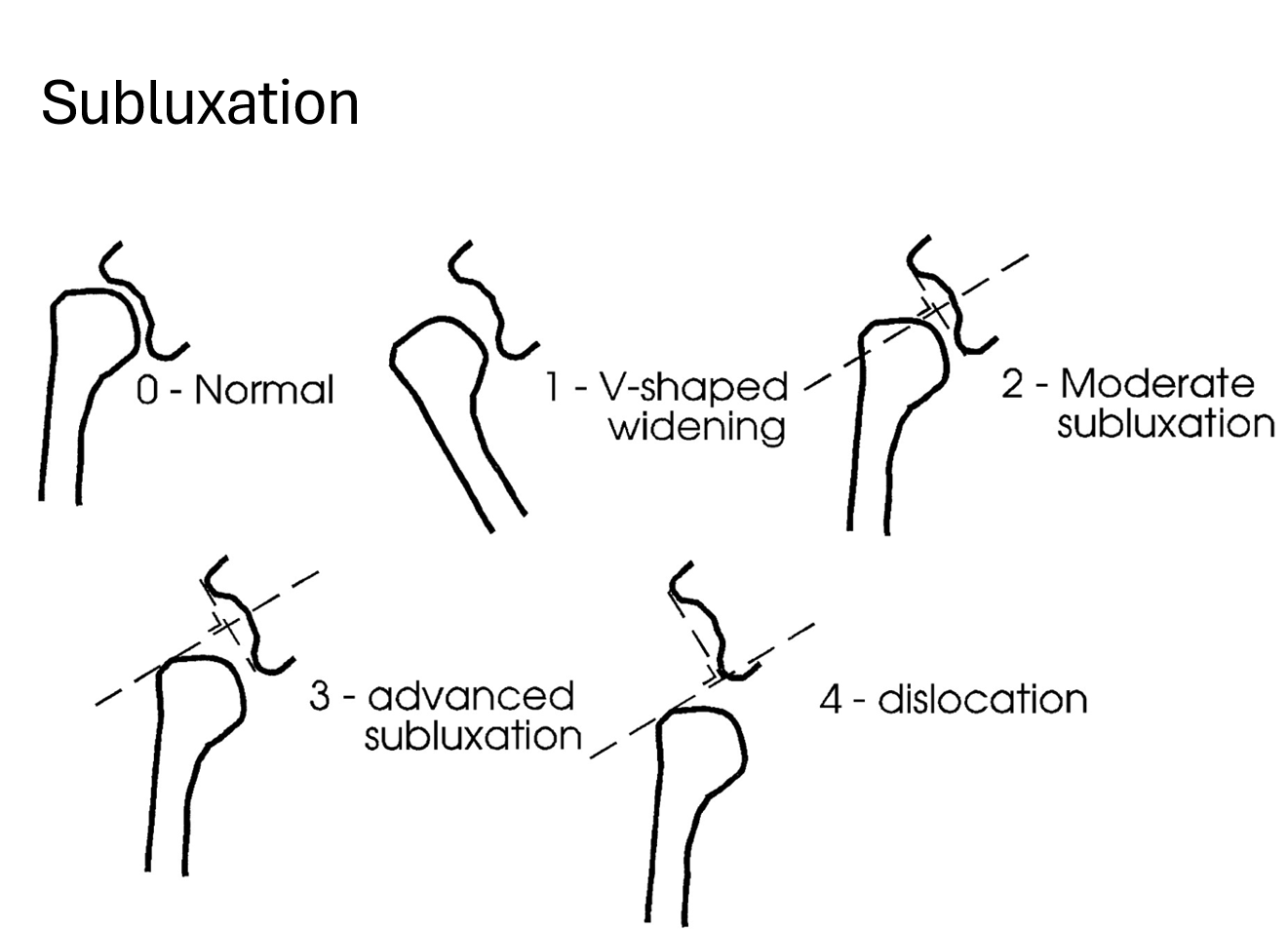
Don’t memorize
Treatment strategy for shoulder dislocation
Strengthening RC muscles AND scapular stabilizers that __ rotate scapula
NMES- electrodes on? increase from __ to __ a day?
Taping- __ shoulder to reduce sublux, extra to stabilize scap and humeral head
Combo of ___ may have longest lasting effect

Adverse effects of subluxation
•Undue stress on neurovascular structures around shoulder joint may lead to ?
•To minimize stress, the __ of the shoulder should be supported.
•The best way to do this is controversial
Ways to support hemiplegic UE

Hemiplegic Shoulder Pain
Most common cause?
Marked by?
Work to maintain ROM from beginning by?
Precautions?
Key?