Vascular dx in dogs & cats
 Call Kai
 Learn
Learn Practice Test
 Spaced Repetition
 Match
Match Flashcards
 Knowt Play
1/38

There's no tags or description
Looks like no tags are added yet.
Name | Mastery | Learn | Test | Matching | Spaced | Call with Kai | Chat |
|---|
No analytics yet
Send a link to your students to track their progress
39 Terms
List the indications of measuring BP
Anaesthetic monitoring
Assessing severity of heart dx —> hypotensive = grave prog indicator
Identification of systemic hypertension
Assess response to drugs (vasodilators, anti-hypertensives etc.)
List the methods of measuring BP
Direct (more likely in anaesthetised)
Indirect
Doppler technique (measures systolic only)
Oscillometric technique (patient must be still & have no arrhythmias) —> systolic & diastolic pressure, HR

What is normal BP in dogs and cats?
Dogs —> 133/75 mmHg
Higher in sighthounds
Cats —> 125/80 mmHg
Can get situational hypertension i.e. when stressed (keep in mind)
What values suggest systemic hypertension?
Systolic = >160 / 175 / 180
Diastolic = >95 - 100
has potential to cause severe organ damage
What are the main organs targeted by hypertension?
Eye (retina)
Brain
Myocardium
Kidney
Severity based on risk of 'target organ damage'

What are the main consequences of systemic hypertension?
Ocular —> retinal haemorrhage, hyphaema, retinal detachment, blindness)
CNS effects
Renal failure/ proteinuria
Cardiac —> LVH, heart murmurs due to LVOTO / MR
What should you do if you diagnose hypertension?
Check for end-organ damage
examine retinas
hx & neuro exam
check SG of urine sample
ECG
Search for underlying cause —> 1° hypertension v. rare
List diseases associated with 2° systemic hypertension
CRD
Hyperthyroidism (cats)
Hyperadrenocorticism
Diabetes mellitus
Liver dx
Hypothyroidism
Acromegaly
Phaeochromocytoma
Hyperaldosteronism
Chronic anaemia (cats)
Obesity
CNS dx
How is systemic hypertension treated?
If very severe (systolic >200) should treat before other investigations
Amlodipine —> Ca channel antagonist
Check BP after one week (up-tire if required)
ACEi (e.g. Benazepril) first in a dog usually then add amlodipine
Can add Telmisartan (AngII blocker)
Recall the factors in Virchow's triad which leads to clot formation

What is feline arterial thrombo-embolism? (FATE)?
Any condition causing stasis in heart resulting in thrombus formation
Usually in LA —> embolisation may be to any region; often distal aorta
Initial embolus causes further platelet aggregation & adhesion → further activation of coagulation cascade & vasocon of lateral vessels→ viscious cycle
What are the clinical signs of FATE?
Severe
Loss of use of HLs
Marked pain
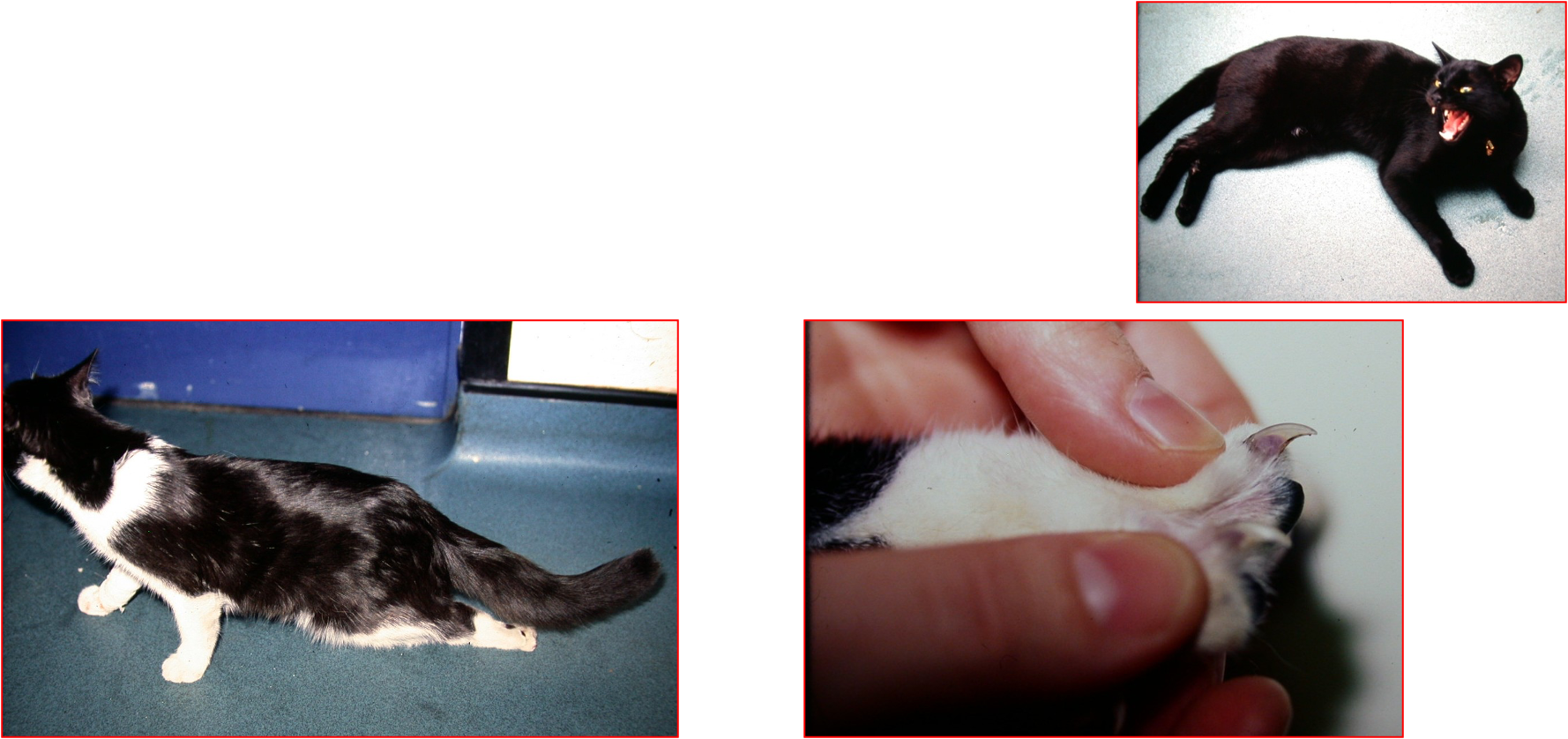
poor prog due to underlying heart dx
How is FATE treated?
Priority = Analgesia & anxiolytic
meth, buprenophine, morphine
Stabilise heart failure
Could use tissue plasminogen activator as it is 'clot busting'
Clopidogrel / aspirin / heparin to inhibit further platelet aggregation
Euthanasia reasonable —> bad prognosis (<50% survival)
survival may not have full neuro recovery —> may still drag back legs
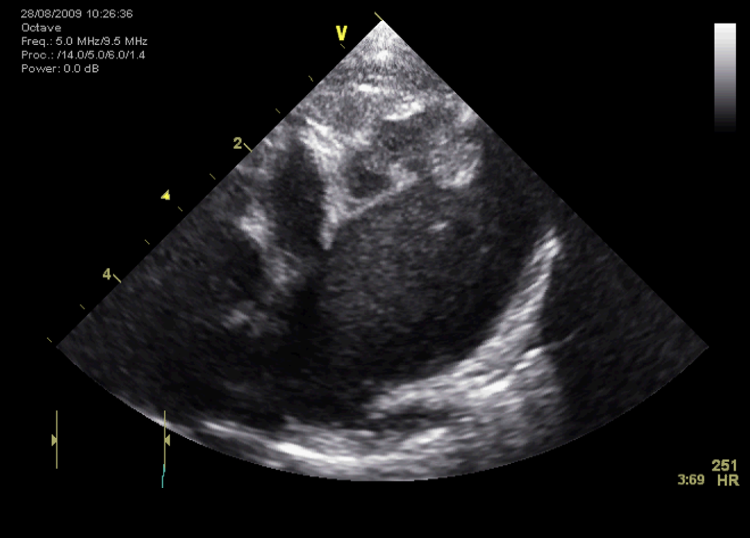
How does FATE present on echo?
'Smoke' in LA
Can see thrombus in left atrial appendage
What can you use for prevention of FATE in @ risk cats?
Aspirin @ low dose
Clopidogrel
better than aspirin @ preventing further events / improving survival
Low molecular weight heparin (e.g. dalteparin)
Consider oral anti-coags e.g. Rivaroxaban / Apixaban
Treat cardiac dx
Describe the MOA of unfractionated heparin vs LMW heparin
Unfractionated
Major effect on interaction of thrombin and antithrombin III, to initiate platelet aggregation and thrombosis.
Heparin-ATIII also inhibits factor Xa and other factors of coagulation cascade
Monitor APTT – increase x 1.5 - 2 fold
LMW
Anti-Factor Xa
Do not need to monitor coagulation times
Can train owners to inject once or twice daily
How does arterial thrombo embolism present in dogs?
Cavaliers predis?
Hindlimb weakness or pain, worse w/ exercise
Pale / pulseless / cold c.f. w/ non-affected limb
What is canine ATE more commonly associated with?
Endocrinopathy e.g. Cushing’s dx, Hypothyroidism.
Rarely heart dx
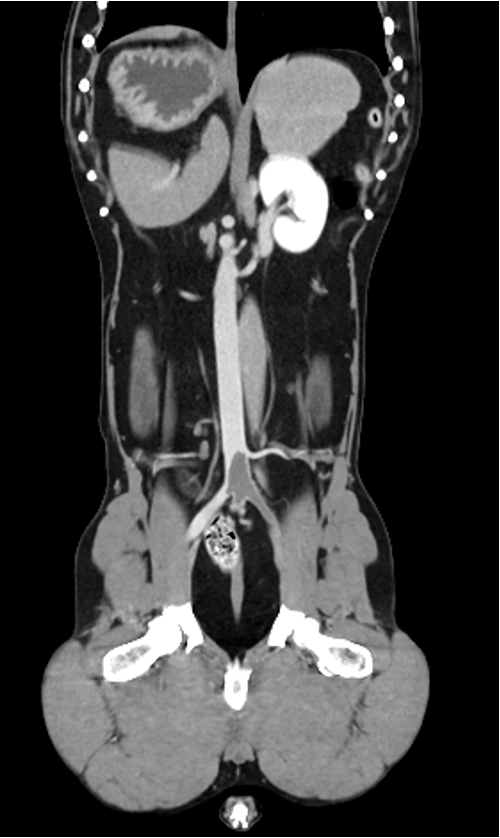
List the different types/ causes of pulmonary hypertension
Type 1 —> Pulmonary arterial hypertension (e.g. vascular changes with shunting defects & Eisenmengers)
Type 2 —> ass. w/ left heart failure – high LA pressure (post-capillary) e.g. caused by mitral valve dx
Type 3 —> ass. w/ respiratory disease / hypoxia e.g. brachys / idiopathic pulmonary fibrosis
Type 4 —> pulmonary thrombo-embolism
Type 5 —> parasitic e.g. Dirofilariasis, Angiostrongylosis → vascular changes
How does a PH (pulmonary hypertension) case present?
Exercise intolerance, syncope, shortness of breath on exertion/ stress
Loud S2, loud TR murmur
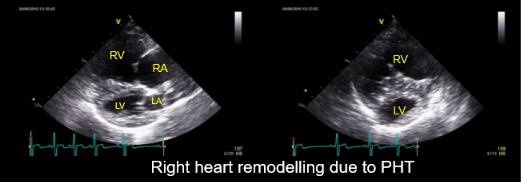
How does PH present on Rx and echo?
Rads —> dilated, tortuous or pruned pulmonary arteries

Echo:
Dilated & hypertrophic RV
Dilated pulmonary trunk
High velocity TR, PR jets
What are the consequences of PH?
R-CHF → cor pulmonale (due to lung dx e.g. pulmonary fibrosis)
How is PH treated?
Treat underlying dx
Sildenafil (viagra) —> anti-phosphodiesterase V inhibitors
Pimobendan? Amlodipine
What is PTE (pulmonary thrombo-embolism) ass. with?
PH
Cushing’s disease, protein losing nephropathy & enteropathy, IMHA etc.
How is PTE diagnosed?
Arterial blood gas —> largre alveolar to arterial O2 gradient
Significant V:Q mismatch
D dimers & fibrin degredation products identified (clot breakdown products)
How do you treat/prevent PTE?
Same as ATE
How is dirofilaria immitus spread and what conditions does it need?
mosquito-borne; endemic in much of the world in dogs & cats
Needs warm, moist climate to allow L1 to mature into infective L3 in a mosquito (intermediate host)
What is the lifecycle of dirofilaria immitus?

What does dirofilaria immitus cause?
Cor pulmonale, wt. loss, fatigue, cough, dyspnoea
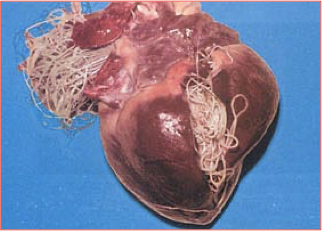
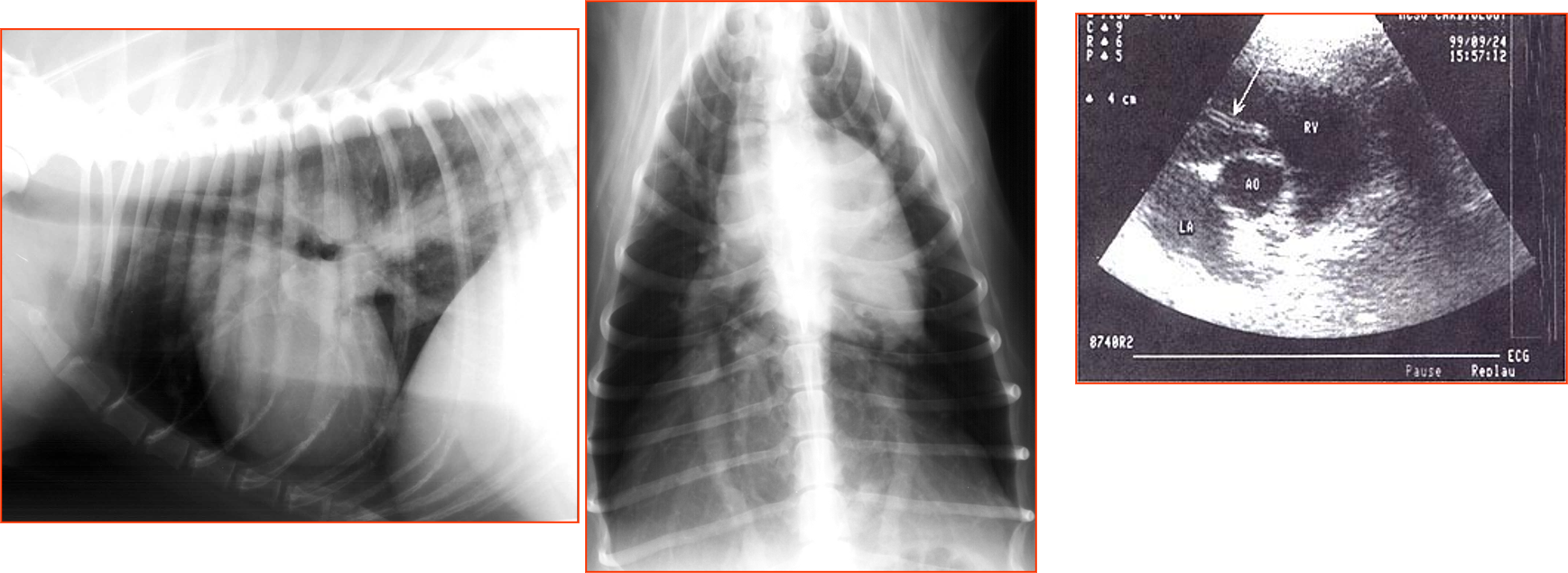
How does dirofiliarisis present on rads & echo?
Rads —> Lungs affected & enlarged pulmonary vessels
Can see worms on echo
What is dirofilaria treated?
Can surgically remove —> must remain intact when removed otherwise anaphylactic reaction poss
Moxidectin & doxyclyine to kill Wolbachia first
Melarsomine Dihydorchloride (but have to import) (also doxycyline first)
How is dirofilariosis diagnosed?
Direct smear
Microfilariae on Knott test

Immunodiagnostic testing —> antigen ELISA test (detects F), antibody test
What are the dirofilariasis preventatives?
Selamectin monthly topical
Milbemycin (with praziquantal) monthly oral
Moxidectin (advocate) (with imidacloprid) monthly topical
Adulticides —> melarsomine dihydrochloride
What are wolbachia and how are they ass. w/ dirofilariasis?
Obligate, intracellular, G-ve, endo-symbiotic bacteria
Found in uterus of F dirofilaria
Poss role in pathogenesis?
Recommendation —> treat wolbachia w/ doxycycline prior to melarsamine
Recall the epidemiological features of angiostrongylus vasorum?
Adults about 2cm long, found in dogs & foxes
Slugs/ snail intermediate host
Widespread in UK, more in south
(French heartworm)
What are the clinical signs of angiostrongylosis?
Often young dogs
May be asymp depending on worm burden & immune response
Resp signs
Chronic / unresponsive cough
haemoptysis (coughing up blood / bloody mucus)
Pulmonary hypertension
Dyspnoea
Exercise intolerance, CHF
Coagulopathy
Can have major bleeds after injury / surgery (e.g. neutering), epistaxis etc.
Haemoptysis / Haematemesis
Neurological
May be due to aberrant migration of parasites
Intracranial bleed
how is angiostrongylosis diagnosed?
Thoracic rads:
cor pulmonale
variable/patchy/mixed pulmonary infiltrates (more marked @ periph of lung field)
Eosinophilia
Raised B-globulins
Angio Detect SNAP test
Larvae in faeces (Baermann)
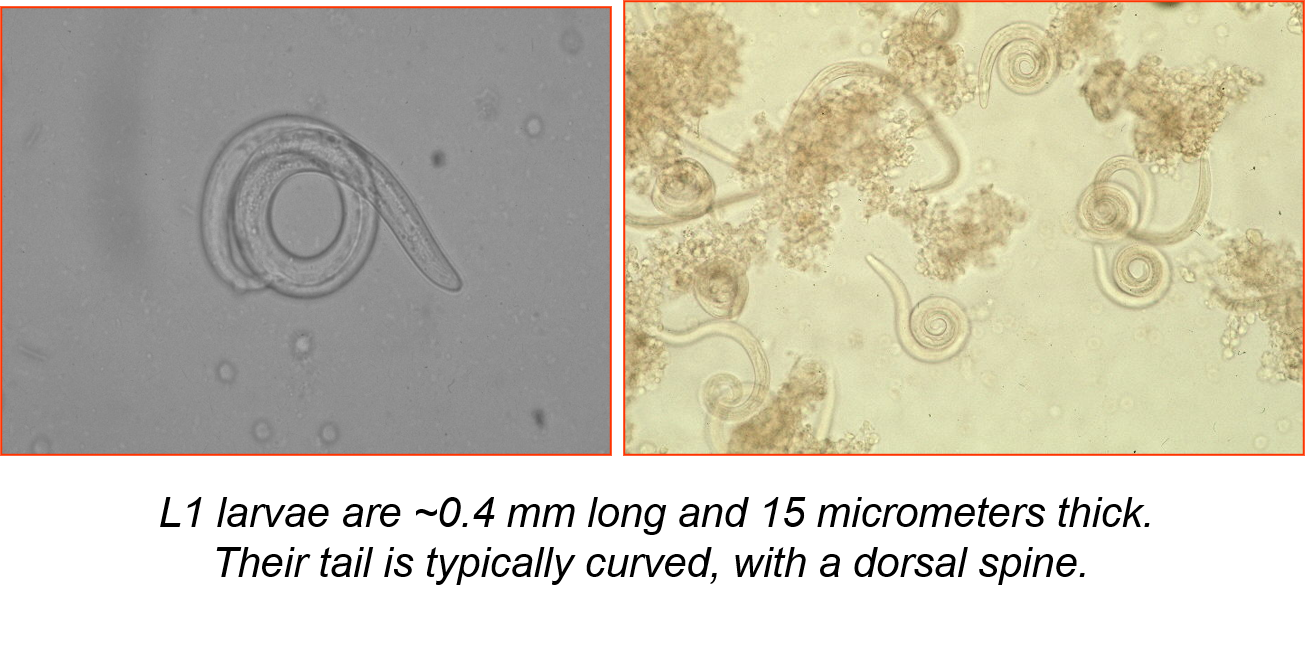
How is angiostrongylosis treated?
Milbemycin (w/ praziquantel)
Moxidectin (w/ imidacloprid)
Fenbendazole —> kills slowly, not licensed yet (good to start on)
+/- Prednisolone to prevent immune reaction
How is angiostrongylosis prevented?
Moxidectin (Advocate)
Milbemycin (Milbemax) (q. 4 wks)