ne102 4/6 lecture - transport across membranes

0.0(0)
Studied by 0 people
call kaiCall Kai
learnLearn
examPractice Test
spaced repetitionSpaced Repetition
heart puzzleMatch
flashcardsFlashcards
GameKnowt Play
Card Sorting

1/21

encourage image

There's no tags or description

Looks like no tags are added yet.

22 Terms
1
New cards
<p>cellular membranes</p>

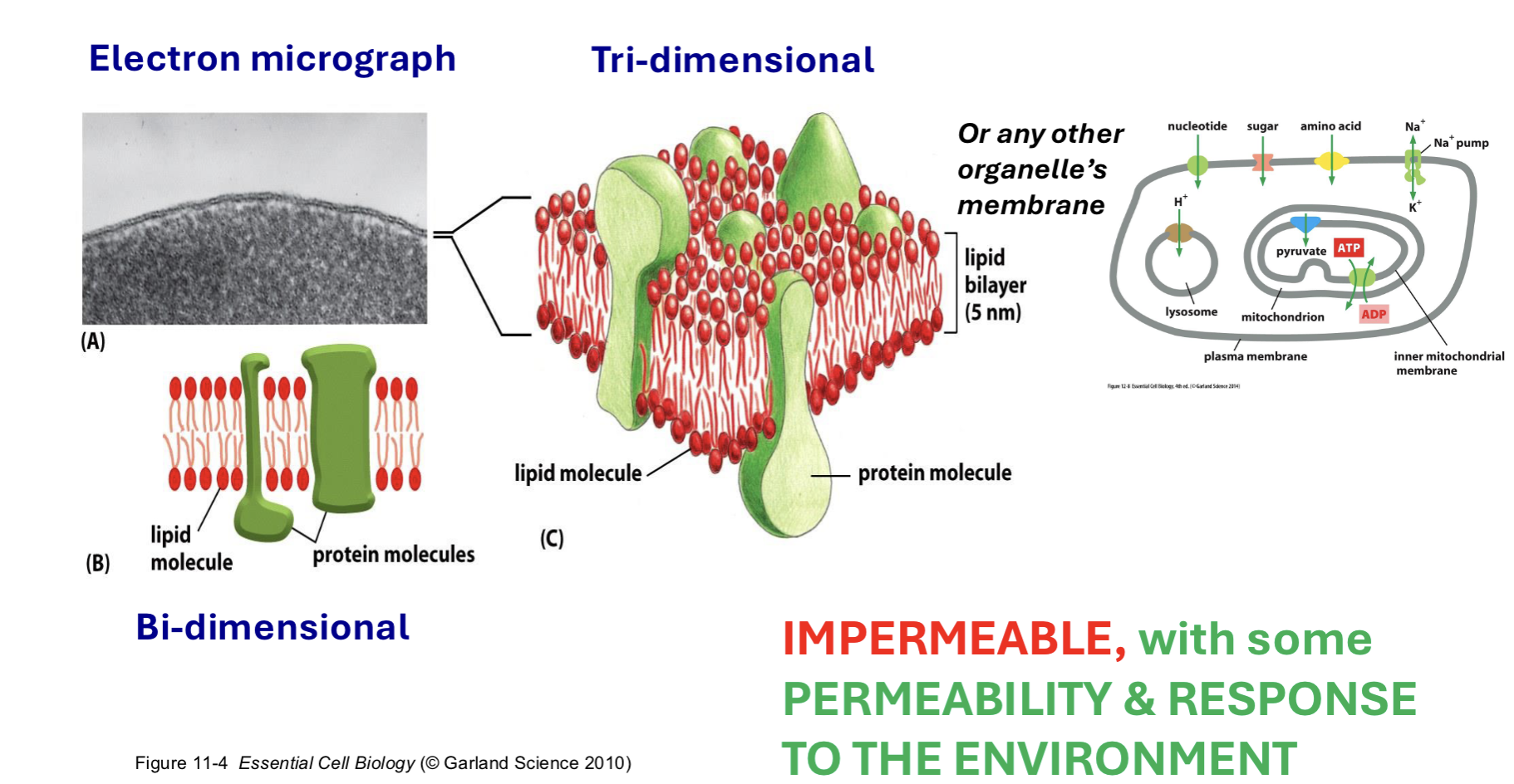
cellular membranes

made of embedded proteins + lipids; impermeable, with some permeability + response to the environment
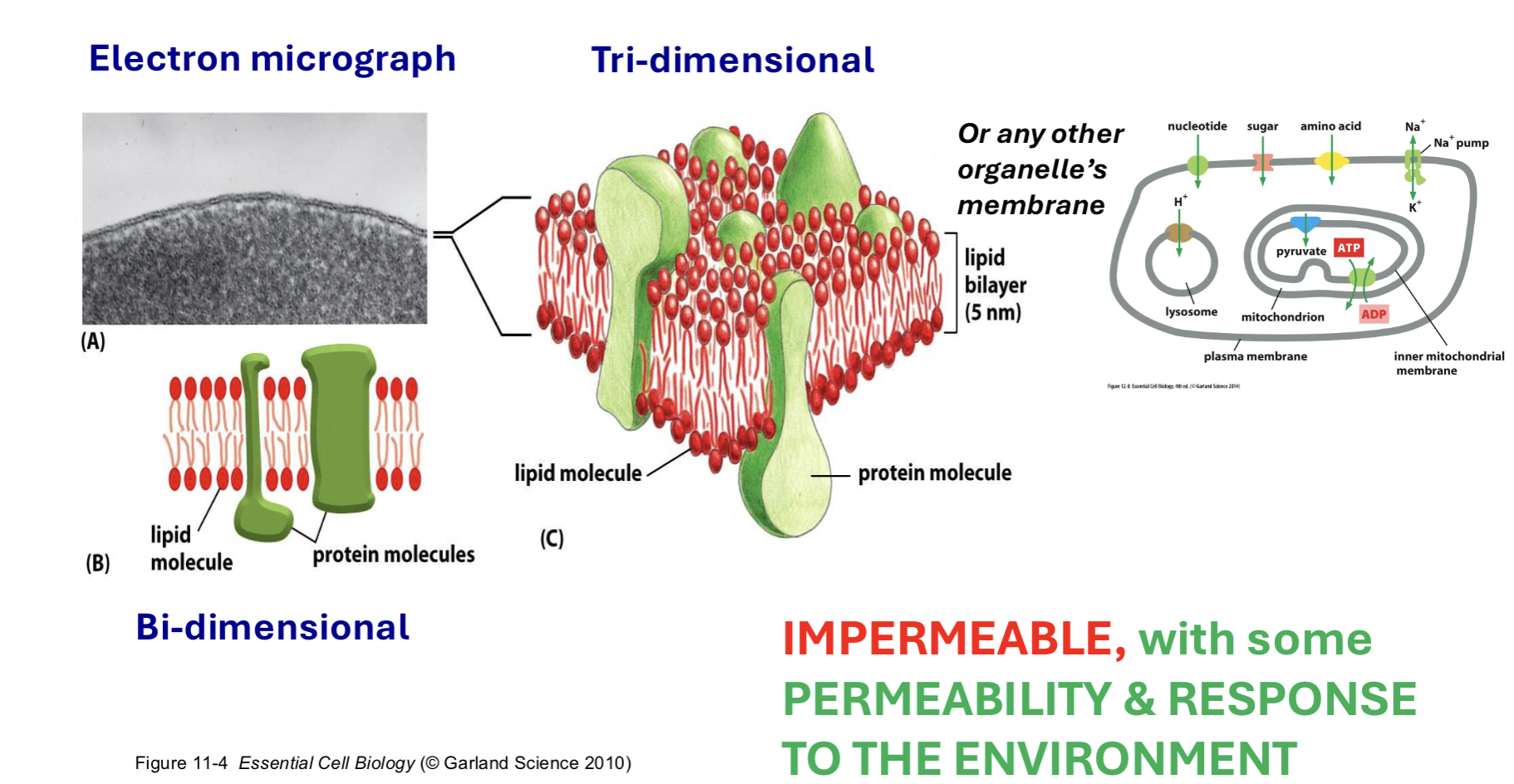
<p>made of embedded proteins + lipids; impermeable, with some permeability + response to the environment</p>
2
New cards
<p>membrane orientation</p>

membrane orientation

is maintained during transport

<p>is maintained during transport</p>
3
New cards
<p>names of transmembrane proteins</p>

names of transmembrane proteins

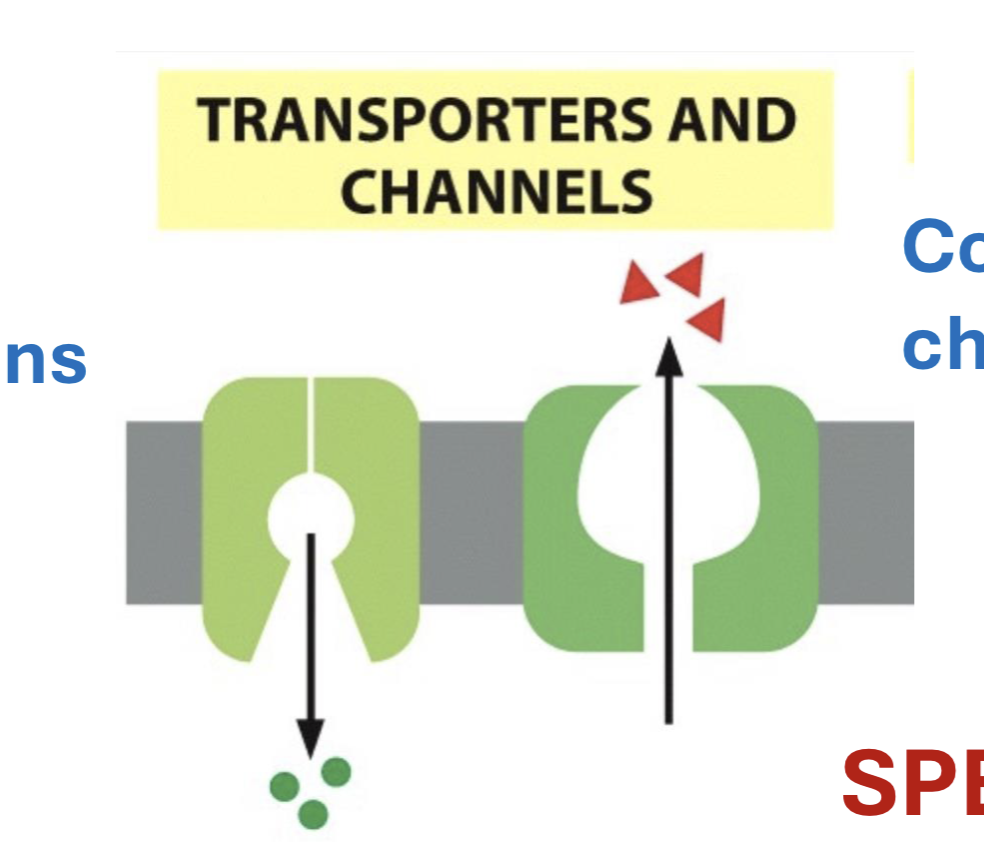
  1. transporters and channels

  2. anchors

  3. receptors

  4. enzymes


<ol><li><p>transporters and channels</p></li><li><p>anchors</p></li><li><p>receptors</p></li><li><p>enzymes</p></li></ol><p></p>
4
New cards
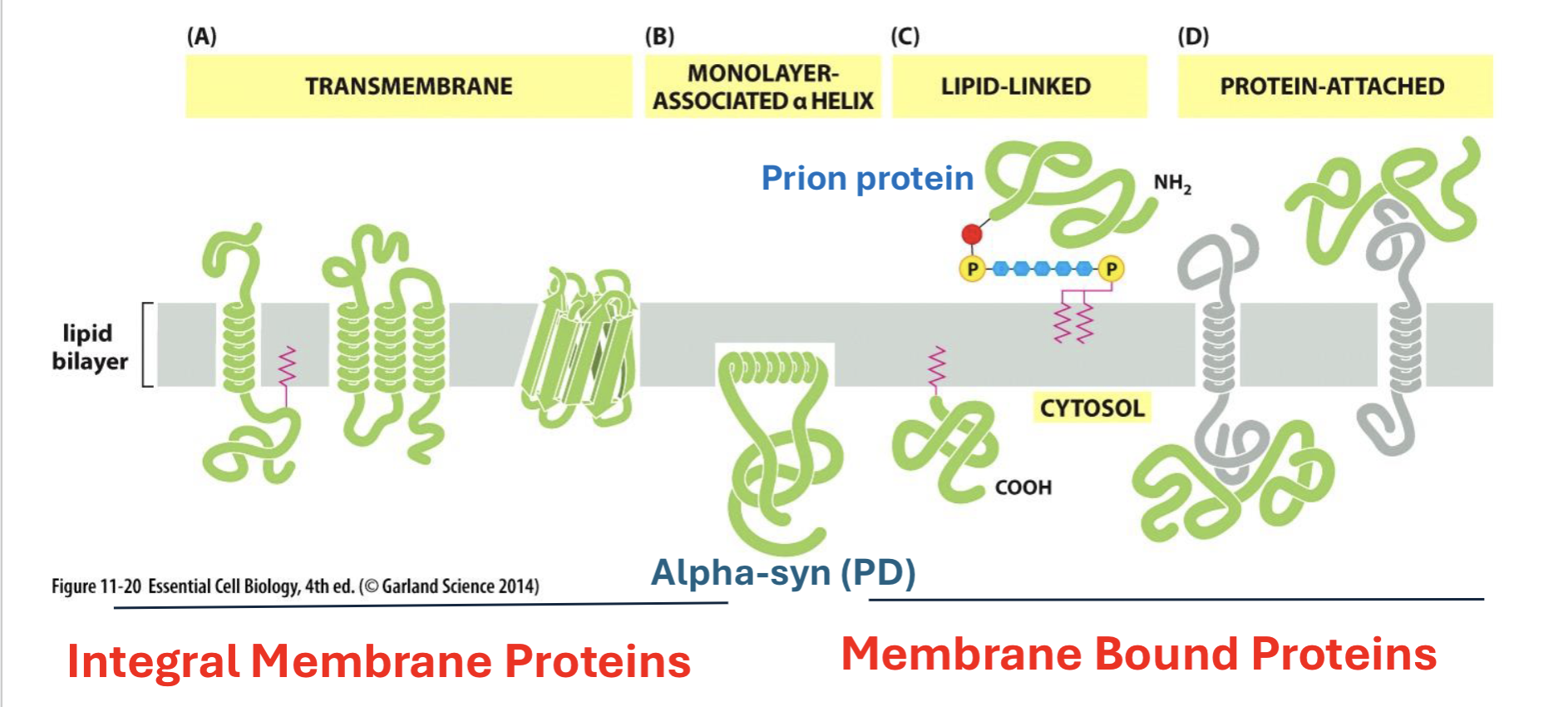
<p>membrane proteins can associate with the lipid bilayer in different ways </p>

membrane proteins can associate with the lipid bilayer in different ways

integral membrane proteins: transmembrane (alpha helix, beta sheet), monolayer-associated alpha helix (alpha syn PD)

membrane bound proteins: lipid-linked (prion protein), protein attached
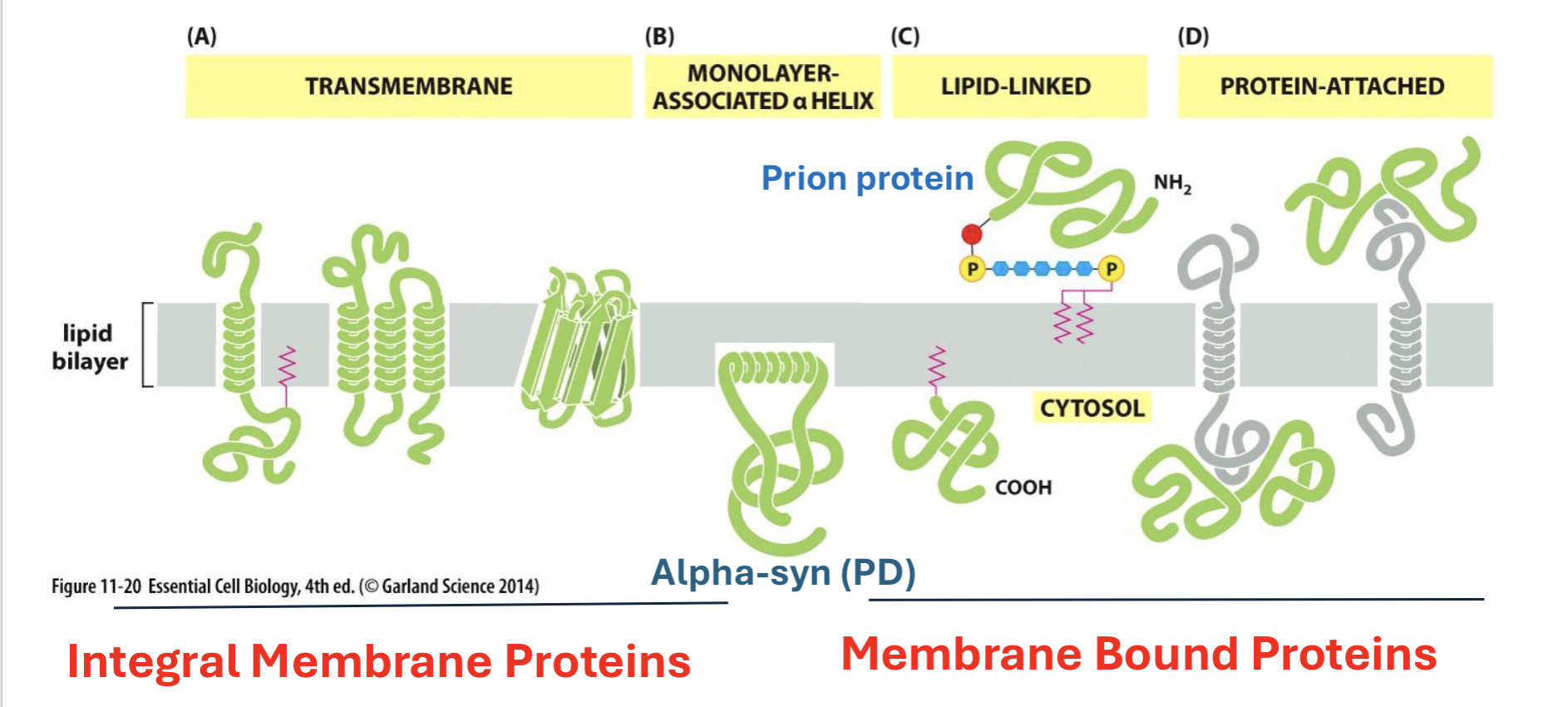
<p>integral membrane proteins: transmembrane (alpha helix, beta sheet), monolayer-associated alpha helix (alpha syn PD) </p><p>membrane bound proteins: lipid-linked (prion protein), protein attached</p>
5
New cards
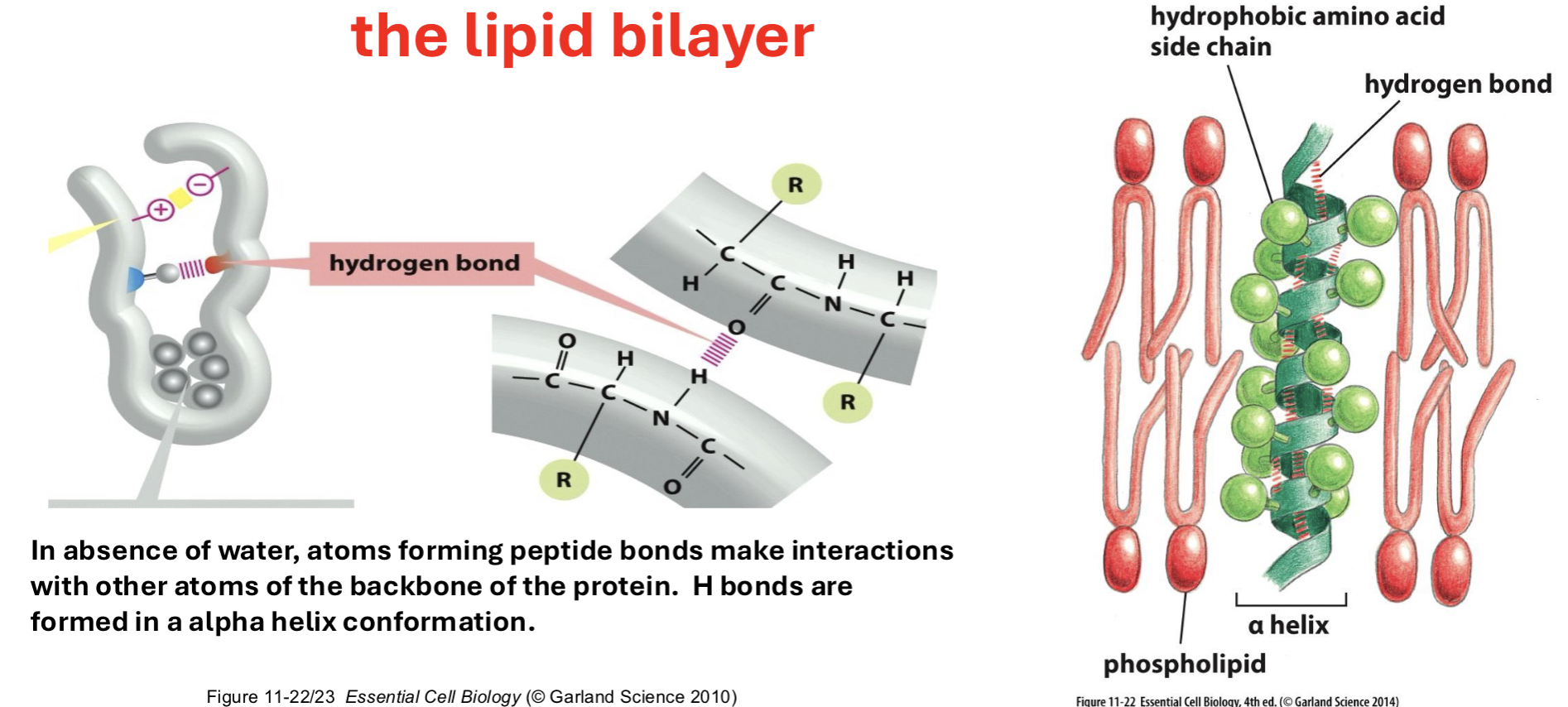
<p>integral membrane proteins</p>

integral membrane proteins

alpha-helix structures intercalate in the lipid bilayer; in absence of water, atoms forming peptide bonds make interactions w/ other atoms of the backbone, H bonds are formed in alpha helix
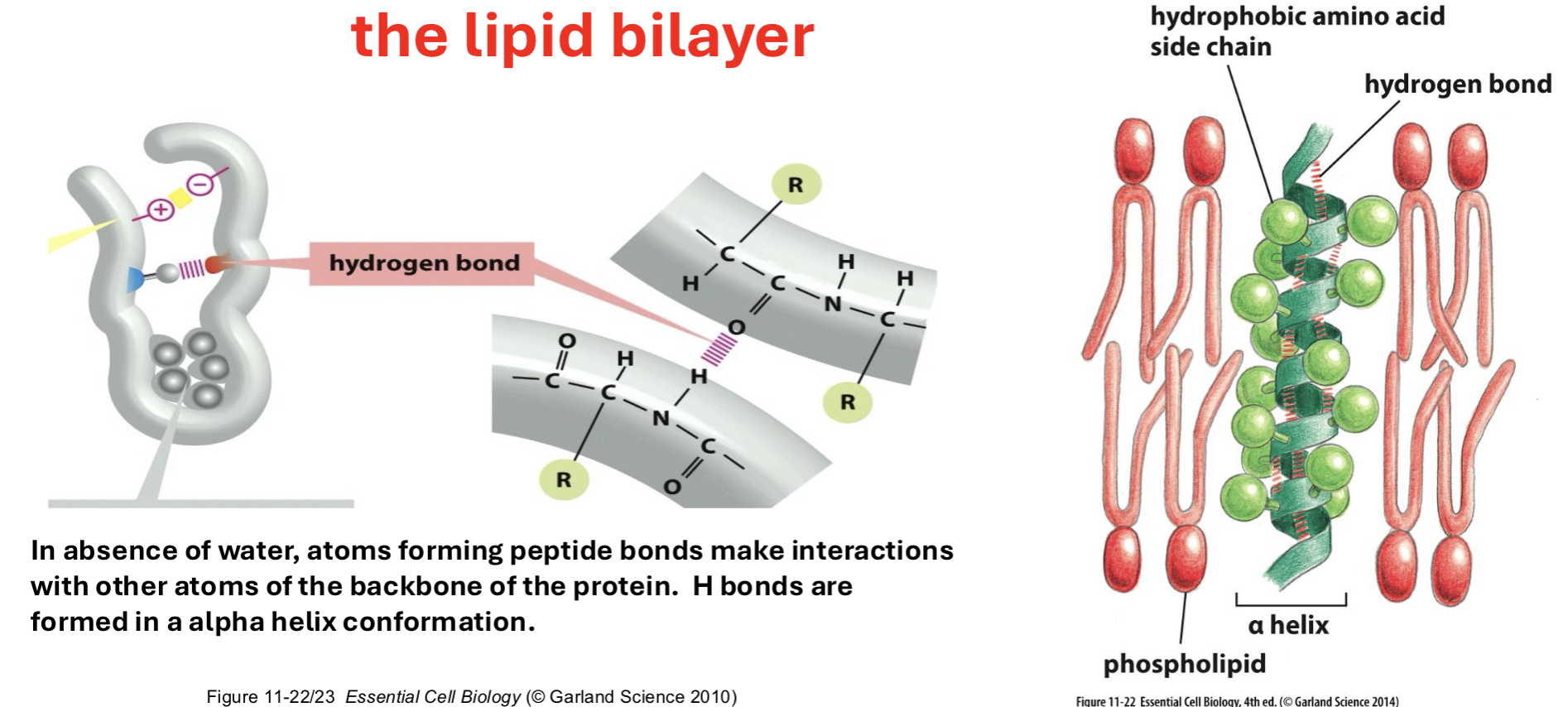
<p>alpha-helix structures intercalate in the lipid bilayer; in absence of water, atoms forming peptide bonds make interactions w/ other atoms of the backbone, H bonds are formed in alpha helix</p>
6
New cards
<p>required for transport across the membrane? </p>

required for transport across the membrane?

  1. transient interactions

  2. conformational changes

  3. SPECIFICITY


<ol><li><p>transient interactions</p></li><li><p>conformational changes</p></li><li><p>SPECIFICITY</p></li></ol><p></p>
7
New cards
<p>specialized transport proteins</p>

specialized transport proteins

regulate the amounts of ions + nutrients in the cell (ONLY in cell membrane)

<p>regulate the amounts of ions + nutrients in the cell (ONLY in cell membrane)</p>
8
New cards
<p>liposome vs cell membrane</p>

liposome vs cell membrane

liposome: protein-free artificial lipid bilayer, no transmembrane proteins

cell membrane: contains specialized transport proteins

<p>liposome: protein-free artificial lipid bilayer, no transmembrane proteins</p><p>cell membrane: contains specialized transport proteins </p>
9
New cards
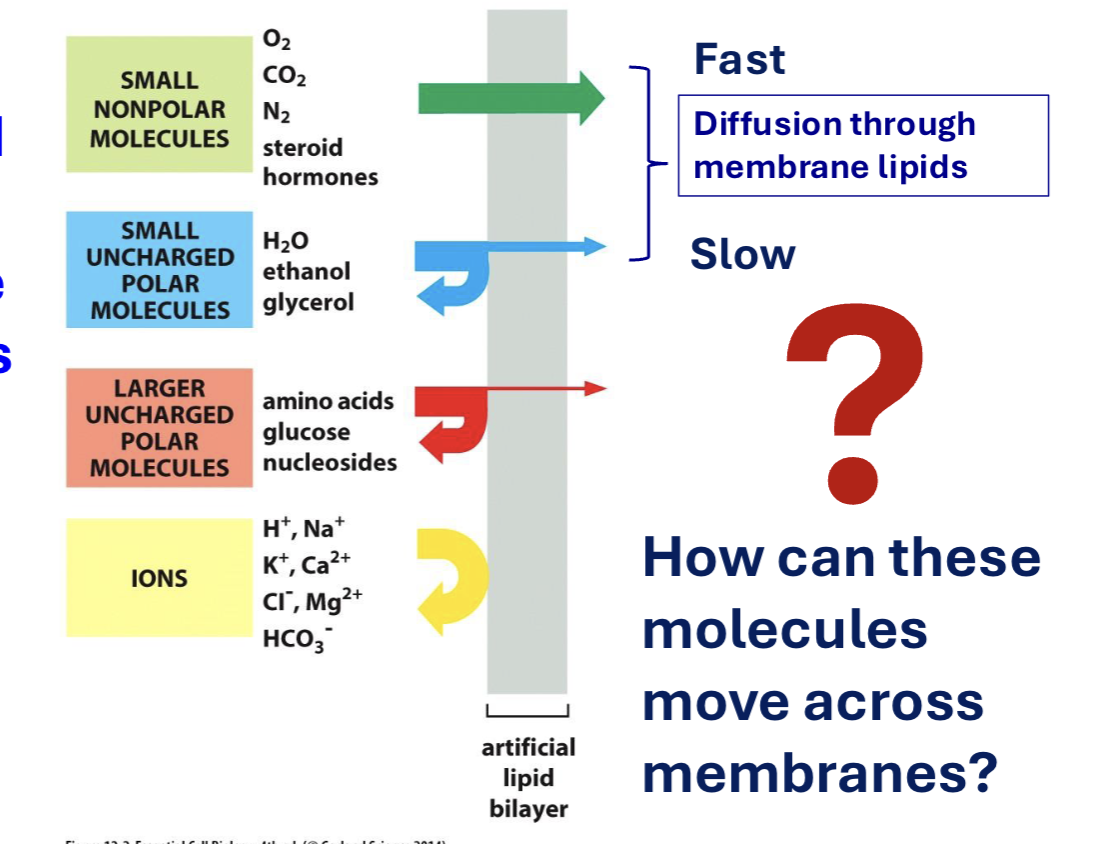
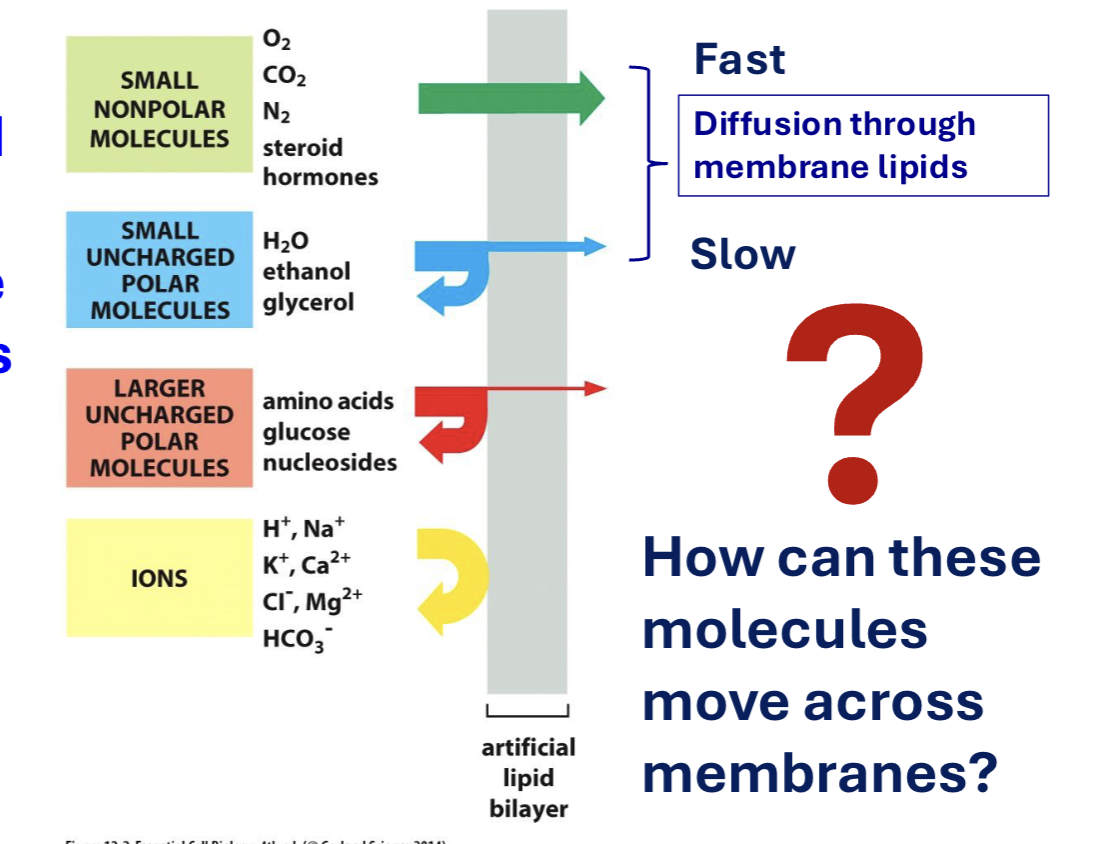
<p>rate of molecular diffusion across a synthetic lipid bilayer</p>

rate of molecular diffusion across a synthetic lipid bilayer

small NP molecules (O2, CO2, N2, steroid hormones): fast, diffusion through membrane lipids

small uncharged polar molecules (H2O, ethanol, glycerol): slow, diffusion through membrane lipids

larger uncharged polar molecules + ions (AAs, glucose, H+ Na+): need transporters
<p>small NP molecules (O2, CO2, N2, steroid hormones): fast, diffusion through membrane lipids</p><p>small uncharged polar molecules (H2O, ethanol, glycerol): slow, diffusion through membrane lipids</p><p>larger uncharged polar molecules + ions (AAs, glucose, H+ Na+): need transporters</p>
10
New cards
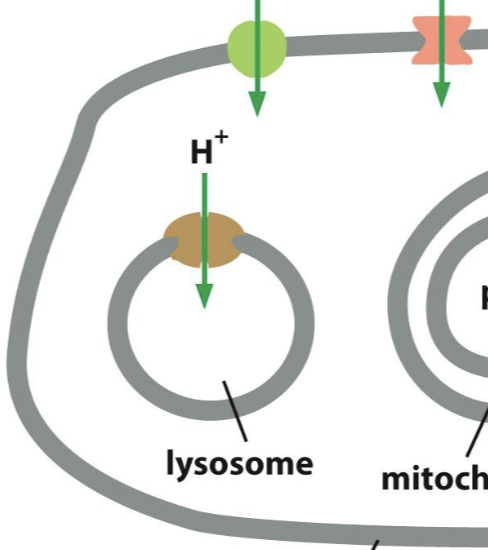
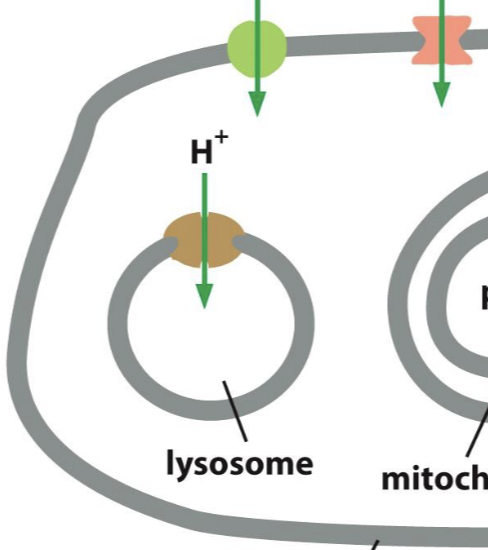
<p>what does lysosome need in order to function? </p>

what does lysosome need in order to function?

acidic pH
<p>acidic pH</p>
11
New cards
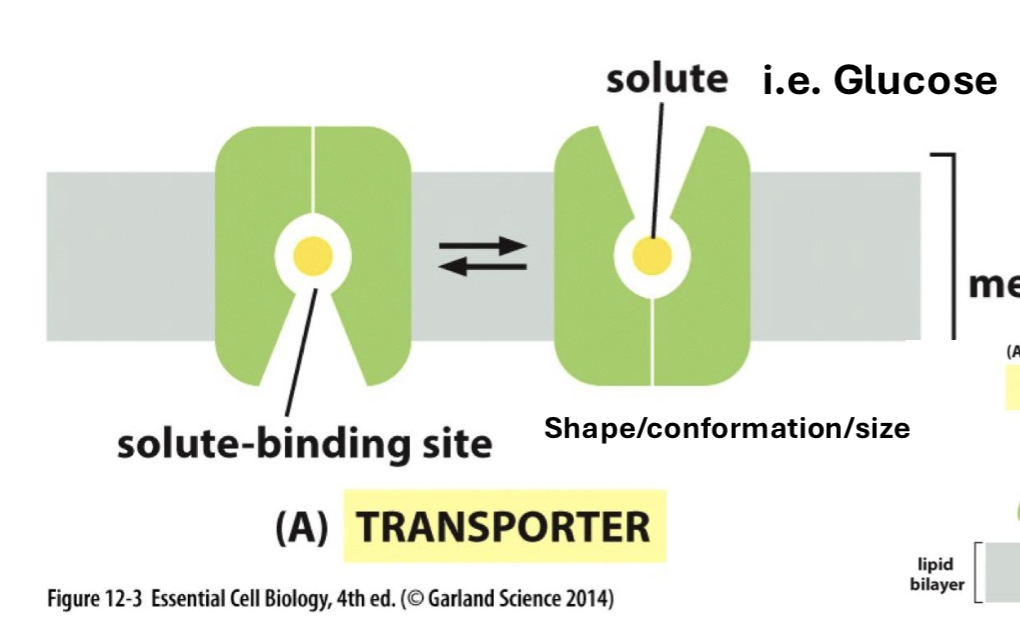
<p>transporters</p>

transporters

transmembrane proteins where solute (ex glucose) binds to specific binding sites → changes in shape + conformation

<p>transmembrane proteins where solute (ex glucose) binds to specific binding sites → changes in shape + conformation</p>
12
New cards
<p>channels</p>

channels

transmembrane proteins where hydrophilic pores form → ions (ex Ca2+) pass through → changes in shape + conformation

<p>transmembrane proteins where hydrophilic pores form → ions (ex Ca2+) pass through → changes in shape + conformation</p>
13
New cards

which direction will molecules move across membranes?

depends on concentration gradient
14
New cards
<p>passive transport</p>

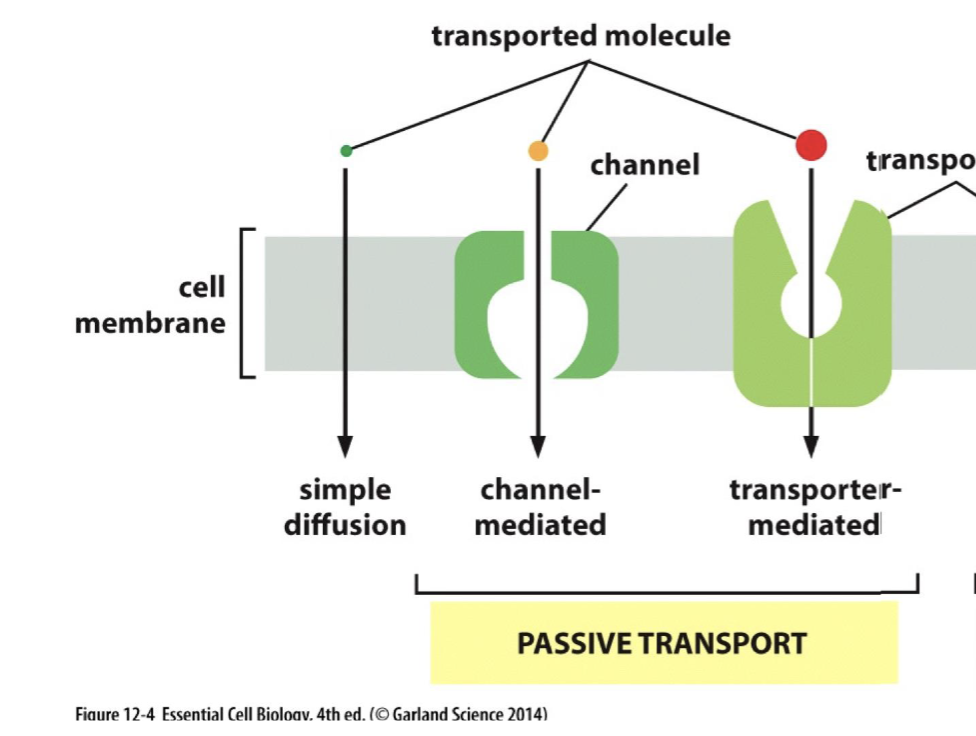
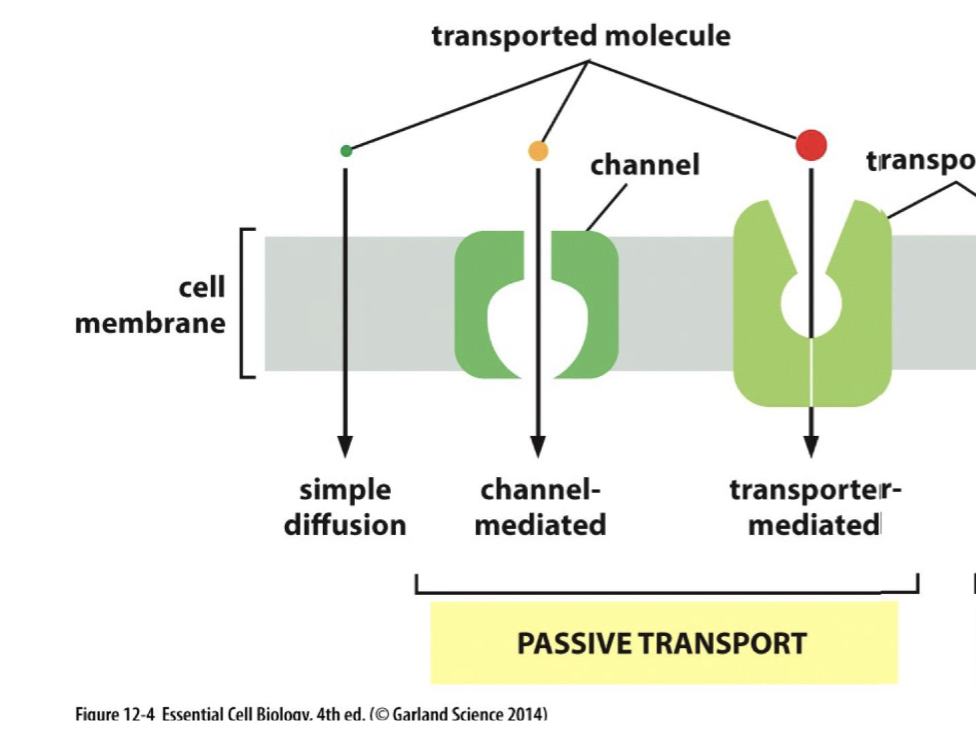
passive transport

follows a gradient, no energy required to pass ions + other molecules. ex: simple diffusion, channel-mediated, transporter-mediated
<p>follows a gradient, no energy required to pass ions + other molecules. ex: simple diffusion, channel-mediated, transporter-mediated</p>
15
New cards
<p>active transport</p>

active transport

works against a gradient, requires energy. ex: keeping lysosome acidic by pushing H+ into it

<p>works against a gradient, requires energy. ex: keeping lysosome acidic by pushing H+ into it</p>
16
New cards
<p>passive transport of <em>uncharged</em> molecules process</p>

passive transport of uncharged molecules process

glucose binds to glucose binding site of glucose transporter → 2 consequential conformational changes → glucose released into cytosol

<p>glucose binds to glucose binding site of glucose transporter → 2 consequential conformational changes → glucose released into cytosol</p>
17
New cards
<p>passive transport of ions</p>

passive transport of ions

Na+ wants to enter, K+ wants to leave, by concentration gradients

<p>Na+ wants to enter, K+ wants to leave, by concentration gradients</p>
18
New cards

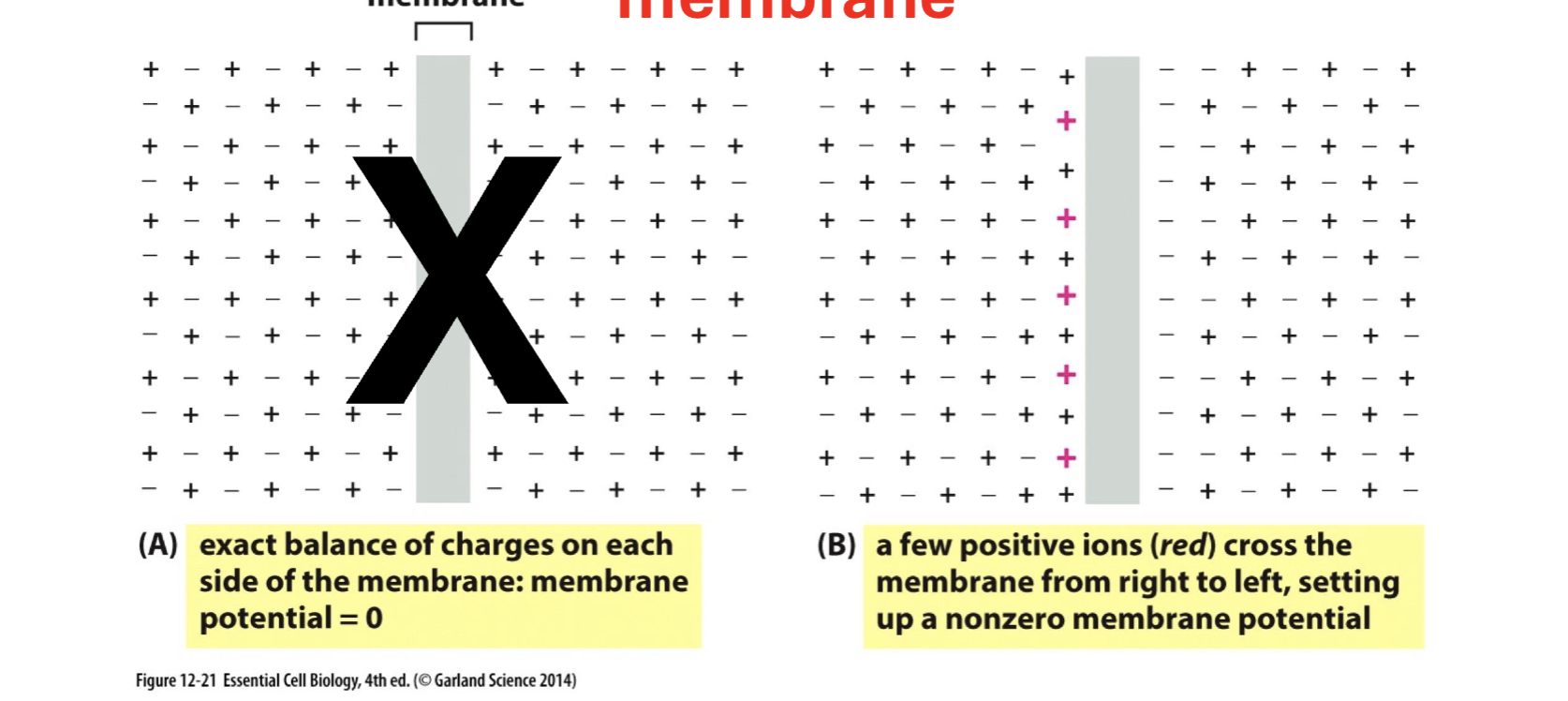
membrane potential

voltage difference caused by uneven distribution of charges across the two sides of a membrane
19
New cards
<p>resting membrane potential</p>

resting membrane potential

never equals zero; it’s the voltage difference measured across the membrane, when a cell is not stimulated

<p>never equals zero; it’s the voltage difference measured across the membrane, when a cell is not stimulated</p>
20
New cards

electrochemical gradient

net driving force to move charged molecules across membranes. two components: charge + concentration

21
New cards
<p>high electrochemical driving force</p>

high electrochemical driving force

electrochemical gradient when voltage + concentration gradients work in the same direction ex: Na+

<p>electrochemical gradient when voltage + concentration gradients work in the same direction ex: Na+</p>
22
New cards
<p>low electrochemical driving force</p>

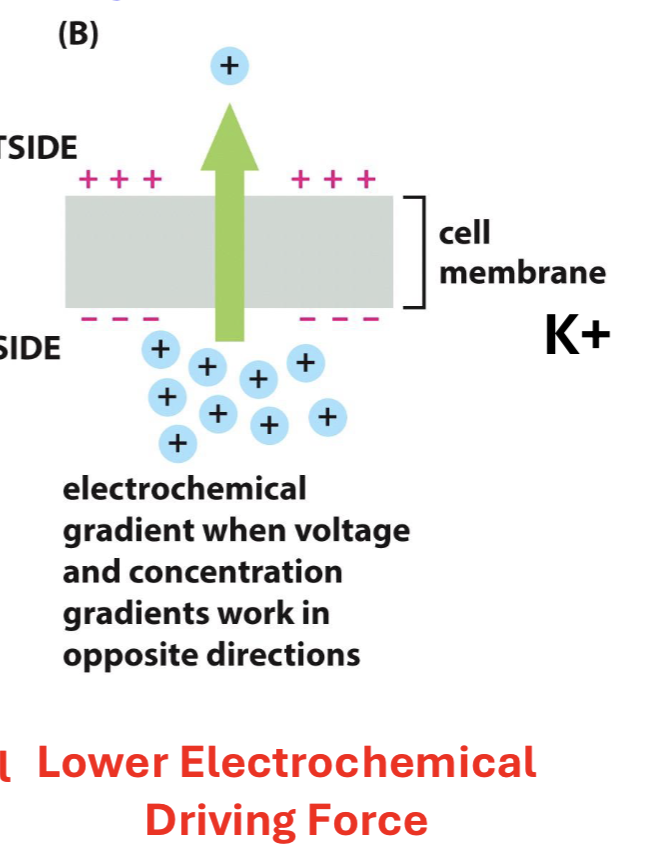
low electrochemical driving force

electrochemical gradient when voltage + concentration gradients work in opposite directions
<p>electrochemical gradient when voltage + concentration gradients work in opposite directions</p>