Chapter 17 Cutting Tool Technology
 Call Kai
 Learn
 Practice Test
 Spaced Repetition
 Match
 Flashcards
 Knowt Play
1/12

There's no tags or description
Looks like no tags are added yet.
13 Terms
Three modes of failure
fracture
cutting force excessive & dynamic → brittle fracture
temperature
temp too hi
gradual wear
preferred mode, only non premature failure
two locations:
crate (rake face)
flank: flank (side)
Taylor tool life equation
vT^n = C
v = cutting speed
T = tool life
n and C parameters based on feed, depth of cut, work mtl, tool mtl, tool life criterion
n is slope of plot
Tool mtls
toughness: avoid fracture failure
hot hardness: ability to retain hardness @ hi temp
ceramics > carbides > hi speed steel > C steel
wear resistance: hardness most important to resist abrasive wear
Hi speed steel HSS
highly alloyed steel capable of maintaining hardness @ elevated temp better than high carbon / low alloy steels
drills, taps, milling cutters, broaches
types of HSS:
tungsten type T grade
molybdenum type M grade
other ingredients:
chromium & vanadium
carbon
cobalt
Cemented carbides
class of hard tool mtl based on tungsten carbide (WC) using powder metallurgy with cobalt (Co)
types:
non steel cutting grades (WC-Co)
steel cutting grades (TiC and TaC added to WC-Co)
properties:
high compressive strength, low to mod tensile
high hardness and hot hardness
wear resistance
hi thrmal conductivity
high elastic mod
toughness < hi speed steel
Cermets
combos of TiC, TiN, titanium carbonitride w/ nickel & molybdenum as binders
applications:
hi speed finishing & semi finishing of steels, stainless steels, and cast irons
high speeds, low feeds than steel cutting cemented carbide grades
better finish achieved
Coated carbides
cemented carbide insert coated in one or more layers of TiC, TiN, or Al2O3
thickness: 2.5 - 13 micro meters
applications:
cast irons and steels in turning and milling operations
Tool geometry
single point:
turning, boring, shaping and planing
multiple:
drilling, reaming, tapping, milling, broaching, sawing
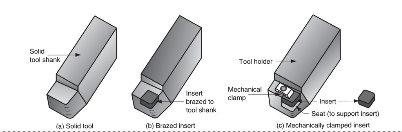
More on single point tools
solid shank (HSS)
brazed cemented carbide insert
mechanically clamped insert
cemented carbides, ceramics, other hard tool mtls
Chip breaker purpose
eliminating long chips
controlling chip flow
reducing vibration and heat generated
Twist drill
most common cutting tool for hole making
HSS
flutes must provide sufficient clearance to allow chips to move from bottom of hole during cutting
Cutting fluids
problems addressed:
heat generation @ shear & friction zones
friction @ tool chip and tool work interfaces
washes away chip
reduces temp
improved dimensional stability
class:
coolant: reduce effects of heat, water based
lubricant: reduce tool chip & tool work friction, oil based
Mechanical properties and machinability
hardness: hi hardness → abrasive wear increases → tool life reduced
strength: hi strength → hi cutting forces, specific energy, cutting temp
ductility: hi ductility → tearing of metal to form chip → chip disposal problems → poor finish