Cell structure and function
 Call Kai
 Learn
Learn Practice Test
 Spaced Repetition
 Match
Match Flashcards
 Knowt Play
1/62

There's no tags or description
Looks like no tags are added yet.
Name | Mastery | Learn | Test | Matching | Spaced | Call with Kai | Chat |
|---|
No analytics yet
Send a link to your students to track their progress
63 Terms
cell theory
All living organisms are composed of one or more cells
The cell is the basic unit of life
All cells arise form pre-existing cells
Related research to abiogenesis
abiogenesis: creation of life without life (based on 3rd rule of cell theory)
Miller Urey experiment: primordial atmosphere/ocean in container, add electricity=biomolecules
Found 20 AAs and 5 nucleotide bases found in meteorites
RNa bases found in fast cooling lava
7 of life
Made of cells
Grow, develop, heal
Reproduce
Obtain and process energy (has metabolism)
Exchanges gases w/ the environment (respiration)
Has DNA
Responds to environment
Maintain consistent internal environments (homeostasis). Ie body temp, pH, osmosis, [O2], [Co2], [ion], [glucose] (all monitored by cell activity)
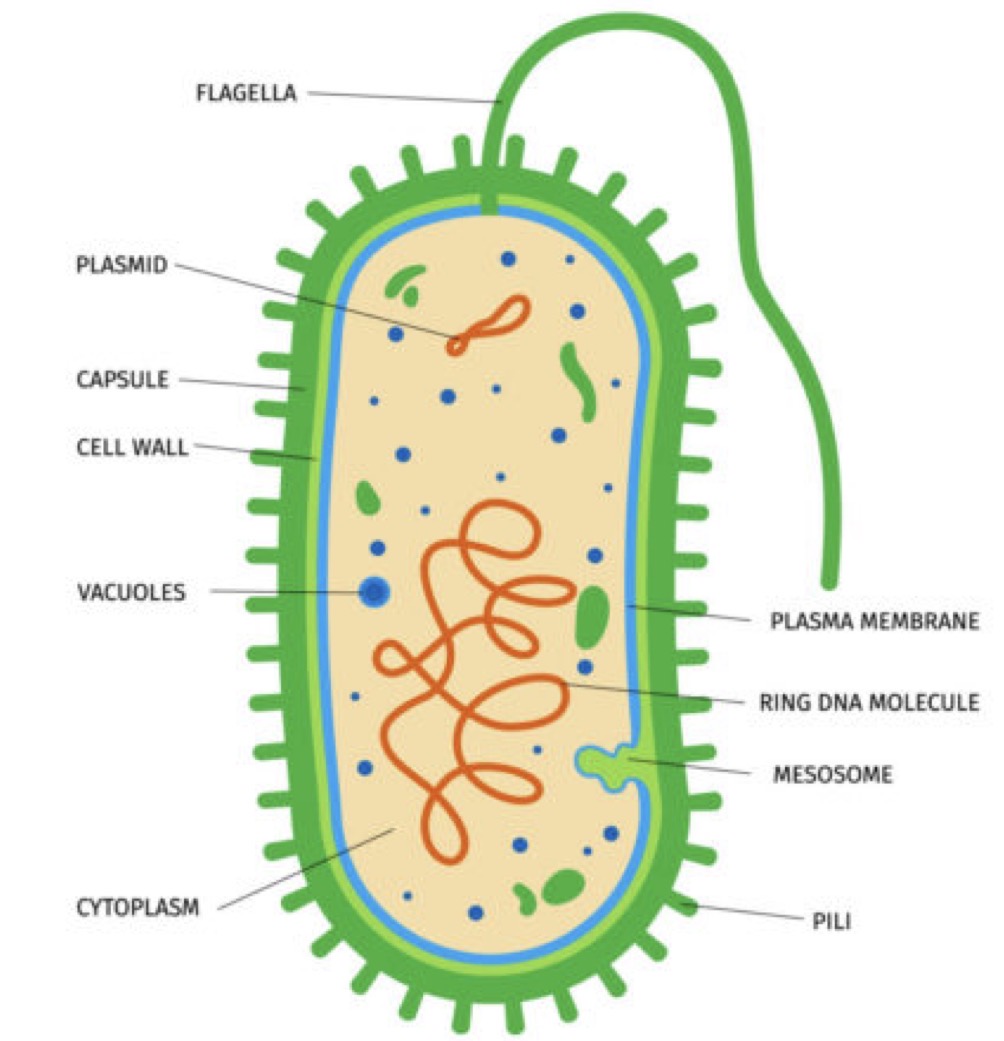
prokaryotic cells
smaller (0.5-5 micrometers), in bacteria and archaea, lack nucleus and membrane bound organelles,
Very abundant
First cells
All have cell wall
DNA in nucleotide region, have cell wall, plasma membrane, ribosomes, and flagella or puli for movement (tail thing)
Adapt to environment quick bc DNA is free floating and transcriptions and translation happen at same time and place. No membrane bound organelles so rats happen in cytoplasm, good for rapidly dividing
Eukaryotic cells
larger (10-100 micrometers), found in plants, animals, fungi, and protists; contain a nucleus and membrane-bound organelles, DNA organized into linear chromosomes.
DNA in nucleus: more complex gene regulation
Membrane bound organelles: good for complex rxts and effiency

Both Eu and Pro
DNA
Cytoskeleton
Ribosomes
Cytoplasm
Cell membrane
Specialized cells
Cell has specific function via differentiation to be different from progenitor cells (cells that preceded them-stem cells-Undifferentiated cell that has the ability to specialize)
Have different structure and organelles (amount, distribution, and type)
Nucleus
Hold cell DNA
Coordinate Growth, metabolism, reproduction
Nucleolus makes ribosomes
Double membrane
ribosomes
site of protein synthesis, either floating freely in cytoplasm or attached to rough ER
Rough endoplasmic reticulum
protein synthesis and modification, have ribosomes
Network of folded sacs and tubes
Smooth ER
synthesis of lipids and detoxification, lacks ribosomes
Golgi apparatus
modifies, Scotty’s, and packages proteins and lipids for storage or transport out of cell. Has flattened space called cisternae.
Cis side: receives vesicles from ER
Trans side: ships vesicles to final destination
Mitrochondria
generate ATP through cellular respiration
Double membrane structure: outer membrane and highly folded inner membrane called cristae, increases surface area for ATP
Has own DNA

Chloroplasts
photosynthese, light energy→chemical energy in glucose
A type of plastid
Double membrane
Thylakoids (stacked into grana): light dependent reaction occur
Granum: flat membrane stacks, increases surface area SA
Stromatolites: Calvin cycle bc of appropriate enzymes and suitable pH
Lamella:connects and separates thylakoid stacks
Has own DNA

Lysosomes
digestive enzymes that break down waste materials and cellular debris
Small spherical sacs
Peroxisomes
enzymes that detoxify harmful substances and break down fatty acids, producing hydrogen peroxide as byproduct, which is converted to water
Vacuoles
storage organelles
in plant cells: large central vacuole maintains turgor (internal h20 force on membrane) pressure which helps maintain the plants structure and rigidity
Animal cells: smaller vacuoles store various substances
Cytoskeleton
structure, aids in cell division, enables cell movement
Microfilaments: thin actin filaments that support cell shape and enable movement
Microtubules:hollow tubes made of tubular that help with cel shape, transport within cell, and cell division
Intermediate filaments: fibrous proteins that provide mechanical support and help maintain cell shape
Plant cell walls
Support and protection, maintain cell shape, provides rigidity, prevents excessive water uptake
Made of cellulose fibers embedded in matrix of other polysaccharides and proteins
Prevents bursting in hypotonic (lower solute concentration and lower osmotic pressure than another fluid) environment by providing a counter pressure

Path of protein in cell
M mRNA is transcribed in nucleus, leaves to ribosomes (where protein is synthesized, mRNA translated) on RER for modification (fold and process), then travels in RER to SER then Golgi apparatus for packages and sorting. Then leaves through a vesicle to final destination (cell membrane, outside cells, lysosomes, or stay in ER)
Endomembrane system
organelles involved in synthesis, modification, and transport of proteins and lipids
Consists of nuclear envelope, rough and smooth ER, Golgi apparatus, lysosomes, vesicles, and plasma membrane
Ensures that cellular products are properly processed and directed to their destinations
Energy organelles
mitochondria and chloroplasts
Involved in energy conversion
Compartmentalization
the division of cellular functions into distinct membrane bound organelles (in eukaryotic cells), allowing for specialization and for specific biochemical rxts to occur i isolated areas, enhancing efficiently in processes like metabolism and protein synthesis.
Lysosome compartmentalization
acidic environment is optimal for enzyme activity, preventing damage to other cellular components
Mitochondria compartmentalization
inner membrane (cristae): large surface area for electron transport chain
Mitochondrial matrix: enzymes for Karen’s cycle enabling efficient ATP production
Difference between plant and animal cells
Plants: cell wall, chloroplasts, large central vacuole, plasmodesmata(channels that allow communication and transport between plant cells). 10-100 micro meters, rectangular or cubic shape
Animals: lysosomes, centrioles ( cell division), cilia and flagella (movement). 10-30 micrometers, rounde or irregular shape
Similarities plant cell and animal
cells: both have cell membranes, golgi, cytoplasm, mitochondria, and a nucleus. They also share ribosomes and endoplasmic reticulum for protein synthesis.
Also both are eukaryotic
Cell metabolism
Chemical reactions that occur in a cell to maintain life.
Breaking down nutrients for energy, synthesizing proteins, and removing waste products
Effeciency of metabolic processes are influenced by the cells size
Small cells have a
Higher surface area relative to their volume SA:V which is more efficient for exchanging materials and distributing nutrients, which supports higher metabolic rates
SA:V
high SA:V is beneficial for exchanging materials quickly and efficiently through diffusion
Cells can lose heat more rapidly with a high SA:V ratio, helping to maintain optimal temps for enzymatic activities
Formulas for SA and V
Cuboidal cells: SA=6s² V=s³
Spherical cells: 4 pi r² V=(4pi r³)/3
S=side length
R=radius
As the size (side length for cubodial or radius for spherical) increases
the volume grows faster than the surface area, causing a decrease in SA:V ratio
Larger cells struggle to obtain enough nutrients and oxygen or to expel waste quickly
Reduced SA ration can hinder cells ability to support high metabolic activity, affecting growth and reproduction
Strategies to increase SA:V ratio
Microvili, flattened shapes, and compartmentalization (all increase surface area relative to volume)
Plasma membrane (cell membrane) functions
protection, support, controls what enters and leaves cell (selectively permeable), Maintains homeostasis
Plasma membrane structure
Phospholipid bilayer: tails face inward shield from water, heads face outward toward aqueous environment
proteins: integral (penetrate hydrophobic core of bilayer, channels or transporters for molecules) and peripheral (exterior or interior surfaces of membrane, signaling or maintain shape)
Aquaporins: protein channel increases diffusion rate of water
Carbohydrates: attached to proteins (called glycoproteins) on extra cellular side for cell recognition and communication, help cells identify each other and interact. ( also lipids attached to proteins called glycolipids help)

Lipid insoluble
polar
Fluid mosaic model
plasma membrane structure is a mosaic of various proteins that float in or on the fluid lipid bilayer, also lipids and carbs arranged in mosaic patternt
fluidity: the lipid bilayer is flexible, allowing lipids and proteins to move laterally within the layer
Factors affecting membrane fluidity
temperature: higher temp increases fluidity, lower temp decreases it
Fatty acid composition: unsaturated fatty acids increase fluidity due to kinds in their tails, saturated fatty acids decrease fluidity
Cholesterol: at high temps it stabilizes membrane and reduces fluidity. Low temps prevents tight packing of phospholipids increasing fluidity
Easy vs difficult to diffuse
Easy: small, non polar molecules like oxygen and carbon dioxide and N2
Hard: large (glucose, lipids, proteins) polar molecules (H20 get stuck but sometimes diffuse, polar head is attracted, and ions (Na+, Cl-, K+, Fl-, Ca2+, Mg2+, Li+)
Passive transport
Movement of substances across membrane without use of energy
Simple diffusion, osmosis, and facilitated diffusion
Simple diffusion
Solutes move from area of high concentration to low concentration until they are evenly distributed, happens naturally does not require energy
Osmosis
Solvent moves from area of lower solute concentration (more water) to higher solute concentration (less water)
Maintaining cell homeostasis, ensuring that cell neither swell excessively nor shrink too much, which can disrupt function and lead to cell death
Facilitated diffusion
Use proteins to help larger or polar molecules cross membrane, the proteins are hydrophobic so they are able to embed into plasma membrane
Channel proteins: from pores in membrane, allow specific molecules or ions to pass (ex aquaporins: rapid passage of water)
Carrier proteins: bind to the molecule they transport, change conformation, and release the molecule on the other side
Active transport
requires atp to move substances against concentration gradient low→high
Sodium potassium pump
three sodium ions out and two potassium ions into the cell using 1 molecule of ATP
Maintain the cells membrane potential, an electrical gradient across membrane
Found in almost all animal cells and is common in plant cells too
Sodium must be removed from cell to maintain fluid balance
Gradient can be use to drive transport of other substances like cotransport of glucose.
Proton pump
moves protons (H+ ions) out of the cell, creating gradient for ATP synthesis in cellular respiration
Inside is negative, potential difference can be couples to the transport of other molecules
Cotransport
simulatneous movement of two substances across membrane. Proteins moves one substance down its electrochemical gradient in order to move another substance against its concentration/electrochemical gradient
Symport: both substances move in same direction
Antiport: substances move in opposite directions
Plants: sucros-proton con transport system uses proton gradient created by proton pump to bring sucrose into the cell against its concentration gradient
Ex. Gradient in sodium ions drives transport of glucose intestinal epithelial cells,

Plasmolysis
The process where plant cells lose water in a hypertonic solution (osmosis), causing the cell membrane to pull away from the cell wall.
Dynamic equilibrium
concentrations are equal on either side of membrane but molecules are still in motion
Endo and exotytosis
move large molecules/particles in or out of cell using vesicles
Active transport
Through localized activity of micrtofilaments and microtubules in cytoskeleton
Exocytosis
Cells expel materials by merging vesicles with the plasma membrane, releasing their contents outside the cell.
Used to secrete hormones, neurotransmitters and digestive enzymes
Typical of secretory cells
Ex. lymphocytes secrete proteins out

Endocytosis
cells take in materials by engulfing them in a vesicle formed by the plasma membrane
Typically in protozoans and white blood cells
Phagocytosis: cell eating-cell engulfs large particles (solid) like food, pathogens, and cellular debris to form vesicles. Ex capture and destruction of a bacterial cell by white blood cell, or ingestion of a food particle by a protozoan
Pinocytosis: cell drinking-cell takes in extra cellular fluid and dissolved substances to form pinocytic vesicles. Cell membrane encloses and forms vesicle, the fuses with lysosome to break substance down. Ex uptake of extracellular fluid by liver cells, Receptor-mediated endocytosis: specific molecules are taken into the cell after binding to receptors on the cell surface, forming a vesicle around the bound molecules

ATP in active transport
broken into ADP and phosphate group, and energy is released
Tonicity
Ability of a surrounding solution to cause a cell to gain or lose water. Determined by the relative concentrations of solutes inside the cell compared to outside
Hypo,hyper,isonic
Isotonic solution
solute concentration is equal inside and outside the cell
Ex. When cell in in saline solution with same concentration as its cytoplasma, water moves in and out of cell at equal rates

Hypotonic solution
solute concentration outside the cell is lower than inside the cell
Ex. Cell is in pure water, water enters the cell due to osmosis, causing cell to swell and possible burst (lysis)
Plants: cells become turgid (firm) due to inflow of water, idles for structure

hypertonic solution
solute concentration outside the cell is higher than inside the cell.
Ex. Cell in a saltwater solution, water leaves the cell, causing it to shrink.
Plants: lose water, plasma membrane pulls away from cell wall, (plasmolysis) can be damaging

Cyclosis
Movement of cytoplasm in a cell to distribute nutrients
Water potential
Ψ
Measure of potential energy in water and is used to predict the direction of water movement.
Water moves from regions of higher water potential to regions of lower water potential,
Water potential will be equal to the solute potential for
a solution in an open container because the pressure potential of the solution in an open container is zero
water potential formula
Ψ=Ψp + Ψs
ΨP=pressure potenital
ΨS=solute potential
Solute potential
Ψs, also osmotic potential
Effect of solute concentration on the water potential. It is always negative or zero b/c addition of solutes lowers the water potential
Solute potential formula
Ψs= -iCRT
I=ionization constant (the number of particles the solution dissociates to)
C=molar concentration of the solute
R= pressure constant (0.0831 liter bar per mole K)
T= temp in Kelvin
Pressure potential
Ψp
The physical pressure exerted on or by the cell. In plant cells: positive due to turgor pressure form the cell wall, which helps maintain rigidity