Tissue level of organization
 Call Kai
 Learn
 Practice Test
 Spaced Repetition
 Match
 Flashcards
 Knowt Play
1/20

There's no tags or description
Looks like no tags are added yet.
21 Terms

what are tissue(s)
These are groups of cells which have a common place within embryo development and that function together to carry out activites
What is the disepline of histology
This the study of tissues
What is a Pathologist
This is a physician who looks at cells and tissues to help others make diagnoses
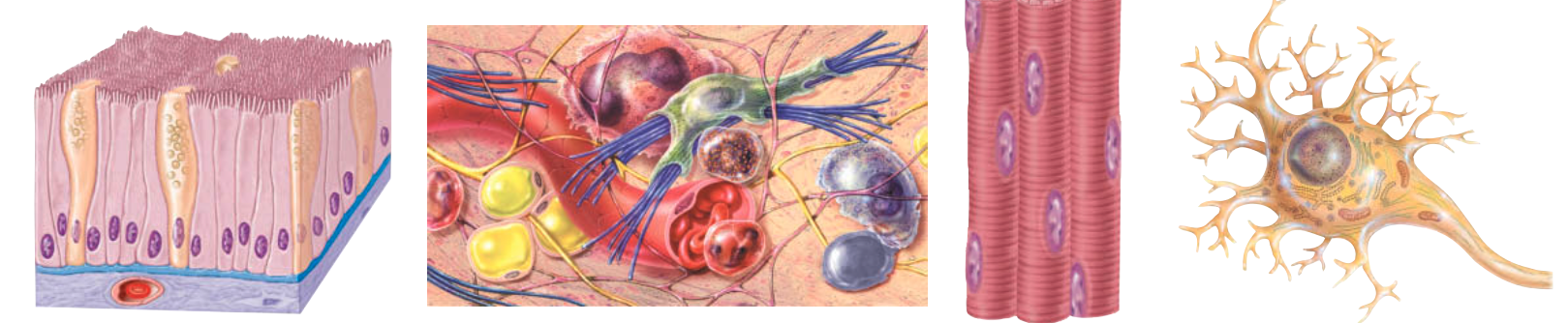
What are the four types of tissues in the body
Epithelial
Connective
Muscular
Nervous
Define Epithelial tissue(s)
This are tissues which cover body surfaces, lines hollow organs, cavities, ducts, and forms glands. They allow for the external and internal world of the body to interact.
Define connective tissue(s)
These are tissues which function to protect and support the body’s organs, store energy, provide immunity to the body
Define Muscular tissue(s)
These are tissues which give the body the ability to contract and generate force which results in those abilities buy in heat production
Define Nervous tissue(s)
These are tissues that detect changes in variety of conditions both inside and out that make electrical signals to active muscular contractions or glandular secretions in response.
What is a Biopsy
This is the examination of living tissue which has been removed to help in diagnose of disorders and detections of issues of the tissues/cells
what are the 5 main types of junctions between cells?
Tight
Gap
Adhere
Desmosome
Hemidesmosome

what are cellular junctions
These are contact points between cells plasma membrane

define tight junctions
These are junctions which make a weblike network of fused proteins between adjecce cells that function to block off passageways between cells
examples include: Epithelial tissue of the stomach, intestines and urinary tract
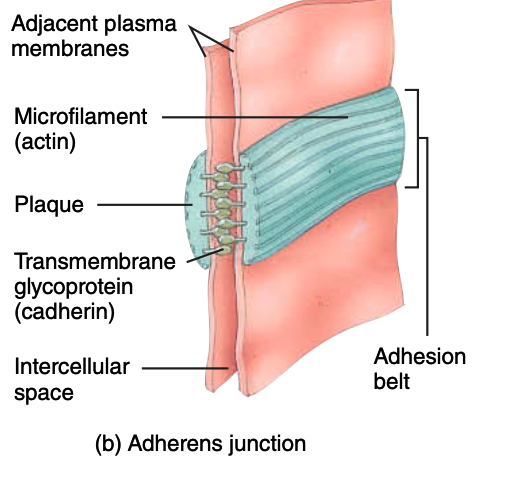
Define Adhere junctions
these are junctions which contain plaques of proteins which attach to both side of the membrane through mircofilaments and join cells together by glycoproteins called “cadherins”. they help for extensive contractile actitvies
The Cadherins attach to the other cadherins which join the cells together
they also make extensive zones called adhesion belts since they tend to encircle the cells

Define Desmosomes
Very similar to adhere however instead of attaching to the microfilaments they attach to intermediate filaments
these tend to be common in the epidermis and the cardiac muscle cells since they help with perventing cells from separating under tension

define Hemidesmsomes
Again very similar to Desmosomes and Adherens but the difference lies in the the type of glycoproteins they use being “intergins”, the function which is to anchor the cell to the basement membrane, and that is it only one instead of like desmosomes being two

Define gap junctions
these are junctions which are made up of membrane proteins called connexions which make a fluid filled tunnels which allows for ions and small molecules to pass through and exchange cytosplasma between cells
which type of junctions presents the contents of organs from leaking into surroundings tissues
Tight junctions
which types of cell junctions are found epithelial tissue
tight junctions
Gap junctions
Adherens
Desmosomes
Hemidesmsomes

what are the differences between epithelial tissue and connective tissue
1) the number of cells and the amount of ECF is between the cells
Epithelial tissue: they are tightly packed and don’t have a lot of a extracellular fluid
Connective tissue: they have lot of extracellular fluid and they spaced out
2) present blood vessels
Epithelial tissue: they don’t have blood vessels
Connective tissue: they contain a lot of blood vessels
3) Layers
Epithelial tissue: they are almost always the top layer
Connective tissue: they tend to be supporting layers and not top layers
Why are epithelia and connective tissue found adjacent to each other?
Because epithelial tissue lacks blood vessels and forms sur-
faces, it is always found immediately adjacent to blood vessel–rich
connective tissue, which enables it to make the exchanges with
blood necessary for the delivery of oxygen and nutrients and the
removal of wastes that are critical processes for its survival and
function.