Decoding
 Call Kai
 Learn
 Practice Test
 Spaced Repetition
 Match
 Flashcards
 Knowt Play
1/32

There's no tags or description
Looks like no tags are added yet.
33 Terms
Letter–Sound Correspondence
knowing what sound(s) each letter makes
Example.
the letter “f” makes the first sound in the word “foot”
Phonics / Graphophonemic Principle
using the relationship between symbols (letters and words) and sounds of a language to read and write
Short Vowel
the sound that most often corresponds to a vowel when the vowel occurs individually between consonants
Example.
When there is one vowel in a word, either at the beginning or between two consonants, it usually has the short vowel sound.
Long Vowel
when a vowel sounds like its name, this is called a long vowel sound
Example.
Long A sound is AY as in cake. Long E sound is EE an in sheet ... etc.
Suffix
letter or letters at the end of a root word that changes its meaning
Example.
s, es, ed, ing, ly, er, or, ion, tion, able, and ible
Consonant Blend
two or more consonants that blend together when decoded, but each retains its own sound
Example.
In the word "blue," the letters b and l form the consonant blend, bl.
Prefix
a letter or letters at the beginning of a root word that changes its meaning
Example.
re, de, un
Affix
a letter or letters that change a root word's meaning
Example.
prefixes or suffixes
Print Awareness
The ability to be aware of the forms and functions of printed language.
Morpheme
a combination of sounds that has meaning in speech or writing and cannot be divided into smaller grammatical parts; this includes prefixes and suffixes
Example.
write, cat, laugh, box
Phoneme Blending
the ability to blend two sounds to make a word
Example.
Blend together these sounds to make a word: /b/ /a/ /t/ to form bat.
Heart Words Approach
students learn to decode the regular parts while memorizing the irregular; supports decoding skills and reduces rote memorization
Print Orientation
The understanding of how to begin writing letters including writing from left to right, on lines, etc.
Consonant Digraph
two consonants that make a single consonant sound when together in a word
Example.
In the word "wish," the letters s and h form the consonant digraph, sh.
Root
the smallest unit or core of a word that carries the meaning
Example.
form means "shape," as in reform, conform, formulate
Alphabetic Knowledge
the ability to recognize, name, and write letters
Tense
words that indicate if a statement is referring to past time, present time, or future time
Example.
Past- She spoke. Present- She speaks. Future- She will speak.
High-Frequency Word
a word that appears often in grade-level text; can be decodable or irregular
Example.
Words like "and", "the", "as" and "it" are high-frequency words.
Decoding
in reading out loud, being able to sound out words by breaking them into simple forms; in reading for comprehension, the understanding of how to read each letter or letter pattern in a word to determine the word's meaning
Contextual Analysis
use of surrounding information in a text to help determine a word
Word Recognition Skills
the ability to recognize written words correctly
Inflectional Affix
an affix that changes the form of the root or base word
Example.
The inflectional affix, "ed" changes a verb to the past tense.
Fry Word List
the 100 most frequently occurring words in the English language
Decodable Word
words that follow regular phonics patterns and can be read by applying letter-sound correspondence rules
Example.
For a third grader, words like "family" and "afternoon" are decodable.
Morphology
the study of forms of words, including affixes, roots, stems, and parts of speech
Example.
The word "bicycles" is made up of three individual morphemes. The prefix bi-, the stem cycle, and the suffix -s.
Phonological Awareness
the understanding and ability to hear individual words, syllables, and sounds in spoken language apart from print
Structural / Morphemic Analysis
using meaningful word parts (morphemes) to study a word and determine its meaning
Bound Morpheme
type of morpheme that can appear only as part of a larger word
Example.
Prefixes such as pre-, dis-, in-, un-, and suffixes such as -ful, -ment, -ly, -ise are bound morphemes.
Reading Fluency
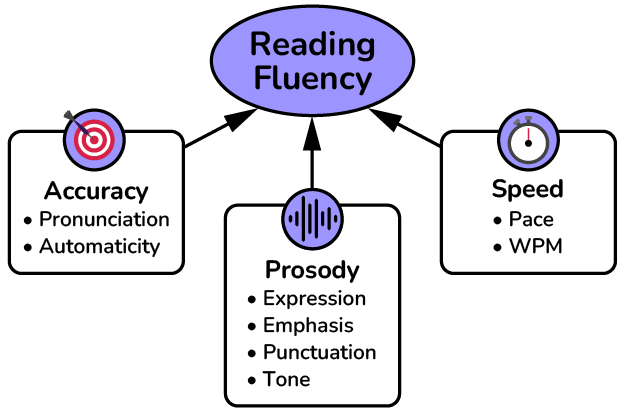
ability to read with appropriate speed, accuracy, and prosody
Free Morpheme / Unbound Morpheme
type of morpheme that can stand alone or can appear with other morphemes in a lexeme
Example.
Simple words (i.e. words made up of one free morpheme, such as the, run, on, etc.) and compound words (i.e. words made up of two free morphemes, such as keyboard, greenhouse, etc.) are free morphemes.
Alphabetic Principle
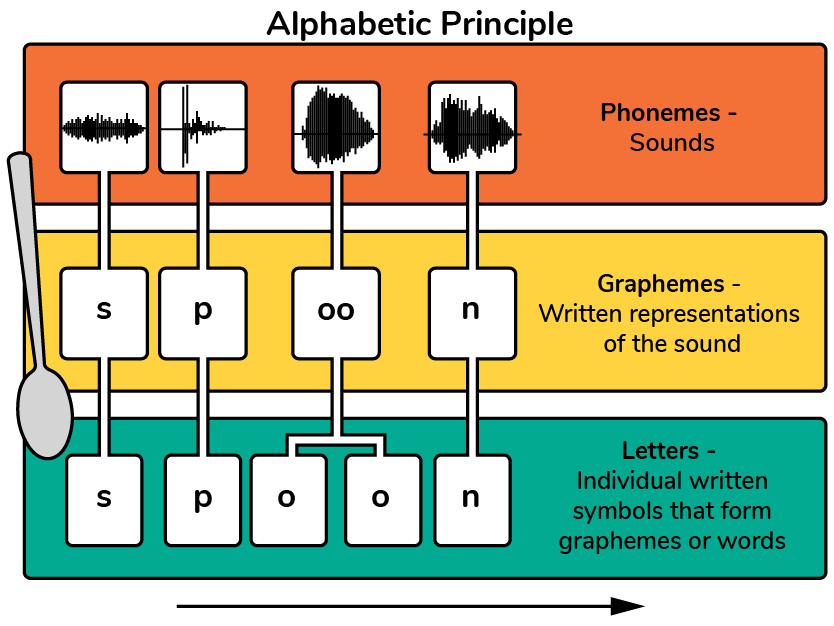
the understanding that there is a logical/systematic relationship between the sounds of spoken English and the letters and letter–patterns of written English
Phonemic Awareness / Sound Awareness
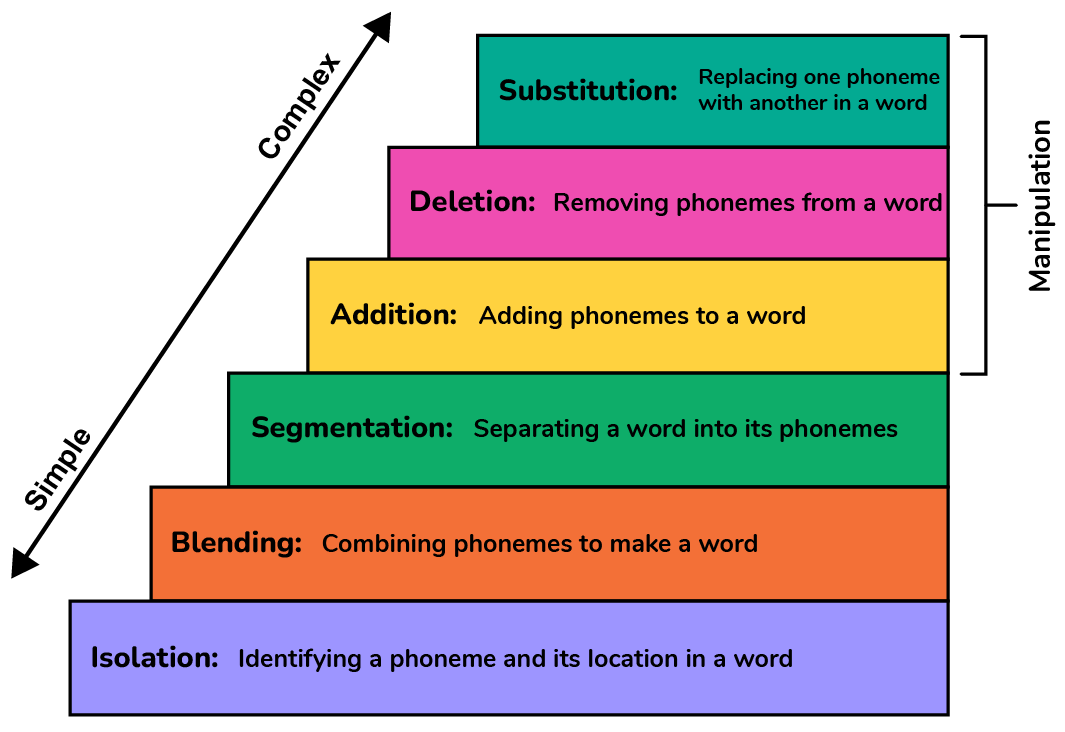
the ability to hear, identify, and re-create individual sounds in spoken words
Example.
A student can hear that /b/ makes first sound in the word blue.
Derivational Affix
an affix that changes the root or base word into a new word
Example.
When the derivational affix, "ful" is added to the noun, beauty, the word "beautiful" forms, meaning full of beauty.