developmental psych - exam 1
 Call Kai
 Learn
 Practice Test
 Spaced Repetition
 Match
 Flashcards
 Knowt Play
1/119

There's no tags or description
Looks like no tags are added yet.
120 Terms
development
growth, change, and stability of traits and the underlying process
developmental domains
physical, cognitive, social-emotional
prenatal time period
before birth - 9 months
infancy time period
0-2 years
childhood time period
early = 2-5 years
middle = 5-7 years
late = 8-11 years
adolescence time period
12-18 years
adulthood time period
18-? years
continuous development
seen as a cumulation of stuff (as you age you gather more and more)

discontinuous development
changing in a fundamental way (changes happen at critical periods of life)

four assumptions that guide contemporary developmental science
development is lifelong
development is shaped by multiple interactive factors
development is plastic
development is multidimensional and multidirectional
multidimensional development
control and regulation of own behavior
example of multidimensional development
development of effortful control: control and regulation of attention, impulses, emotions, thoughts, and behaviors
multi-finality
same start, different end point

equifinality
different start, same end point

the normative approach
map development with age-specific averages
benefits: look at an individual and measure up with the average
alfred binet
used normative approach to see academic intelligence for individual students = Mental age

psychoanalytical approaches
mental development as balance of biological impulses (Id) and social forces (superego)
Freud
Idea we have a conscious (thoughts, feelings, experiences) and unconscious mind (inaccessible to us) but influences us
id
pleasure principle (wants what it wants right now, food, sleep, fun)
the superego
moral imperatives, ideals (knows every social rule and pushes for perfection)
the ego
reality principle, (find a realistic way to find a happy medium between the id and superego)
Freud’s Psychosexual Stages of development
Oral (0-1)
Anal (1-3)
Phallic (3-6)
Latency (6-11)
Genital (Adolescence)
Later life development depends on experiences in these early life stages
Erik Erikson
development is lifelong, well-being at each stage depends on “success” at the task

The behaviorists
explain behavior by studying behavior
John B. Watson
B.F. Skinner
John B. Watson
applied Pavlov’s conditioning perspectives to human emotions
Little Albert: use the principles of Pavlov to make Albert fear rats
pavlov’s dog
ring a bell when feeding the dog = causes salivating; after awhile dogs salivate when bell was rung with no food
B.F. Skinner
expanded on principles of operant conditioning
operant conditioning
do a behavior then administer a reinforcement or punishment
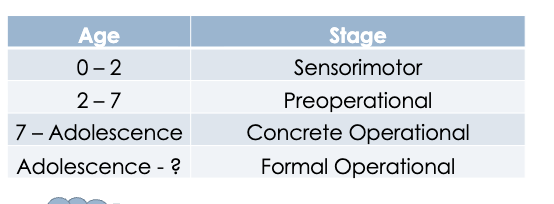
Piaget’s Cognitive development
children actively construct knowledge through exploration/interaction
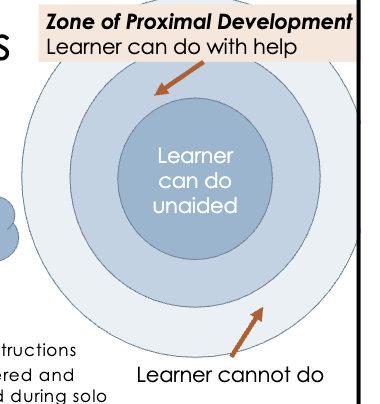
Vygotsky’s social cultural theory
you learn by interacting with the people around you
example: parents verbally facilitates problem solving
Bronfenbrenner’s Ecologocial systems theory
development occurs within complex system of relationships with the environment

information processing
mind operates like a computer
prefrontal cortex
ability to regulate your own behavior
integration of information from memory, reasoning, planning, decision-making
brain plasticity
when your brain is more moldable
adolescents brains are more plastic then adults (learn languages quicker)
microsystem
activities/interactions in immediate surroundings
school, work, neighborhood, grocery store
bidirectional effects
individual can affect the microsystem
child’s behavior may alter how parent’s react to it
mesosystem
connections between microsystems
parents involvement in school
exosystem
indirect effects of social settings that do not contain the individual
parent’s have a tough day at work then comes home to care for their child
macrosystem
cultural values, laws, customs, and resources
social support for low income families
chronosystem
system levels change across time
school structure, pre-k to elementary to middle, to high school
scientific method
framing informed questions, observation, analysis, hypothesis

three basic scientific goals of the scientific process
describe what happens
predict what happens
explain what happens
observational designs (describe)
establish the basic facts of the world; important for asking the other questions
what is the proportion of child prodigies in the population?
correlational designs (predict)
establish the relationship between variables
does commute time relate to work satisfaction?
experimental designs (explain)
manipulate variables and measure effects. helps to infer causality.
does providing a clinical intervention improve children’s school performance?
naturalistic observation
document behavior in the behavior it typically occurs
high ecological validity
laboratory observation
document behavior in a controlled environment
lower ecological validity
bivariate data
measure two variables per person, time, or place
the correlation coefficient
quantifies the strength and direction of relationship
cross-sectional
different groups of different ages, measured at one time
longitudinal
repeated measures of same group at different times
sequential
combination of the two
study of behaviorism
a passive learner shaped by the environment, stimuli, and consequences
trisomy 21
disorder caused by extra 21st chromosome
intellectual difficulties
slower motor development
XXY
may be taller, more testosterone
XXX
typically develop normally
X (turner syndrome) and XXY
likely to have fertility issues
heritability
the extent to which variation in traits are owed to variations in genetics
gene environment interaction
different genetics result in different responses to the environment
gene environment correlation
similarity between genetic traits and environmental context
evocative correlation
genetic traits evoke corresponding responses from adults
baby smiles, adults respond with warmth
passive correlation
parents provide genetic and environmental support for trait
highly musical parents pass down “musical genes” and fill their home with instruments
active correlation/niche picking
people make choices of activities that may derive from genetic traits
someone who is naturally more athletic may choose to play sports, which gives them more opportunities to develop those abilities
incomplete dominance
sometimes the presence of a recessive allele has an effect (sickle cell anemia)
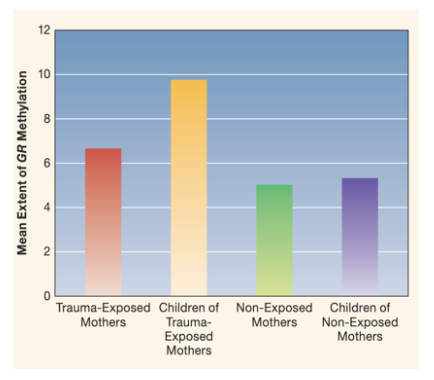
epigenetics
environment can modify expression of genes without changing the DNA sequence
fertilization
sperm enters egg, egg closes itself off to other sperm
1st stage of prenatal development: germinal
one-celled zygote becomes multi-celled blastocyst
monozygotic twins (identical)
one fertilization that splits into two embryos
dizygotic twins (fraternal)
two eggs, two sperm
ectopic pregnancy
blastocyst implants in fallopian tube
2nd stage of prenatal development: embryonic (3-8 weeks)
blastocyst —> embryonic disk —> ectoderm, mesoderm, endoderm
umbilical cord (vein to provide nutrients and remove waste)
amniotic sac (protects embryo)
placenta (filters blood exchange between umbilical cord and mother)
fetal alcohol syndrome
range of developmental disorders due to alcohol consumption during pregnancy
stage 3 of prenatal development: fetal stage
most physiological structures are formed, baby mostly grows in size
trimesters
trimesters
divide prenatal period into three equal periods of time
1st: to end of 3rd month. zygotic, embryonic
2nd: months 3-6. most organs are developed
3rd: viability. fetus has possibility of survival
nutrition
large energy needs for development necessitate high caloric intake. 25-30 lb gain.
stress
linked to miscarriage, prematurity, low birth weight, infant temperament
barriers to healthcare
situational barriers: lack of access, resources, transportation
personal barriers: stress, other demands, work/family crisis
solution - group prenatal care: discussion of health issues with caregivers
the newborn infant: reflexes
automatic behaviors in response to specific stimuli
palmar grasp
step reflex
rooting (turns head and open their mouth when touched)
dynamic systems
behaviors emerges from the interplay of interactive components
behavior = brain + body + environment working together
neonatal behavioral assessment scale
evaluates newborns at risk for developmental problems
exposure to substance abuse
preterm delivery
low birth weight
lateralization
specialized functions across the hemispheres
most functions are reflected on both hemispheres, and require coordination between them
left hemipshere
sequential information processing
step by step in order 1 —> 2 —> 3
right hemisphere
holistic information processing
the whole picture at once
sensitive period
a time when the brain is especially ready to develop a certain ability, but it needs the right environment or stimulation

influences on growth: heredity
early growth has large genetic component when environmental influences are appropriate
influences on growth: nutrition
breastfeeding provides key nutrients, alongside immune support
influences on growth: malnutrition
deficits resulting from lack of nutrients and unbalanced diet
marasmus
severe lack of calories and nutrients
kwashiorkor
lack of protein, while often meeting caloric needs
can lead to disordered eating, neurological deficits
gross motor development
control of large bodily movements for navigating environment
fine motor development
control of small-scale and precise movements
reaching and grasping
mass-to-specific trend
physical gains in gross motor muscles before fine motor
perceptual development: statistical learning
capability to detect regularities in stimulation, especially speech sounds
noticing patterns
perceptual development: perceptual narrowing
better at noticing things you experience the most, and less sensitive to things you don’t experience often
becoming specialized in what you hear/see most
Piaget’s cognitive development
children actively construct knowledge through exploration/interaction
Piaget’s sensorimotor stage
toddler’s think with their hands
Piaget’s schemes (schema)
mental structures for organizing experience
concepts: what you know about something
behaviors: how you know to do something
assimilation (Piaget)
interpreting experience with existing schemes
child knows a dog is a four-legged animal, they see a cow for the first time and say “dog”
adaptation
modify/build schemes through interaction with environment
Child sees cow → thinks “dog” (assimilation) → learns it's different → creates a cow scheme (accommodation) → overall adjustment in understanding (adaptation).
accommodation
modifying schemes to better fit experience
learns that cow is not a dog. change understanding and create a separate “cow” scheme