Carboxylic Acid and Esters
 Call Kai
 Learn
 Practice Test
 Spaced Repetition
 Match
 Flashcards
 Knowt Play
1/26

There's no tags or description
Looks like no tags are added yet.
27 Terms


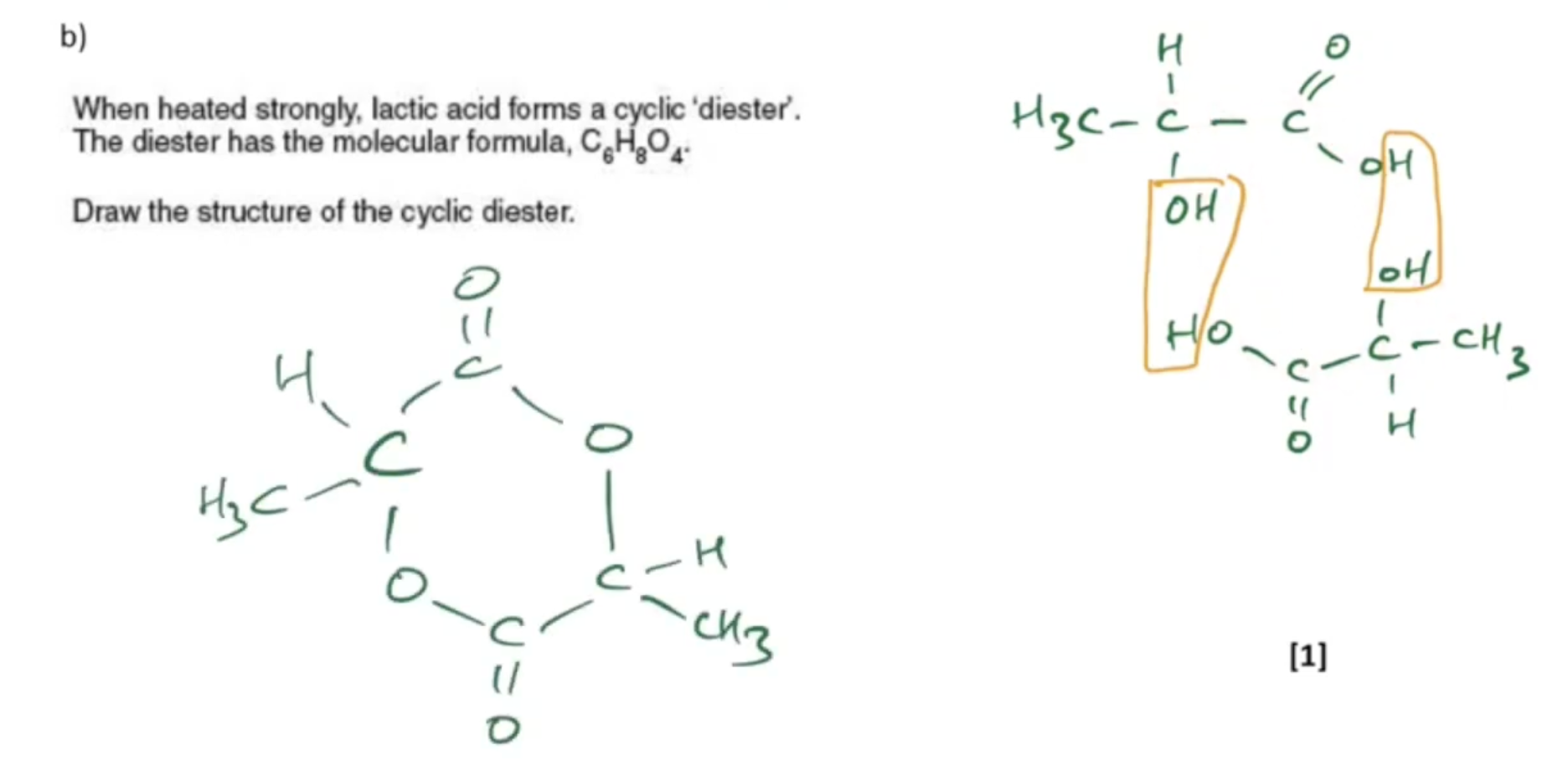

Excess NaOH is important because it reacts with both groups, whereas a weaker base such as sodium carbonate reacts with the carboxylic acid group but not the phenol group.


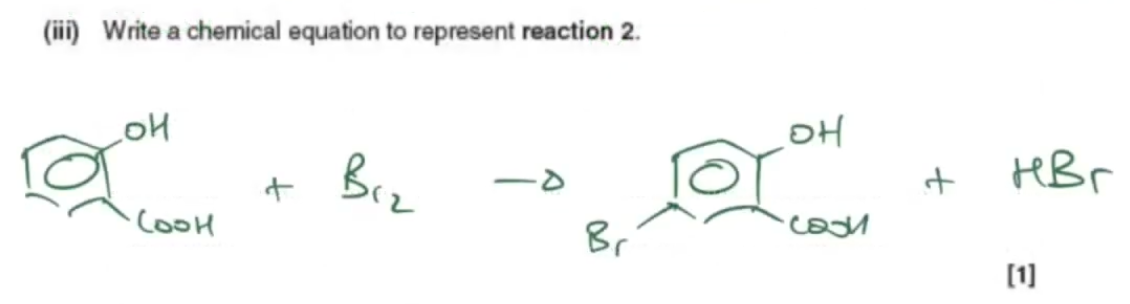
A white precipitate of 2,4,6-tribromophenol forms because it is insoluble in water.


State the reagents and conditions in reaction 3 (1 mark)


Write a chemical equation to represent reaction 2.


aii


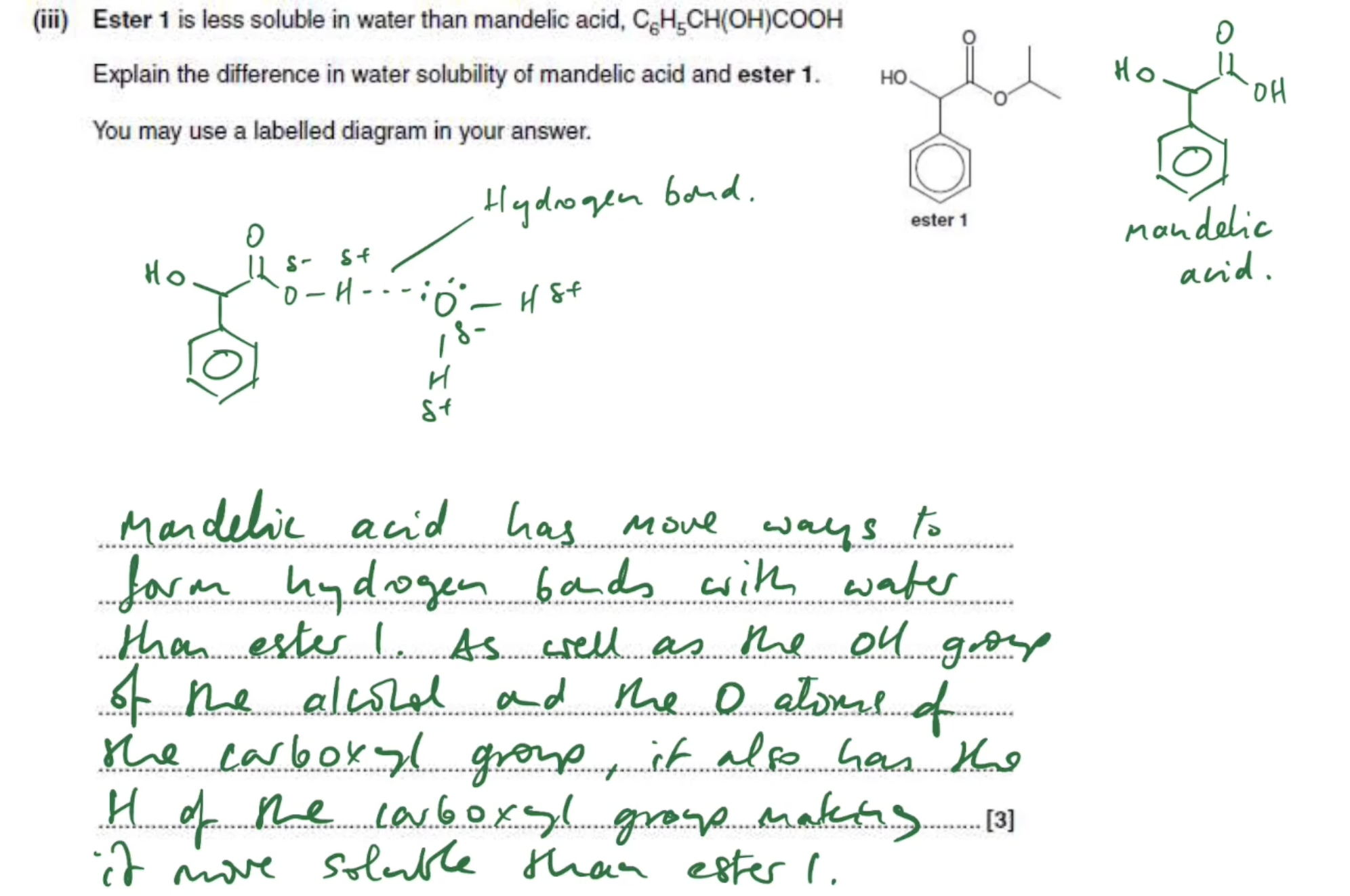
Basically they can both form hydrogen bonds in each the O’s and the H’s e.g the OH can form hydrogen bonds with the H of the water with it’s O , but alsooo the O of the water with it’s H
Ester 1’s ester can only form hydrogen bond with the H of water, but mandelic acid’s COOH can form hydrogen bond with the H of water AND the O of water (since it has an extra H on the OH)


3 ways of esterification
Carboxylic acid + alcohol ~ conc H2SO4 or H+, produces esters and water
Acyl chloride + alcohol ~ produces ester and HCl
Acid anhydride + alcohol ~ produces ester and carboxylic acid
What’s one way of making acyl chlorides
reacting carboxylic acids with thionyl chloride, SOCl2
make an acyl chloride from CH3CCH2COOH (propanoic acid)


What happens if water is present

What can be made from acyl chlorides?
Esters
Phenyl esters (important since not possible with carboxylic acids)
Carboxylic acids
Primary and Secondary amides
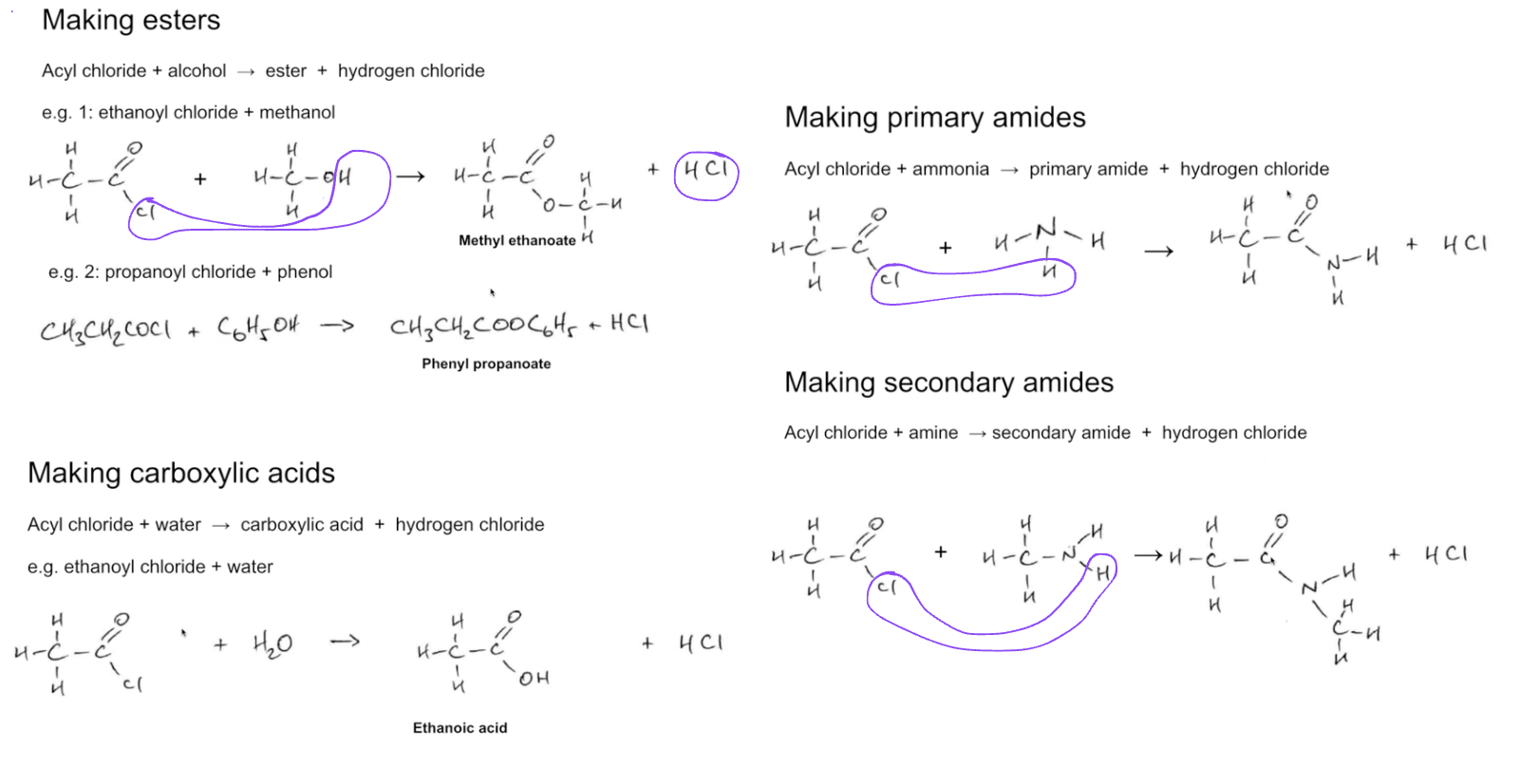
How can do esterification of a phenol , and how can you not…
Using acyl chlorides , important since not possible with carboxylic acids
Why are carboxylic acids soluble in water?
They form hydrogen bonds with water molecules through the –OH group and carbonyl oxygen C=O
How does chain length affect carboxylic acid solubility?
Solubility decreases as the non-polar hydrocarbon chain gets longer.
What happens when carboxylic acids react with metals?
Salt + hydrogen
Example: 2CH₃COOH + Mg → (CH₃COO)₂Mg + H₂. Fizzing occurs.
What happens when carboxylic acids react with metal oxides?
Salt + water
Example: 2CH₃COOH + MgO → (CH₃COO)₂Mg + H₂O.
What happens when carboxylic acids react with alkalis?
Salt + water (neutralisation).
Example: CH₃COOH + NaOH → CH₃COONa + H₂O.
What happens when carboxylic acids react with carbonates?
Salt + water + CO₂.
Example: 2CH₃COOH + Na₂CO₃ → 2CH₃COONa + H₂O + CO₂.
How can you identify the CO₂ produced in the carbonate reaction?
Bubble it through limewater. It turns milky/cloudy.
What are the conditions and products of acid hydrolysis of esters?
Conditions: Hot aqueous acid (H+)
Products: carboxylic acid + alcohol.
Reversible reaction.

What are the conditions and products of alkaline hydrolysis of esters?
Conditions: Hot aqueous alkali (e.g. NaOH)
Products: Carboxylate salt + alcohol.
Irreversible reaction.
