Block 4 stuff
 Call Kai
 Learn
Learn Practice Test
 Spaced Repetition
 Match
Match Flashcards
 Knowt Play
1/45

There's no tags or description
Looks like no tags are added yet.
Name | Mastery | Learn | Test | Matching | Spaced | Call with Kai | Chat |
|---|
No analytics yet
Send a link to your students to track their progress
46 Terms
infection
A disorder that occurs when microorganisms invade the body and multiply (bacteria
disease
Any impairment of an animal's normal physiological functions that disrupts or modifies its ability to function; not always caused by microbes
capsid
Protein shell that surrounds the nucleic acid
nucleocapsid
Capsid plus the genome; used to describe helical nucleocapsids of enveloped viruses
envelope
Lipid bilayer that encloses the viral capsid or nucleocapsid; viral glycoproteins/spikes are inserted in the envelope
virion
A complete infectious virus particle
tegument
Unstructured layer of proteins found between the envelope and capsid of herpesviruses
spike (glycoprotein)
Usually trimeric glycoproteins inserted in the envelope that bind to cell surface receptors to mediate virus attachment and entry
virus-like particle
Resemble viruses but contain no genome
pseudotyped virus
Virus particle containing glycoproteins from a different virus
viral strain/isolate
A genetic variant below the species level
viral serotype
Based on the presence of a unique surface antigen recognized by an antibody or serum
viral serogroup
Viruses of different serotypes that can be grouped based on a shared surface antigen
viral pathotype/biotype
Classification based on disease or pathological outcome

heterophil (avian)

canine neutrophil

feline neutrophil

equine neutrophil

bovine neutrophil

band neutrophil

eosinophil

basophil
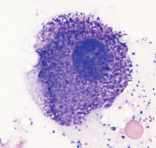
mast cell

monocyte

macrophage

dendritic cells
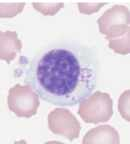
natural killer (NK cell)

if you see this on a blood agar, what does it mean?
partial hemolysis of RBCs

if you see this on a blood agar, what does it mean?
complete hemolysis of RBCs (yellow=none present)

if you see this on a blood agar, what does it mean?
no hemolysis- this is how it would look on a regular agar
antigen
a molecule that can be recognized by a T or B lymphocyte receptor
immunogen
is an antigen that does elicit an immune receptors
epitope
the part of an antigen that is bound by the lymphocyte receptor
Xenobiotic
a "foreign" compound which may be a drug or environmentally distributed chemical
Detoxification
decreased activity following metabolism or biotransformation (note that metabolism does not always result in decreased activity)
Biotransformation
the chemical transformation of xenobiotics.
mild clinical mastitis
alterations in milk
moderate clinical mastitis
alterations in the milk and sings of local inflammation
severe clinical mastitis
alterations in milk, signs of local inflammation, and a sick cow (systemic signs)
subclinical mastitis
inflammatory response not reflected visually
petechial
adjectival form of petechia meaning a minute red spot due to the escape of a small amount of blood
ecchymotic
a small focus of hemorrhage, larger than a petechia, in the skin or mucous membrane
hyperemic
excess amount of blood in a body part
agammaglobulinemic
a severe condition in which there are very low numbers of gamma globulins in the blood, which makes the patient more susceptible to infectious diseases.
which of the following is NOT true about fungal cell walls?
The fungal cell wall is rigid
The fungal cell wall helps determine fungal shape
The fungal cell wall is made up primarily of proteins
The fungal cell wall contains chitin, a molecule not found in birds or mammals
The fungal cell wall is made up primarily of proteins
which of the following is the target of the majority of antifungal drugs in use today?
Chitin
Ergosterol
Pseudohypha
Spherule
Ergosterol