Proteins
 Call Kai
 Learn
 Practice Test
 Spaced Repetition
 Match
 Flashcards
 Knowt Play
1/22

There's no tags or description
Looks like no tags are added yet.
23 Terms

amino acid structure
has the functional group hydroxyl ,carboxyl and amino

dipeptide structural formula is held by ?
the peptide bond is c and N

what’s a polypeptide
an amino acid forming a chain
what’s a conformation of a polypeptide
each protein has a complex 3 dimension shape
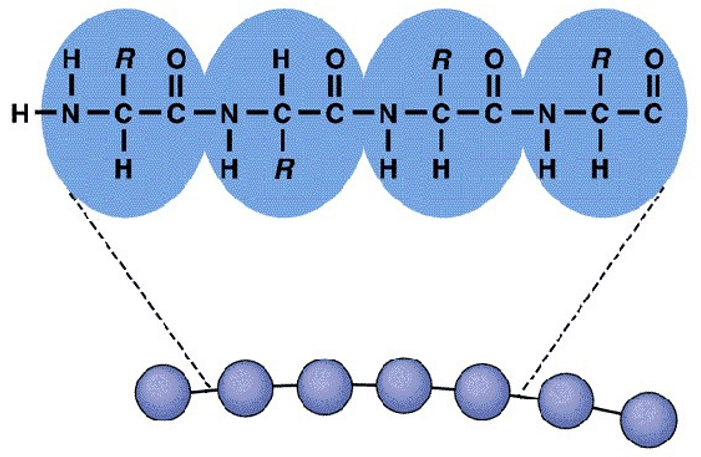
what’s a primary structure
a line of amino acids(polypeptide) held together by covalent bond amino bond at the end and carboxyl on the other end

what’s a secondary structure
the local repeating spatial folding of the protein bone, an allpa helix and beta helix

what’s a tertiary structure
a 3 dimensional shape interacts between R groups
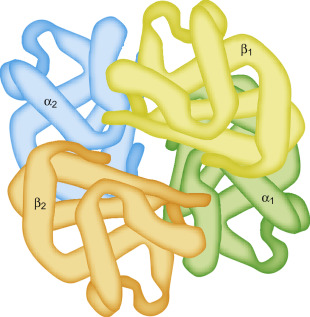
what’s a quaternary structure of a polypeptide
3 dimensional shape with 2 or more polypetide
what type of bonds hold the primary structure together
peptide bonds and covalent bonds
what type of bonds and IMFs hold the 2ndary structure
hydrogen bonds between amino and carboxyl

name all of the bonds and IMFs that hold a tertiary structure in place
r groups connect to hydrogen bond (oh)
what bonds and IMF hold amino acids to form proteins
strong covalent bonds and hydrogen bonds
what will happen to a protein’s shape if you change 1 amino acid in the primary structure
it alters the sequence and changes the proteins shape and function this process is denaturalization
what denaturation how can it happen?
its when a protein or nucleic acid looses its natural 3 dimensional structure. it can happen if theres a disruption of a weak chemical bond.(ex hydrogen bond)
what does DNA tell RNA
DNA tells RNA to tell the proteins what to do and how to arrange themselves
what structure do all proteins have
primary structure, secondary structure, and tertiary structure
what does each amino acid have
hydrogen atom, carboxyl group and variable r group
how many amino acids in the body
there are 20 and each have their own unique R groups
what do r groups do to the conformation ((3 dimensional shape ) of a protein
R groups of a protein come in various types and thus varies the conformation of a protein
examples of r groups being different
some r groups are polar (they have either HO or NH2 ) or non polar, and they can be negtaviley charged
what does a proteins function depend on
proteins functions depend on their conformation
why don’t all proteins have a quaternary structure
because they need 2 or more polypeptides to form
Hydrolysis and peptides
hydrolysis breaks polypeptide bonds to separate them into peptides