ARTH 72 Quiz 2 (11/17)
 Call Kai
 Learn
 Practice Test
 Spaced Repetition
 Match
 Flashcards
 Knowt Play
1/106

There's no tags or description
Looks like no tags are added yet.
107 Terms
Fig. 13.2. Shrine with a bodhisattva, China, 1736–95. Cloisonné enamel and gold wire on gilt copper alloy, gilt bronze Tibetan figure, semiprecious stones; 25¼ × 14⅜ × 10⅝ in. (64.1 × 36.5 × 27 cm). Brooklyn Museum

Fig. 13.6a. Carved mountain: Da Yu zhishui yushan (Sage King Yu Controlling the Flood), China, 1778–88. Jade, copper stand, gold inlay; with stand, H. 9¼ ft. (2.8 m). The Palace Museum, Beijing.

Fig. 13.6b. Carved mountain (detail): Da Yu zhishui yushan (Sage King Yu Controlling the Flood), China, 1778–88. Jade, copper stand, gold inlay; with stand, H. 9¼ ft. (2.8 m). The Palace Museum, Beijing.

Fig. 13.16. Sin Yun-bok (Hyewon). Spring scene from an album of paintings, Korea, late 18th–early 19th century. Ink and colors on paper; 11 × 13¾ in. (28 × 35 cm). Gansong Art Museum, Seoul (National Treasure 135).

Fig. 13.11. Two-tiered chest with stand, Korea, 1800–50. Lacquered wood, mother-of-pearl inlay; 54⅛ × 29 1/16 × 14½ in. (137.5 × 73.8 × 36.8 cm). Asian Art Museum, San Francisco

Fig. 13.17. Wrapping cloth (pojagi), Korea, c.1900. Embroidered cotton; 16 × 16 in. (40.6 × 40.6 cm). Asian Art Museum, San Francisco

Fig. 13.18. Vest, Shōnai, late 19th century. Indigo-dyed, quilted cotton; L. 32⅝ in. (83 cm). Victoria and Albert Museum, London

Fig. 13.20. Tachibana Minkō. Playing-card makers, from Saiga Shokunin burui (Various Classes of Artisans in Colored Pictures), Edo, 1770. Stencil-printed book; each page, 11¼ × 7½ in. (28.5 × 19 cm). Trustees of the British Museum
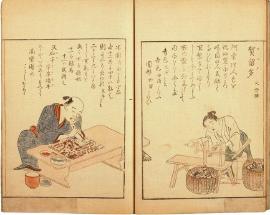
Fig. 13.23. Hosokawa Hanzō Yorinao. Illustration of a tea-carrying automaton, from Karakuri zui (Illustrated Compendium of Automata), Japan, 1796. Woodblock printed book; 8⅞ × 6¼ in. (22.5 × 15.9 cm). Trustees of the British Museum

Fig. 13.30. Utagawa (Gountei) Sadahide. An Englishman Sorting Yokohama Textiles for Trade, Japan, 1861. Woodblock print; 14¼ × 9¾ in. (36.2 × 24.8 cm). Trustees of the British Museum

Christopher Dresser, Leaves and Flowers from Nature, no. 8 color lithograph, from the The
Grammar of Ornament, 1856

Christopher Dresser, Silver-plate designs, England, c. 1879 and toaster rack, c. 1879

Hector Guimard, Metro station entrance, cast iron, Porte Dauphine, c. 1900

Jules Cheret (1836-1932) Les Girard, poster for the Folies-Bergeres, color lithograph, 1879
21 ¼ “ x 17 1/8” (54-44.5 cm)

Henri Toulouse-Lautrec, La Goulue at Moulin Rouge, poster, 1891, 33 x 48"

VICTOR HORTA, STAIR, TASSEL HOUSE, BRUSSELS, 1892-93

Antoni Gaudí, Casa Batllo, Barcelona, 1900-07

Antoni Gaudí, Casa Mila’ (La Pedrera=stone quarry), 1906-10, Passeig de Gracia,
Barcelona, Spain, limestone blocks with wrought iron balconies

AM Cassandre, poster for L’Atlantique, 1931, color lithograph

AM Cassandre, Pi Volo Aperitif, color lithograph, 1925

Jean Dunand, sketch for Smoking Room, Exposition Internationale des Arts Decoratifs et
Industriels Modernes, Paris, 1925

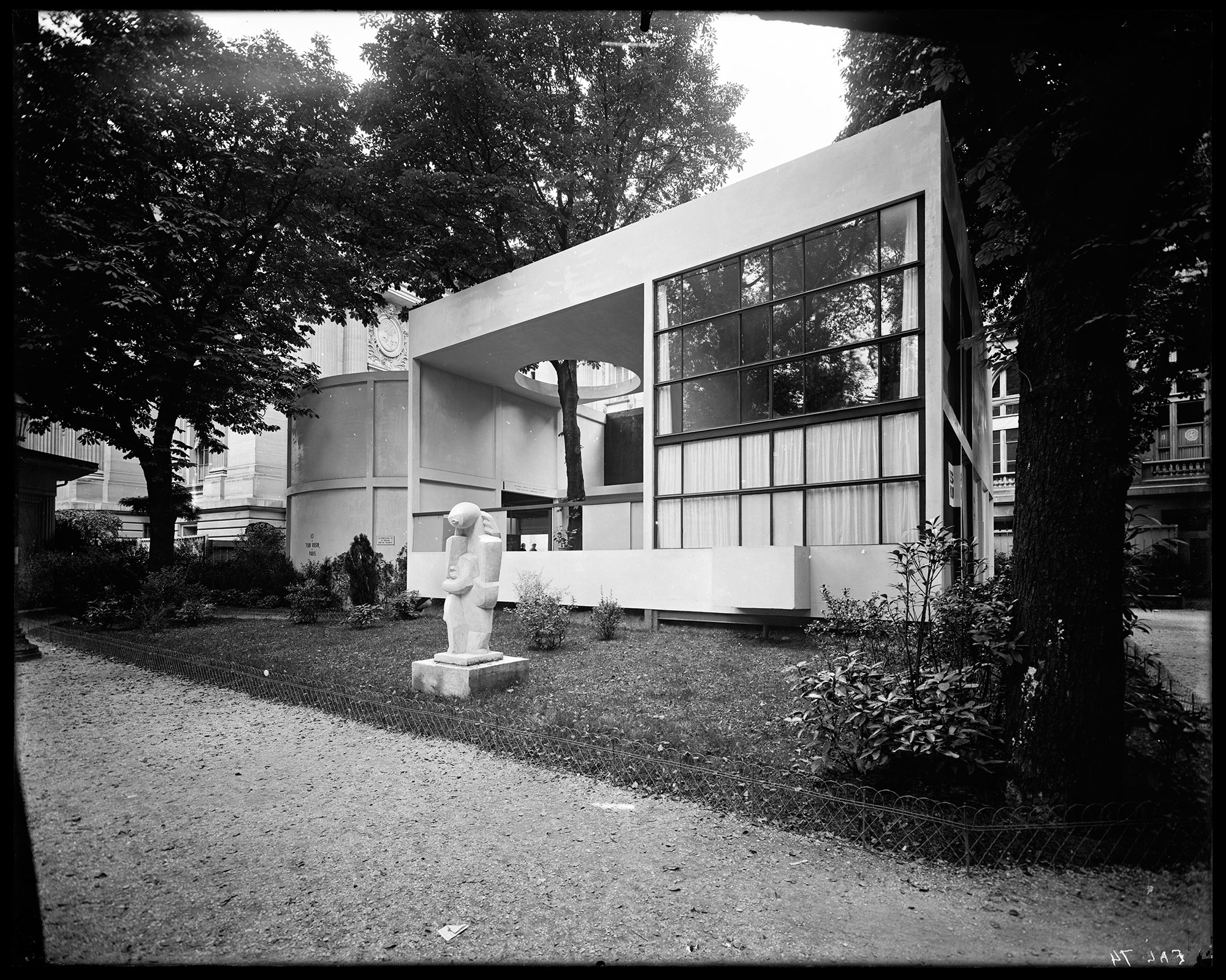
Le Corbusier, Interior, Pavillion de l’Esprit Nouveau, Exposition Internationale des Arts
Decoratifs et Industriels Modernes, Paris, 1925
Filippo Tommaso Marinetti, At Night in Her Bed, fold-out poem, Milan 1919, 9.1

Futurism Giacomo Balla. Dynamism of a Dog on a Leash. 1912.
Oil on canvas. 35-3/8 × 43-1/2 in.

Giacomo Balla, Illustration of the anti-neutral suit, form Futurist Manifesto, 1914

Giacomo Balla, Illustration of the anti-neutral suit, form Futurist Manifesto, 1914,
published in Volantino (means flyer, circular, handbill) della Direzione dei Monumenti
Futuristi, Milan

Gerrit Rietveld, Shröder House, Utrecht, 1924-25, photographed in 1987

Gerrit Rietveld, Red/Blue Armchair, 1918, painted in 1923

Boucher, The Chinese Fair, Beauvais Tapestry Manufactory, 1742 + Cartoon , final Tapestry
on right Minneapolis Institute of the Arts

Duplessis, Potpourri container, by Sèvres Royal Porcelain Manufactory,1761

Michael Thonet, Side chair, beech wood, 1836-40, Victoria and Albert Museum, London

LEED
____ is the most widely recognized green building rating
system in the world. ____ certification offers a framework for healthy,
efficient, and cost-effective green buildings, providing environmental and
social benefits. It serves as a globally recognized symbol of sustainability
leadership, supported by a committed community of organizations and
individuals driving market transformation.
What is interesting about the cotton gin?
It transformed cotton processing from manual and slow to highly automated and rapid mechanical process.
What is the importance of the cotton gin?
Acted as a massive catalyst for the global textile industry by supplying cheap, abundant raw cotton. It fueled the rapid expansion of early factory systems.
“Many people didn’t really like how technology was improving as they liked the traditional way better.”
What do we know about power before and after the industrial revolution?
BEFORE: Power mostly came from human labor despite some advances in tech (not fully advanced yet)
BEFORE: Technology could be powered by animals and other natural resources like water
AFTER: Shifts to steam engine powered by coals for efficiency, manufacturing and transportation
AFTER: Mechanization takes place
What can be considered desirable about the cotton gin? What might be undesirable?
Undesirable: You have to stand and physically move around a lot in order for the cotton gin to work, can be undesirable, exhausting
Desirable: Separated cotton from fiber more efficiently
Bentwood chair: What was interesting about this invention; what is its importance as we talk about the Industrial revolution?
Something interesting about this invention is that it required the use of human labor during a time when manual labor was seen as less important/necessary.
Figured out how to bend wood and machines didn’t have the sensitivity to do so
There is a human component in this chair and preserves the art of skilled craftsmanship
What do we know about power before and after the industrial revolution?
Power before the Industrial Revolution mainly came from labor and more natural resources
Power after became more mechanical and factory powered
Pre industrial revolution: mostly hand made. Post industrial revolution: focused on efficiency and replaced workers with machines
What can be considered desirable about the bentwood chair? What might be undesirable?
Simple design and easy to construct/transport (36 chairs in 1 cubic meter)
No longer necessary to carve wood to create an interesting design
Was only made out of 6 pieces
Limits how a chair can be designed due to the labor process
steam-powered cylinder printing press: What was interesting about this invention; what is its importance as we talk about the Industrial revolution?
sped up production
easier to mass produce things
for printing and fashion
What do we know about power before and after the industrial revolution?
before: more human labor
after: more machines doing the work
What can be considered desirable about the cylinder press? What might be undesirable?
it increased efficiency (manufacturing and transport)
it turned craftsmen into wage laborers and caused cities to grow in size and unhealthiness

Think about the technique needed to create the shrine. What was Emperor Qianlong influenced by?
Cloisonné
European Style, the twisting columns resemble St. Peter’s Basilica in Rome
What evidence do we see of borrowed design elements from different areas/cultures?
cloisonne that was also seen in Japan
- gui was similar to cloisonne, was a ritual food vessel in China
- Borrowed techniques from the Ming Dynasty
- canopy resemblance
Who was the champion of the Arts & Craft movement?
William Morris is considered an early environmentalist, being a large voice in the Arts & Craft movement not only as an artist and designer but writing about it too.
What are values of the Arts & Craft movement?
The Arts & Craft movement celebrated the human of design and arts. This means finding joy in creating something beautiful and using pre-industrial techniques. This meant a lot more labor and used higher-quality material: and so A&C items becoming more expensive is an unfortunate side effect, not the end goal.

This Sussex chair is a great example of the Arts & Crafts Movement
True

The thonet chair is a good example of the Arts & Craft movement
False
What caused East & West trade?
The west wanted spices
China wanted clocks from Europe
India wanted guns from Europe
Luxury goods traded
What was the type of clothing that Koreans typically wore, colors + style, and how were men and women’s clothing different from each other? |
Women wore colored clothing to show their domestic status. Men wore white and hats. |
Hanbok=clothing/fashion. Jeogori= big pants. durumagi= big overcoat |
men dressed wearing white, baggy pants, broad hats. Women wore blouses and skirts. Unmarried women wore red while married wore blue |
What is the difference between baroque and rococo? How to tell them apart?
Baroque has balanced and symmetrical classical design and their values become theatrical. Rococo’s designs are luxural, sensual, and frivolous. It's more of a clever and thought out design.
How did the Industrial Revolution affect the middle class?
With machinery, many lost their jobs as labor no longer required hands on work; Mass production was possible and people were more easily able to afford consumer goods |
What is an example of hybridization? |
World Map in Japan
What issues arose in the Industrial Revolution regarding the workers?
The Industrial Revolution led to workers and craftsmen to lose their jobs to new machinery that were being created to mass produce items.
What religion were the Europeans trying to convert Asians to?
Christianity
What is the definition of Baroque?
Emphasis was on classical norms life balance and symmetry yet those values become theatrical
India & Europe’s relationship
India & the British held a close relationship at one point in history.
The British would eventually take over India
The Indians would look to the West for technology—guns & gunsmiths in
particular.
East & West’s relationship
The West often sought out the East’s culturally rich luxurious goods
Just as the West had “fantasties” of the East, the East too would have
“fantasties” of the west. Brighton’s Pavilion is a good example of a
“fantasy of the east”Perspective was carried over to Easten art from Western influence
designs & objects called ______ based on what
the West thought the east was like, rather than informed
borrowing of design
“chinoiserie”
Emperor Yongzheng of China once posed wearing a _____
European-style wig.
The Jesuits hoped that the _____ would catch on in China
Christian faith
Japans relationship with Europe
The Japanese were intrigued and confused by European fashion
The Japanese would refer Europeans, as well as all foreigners, as
barbarians
Neo-Confucian ideals were forced upon women in 18C ____
Korea
____ important in Asian customs. Held items like make-
up, cosmetics, and perfumes.
Boxes
___________ changed inheritance so that the eldest child was the sole inheritor; used to be equally distributed amongst all children.
Mid-to-late 19C Korea
__(1)__ luxury industries thrived; __(2)___struggled to match their craftsmanship.
(1)Asian
(2) Europe
_____ believed they would be able to convert many people in
the eastern countries they encountered
Europeans
The Japanese would refer Europeans, as well as all foreigners, as _____
barbarians.
The Japanese were intrigued and confused by European ____ (as were other eastern societies)
fashion
gadroons
rope pattern
Jade
wealth, protector of ancestors, antiquity
How long did the Joseon Dynasty reign in Korea?
500 year reign (1392-1910)
How was a unified aesthetic look created for the Art Noveau interior design movement?
Lots of flowing naturalistic forms. All of the walls look very organic & full of assymetry yet remain balanced looking
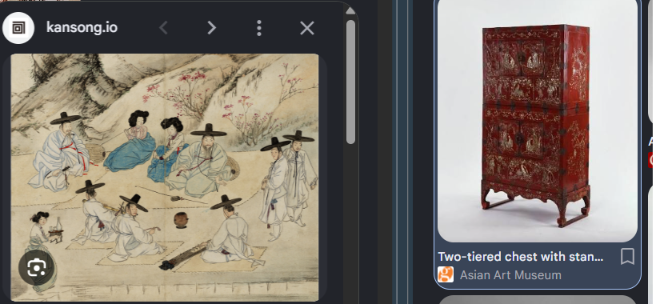
What did these works reveal about korean society during the late 18th century to early 19th century?
Hierarchy. strict social classes. differences between dress and furniture for men & women Furniture for women was more decorative and colorful
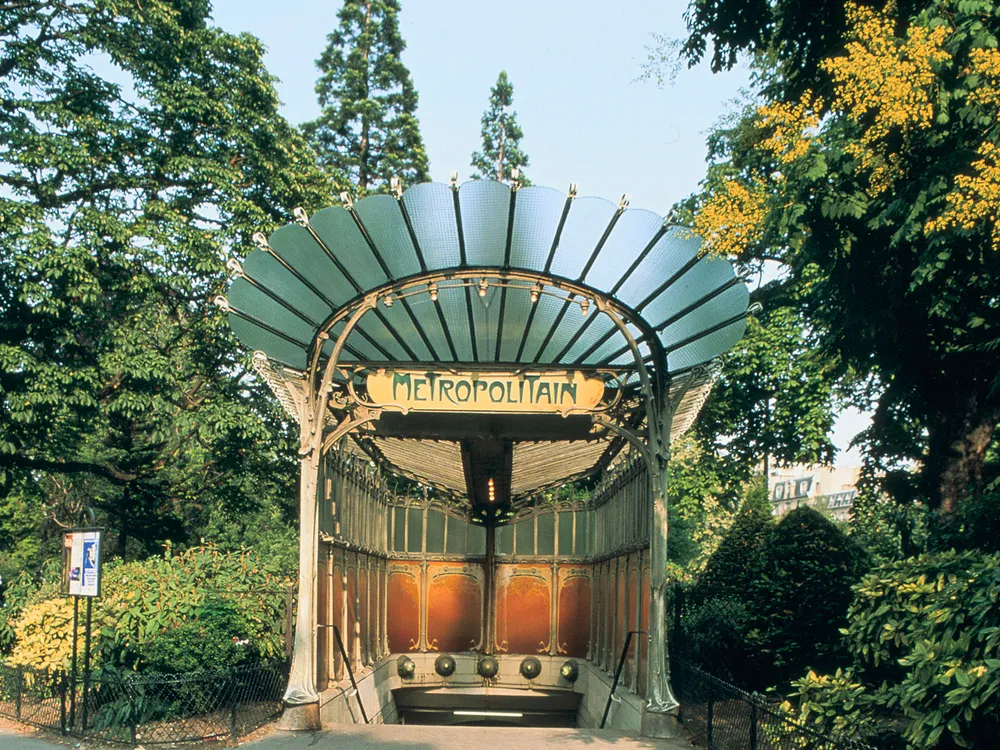
What is the link between art and industry here?
Making art more accessible to the public + glass let sunlight in making it even more accesible. Cast iron was used because its a malleable material
Block print process on fabric
1) draw design
2) transfer design to wood block
3) carve design
4) ink design
5) stamp design onto fabric
Why didn’t furniture within the arts and crafts movement sell well?
it was too expensive for general public
Art Nouveau
Style in Western Europe & U.S characterized by intricate linear designs & flowing curves based on natural forms from 1890-WW1; Means “new art” in French
Modernismo
Art Nouveau in Spain
Art deco (art moderne)
Decorative style of 1920s-30s. characterized by shapes & strong colors. Used most notably in household objects & architecture
S.A.D
Society of decorative arts; Founded 1901 to promote French craftsmanship & a burgeoning interest in modernity & France
Towards modernism
Review of concepts in early 20th century in Europe
Discoveries in science & philosophy
Max Planck (1890) = energy and matter in constant state of flux
A.M. Cassandre
Famous Ukrainian-French designer
Inspired by cubism & surrealism
Used to airbrush to paint designs
Simplifies shapes to basic forms (rectangles, squares, primary colors)
Very angular
De Stijl & universal order
An old & new consciousness of time
The old is connected with the individual, the new w/ the universal
What family ruled Japan from 1615 to 1868?
it was the Tokugawa family, which ruled over Japan. Which is why that period, the Edo Period, is also called the Tokugawa period. It was a period where Japan is both politically and socially stable.
What similarities can be drawn between the Arts and Crafts movement and Art Nouveau?
The Arts and Crafts movement and Art Nouveau were both influential design movements that emerged in the late 19th and early 20th centuries as reactions against the industrialization of the era. While they had distinct aesthetic styles, they shared several core similarities. First, both movements were deeply critical of the poor quality of mass-produced, machine-made goods.
How did Antoni Gaudí’s use of nature and organic shapes challenge traditional architectural styles?
challenged traditional architecture by designing buildings that look like they grew instead of being built. Most architecture before him, from the Baroque symmetry of Versailles to the 19th-century revival styles, used straight lines, flat walls and classical rules of balance and proportion. Gaudí worked in Catalan Modernismo, the Spanish branch of Art Nouveau, and took nature as his model instead of history.
What was silver electroplating?
a process that became popular during the 19th century. It was basically a way to cover cheaper metals with a thin layer of silver using electricity. This made objects look like they were made of real silver, even though they were actually made from a different material.
what are "Luddites"
rebellious artisan weavers in Nottinghamshire, England. The British government made it illegal for workers to form unions or strike. On top of that, they were not paying workers a good wage.
What type of wood was used by Michael Thonet to create his 1836-1840 side chair?
used beechwood to create the specific chair we see as an example in the slides. The reason this is significant/a piece we take note of in our studies about the Industrial Revolution is because it shows us innovation in how wood was used in furniture making. Specifically, this chair is an example of one of the first known usages of the bentwood process in the making of furniture. This process involved using heat and water to bend thin strips or veneers of wood. These strips would then be laminated together (in up to layers of 16) after which these new, layered sections could be heated with steam and eventually curved
What is the difference between wrought iron and cast iron? The processes?
Wrought iron is when iron is heated enough to become malleable. This iron is then beaten into shape with tools to create whatever form is desired.
Cast iron is valuable (especially during the industrial revolution) as it allows for mass production. Due to the fact that the iron does not need to be shaped and formed by hand but rather poured into a mold, it allows for several pieces to be made at once while needing less hands and skill to create.
What are the Design Values of the Victorian Age, and examples?
consumer becoming a dominant class, which led to increased technology in the household and the redefinition of what makes something one’s home. The Victorian world is split into two worlds: a respectable world of home life, religion, and government, and a functional world of tradition developed in transportation science and technology.
What does the shift from Baroque to Rococo show about the ruler’s power and confidence?
French royal influence set the trends of the nation, and thee transition from Baroque to Rococo took place alongside a transition of power from King Louis XlV, to Regent Philippe D'Orleans, and eventually to King Louis XV. Baroque as a style has an emphasis on classical norms and symmetry or balance in design. However, that set of values becomes theatrical when executed on the scale of something as large and grandiose as the Palace of Versailles. Meanwhile Rococo is synonymous with luxurious and frivolous tendencies
What does the Jade symbolize in Chinese artworks?
symbolizes wealth, antiquity, nobility, and the protection of the ancestors. Jade is made from nephrite and jadeite. It was commonly used in the late 17th century because it also embodies moral virtue and imperial authority, and it supports physical and technical trade development. With this material, it has expanded the trade routes across Asia, and this requires technical mastery.
What was the type of clothing that Koreans began to wear in 1900, what colors + style, and how were men and women’s clothing different from each other?
Koreans hanbok in the 19th century began to adopt clothing made out of ramie, silk, cotton, and hemp. Ramie in this case is referring to a fiber crop grown in East Asia, also known as "grass cloth." Married women tend to wear blue, and men wore white. Men also wore clothing of a baggier style with hats to complete the look.
Korean hanbok at the time reflected Confucian and Chinese influence through social hierarchy and status among the two genders, particularly focusing on its gendered views of separating married/non-married women apart through use of color and design.
What are the three ways acceptance can be won by design? And what strategy does each one employ?
through making things seem different than they are. The design of the object alters the way we see commodities and choose whether or not to buy them. With all of the new technology emerging during the industrial revolution, people were hesitant to accept some new advancements. 3 ways designers tried to make the products easier to accept were the archaic, suppressive, and the utopian.
The archaic
aims to make the object feel familiar. It is designed to fit in to what the user already owns. It often looks like a similar style to popular aesthetics at the time.
The suppressive
tries to hide the object. It goes unnoticed, but the user is still able to use it.
The utopian
minimalistic, futuristic, and functional. This type of design is mostly used when the users are already adjusted to using the new technology, and is ready to show it off. This makes the object seem cooler and more appealing, like a status symbol
Pietre Dure
a decorative art technique that uses carefully cut, polished pieces of colorful stones to create detailed pictures or patterns.