Term 4 - B4.2 Ecological Niches
 Call Kai
 Learn
 Practice Test
 Spaced Repetition
 Match
 Flashcards
 Knowt Play
1/27

Earn XP
Description and Tags
B4.2.1 - B4.2.7: 1-12; B4.2.8 - B4.2.13: 13-28
28 Terms
B4.2.1 Ecological Niche (2 + 3)
B4.2.1 Ecological Niche:
Definition: The unique, specialised role of a species within its ecosystem
What niche an organism can fill depends on three things:
Zone of tolerance
How it interacts with other species
How the organism obtains food
B4.2.2 Terms (4)
Obligate: no choice
Facultative: has choice
Aerobic/oxic: in the presence of O2
Anaerobic/anoxic: without the presence of O2
B4.2.2 Obligate Aerobes (2)
B4.2.2 Obligate Aerobes:
Must have O2 to survive
Examples: All animals and plants, skin bacteria (s. epi, m. luteus)
B4.2.2 Obligate Anaerobes (2)
B4.2.2 Obligate Anaerobes:
Only live in anaerobic conditions, cannot be exposed to O2
Examples: Bacteria that causes tetanus, methanogenic archaea
B4.2.2 Facultative Anaerobes (2)
B4.2.2 Facultative Anaerobes:
Can live in both aerobic and anerobic conditions
Examples: E. coli, yeast
B4.2.3 Three groups of photosynthesisers/primary producers/producers/autotrophs (3)
Plants
Cyanobacteria
Algae
B4.2.3 Photosynthesis (2)
B4.2.3 Photosynthesis:
Photosynthetic organisms convert carbon dioxide and water using light energy into organic compounds, such as glucose and oxygen gas
Photosynthesis is the mode of nutrition in plants, algae, and different groups of photosynthetic prokaryotes
B4.2.4 Holozoic Nutrition (1)
B4.2.4 Holozoic Nutrition:
Holozoic nutrition is a form of heterotrophic nutrition where an organism ingests food, internally digests food, and absorbs and assimilates the nutrients from the digested food
B4.2.4 Holozoic Nutrition Steps (5)
B4.2.4 Holozoic Nutrition Steps:
Ingestion: Physical act of consuming food
Digestion: The breakdown of macromolecules of the consumed food into smaller molecules
Absorption: Movement of digested nutrients from the gut into the blood and being circulated into tissues around the body
Assimilation: Using nutrients to synthesise proteins and build macromolecules
Egestion: Removing undigested waste and metabolic waste materials from the digestive tract
B4.2.5 Mixotrophs (3)
B4.2.5 Mixotrophs:
Mixotroph: Organism that can gather energy or nutrients in both autotrophic and heterotrophic ways (e.g. certain protists)
Obligate mixotroph: Must use both methods because they cannot obtain all necessary nutrients from only one mode
Facultative mixotroph: Can use just one method or the other depending on the conditions of the environment (e.g. Euglena (protist) found in freshwater, carnivorous plants (Venus flytrap))
B4.2.6 Types of decomposers (2)
B4.2.6 Types of decomposers:
Saprotrophs: Decomposition occurs externally by secreting digestive enzymes into dead organic matter to break down into simple inorganic ones (e.g. most fungi and bacteria)
Detritivores: Decomposers that consume dead, organic matter and digest them internally (e.g. milliped, slugs, snails, earthworms, woodlice, dung beetle)
B4.2.7 Archaea and Types of Archaea (2 + 3)
Archaea: Single cell prokaryotic microorganisms more closely related to eukaryotes
Three main groups:
Phototrophic: Absorb light energy to produce ATP
Chemotrophic: Oxidise inorganic chemicals to produce ATP
Heterotrophic: Consume other organisms to produce ATP
B4.2.8 Dentition (3)
B4.2.8 Dentition:
Dentition: Teeth
Teeth structure has been studied by scientists to determine the type of food organisms consume
Structure is always related to function
B4.2.8 Family Hominidae (4)
B4.2.8 Family Hominidae:
Family Hominidae is the family of the great apes, which are all tailless primates
Members of the family Hominidae are often referred to as hominids
The family Hominidae includes modern humans (Homo sapiens) and all of our recent ancestors including Homo floresiensis and Paranthropus robustus
Some members of the family Hominidae are herbivores and others are omnivores
B4.2.8 Herbivores (2)
B4.2.8 Herbivores:
Herbivores eat predominantly plants
Herbivorous hominids have large, flat teeth for grinding seeds, along with strong jaws
B4.2.8 Omnivores (2)
B4.2.8 Omnivores:
Omnivores eat plants and animals
Omnivorous hominids have a mixture of sharp incisors for ripping through meat, and flat molars
B4.2.8 Analysing Teeth (3)
Homo sapiens are omnivores. This is evident from examining the teeth as there are sharp incisors, and small flat molars
Homo floresiensis were probably herbivores, as they had large relatively flat molars
Paranthropus robustus were probably herbivores, as they had very large flat molars
B4.2.9 Adaptations of herbivorous insects for feeding on plants (1 + 2, 1 + 2)
Tube-shaped mouthpart:
Pierce into the plant to suck sap out
E.g. Aphids
Jaw-like mouthpart:
Biting and chewing leaves
E.g. Beetles, caterpillars
B4.2.9 How plants prevent herbivory (4)
How plants prevent herbivory:
Spines and spikes (e.g. roses, cacti)
Release of toxins --> leads to irritation
Nettles
Some aphids are able to feed on nettles by producing saliva to help detoxify the nettle’s toxins - this is an example of speciation
B4.2.10 Adaptations of predators that allow them to catch prey (3)
B4.2.10 Adaptations of predators that allow them to catch prey:
Physiological (Chemical): secretion of venom/neurotoxins (e.g. snakes, spiders)
Morphological (Structural/Physical): claws, teeth, night vision
Behavioural: ambush tactics, hunting in a pack
B4.2.10 Adaptations of preys that allow them to avoid predation (3, 1)
B4.2.10 Adaptations of preys that allow them to avoid predation:
Physiological (Chemical): toxins (e.g. skin of cane toads)
Morphological (Structural/Physical): camouflage (e.g. stick insects look like branches)
Behavioural: schooling (e.g. fishes/snappers), bluffing/pretending to play dead
Chemical adaptations take the longest to develop based on natural selection/evolution
B4.2.11 Adaptations that allow other types of plants to harvest light - Lianas (woody climbing vines) (3)
Lianas (woody climbing vines):
Germinate on the forest floor
Firmly ground within the soil to obtain nutrients and water from the soil
Use trunk of surrounding tree branches for support to climb up towards the canopy to absorb light for photosynthesis

B4.2.11 Adaptations that allow other types of plants to harvest light - Epiphytes (air plants) (5)
Epiphytes (air plants):
Grow high up in the tree branches, doesn't grow downwards towards soil
Root is within soil around the tree branches
Can thrive with little sunlight
Birds excrete on branches
Can collect rainwater and absorb nutrients from fallen leaves

B4.2.11 Adaptations that allow other types of plants to harvest light - Strangler epiphytes (3)
Strangler epiphytes:
Grows both up and down
Germinate in the branches of canopy trees, then send aerial roots downwards to the forest floor
Surrounds the trunk of the host tree, and outcompetes it for light

B4.2.11 Adaptations that allow other types of plants to harvest light - Shade-tolerant shrubs (4)
Shade-tolerant shrubs:
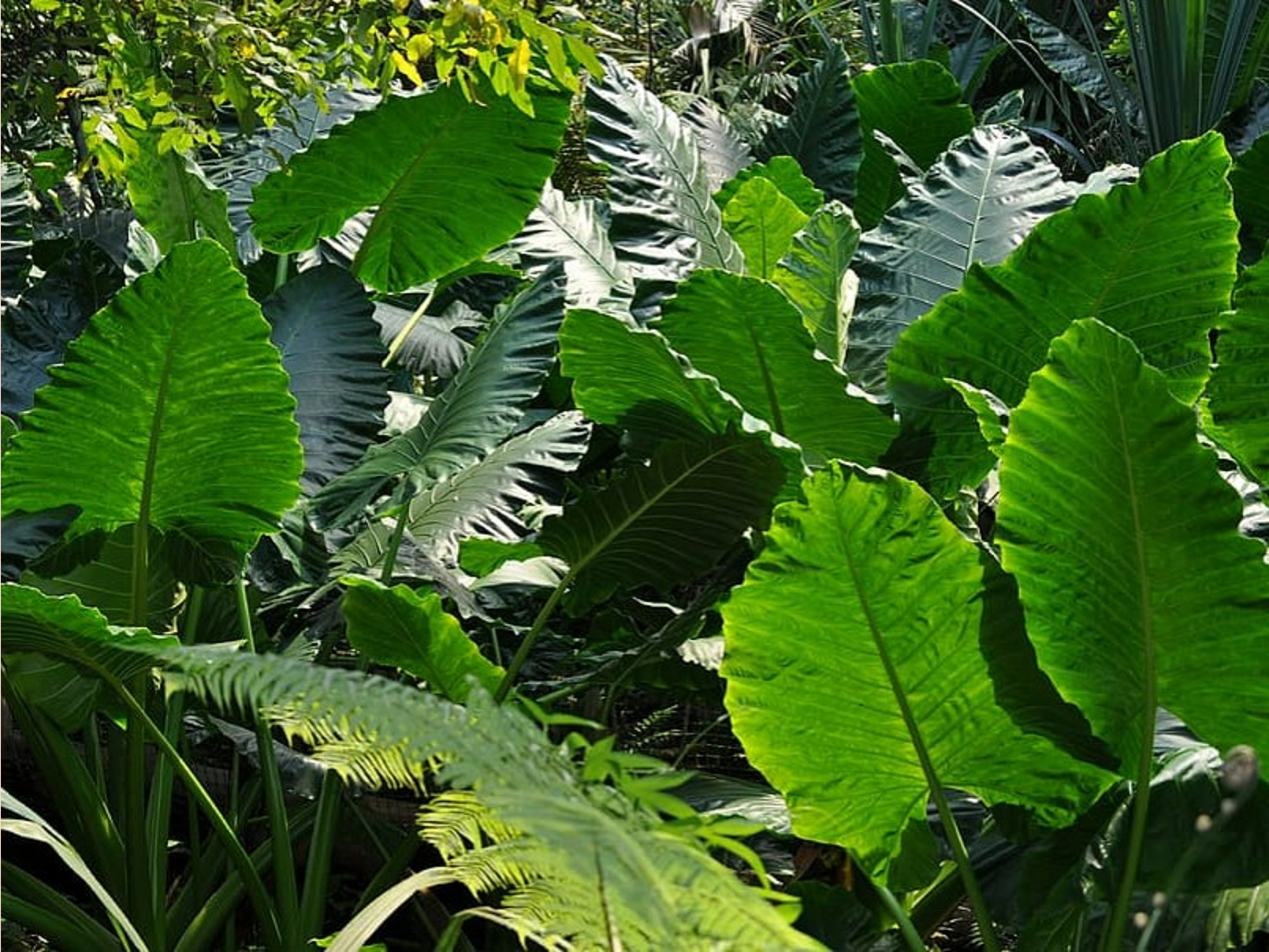
Found on the forest floor with little sunlight and lots of moisture
Contain different photosynthetic pigment - vary in colour
Can absorb the different wavelengths of light to maximise photosynthesis
Large leaves to increase the rate of photosynthesis
B4.2.12 Fundamental Niche (2)
B4.2.12 Fundamental Niche:
A theoretical niche a species would occupy within a habitat if there are no competition and unlimited resources
Size: Always larger than the realised niche
B4.2.12 Realised Niche (2)
B4.2.12 Realised Niche:
The niche that a species actually occupies within a habitat, in the presence of competitor species and limited resources
Size: Always smaller than fundamental niche
B4.2.13 Niche Partitioning (2)
B4.2.13 Niche Partitioning:
Niche partitioning is an ecological process in which competing species divide limited resources so they can coexist in the same environment without driving one another to extinction
Niche partitioning can be spatial (dividing up space), morphological (different shapes or structures), or temporal (different times of day or year)
These warblers occupy very similar niches. However, they have minor variations which suit them to slightly different parts of the same resource
The result is that although none of them uses the whole tree as their niche, they each have their own niche within the habitats and can coexist successfully
Two species of spiny mouse (Acomys genus) uses temporal partitioning - one feeding during the day and the other feeding on the same insects at night