Diseases of the Peri Parturient Ewe 1
 Call Kai
 Learn
Learn Practice Test
 Spaced Repetition
 Match
Match Flashcards
 Knowt Play
1/35

There's no tags or description
Looks like no tags are added yet.
Name | Mastery | Learn | Test | Matching | Spaced | Call with Kai | Chat |
|---|
No analytics yet
Send a link to your students to track their progress
36 Terms
List some of the main metabolic diseases associated with nutrition around lambing time
Metabolic disease
Pregnancy toxaemia / twin lamb diseaes
Hypocalcaemia
Hypomagnesaemia
What are the secondary diseases associated with nutrition around lambing time?
Ewe
Mastitis
Dystocia
Maternal behaviour
Lamb mortality/ morbidity
Low lamb birth weight
Poor colostrum
Poor milk production
Recall the body condition score targets for the different stratifications and different points in the production year

What are the general principles of feeding ewes at each stage?
Pre tupping: summer grazing to recover at pasture before tupping, if flushing inc feed will improve number of eggs produced
Early to mid pregnancy: no sudden changes, maintain BCS
90 days to lambing: nutrition absolutely crucial to health
Late pregnancy: support foetal growth and maintain ewe health to avoid ketosis
What non metabolic issues is underfeeding in late pregnancy related to?
Mastitis during lactation
Maternal behaviour
When do a lot of farms supplementary feed in a ewe's pregnancy?
Last 6-8 weeks pregnancy
Later lambing with well managed grass may be okay without
Forage and/or concentrate
Good access to top quality forage is key
What are some of the principles of nutrition that are implemented in a nutrition plan for ewes during pregnancy?
Split into feeding groups (BCS, Lambing dates, Young ewes separate, Scanned singles/twins)
Ration
Water
Vitamins and minerals (farm specific
Trough space
Pen first time lambers separate
TMR
Monitor- BCS, Ewe Health, Metabolic Profiles
What does a typical ration look like in late pregnancy for a ewe?
Ad lib good quality forage
Conc requirement based on analysis of ^^
Typically max 1kg per day and 0.5kg per feed
What are the trough space reccomendations for late pregnancy ewes? Why is it so important
Concentrates all sheep feed at once
Forage (ad lib) 1/3 sheep feed at once
If not followed fat get fatter, thing get thinner
At what age do lambs start eating grass? When are they weaned?
Lambs start eating grass 6 weeks age
Weaned about 12-16 weeks old
What will poor feeding in lactation lead to?
Mastitis in ewes
Poor growth in lambs
Susceptible to other diseases
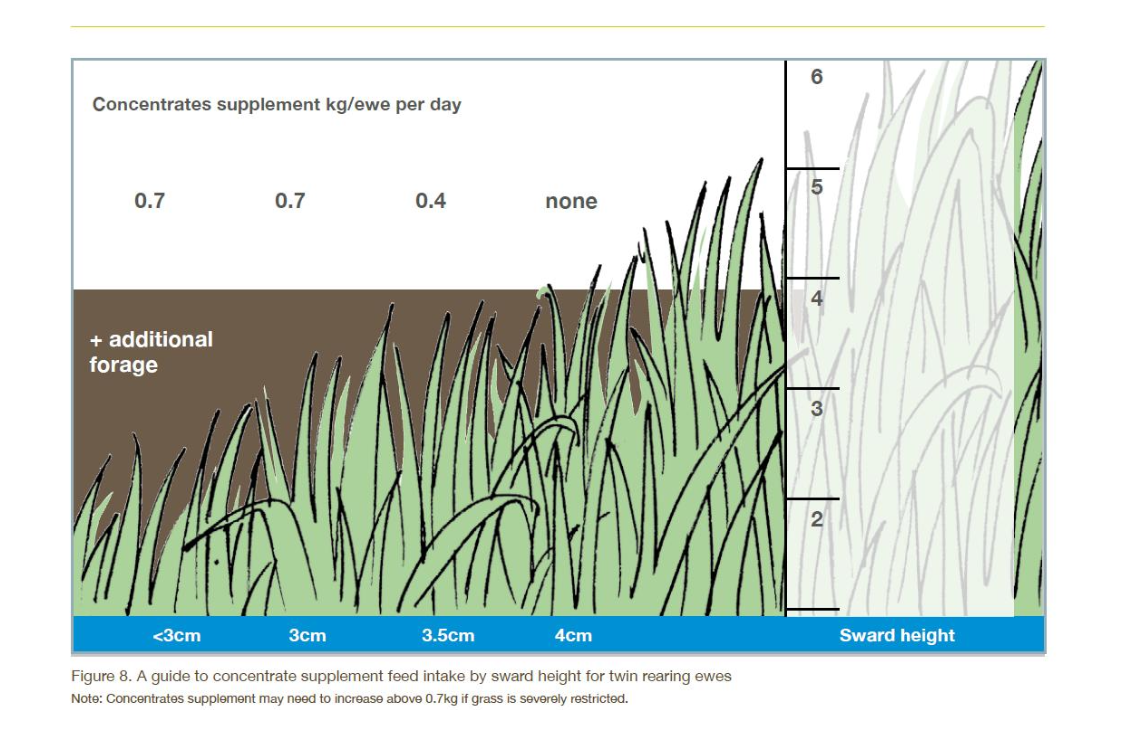
How can you evaluate whether you need to supplement concentrates in a lactating ewe?
Can use sward height
What diseases may arise if nutrition is not adequate in peri parturient ewes?
Twin Lamb Disease
Hypocalcaemia
Lamb mortality/morbidity
Weak small lambs at birth
Watery mouth
Joint ill/ infections
Hypothermia
Mastitis
Lamb Growth
List some common problems you may come across with sheep nutrition around lambing time
Thin ewes- inadequate nutrition
Forage- poor quality, spoiled, not ad lib, insufficient trough space
Concentrates- inadequate trough space, poor quality, too much (acidosis)
High stocking rates/ overcrowding
No access to water
If a ewe is fat what does this make it susceptible to? (doesn't tend to be a problem in commercial sheep flocks)
Pregnancy toxaemia
Dystocia
Prolapse
Higher lamb mortality
What is the main cause of pregnancy toxaemia?
Energy deficiency
Hypoglycaemia
Hyperketonaemia
List some of the risk factors of pregnancy toxaemia
Late Pregnancy (last 6 weeks)
Thin ewes (<BCS 2.0)
Fat ewes (>BCS 4.0)
Stress
Broken mouth
Concurrent disease ( fluke, worms)
Multiple foetuses
Inadequate diet
Change in diet
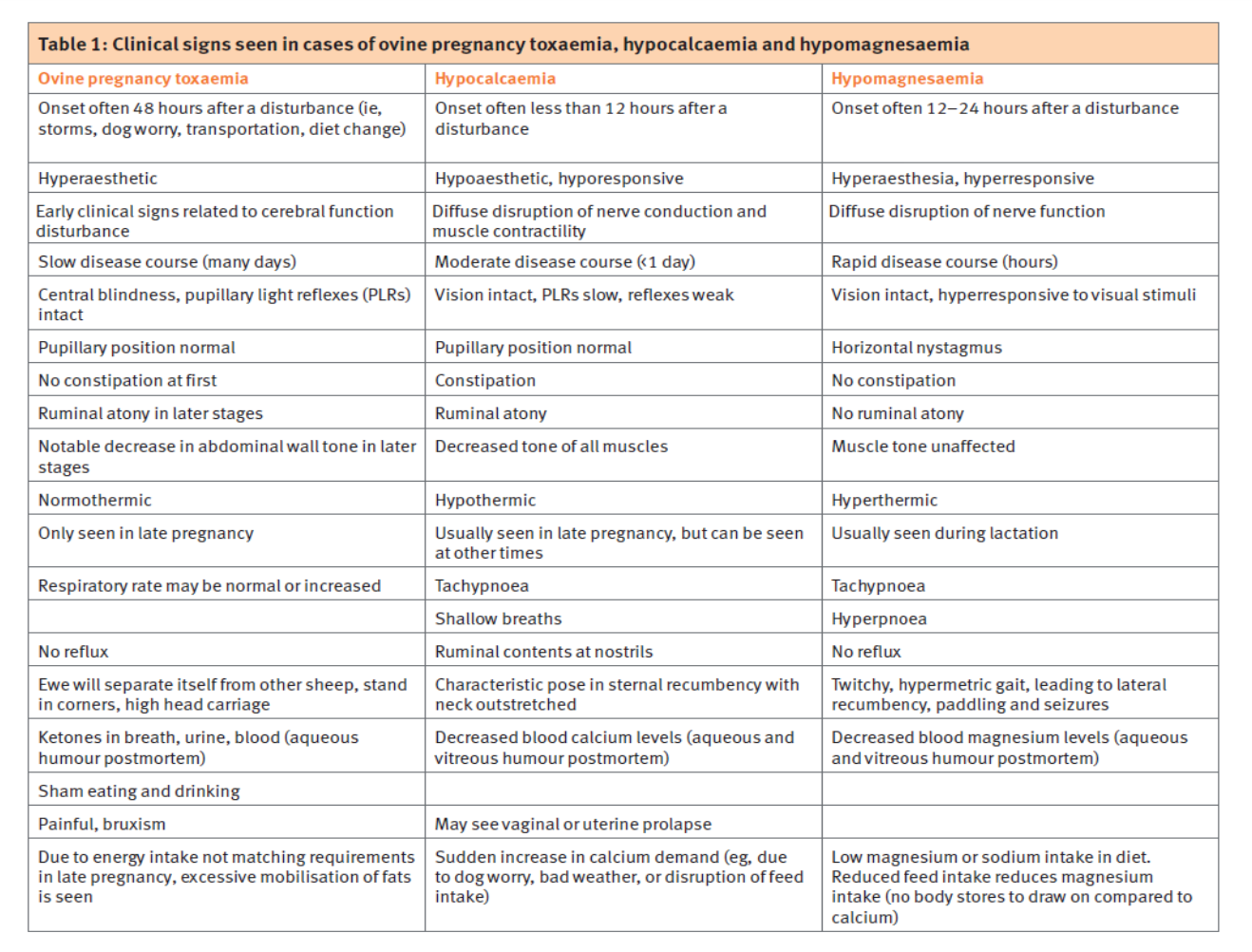
What are the clinical signs of pregnancy toxaemia?
Caused by lack of glucose in cerebrum and toxic effects of ketones
Separate from group
Inappetant
Central blindeness
Tremors face and ears
Hyperaesthesia
Head, pressing, star gazing, persistent drinking)
Progress of recumbency
Death
0-10 days
How is pregnancy toxaemia diagnosed?
Clinical signs
BOHB > 1.1 mmol/l = abnormal/ subclinical
BOHB >3 mmol/l = clinical signs
How would you treat preganancy toxaemia?
Separate, provide highly palatable feed
IV glucose 50-100ml 40% dextrose
Propylene glycol 120ml BID for first day, 60 ml BID after this
Ca supplementation
NSAID
Check for concurrent disease
If a case of pregnancy toxaemia is not improving what would you do?
Consider stage of pregnancy
Abort ewe (<135 days) or Induce labour (>135 days)
PTS
How may you treat the flock if there is a case of pregnancy toxaemia?
Review nutrition
Separate thin or older ewes
Ad lib treacle/ molasses
How do you prevent pregnancy toxaemia?
Ensure adequate feeding - BCS, avoid sudden changes
Monitor ketone body levels 2-3 weeks before lambing
Don't keep old broken mouth ewes
Manage concurrent disease
How do you monitor ketobe body levels?
Blood sample for Beta hydroxy butyrate
Explain the pathogenesis of hypocalcaemia in sheep?
Increased demand of foetus and colostrum production for calcium
Inc absoprtion of Ca from gut and kidneys
Mobilise calcium from bones
Mediated by Parathyriod Hormone and 1,25 hydroxy vitamin D
At what stage in the production year does hypocalcaemia occur in ewes?
Pre-lambing- 6 weeks onwards (most common)
(Not always, can be early lactation)
What are the risks factors for hypocalcaemia?
Often stress induced
Other risk factors:
Acidosis cereal diet
Older ewes
Rapid growing lush pasture
What are the clinical signs of hypocalcaemia?
Initial Weakness and excitement
Progress to recumbent
Dilated pupils, constipated, bloated, comatose, death
How can you confirm a hypocalcaemia diagnosis?
Pre treatment blood sample for Ca
Response to treatment
What treatment is used for hypocalcaemia?
Slow IV 40-80ml, 20% (or 20-40ml of 40%) Calcium borogluconate
Rapid response
Subcut can be given but slower response
Monitor as may relapse and address risk for rest of flock
What is the typical history associated with hypomagnesaemia/ staggers?
Post lambing, peak lactation
Lush rapidly growing grass (can be low in Mg) or bare pastures
What are the clinical signs of staggers?
Rapid onset, neurological symptoms
Excitable, tremors, convulsions death
Found Dead
How is staggers diagnosed?
History and clinical signs
Blood sample Mg <0.2mmol/l
How is staggers treated?
40-80ml 20% Calcium IV (bc Ca involved in disease process)
20-40ml 25% Mg SC (NOT IV)
What are the Ddxs of sick/ recumbant ewe at lambing time?
Hypocalcaemia
Pregnancy toxaemia
Hypomagnesaemia
Listeria
Mastitis
Metritis
Bloat
Pasturellosis
Poisoining
Acidosis
Summary to compare pregnancy tox, staggers, and hypocal