Boyd Hill Plants
 Call Kai
 Learn
Learn Practice Test
 Spaced Repetition
 Match
Match Flashcards
 Knowt Play
1/91

There's no tags or description
Looks like no tags are added yet.
Name | Mastery | Learn | Test | Matching | Spaced | Call with Kai | Chat |
|---|
No analytics yet
Send a link to your students to track their progress
92 Terms

Beautyberry (Callicarpa americana)
Type of Plant: Deciduous shrub
How to ID: Opposite, coarse-toothed leaves with vibrant, tight clusters of iridescent purple berries wrapping around the stems in autumn.
Habitat: Moist pine woods, thickets, and forest margins across the southeastern United States.
Ecosystem Significance: Fruits provide an essential food source for over 40 species of songbirds, deer, and small mammals in autumn and winter.
Edibility: Berries are edible; raw berries are astringent and mealy, but they make sweet jellies and jams when cooked.
Fun Fact: Crushed leaves contain a natural compound called callicarpenal that repels mosquitoes, ticks, and fire ants.

Slash Pine (Pinus elliottii)
Type of Plant: Evergreen coniferous tree
How to ID: Long needles (7-10 inches) borne in bundles of 2 or 3; shiny, reddish-brown cones with small prickles on scale tips.
Habitat: Wet flatwoods, swamp margins, and sandy coastal plains across the southeastern United States.
Ecosystem Significance: Forms critical canopy cover in fire-adapted ecosystems and provides nesting sites for bald eagles, ospreys, and fox squirrels.
Edibility: Pine needles can be steeped into vitamin C-rich tea; inner bark (cambium) is edible in survival scenarios.
Fun Fact: Historically prized for its heavy resin content, making it a primary source for naval stores like turpentine, rosin, and pitch.

Longleaf Pine (Pinus palustris)
Type of Plant: Evergreen coniferous tree
How to ID: Exceptionally long needles (8-18 inches) borne in bundles of 3; large cones (6-12 inches); distinctive silvery-white terminal buds.
Habitat: Fire-maintained sandy uplands, pine savannas, and coastal plains across the southeastern United States.
Ecosystem Significance: Keystone species of longleaf pine savannas, providing essential habitat for threatened species like the red-cockaded woodpecker and gopher tortoise.
Edibility: Seeds (pine nuts) are edible; needles can be steeped into vitamin C-rich tea; inner bark (cambium) is edible in survival situations.
Fun Fact: Seedlings spend several years in a stemless "grass stage" developing a massive taproot and fire resistance before rapidly growing upward.

Gallberry (Ilex glabra)
Type of Plant: Evergreen shrub
How to ID: Smooth, dark green, leathery leaves with a few small teeth near the tip; produces small, shiny black berries (drupes) that persist through winter.
Habitat: Acidic wet pine flatwoods, bogs, savannas, and coastal plains across the southeastern United States.
Ecosystem Significance: Critical spring nectar source for native bees and honeybees; berries serve as an important winter food source for birds and small mammals.
Edibility: Berries are inedible/mildly toxic to humans, but dried leaves can be brewed into a caffeine-containing tea.
Fun Fact: Highly valued by beekeepers, its blossom nectar creates a famous, mild-flavored honey that is naturally very slow to crystallize.


Lizard’s tail (Saururus cernuus)
Type of Plant: Perennial herbaceous wetland plant
How to ID: Heart-shaped leaves with prominent veins; long, drooping spikes of tiny, fragrant white flowers that arch over like a lizard's tail.
Habitat: Swamps, marshes, wet pine flatwoods, and shallow water along stream margins across eastern North America.
Ecosystem Significance: Helps stabilize stream banks and wetlands against erosion; flower spikes attract native bees, flies, and aquatic insects.
Edibility: Inedible and toxic if ingested; historically used in traditional poultices, but unsafe to eat.
Fun Fact: When bruised or crushed, the heart-shaped leaves give off a pleasant citrusy aroma resembling lemon.

Spanish moss (Tillandsia usneoides)
Type of Plant: Epiphytic perennial bromeliad
How to ID: Long, gray-green, threadlike strands hanging from branches; covered in tiny scale-like structures that absorb moisture and nutrients from the air. It has no true roots in the soil.
Habitat (highlighting within Boyd Hill Nature Preserve): Common on large trees, especially oaks, in hammocks, swamp woodlands, and open areas; look for it throughout Boyd Hill wherever mature trees provide branches for attachment.
Ecosystem Significance: Provides nesting material and cover for insects and other small organisms; contributes to the complex epiphytic community living on trees.
Status: Native
Edibility: Not considered an edible wild plant; historically used as stuffing and insulation.
Fun Fact: Spanish moss isn't actually moss—it's a bromeliad related to air plants and pineapples.

Resurrection fern (Pleopeltis michauxiana)
Type of Plant: Epiphytic perennial fern
How to ID: Small, leathery, deeply lobed green fronds growing directly on tree bark; curls tightly and turns brown-gray during drought, then unfurls and becomes green after rain.
Habitat (highlighting within Boyd Hill Nature Preserve): Moist hardwood hammocks and swamp woodland; especially likely on mature tree trunks and branches around wetter portions of Boyd Hill.
Ecosystem Significance: Adds epiphytic vegetation and provides microscopic habitat for invertebrates without parasitizing its host tree.
Status: Native
Edibility: Not considered edible.
Fun Fact: It can lose most of its water and appear completely dead, then "come back to life" after rainfall.
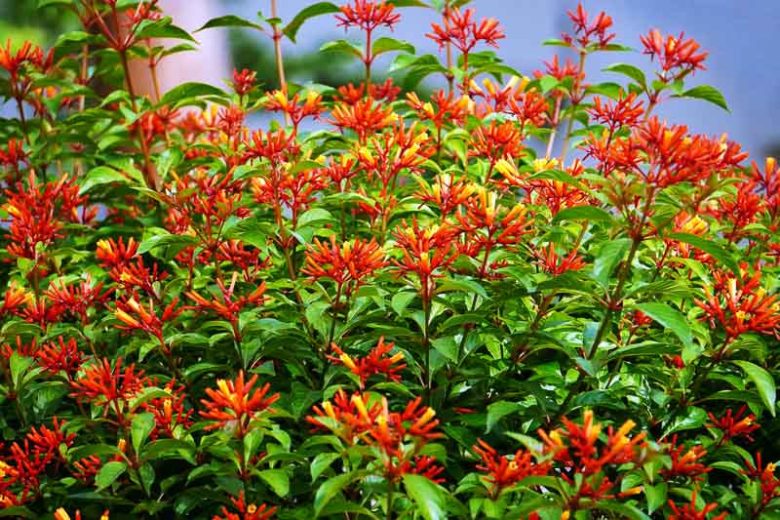
Firebush (Hamelia patens)
Type of Plant: Perennial shrub
How to ID: Opposite/whorled leaves, reddish stems, tubular orange-red flowers in clusters, followed by small dark berries.
Habitat (highlighting within Boyd Hill Nature Preserve): Hammocks, woodland edges, disturbed areas and sunny-to-partly shaded sites; documented at Boyd Hill.
Ecosystem Significance: Excellent nectar source for hummingbirds, butterflies and other pollinators; berries feed birds.
Status: Native
Edibility: Berries are not considered a food for casual human consumption; don't recommend eating wild specimens.
Fun Fact: The flowers are especially attractive to hummingbirds, making firebush one of Florida's classic wildlife plants.

Wild coffee (Psychotria nervosa)
Type of Plant: Evergreen perennial shrub
How to ID: Glossy, dark-green leaves with prominent veins; small white flowers followed by bright red berries.
Habitat (highlighting within Boyd Hill Nature Preserve): Dry-mesic hammocks, shaded woodland and pine flatwoods; look especially in the preserve's shaded hammock areas.
Ecosystem Significance: Provides berries for birds and nectar for numerous butterflies and pollinators.
Status: Native
Edibility: Do not confuse it with true coffee. It is not considered a coffee substitute.
Fun Fact: Its common name comes from the appearance of its berries rather than from being a useful coffee plant.

Sand live oak (Quercus geminata)
Type of Plant: Evergreen perennial tree
How to ID: Thick, leathery, dark-green leaves with strongly rolled-under margins; often develops a dense, shrubby form in scrub.
Habitat (highlighting within Boyd Hill Nature Preserve): One of the characteristic oaks of Boyd Hill's scrubby flatwoods and sandy uplands.
Ecosystem Significance: Acorns feed wildlife while the dense canopy provides shelter and nesting habitat; important component of Florida scrub and flatwoods.
Status: Native
Edibility: Acorns are technically edible after proper leaching and preparation, but raw acorns are high in tannins.
Fun Fact: It can look very different depending on fire and growing conditions—sometimes like a low scrub oak and sometimes like a small tree.

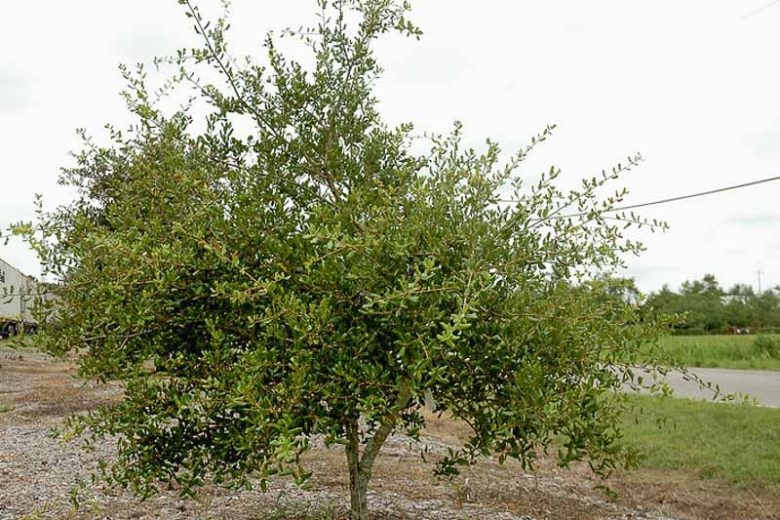
Myrtle oak (Quercus myrtifolia)
Type of Plant: Evergreen perennial scrub oak
How to ID: Small, leathery, oval leaves resembling those of a myrtle; often forms a dense, multi-stemmed shrub.
Habitat (highlighting within Boyd Hill Nature Preserve): A major component of Boyd Hill's scrubby flatwoods.
Ecosystem Significance: Acorns feed birds and mammals; dense growth provides cover and contributes to scrub structure.
Status: Native
Edibility: Acorns technically edible after proper preparation.
Fun Fact: Fire helps maintain the open, shrubby ecosystem where myrtle oak thrives.
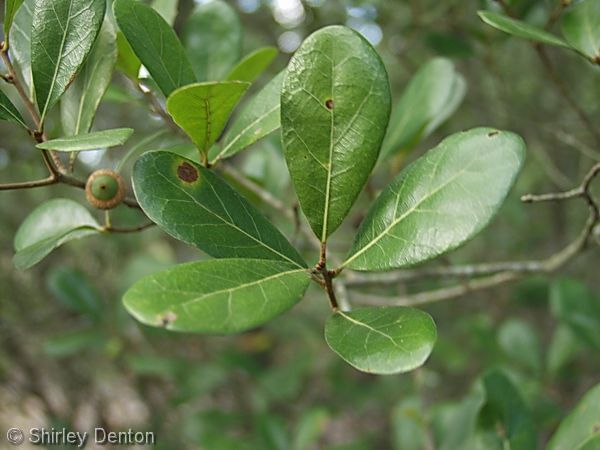

Chapman's oak (Quercus chapmanii)
Type of Plant: Deciduous-to-semi-evergreen perennial oak
How to ID: Small, somewhat wavy, oval leaves; gray bark; small acorns with a shallow-scaled cup.
Habitat (highlighting within Boyd Hill Nature Preserve): One of the characteristic scrub oaks at Boyd Hill.
Ecosystem Significance: Acorns provide food for wildlife and the shrub/tree structure provides habitat.
Status: Native
Edibility: Acorns technically edible after leaching/preparation.
Fun Fact: The species is named for botanist Alvan Wentworth Chapman.


Turkey oak (Quercus laevis)
Type of Plant: Deciduous perennial oak
How to ID: Distinctive deeply lobed leaves resembling a turkey's foot; rough gray bark; often crooked or irregular branching.
Habitat (highlighting within Boyd Hill Nature Preserve): Sandy uplands and sandhill/scrub habitats; less characteristic of Boyd Hill's core scrubby-flatwoods community than sand live, myrtle and Chapman's oak.
Ecosystem Significance: Acorns support wildlife and the tree contributes to sandy upland habitat.
Status: Native
Edibility: Acorns technically edible after proper preparation.
Fun Fact: Turkey oak is strongly associated with fire-maintained sandy ecosystems.


Bald cypress (Taxodium distichum)
Type of Plant: Deciduous coniferous tree
How to ID: Needle-like leaves arranged in two rows; reddish-brown fibrous bark; often develops "knees" in wet conditions.
Habitat (highlighting within Boyd Hill Nature Preserve): Swamps, wet woodland and water margins; look toward the preserve's wetter swamp/wetland areas rather than xeric scrub.
Ecosystem Significance: Stabilizes wetland soils, provides nesting habitat and contributes woody structure to swamp ecosystems.
Status: Native
Edibility: Not edible.
Fun Fact: It is a conifer that loses its needles—unusual among Florida trees.


Red maple (Acer rubrum)
Type of Plant: Deciduous perennial tree
How to ID: Opposite leaves with 3–5 lobes; reddish petioles; samaras ("helicopter" seeds); red fall color.
Habitat (highlighting within Boyd Hill Nature Preserve): Wet woodlands, swamps and moist hammocks; most likely in wetter portions of Boyd Hill.
Ecosystem Significance: Flowers provide early-season resources for pollinators and seeds are eaten by wildlife.
Status: Native
Edibility: Not considered edible.
Fun Fact: Red maple can tolerate a surprisingly broad range of Florida wetland and upland conditions.


Carolina willow (Salix caroliniana)
Type of Plant: Fast-growing perennial shrub/small tree
How to ID: Narrow, pointed leaves with fine teeth; slender flexible branches; often forms dense stands beside water.
Habitat (highlighting within Boyd Hill Nature Preserve): Especially associated with Boyd Hill's willow marsh and wetland edges.
Ecosystem Significance: Stabilizes wet soil and provides cover, shade and habitat around wetlands.
Status: Native — vigorous/aggressive in wet disturbed areas
Edibility: Not considered edible.
Fun Fact: Willows contain salicin, a compound chemically related to the origin of aspirin.


Swamp Tupelo (Nyssa biflora)
Type of Plant: Deciduous perennial wetland tree
How to ID: Glossy oval leaves, often clustered toward branch tips; dark bark; small flowers; blue-black fruits on reddish stalks.
Habitat (highlighting within Boyd Hill Nature Preserve): Swamps, wet flatwoods and wet woodland; look in wetter preserve habitats.
Ecosystem Significance: Provides fruit for birds and important structural habitat in wetlands.
Status: Native
Edibility: Fruit is wildlife food; not generally harvested for human consumption.
Fun Fact: Tupelo flowers are highly valuable to bees, and tupelo honey is a famous regional product.


Sweetbay (Magnolia virginiana)
Type of Plant: Evergreen-to-deciduous perennial tree
How to ID: Smooth, lance-shaped leaves with a silvery underside; fragrant white magnolia flowers.
Habitat (highlighting within Boyd Hill Nature Preserve): Wet hammocks, swamps and wetland margins; look in moist woodland.
Ecosystem Significance: Flowers support pollinators and seeds feed birds.
Status: Native
Edibility: Not considered edible.
Fun Fact: Crushing the leaves releases a sweet, spicy fragrance


Poison ivy (Toxicodendron radicans)
Type of Plant: Perennial woody vine/shrub
How to ID: Three leaflets—"leaves of three, let it be." The center leaflet has a longer stalk; leaves can be shiny, dull, toothed or nearly smooth. It may climb trees or trail along the ground.
Habitat (highlighting within Boyd Hill Nature Preserve): Woodland edges, hammocks, trails and disturbed areas; assume it may occur anywhere at Boyd Hill where suitable vegetation exists.
Ecosystem Significance: Native wildlife food and cover; berries are eaten by birds and foliage is browsed by some wildlife.
Status: Native — hazardous, not invasive
Edibility: Toxic/irritating. All parts contain urushiol.
Fun Fact: Urushiol remains irritating even when the plant is leafless or dormant.

Virginia creeper (Parthenocissus quinquefolia)
Type of Plant: Perennial woody vine
How to ID: Usually five leaflets arranged like fingers on a hand; toothed margins; blue-black berries; climbing tendrils with adhesive pads.
Habitat (highlighting within Boyd Hill Nature Preserve): Hammocks, woodland edges and disturbed areas.
Ecosystem Significance: Provides cover and food for birds and other wildlife.
Status: Native — vigorous/aggressive
Edibility: Not edible; berries can be toxic, especially to children and pets.
Fun Fact: The easiest field distinction from poison ivy is 3 leaflets = poison ivy; 5 = Virginia creeper.
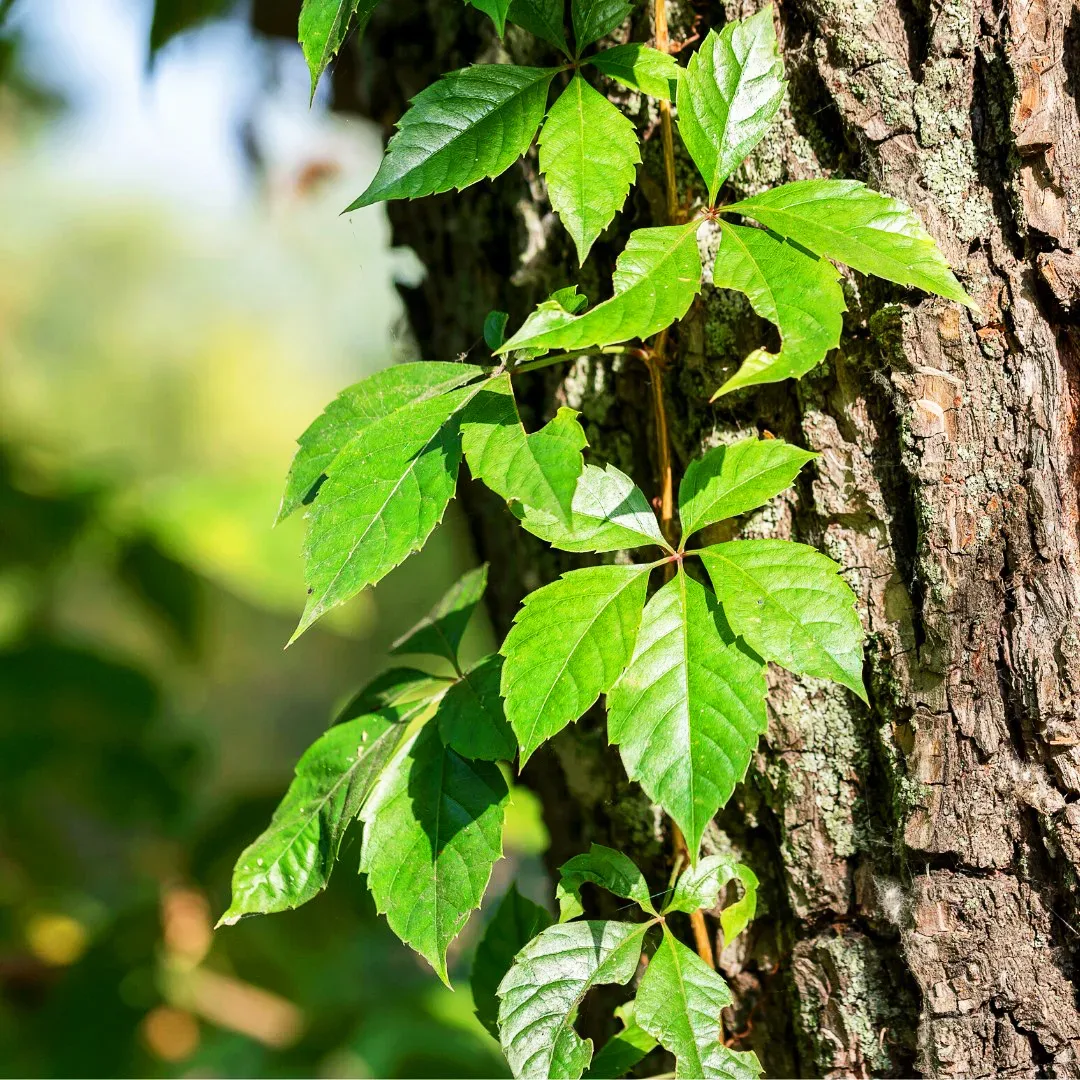

Poison oak (Toxicodendron pubescens)
Type of Plant: Deciduous woody shrub
How to ID: Three leaflets with lobed, oak-like shapes; unlike poison ivy, it generally grows as an upright shrub rather than a climbing vine.
Habitat (highlighting within Boyd Hill Nature Preserve): Sunny, dry upland habitats; more characteristic of northern and central Florida than wet habitats.
Ecosystem Significance: Native wildlife food and cover.
Status: Native — hazardous
Edibility: Toxic/irritating because it contains urushiol.
Fun Fact: Poison oak follows the same "leaves of three" warning as poison ivy.


English ivy (Hedera helix)
Type of Plant: Evergreen perennial climbing vine
How to ID: Thick, glossy evergreen leaves, often distinctly lobed when young; attaches with aerial rootlets.
Habitat (highlighting within Boyd Hill Nature Preserve): Not a characteristic native Boyd Hill plant; most often associated with landscapes and disturbed areas.
Ecosystem Significance: Can smother vegetation and alter native plant communities where it escapes cultivation.
Status: Non-native/invasive in many natural areas
Edibility: Not edible.
Fun Fact: Don't confuse this evergreen climbing ivy with native Virginia creeper or poison ivy.
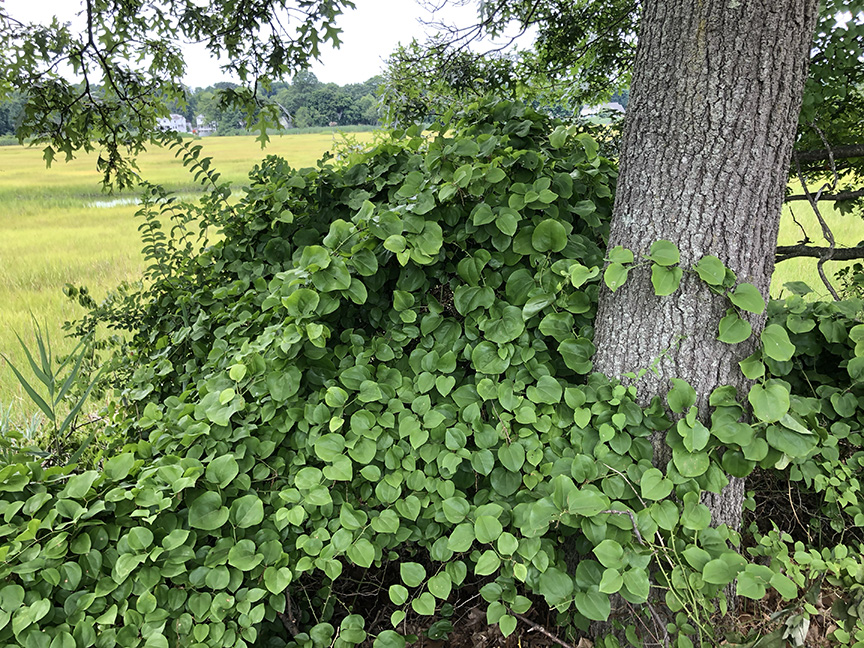
Greenbrier / Catbrier (Smilax spp.)
Type of Plant: Perennial woody vine
How to ID: Heart-shaped or oval leaves, woody stems and sharp thorns; tendrils may help it climb.
Habitat (highlighting within Boyd Hill Nature Preserve): Hammocks, scrub and flatwoods; common native vine type to learn for woodland trails.
Ecosystem Significance: Dense vines provide cover and food for wildlife.
Status: Native — often aggressive/vigorous
Edibility: Some Smilax species have edible young shoots/roots, but do not recommend eating without species-level identification.
Fun Fact: "Greenbrier" refers to a whole group of closely related Smilax species, so leaf and thorn characteristics matter.


Leather fern / Giant leather fern (Acrostichum danaeifolium)
Type of Plant: Large perennial fern
How to ID: Huge upright fronds, often 6–12 feet tall; thick leathery leaflets; fertile fronds can have rusty-brown spore covering beneath.
Habitat (highlighting within Boyd Hill Nature Preserve): Freshwater marshes, swamps and floodplains; look in wetland portions rather than dry scrub.
Ecosystem Significance: Provides dense wetland cover for birds, reptiles, amphibians and small mammals.
Status: Native
Edibility: Young fiddleheads have been reported edible, but not recommended for casual wild consumption.
Fun Fact: It can look almost like a small palm because of its enormous upright fronds.
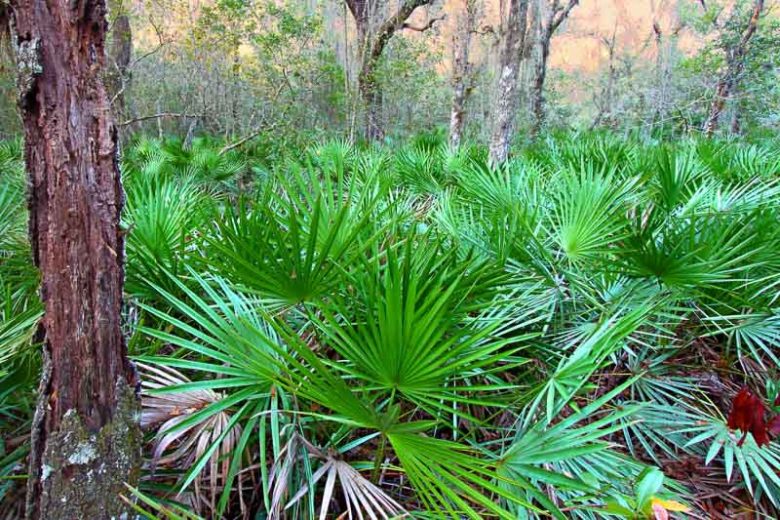
Saw palmetto (Serenoa repens)
Type of Plant: Clonal evergreen palm shrub
How to ID: Fan-shaped leaves with sharp teeth along the petiole; creeping or upright trunks; saw-toothed leaf stems.
Habitat (highlighting within Boyd Hill Nature Preserve): One of the dominant plants in Boyd Hill's scrubby flatwoods and gopher-tortoise habitat.
Ecosystem Significance: Major wildlife food and cover plant; important host/nectar plant for butterflies and numerous insects; major component of Florida fire ecology.
Status: Native
Edibility: Berries are wildlife food and have been eaten by humans, but they are extremely strong/bitter; do not recommend casual consumption.
Fun Fact: Individual clones can persist for thousands of years.


Cabbage palm (Sabal palmetto)
Type of Plant: Evergreen perennial palm
How to ID: Tall gray trunk, fan-shaped leaves, smooth upper trunk, and characteristic persistent leaf bases/"boots" on many trees.
Habitat (highlighting within Boyd Hill Nature Preserve): A major plant of Boyd Hill's scrubby flatwoods and wetter habitats.
Ecosystem Significance: Provides nesting, roosting, cover and food for many wildlife species.
Status: Native
Edibility: Growing tip ("heart") is edible but removing it kills the palm.
Fun Fact: It is Florida's official state tree.

Ball moss (Tillandsia recurvata)
Type of Plant: Epiphytic perennial bromeliad
How to ID: Small gray-green spherical/tufted clusters attached to tree branches; narrower and more compact than Spanish moss.
Habitat (highlighting within Boyd Hill Nature Preserve): Mature trees throughout hammocks and open woodland.
Ecosystem Significance: Provides habitat for tiny insects and contributes to the epiphytic community.
Status: Native
Edibility: Not edible.
Fun Fact: Like Spanish moss, it is an air plant—not a parasite stealing food from its host tree.

Southern needleleaf (Tillandsia setacea)
Type of Plant: Epiphytic perennial bromeliad
How to ID: Dense tufts of thin, curved needle-like leaves; often reddish-green at the base; violet flowers on a short stalk.
Habitat (highlighting within Boyd Hill Nature Preserve): Hammocks and swamps—exactly the kinds of habitats represented at Boyd Hill.
Ecosystem Significance: Adds structural complexity to trees and provides tiny habitat for insects and microorganisms.
Status: Native
Edibility: Not edible.
Fun Fact: It is also called the needleleaf airplant and occurs in Pinellas County.
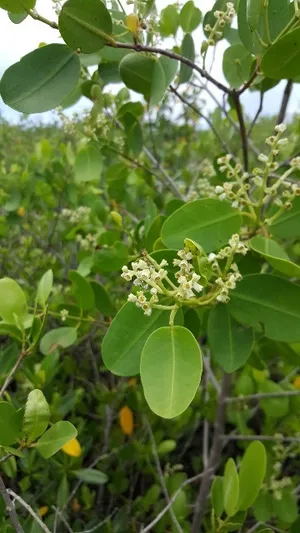
White mangrove (Laguncularia racemosa)
Type of Plant: Evergreen perennial shrub/tree
How to ID: Rounded leathery leaves with distinctive paired salt-excreting glands near the leaf stalk; no obvious prop roots.
Habitat (highlighting within Boyd Hill Nature Preserve): Coastal salt marshes and mangrove forests; not characteristic of inland Boyd Hill.
Ecosystem Significance: Stabilizes shorelines and provides nursery habitat for fish, crabs and other coastal wildlife.
Status: Native
Edibility: Not recommended for consumption.
Fun Fact: Its leaf glands excrete excess salt.


Red mangrove (Rhizophora mangle)
Type of Plant: Evergreen perennial tree
How to ID: Obvious arching prop roots, glossy leaves, and long cigar-like propagules hanging from branches.
Habitat (highlighting within Boyd Hill Nature Preserve): Tidal coastal shorelines; not a Boyd Hill habitat.
Ecosystem Significance: Creates critical nursery habitat and protects coastlines from erosion and storm surge.
Status: Native
Edibility: Not edible.
Fun Fact: Its seedlings begin developing while still attached to the parent tree.
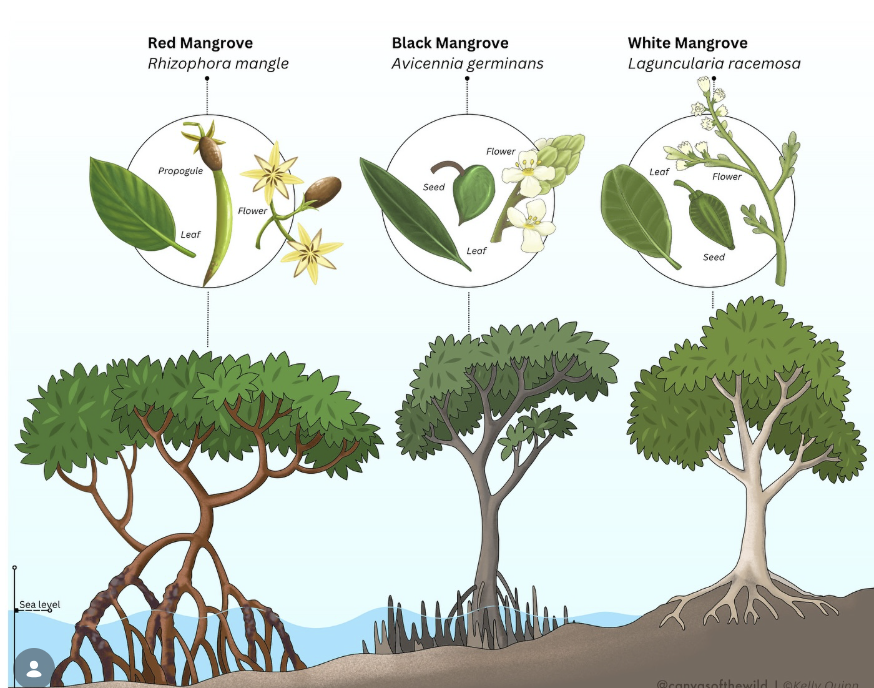
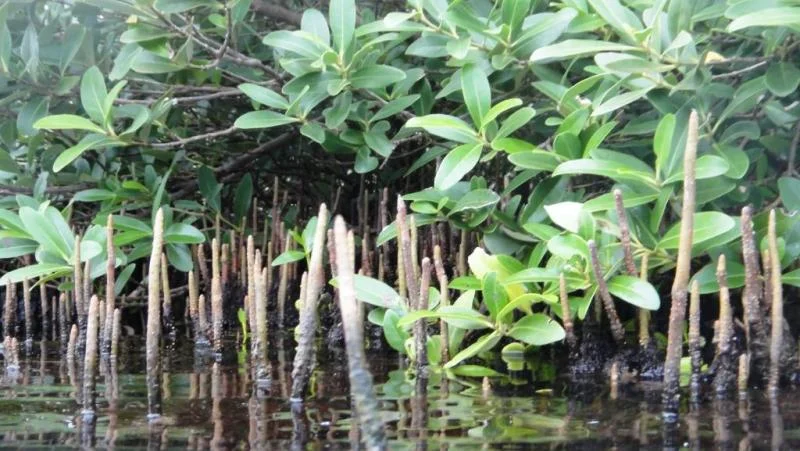
Black mangrove (Avicennia germinans)
Type of Plant: Evergreen perennial tree/shrub
How to ID: Narrow leathery leaves with a gray/silvery underside; numerous pencil-like pneumatophores sticking vertically from the mud around the tree.
Habitat (highlighting within Boyd Hill Nature Preserve): Coastal saline mudflats and mangrove wetlands; not a Boyd Hill habitat.
Ecosystem Significance: Stabilizes shorelines and provides fish and invertebrate habitat.
Status: Native
Edibility: Not recommended for consumption.
Fun Fact: Pneumatophores allow the roots to obtain oxygen in oxygen-poor saturated soil.

Muscadine (Vitis rotundifolia)
Type of Plant: Perennial woody vine
How to ID: Large, roundish, thick leaves; curling tendrils; loose clusters of large grapes; bark peels in strips on mature vines.
Habitat (highlighting within Boyd Hill Nature Preserve): Hammocks, woodland edges and flatwoods.
Ecosystem Significance: Grapes feed birds and mammals; vines provide cover.
Status: Native — vigorous
Edibility: Fruit is edible when ripe.
Fun Fact: Muscadines have much thicker skins than most supermarket grapes.

Muscadine grape vine (Vitis spp.)
Type of Plant: Perennial woody vine
How to ID: Alternate leaves, tendrils opposite leaves, woody climbing stems and grape clusters.
Habitat (highlighting within Boyd Hill Nature Preserve): Hammocks, woodland edges and disturbed areas.
Ecosystem Significance: Important wildlife fruit and cover.
Status: Native — vigorous
Edibility: Some native Vitis fruits are edible, but never eat a wild grape unless the plant has been positively identified.
Fun Fact: Poison ivy can climb like a grape vine, so check the leaf arrangement and tendrils carefully.

Spanish needles (Bidens alba)
Type of Plant: Annual or short-lived perennial herb
How to ID: White daisy-like flowers with yellow centers; opposite leaves; distinctive barbed seeds that cling to clothing and fur.
Habitat (highlighting within Boyd Hill Nature Preserve): Roadsides, disturbed ground, trail edges and open areas.
Ecosystem Significance: Major nectar/pollen resource for bees, butterflies and other pollinators.
Status: Native — often aggressive/weed-like
Edibility: Young leaves and flowers have been eaten traditionally, but avoid wild consumption in a preserve setting.
Fun Fact: The seed heads are the "beggar's ticks" that stick to your clothes.

Sand pine (Pinus clausa)
Type of Plant: Evergreen perennial conifer
How to ID: Short needles in pairs, rounded crown, reddish-brown bark and small cones that may remain closed for years.
Habitat (highlighting within Boyd Hill Nature Preserve): Sand-pine scrub—one of Boyd Hill's named habitats.
Ecosystem Significance: Defines scrub habitat and provides nesting and cover structure.
Status: Native
Edibility: Not edible.
Fun Fact: Some sand pine populations are strongly adapted to fire, with cones opening after heat releases their seeds.


Florida rosemary (Ceratiola ericoides)
Type of Plant: Evergreen perennial shrub
How to ID: Dense upright shrub with tiny needle-like leaves arranged closely around slender branches; rosemary-like appearance but not a true rosemary.
Habitat (highlighting within Boyd Hill Nature Preserve): Dry sandy scrub; relevant to Boyd Hill's scrub habitat.
Ecosystem Significance: Important scrub plant and indicator of sandy, fire-maintained conditions.
Status: Native
Edibility: Not edible; do not use as culinary rosemary.
Fun Fact: Florida rosemary is actually more closely related to blueberries than culinary rosemary.

Gopher apple (Geobalanus oblongifolius)
Type of Plant: Low, clonal perennial shrub
How to ID: Low-growing colony with leathery oval leaves; small white flowers; yellow-orange rounded fruits.
Habitat (highlighting within Boyd Hill Nature Preserve): Dry sandy scrub and scrubby flatwoods; documented at Boyd Hill.
Ecosystem Significance: Fruits feed wildlife and the low growth provides cover.
Status: Native
Edibility: Ripe fruit is edible.
Fun Fact: It spreads underground by rhizomes and can form large colonies.


Rusty lyonia (Lyonia ferruginea)
Type of Plant: Evergreen perennial shrub/small tree
How to ID: New growth is distinctly rusty-orange, with narrow leaves and interesting reddish-brown bark.
Habitat (highlighting within Boyd Hill Nature Preserve): Scrub, scrubby flatwoods and sandy uplands.
Ecosystem Significance: Provides structure and flowers for native bees.
Status: Native
Edibility: Not considered edible.
Fun Fact: The rusty color of new growth is one of its best field marks.


Fetterbush / Shiny lyonia (Lyonia lucida)
Type of Plant: Evergreen perennial shrub
How to ID: Glossy evergreen leaves; smooth, shiny appearance; small white-to-pink flowers.
Habitat (highlighting within Boyd Hill Nature Preserve): Flatwoods, scrubby flatwoods and wetland hummocks.
Ecosystem Significance: Provides structure and nectar for bees.
Status: Native — clonal/vigorous
Edibility: Apparently toxic to many mammals; do not eat.
Fun Fact: Unlike rusty lyonia, its leaves are notably glossy and it is strongly associated with moist flatwoods.
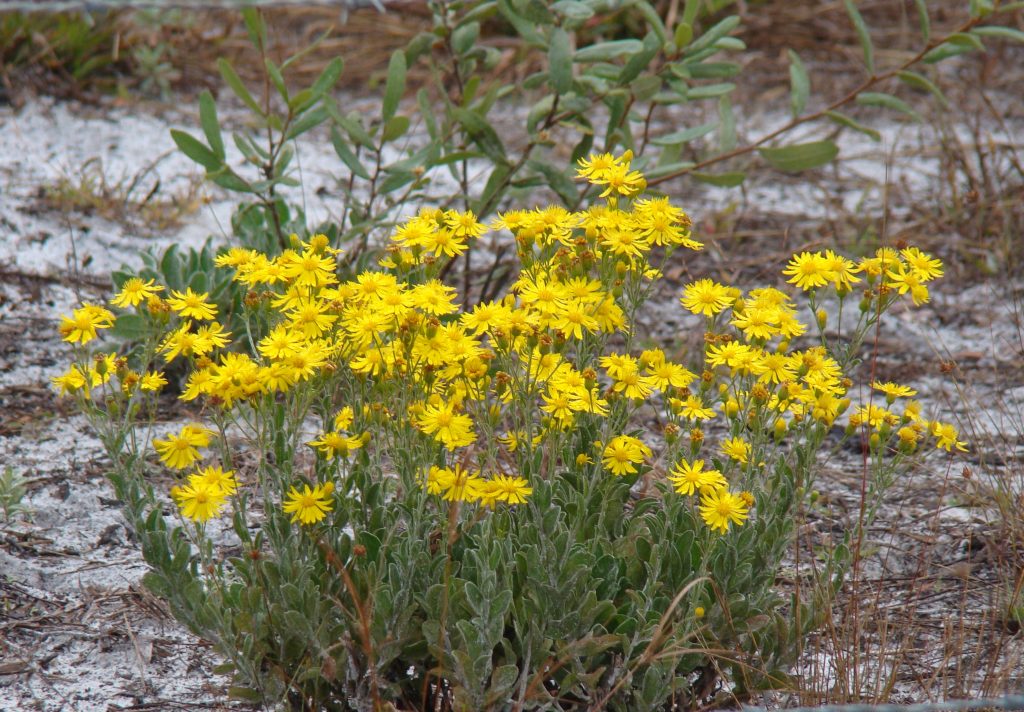
Florida goldenaster (Chrysopsis floridana)
Type of Plant: Short-lived perennial herb
How to ID: Silvery-gray foliage and yellow daisy-like flowers appearing in late fall.
Habitat (highlighting within Boyd Hill Nature Preserve): Open scrub and scrub ecotones; not a plant to casually collect or disturb.
Ecosystem Significance: Contributes nectar/pollen resources and scrub biodiversity.
Status: Native — federally and state endangered
Edibility: Not edible.
Fun Fact: It is a Florida endemic associated with open scrub and requires disturbance to persist.

Coastalplain honeycombhead (Balduina angustifolia)
Type of Plant: Annual-to-biennial herb
How to ID: Tall branching stems with narrow leaves and numerous yellow flower heads; dried flower heads develop a honeycomb-like appearance.
Habitat (highlighting within Boyd Hill Nature Preserve): Sandy scrub, dunes and open pine/scrubby flatwoods; more characteristic of coastal/sandy open habitat than Boyd Hill's wetter zones.
Ecosystem Significance: Supports bees, butterflies and other pollinators; the specialized Balduina bee depends on it.
Status: Native
Edibility: Not edible.
Fun Fact: The mature seed head looks like a tiny honeycomb.

Partridge pea (Chamaecrista fasciculata)
Type of Plant: Annual herb
How to ID: Small paired leaflets that fold when touched; bright yellow flowers; long narrow seed pods.
Habitat (highlighting within Boyd Hill Nature Preserve): Open disturbed areas, sandy flatwoods and sunny trail edges.
Ecosystem Significance: Excellent pollinator plant and nitrogen-fixing legume; seeds feed wildlife.
Status: Native — can be locally aggressive/self-seeding
Edibility: Not recommended for human consumption.
Fun Fact: Its leaves fold shut in response to touch or darkness.

Beach pea (Lathyrus japonicus)
Type of Plant: Perennial trailing legume
How to ID: Blue-green pinnate leaves with tendrils; pink-purple pea-like flowers; fleshy coastal growth.
Habitat (highlighting within Boyd Hill Nature Preserve): Coastal beaches and dunes—not a typical Boyd Hill plant.
Ecosystem Significance: Helps stabilize sandy coastal soils and supports pollinators.
Status: Native in its broader North American range, not characteristic of inland Boyd Hill
Edibility: Some sources report edible portions, but do not consume wild pea plants without expert identification.
Fun Fact: The common name "beach pea" covers several different plants; Lathyrus japonicus is the classic beach pea.

Prickly pear cactus (Opuntia spp.)
Type of Plant: Perennial succulent cactus
How to ID: Flat, paddle-shaped pads covered with clusters of tiny barbed glochids; large flowers followed by pear-shaped fruits.
Habitat (highlighting within Boyd Hill Nature Preserve): Dry sandy uplands, scrub and open disturbed areas.
Ecosystem Significance: Provides food, shelter and nesting habitat for wildlife and helps stabilize dry sandy soils.
Status: Native — can be vigorous
Edibility: Pads and ripe fruit can be edible only after careful removal of glochids.
Fun Fact: The tiny glochids can be harder to remove than the large spines.

Silkgrass (Pityopsis graminifolia)
Type of Plant: Perennial herbaceous grass-like plant
How to ID: Narrow silvery-gray leaves forming basal clumps; yellow daisy-like flowers on tall stems.
Habitat (highlighting within Boyd Hill Nature Preserve): Dry pine flatwoods, sandhill and open scrubby areas.
Ecosystem Significance: Provides cover and contributes to fire-maintained grassland communities.
Status: Native
Edibility: Not edible.
Fun Fact: The silvery foliage makes it easy to spot among green grasses.
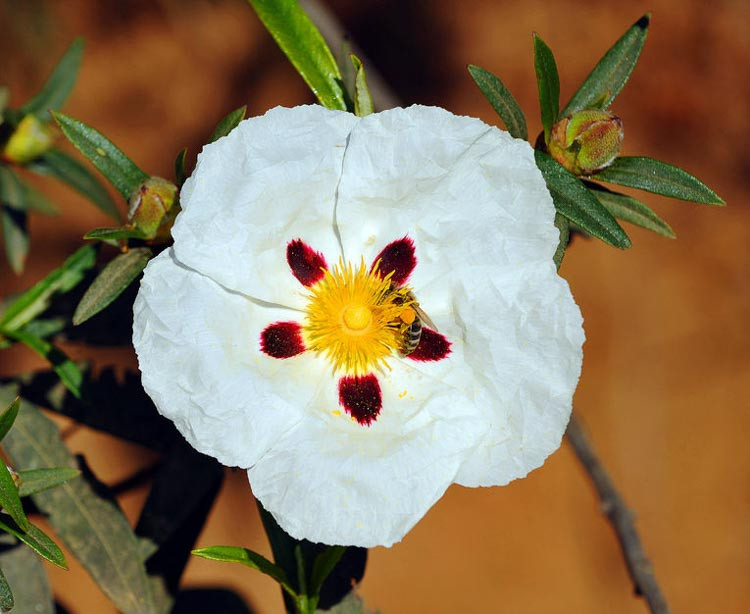
Rockrose (Crocanthemum spp.)
Type of Plant: Small perennial shrub/herb
How to ID: Low-growing plant with small leaves and bright yellow five-petaled flowers, often opening strongly in sunlight.
Habitat (highlighting within Boyd Hill Nature Preserve): Sandy scrub and open dry habitats.
Ecosystem Significance: Provides nectar/pollen for insects and contributes to scrub diversity.
Status: Native
Edibility: Not edible.
Fun Fact: The flowers can be extremely short-lived, making a sunny day the best time to spot them.

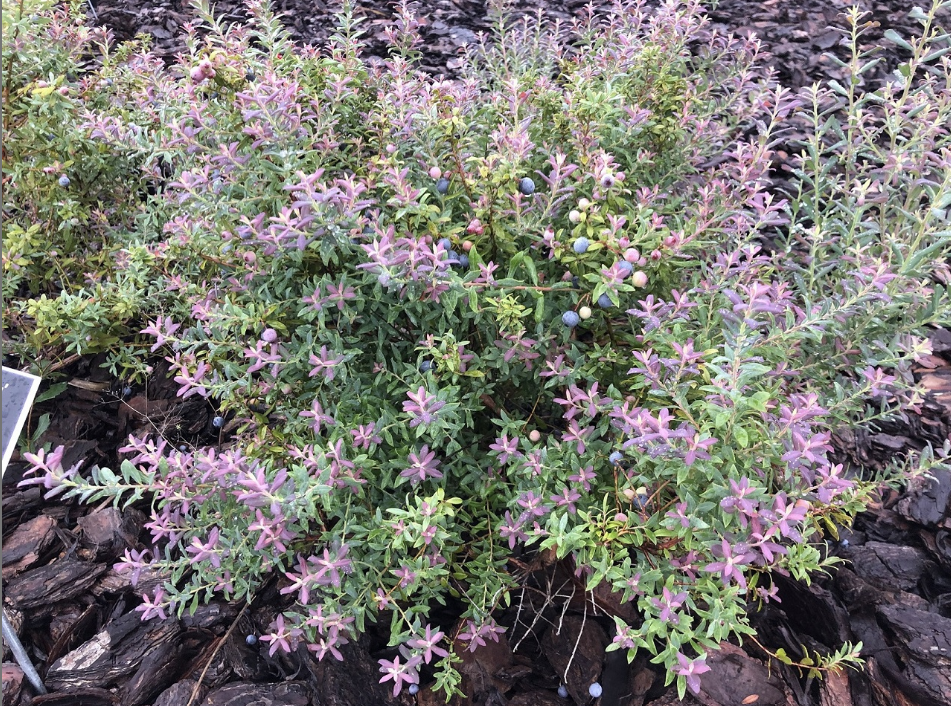
Darrow's blueberry (Vaccinium darrowii)
Type of Plant: Evergreen perennial shrub
How to ID: Small blue-green leaves, often with a glaucous/waxy appearance; pink-white flowers followed by blue-black berries.
Habitat (highlighting within Boyd Hill Nature Preserve): Sandy scrub and scrubby flatwoods.
Ecosystem Significance: Important nectar source for native bees and fruit source for birds and mammals.
Status: Native
Edibility: Berries are edible when ripe.
Fun Fact: It can spread by rhizomes and form large clonal patches.

Shiny blueberry (Vaccinium myrsinites)
Type of Plant: Low perennial shrub
How to ID: Small shiny evergreen leaves; pink-white bell-shaped flowers; small blue-black berries.
Habitat (highlighting within Boyd Hill Nature Preserve): Dry flatwoods, scrubby flatwoods and sandy uplands.
Ecosystem Significance: Provides berries for wildlife and nectar for pollinators.
Status: Native
Edibility: Berries are edible when ripe.
Fun Fact: It is usually smaller and more compact than many other Florida blueberries.

Coastalplain St. John's-wort (Hypericum brachyphyllum)
Type of Plant: Perennial shrub/herb
How to ID: Dense rounded form, narrow needle-like leaves with margins rolled backward, and small yellow five-petaled flowers.
Habitat (highlighting within Boyd Hill Nature Preserve): Wet pine savannas, wet flatwoods and moist sandy habitats; look toward wetter flatwoods rather than dry scrub.
Ecosystem Significance: Contributes to wet-flatwoods plant diversity and provides floral resources.
Status: Native
Edibility: Not edible.
Fun Fact: The strongly rolled leaf margins are useful for distinguishing it from other St. John's-worts.

Tarflower (Bejaria racemosa)
Type of Plant: Evergreen perennial shrub
How to ID: Upright shrub with hairy stems, leathery oval leaves and fragrant white-to-pink flowers that are unusually sticky.
Habitat (highlighting within Boyd Hill Nature Preserve): Scrub and scrubby flatwoods.
Ecosystem Significance: Supports native bees, but its sticky flowers can trap small insects.
Status: Native
Edibility: Not edible.
Fun Fact: Its sticky flowers can trap bees and flies—hence the nickname flyweed.

Dwarf wax myrtle (Morella cerifera — dwarf form)
Type of Plant: Evergreen perennial shrub
How to ID: Small aromatic leaves arranged alternately; gray-green foliage; waxy gray-white berries.
Habitat (highlighting within Boyd Hill Nature Preserve): Dry uplands and scrub where wax myrtle occurs in a naturally compact form.
Ecosystem Significance: Provides dense wildlife cover and berries for birds.
Status: Native — vigorous in favorable conditions
Edibility: Not edible.
Fun Fact: "Dwarf wax myrtle" is generally a naturally compact form rather than a completely different species

Narrowleaf yellowtops (Flaveria linearis)
Type of Plant: Perennial herb
How to ID: Upright-to-spreading plant with narrow leaves and clusters of small yellow flower heads at branch tips.
Habitat (highlighting within Boyd Hill Nature Preserve): Wet/open areas; more strongly associated with coastal habitats than dry uplands.
Ecosystem Significance: Provides nectar and pollen for insects.
Status: Native
Edibility: Not recommended for consumption.
Fun Fact: Despite the name, it is a member of the sunflower family, not a grass.

Blazing star / Gayfeather (Liatris spp.)
Type of Plant: Perennial herbaceous wildflower
How to ID: Narrow grass-like leaves and tall flower spikes covered with purple/pink fuzzy flower heads.
Habitat (highlighting within Boyd Hill Nature Preserve): Open pine flatwoods, scrubby flatwoods and sunny meadow-like areas.
Ecosystem Significance: Excellent nectar source for butterflies and bees.
Status: Native
Edibility: Not edible.
Fun Fact: Unlike most flower spikes, blazing star flowers tend to open from the top downward.
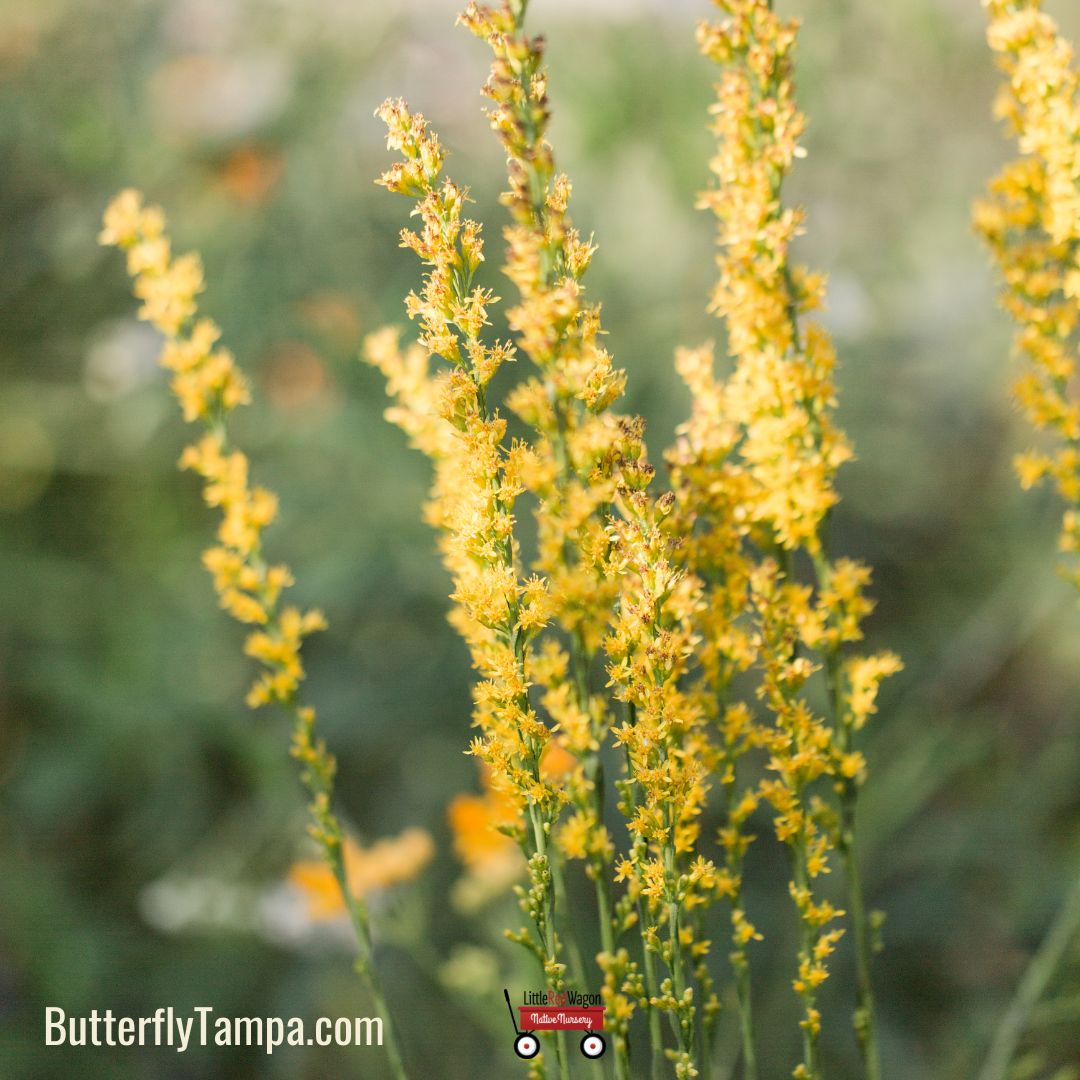
Wand goldenrod (Solidago stricta)
Type of Plant: Perennial herbaceous wildflower
How to ID: Tall slender stems with narrow leaves and golden-yellow flower clusters forming a narrow plume.
Habitat (highlighting within Boyd Hill Nature Preserve): Wet flatwoods, marsh edges and open sunny areas.
Ecosystem Significance: Late-season nectar source for bees, butterflies and other insects.
Status: Native
Edibility: Not edible.
Fun Fact: Goldenrod is frequently blamed for causing fall allergies, but ragweed is usually the actual culprit.

Vanilla plant / Deer's tongue (Carphephorus odoratissimus)
Type of Plant: Perennial herbaceous wildflower
How to ID: Basal leaves with a distinctive vanilla-like fragrance when crushed; tall stems topped with purple flower clusters.
Habitat (highlighting within Boyd Hill Nature Preserve): Pine flatwoods, savannas and moist-to-moderately dry open habitats.
Ecosystem Significance: Important nectar source for butterflies and other pollinators.
Status: Native
Edibility: Not edible.
Fun Fact: Crush a leaf gently and the vanilla-like fragrance gives this plant away.
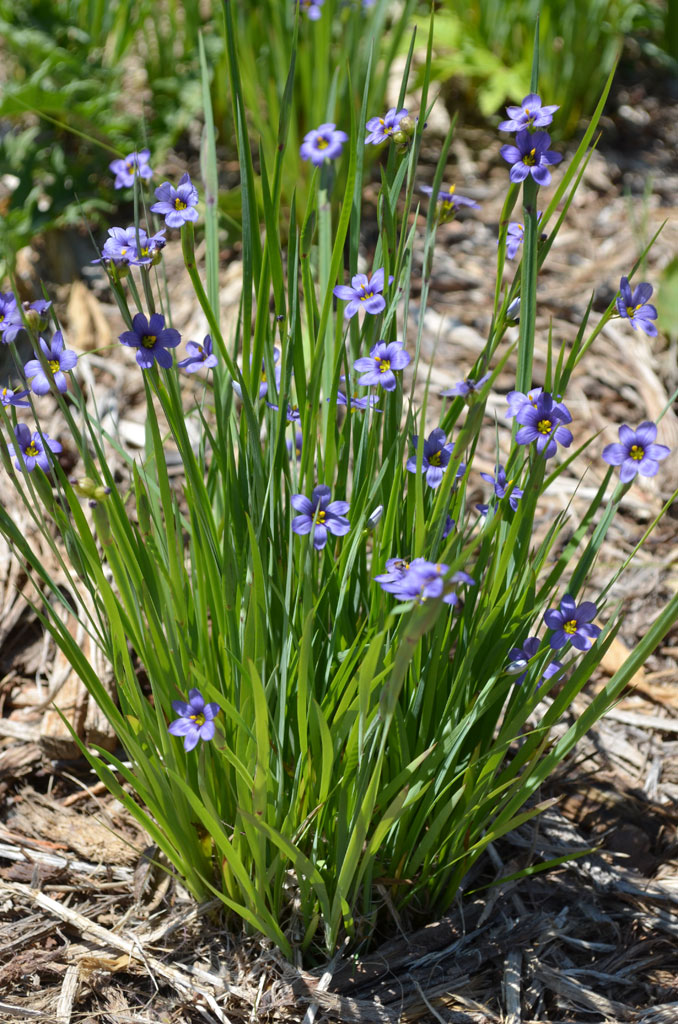
Blue-eyed grass (Sisyrinchium spp.)
Type of Plant: Small perennial herb
How to ID: Grass-like leaves, but the plant is actually an iris relative; tiny blue/purple flowers with yellow centers.
Habitat (highlighting within Boyd Hill Nature Preserve): Moist sunny meadows, flatwoods and open grassy areas.
Ecosystem Significance: Provides nectar and pollen for small native bees and flies.
Status: Native
Edibility: Not edible.
Fun Fact: It isn't a grass at all—it belongs to the iris family.

Yellow canna (Canna flaccida)
Type of Plant: Perennial herbaceous wetland plant
How to ID: Large broad leaves and bright yellow flowers on tall stalks; grows in clumps.
Habitat (highlighting within Boyd Hill Nature Preserve): Wetlands, marshes, pond margins and wet ditches; look around wetland/lake-edge habitats.
Ecosystem Significance: Provides cover and food resources for wetland wildlife and attracts pollinators.
Status: Native
Edibility: Not generally consumed as a wild food.
Fun Fact: Despite resembling ornamental cannas, this is a native Florida wetland species.

Wiregrass (Aristida beyrichiana)
Type of Plant: Perennial bunchgrass
How to ID: Fine, wiry leaves forming clumps; distinctive three-awned seed structures.
Habitat (highlighting within Boyd Hill Nature Preserve): One of the defining plants of Boyd Hill's fire-maintained scrubby flatwoods and longleaf/scrub pine habitat.
Ecosystem Significance: Critical fuel for prescribed fire and a foundation species of Florida pine ecosystems.
Status: Native
Edibility: Not edible.
Fun Fact: Wiregrass and fire have evolved together—regular fire helps maintain the ecosystem it belongs to.

Chalky bluestem (Andropogon virginicus var. glaucus)
Type of Plant: Perennial bunchgrass
How to ID: Upright blue-gray/green stems and leaves forming clumps; fluffy seed heads develop with maturity.
Habitat (highlighting within Boyd Hill Nature Preserve): Pine flatwoods and open grassy areas.
Ecosystem Significance: Provides cover and forage for wildlife and contributes to fire-maintained grassland structure.
Status: Native
Edibility: Not edible.
Fun Fact: Its bluish, chalky appearance is most noticeable when growing in open sunlight.
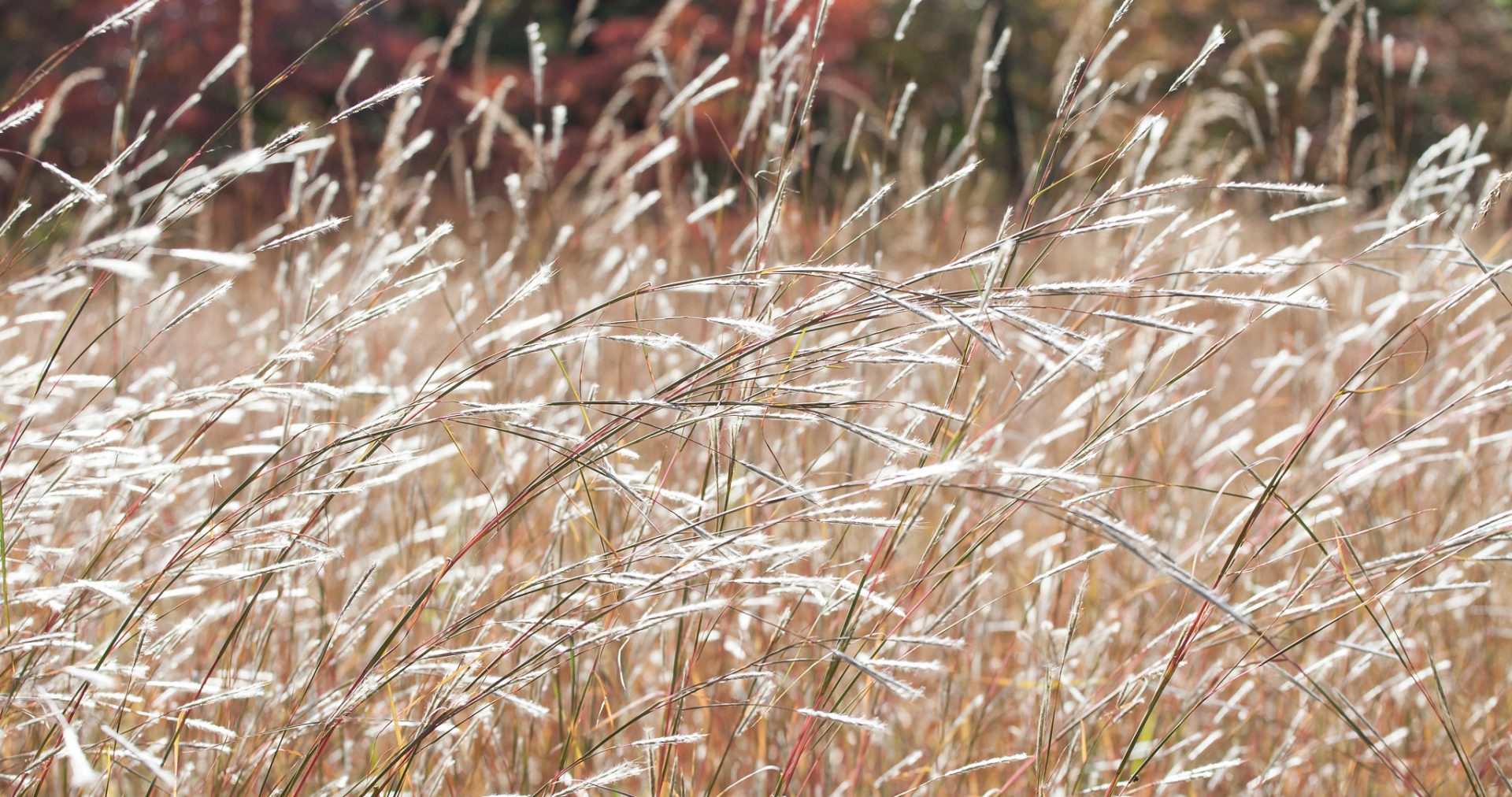
Splitbeard bluestem (Andropogon ternarius)
Type of Plant: Perennial bunchgrass
How to ID: Tall narrow grass with distinctive paired/divided fluffy seed clusters that can resemble a split beard.
Habitat (highlighting within Boyd Hill Nature Preserve): Dry pine flatwoods, sandhill and open uplands.
Ecosystem Significance: Provides cover, seeds and structure while carrying fire through grassy communities.
Status: Native
Edibility: Not edible.
Fun Fact: The fluffy divided seed head is the key reason for the common name.

Southern live oak (Quercus virginiana)
Type of Plant: Evergreen perennial tree
How to ID: Massive spreading limbs, dark rough bark and small thick oval leaves with smooth or slightly toothed margins.
Habitat (highlighting within Boyd Hill Nature Preserve): Hardwood hammock and upland woodland; present within Boyd Hill's landscape.
Ecosystem Significance: One of Florida's most important wildlife trees, supporting insects, birds, squirrels and other animals.
Status: Native
Edibility: Acorns technically edible after preparation.
Fun Fact: Its enormous horizontal branches can create an entire mini-ecosystem of epiphytes.


Laurel oak / Sand laurel oak (Quercus laurifolia / Q. hemisphaerica)
Type of Plant: Perennial evergreen/semi-evergreen oak
How to ID: Long, narrow, laurel-like leaves; smooth gray bark when young, becoming furrowed with age.
Habitat (highlighting within Boyd Hill Nature Preserve): Moist hammocks and flatwoods. Boyd Hill research specifically identifies sand laurel oak (Q. hemisphaerica) rather than only the generic Q. laurifolia.
Ecosystem Significance: Acorns support wildlife and the canopy provides shade and structure.
Status: Native
Edibility: Acorns technically edible after preparation.
Fun Fact: "Laurel oak" can refer to more than one closely related oak in Florida, so scientific names matter.
Pignut hickory (Carya glabra)


Pignut hickory (Carya glabra)
Type of Plant: Deciduous perennial tree
How to ID: Compound leaves with several lance-shaped leaflets; gray-brown shaggy bark on mature trees; small pear-shaped nuts.
Habitat (highlighting within Boyd Hill Nature Preserve): Upland hardwood forests and hammocks.
Ecosystem Significance: Nuts feed squirrels, deer, birds and other wildlife.
Status: Native
Edibility: Nuts are edible but can be bitter.
Fun Fact: Hickories are recognizable by their compound leaves and stout woody twigs.


Southern magnolia (Magnolia grandiflora)
Type of Plant: Evergreen perennial tree
How to ID: Huge glossy leathery leaves with rusty-brown undersides; enormous fragrant white flowers; large cone-like seed structures with red seeds.
Habitat (highlighting within Boyd Hill Nature Preserve): Hardwood hammocks and mature woodland.
Ecosystem Significance: Flowers attract beetles and other pollinators; seeds feed birds.
Status: Native
Edibility: Not edible.
Fun Fact: Magnolias evolved before bees became dominant pollinators and are strongly associated with beetle pollination.

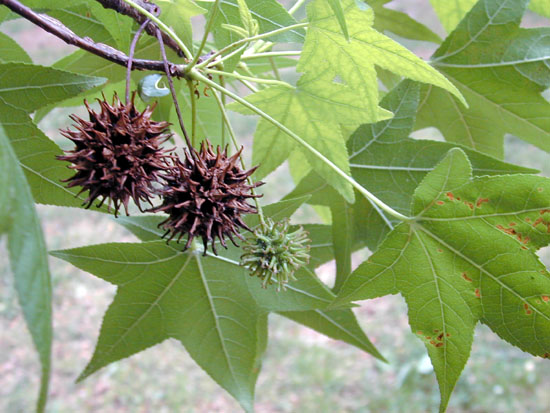
American sweetgum (Liquidambar styraciflua)
Type of Plant: Deciduous perennial tree
How to ID: Star-shaped five-lobed leaves; distinctive spiky round fruits; gray-brown bark.
Habitat (highlighting within Boyd Hill Nature Preserve): Moist woodland, hammocks and wetland edges.
Ecosystem Significance: Seeds feed birds and small mammals; tree provides canopy habitat.
Status: Native
Edibility: Not edible.
Fun Fact: The spiky fruits are often called "gumballs."


Sugarberry / Hackberry (Celtis laevigata)
Type of Plant: Deciduous perennial tree
How to ID: Gray bark, often slightly warty or corky; simple leaves with an asymmetrical base; small orange-red berries.
Habitat (highlighting within Boyd Hill Nature Preserve): Hardwood hammocks and moist upland woodland.
Ecosystem Significance: Excellent wildlife tree; berries are eaten by birds and mammals and foliage supports butterfly caterpillars.
Status: Native
Edibility: Fruits are technically edible when ripe but small and mostly seed.
Fun Fact: Hackberries are particularly valuable to wildlife despite being overlooked by many people.


Coral bean (Erythrina herbacea)
Type of Plant: Deciduous perennial shrub/small tree
How to ID: Thorny stems, three-part leaves and brilliant red tubular flowers followed by red seeds.
Habitat (highlighting within Boyd Hill Nature Preserve): Dry uplands, scrub, flatwoods and woodland edges.
Ecosystem Significance: Flowers attract hummingbirds; thorny branches provide refuge for small wildlife.
Status: Native
Edibility: Seeds are poisonous. Do not eat.
Fun Fact: The bright red seeds are extremely attractive but should be treated as toxic.

Marlberry (Ardisia escallonioides)
Type of Plant: Evergreen perennial shrub/small tree
How to ID: Glossy leathery leaves; clusters of small pale flowers; dark purple-black berries.
Habitat (highlighting within Boyd Hill Nature Preserve): Hardwood hammocks and shaded woodland.
Ecosystem Significance: Fruits provide food for birds and the dense foliage provides cover.
Status: Native
Edibility: Not recommended for human consumption.
Fun Fact: Its glossy leaves can make it resemble some non-native Ardisia species, so the overall plant and habitat matter.


Rouge plant (Rivina humilis)
Type of Plant: Evergreen perennial shrub
How to ID: Soft green oval leaves, delicate white/pink flowers and bright red berries hanging in clusters.
Habitat (highlighting within Boyd Hill Nature Preserve): Shaded woodland and hammock understory—an excellent plant to learn for Boyd Hill's forested areas.
Ecosystem Significance: Flowers attract pollinators and berries are relished by birds.
Status: Native
Edibility: Do not eat the berries.
Fun Fact: It can flower and fruit almost year-round in Florida.

Basket grass (Oplismenus setarius)
Type of Plant: Perennial grass
How to ID: Low, spreading grass with broad blades and delicate branching flower/seed structures; often forms mats.
Habitat (highlighting within Boyd Hill Nature Preserve): Shaded hammocks and woodland understory.
Ecosystem Significance: Ground-level cover and habitat for small insects and decomposers.
Status: Native — can be vigorous
Edibility: Not edible.
Fun Fact: Its ability to form a soft understory mat makes it an important "quiet" component of hammock vegetation.

Elephant's foot (Elephantopus elatus)
Type of Plant: Perennial herb
How to ID: Large basal leaves forming a rosette; branching flower stalk topped by clusters of small purple flowers.
Habitat (highlighting within Boyd Hill Nature Preserve): Pine flatwoods, sandy open areas and roadsides.
Ecosystem Significance: Supports pollinators and contributes to herbaceous diversity.
Status: Native
Edibility: Not edible.
Fun Fact: The large basal leaf rosette supposedly resembles an elephant's foot.

Buttonbush (Cephalanthus occidentalis)
Type of Plant: Deciduous perennial shrub/small tree
How to ID: Opposite/whorled leaves and unmistakable spherical balls of tiny white flowers.
Habitat (highlighting within Boyd Hill Nature Preserve): Marsh edges, wetland margins and shallow water; particularly relevant to Boyd Hill's wetland habitats.
Ecosystem Significance: Extremely valuable pollinator plant; seeds and structure provide wildlife habitat.
Status: Native
Edibility: Not edible.
Fun Fact: The flower heads look like tiny white pincushions.

Cinnamon fern (Osmundastrum cinnamomeum)
Type of Plant: Large perennial fern
How to ID: Tall green sterile fronds surrounding distinctive cinnamon-colored fertile fronds that appear in the center of the plant.
Habitat (highlighting within Boyd Hill Nature Preserve): Wet woodlands, swamps and marsh edges.
Ecosystem Significance: Provides cover and contributes to wetland plant communities.
Status: Native
Edibility: Not recommended for consumption.
Fun Fact: The fertile fronds resemble cinnamon sticks, giving the fern its common name.

Royal fern (Osmunda regalis)
Type of Plant: Large perennial wetland fern
How to ID: Tall arching fronds with broad, widely spaced leaflets; fertile sections develop at the tips and resemble clusters of beads.
Habitat (highlighting within Boyd Hill Nature Preserve): Swamps, marshes and wet woodland.
Ecosystem Significance: Provides wetland cover and contributes to soil stabilization.
Status: Native
Edibility: Not recommended for consumption.
Fun Fact: It is one of the largest ferns found in Florida wetlands.

Virginia chain fern (Woodwardia virginica)
Type of Plant: Perennial wetland fern
How to ID: Tall narrow fronds with repeated rows of connected-looking sori on the undersides, creating a "chain" pattern.
Habitat (highlighting within Boyd Hill Nature Preserve): Wet flatwoods, marshes and swampy areas.
Ecosystem Significance: Provides wetland cover and helps hold organic soils.
Status: Native
Edibility: Not edible.
Fun Fact: The "chains" are actually rows of spore-producing structures.


American lotus (Nelumbo lutea)
Type of Plant: Perennial aquatic plant
How to ID: Huge round leaves held above or floating on water; large pale-yellow flowers; distinctive flat-topped seed pod.
Habitat (highlighting within Boyd Hill Nature Preserve): Shallow ponds and lake margins; potentially relevant to Boyd Hill's lake/wetland areas.
Ecosystem Significance: Provides cover for aquatic wildlife and food resources for birds and aquatic organisms.
Status: Native — can spread aggressively in favorable water bodies
Edibility: Seeds and rhizomes have historically been eaten, but don't harvest wild preserve plants.
Fun Fact: Water often beads up dramatically on lotus leaves.

Fragrant water lily (Nymphaea odorata)
Type of Plant: Perennial aquatic herb
How to ID: Round floating leaves with a slit; fragrant white flowers held at or slightly above the water surface.
Habitat (highlighting within Boyd Hill Nature Preserve): Ponds, lakes and slow-moving freshwater.
Ecosystem Significance: Provides shade, shelter and habitat for aquatic organisms.
Status: Native
Edibility: Some parts are technically edible but not recommended for casual wild consumption.
Fun Fact: The flowers often close at night and reopen during the day.

Arrowhead / Duck potato (Sagittaria latifolia)
Type of Plant: Perennial emergent aquatic herb
How to ID: Distinctive arrowhead-shaped leaves; white three-petaled flowers; plants arise from shallow water or saturated soil.
Habitat (highlighting within Boyd Hill Nature Preserve): Marsh edges, shallow ponds and wet soils.
Ecosystem Significance: Provides cover and food for wetland wildlife.
Status: Native
Edibility: Underground tubers are historically edible when properly prepared; don't harvest wild preserve plants.
Fun Fact: The underground tubers gave it the name "duck potato."
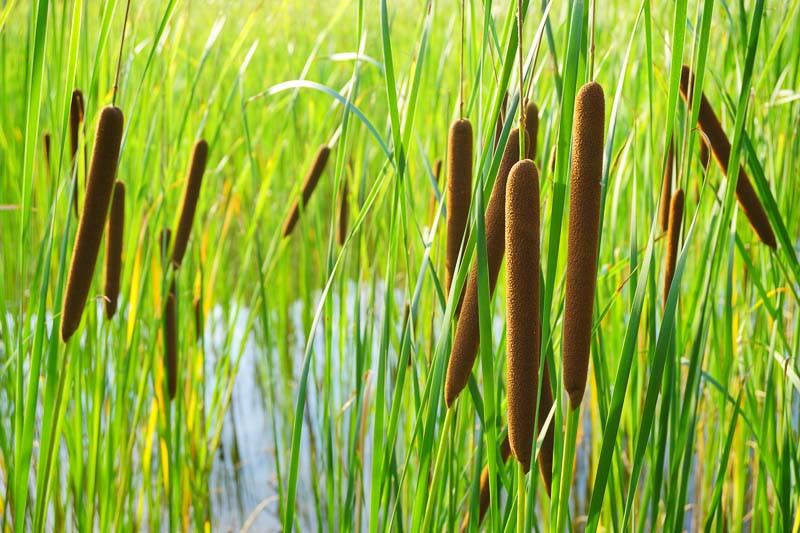
Broadleaf cattail (Typha latifolia)
Type of Plant: Perennial emergent wetland plant
How to ID: Long strap-like leaves and tall stalks ending in thick brown cylindrical seed heads.
Habitat (highlighting within Boyd Hill Nature Preserve): Marshes, pond margins and shallow wetlands.
Ecosystem Significance: Provides nesting/cover habitat and traps sediment in wetlands.
Status: Native — can become aggressive/dense
Edibility: Some young portions are edible when correctly identified, but don't harvest preserve plants.
Fun Fact: The brown "hot-dog" flower head is actually thousands of tiny flowers packed together.

Spatterdock / Cow lily (Nuphar advena)
Type of Plant: Perennial aquatic herb
How to ID: Large floating heart-shaped leaves and yellow cup-shaped flowers that sit just above the water.
Habitat (highlighting within Boyd Hill Nature Preserve): Freshwater ponds and lake margins.
Ecosystem Significance: Provides cover for fish, amphibians, insects and aquatic wildlife.
Status: Native
Edibility: Some historical food uses exist, but do not consume wild preserve plants.
Fun Fact: Unlike water lilies, spatterdock flowers are yellow and more cup-shaped.

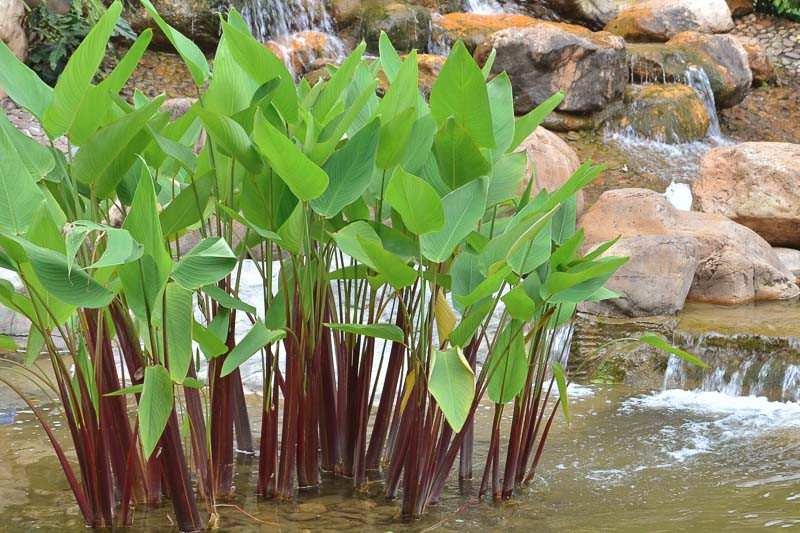
Alligator flag / Fire flag (Thalia geniculata)
Type of Plant: Large perennial wetland herb
How to ID: Huge banana-like leaves on tall stalks; purple flowers and unusual jointed stems.
Habitat (highlighting within Boyd Hill Nature Preserve): Marshes, swamps and wetland edges.
Ecosystem Significance: Creates dense cover for birds, reptiles, amphibians and insects.
Status: Native
Edibility: Not considered an edible wild plant.
Fun Fact: The huge leaves can make it look almost tropical, even though it is native to Florida wetlands.

Swamp sunflower (Helianthus angustifolius)
Type of Plant: Perennial herbaceous wildflower
How to ID: Tall branching stems, narrow rough leaves and numerous bright yellow sunflower heads.
Habitat (highlighting within Boyd Hill Nature Preserve): Wet flatwoods, marsh edges and moist open areas.
Ecosystem Significance: Major late-season nectar/pollen source; seeds feed birds.
Status: Native — rhizomatous/vigorous
Edibility: Seeds technically edible but not a recommended preserve forage.
Fun Fact: It produces one of Florida's best fall displays of yellow flowers.
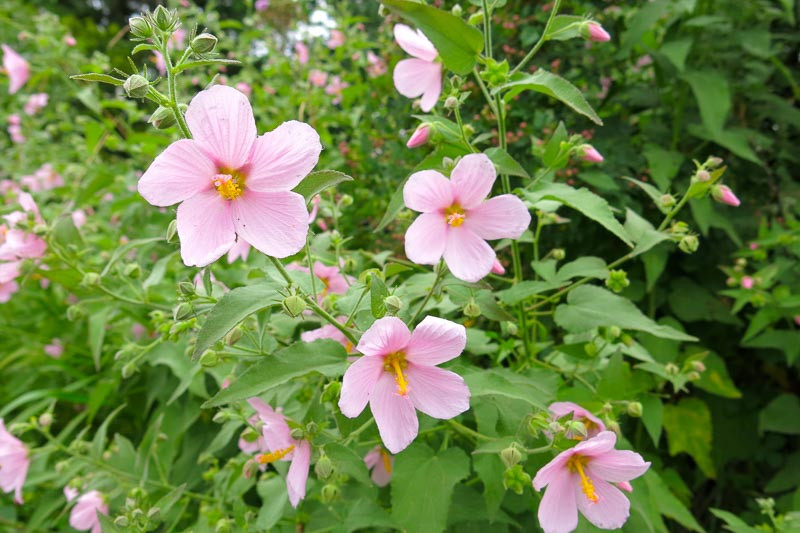
Virginia saltmarsh mallow (Kosteletzkya virginica)
Type of Plant: Perennial herbaceous wetland plant
How to ID: Upright stems, heart-shaped-to-lobed leaves and delicate pink flowers resembling miniature hibiscus.
Habitat (highlighting within Boyd Hill Nature Preserve): Freshwater marsh edges and wet areas; more common in wetland communities than dry scrub.
Ecosystem Significance: Nectar source for pollinators and provides wetland structure.
Status: Native
Edibility: Not edible.
Fun Fact: It is a member of the hibiscus/mallow family.

Sawgrass (Cladium jamaicense)
Type of Plant: Perennial sedge
How to ID: Tall, narrow grass-like leaves with razor-sharp serrated edges; dense stands in wetlands.
Habitat (highlighting within Boyd Hill Nature Preserve): Wetlands and marshy areas.
Ecosystem Significance: Major wetland-forming plant that provides habitat and helps hold wetland soils.
Status: Native
Edibility: Not edible.
Fun Fact: It is not actually a grass—it is a sedge.

Butterfly milkweed (Asclepias tuberosa)
Type of Plant: Perennial herbaceous wildflower
How to ID: Upright plant with narrow leaves and brilliant orange clusters of flowers; milkweed sap may appear when damaged.
Habitat (highlighting within Boyd Hill Nature Preserve): Dry open flatwoods, scrub and sunny meadow-like areas.
Ecosystem Significance: Critical monarch and milkweed-butterfly host plant; flowers support many pollinators.
Status: Native
Edibility: Not edible; milkweed tissues contain toxic compounds.
Fun Fact: Monarch caterpillars can eat milkweed toxins and use them as chemical defense.

Swamp milkweed (Asclepias incarnata)
Type of Plant: Perennial herbaceous wetland plant
How to ID: Upright stems, narrow leaves and clusters of pink/mauve flowers; milky sap when damaged.
Habitat (highlighting within Boyd Hill Nature Preserve): Wetlands, marshes and moist open ground.
Ecosystem Significance: Host plant for monarch caterpillars and important nectar source for butterflies and bees.
Status: Native
Edibility: Not edible.
Fun Fact: Its seed pods split open to release seeds attached to silky parachutes.

Tickseed — Leavenworth's tickseed (Coreopsis leavenworthii)
Type of Plant: Perennial herbaceous wildflower
How to ID: Bright yellow daisy-like flowers, often with a reddish/brown center; narrow leaves and branching stems.
Habitat (highlighting within Boyd Hill Nature Preserve): Open flatwoods, wet meadows and disturbed sunny areas.
Ecosystem Significance: Excellent nectar/pollen resource for bees and butterflies.
Status: Native
Edibility: Not edible.
Fun Fact: The name "tickseed" comes from the small seeds' resemblance to ticks.
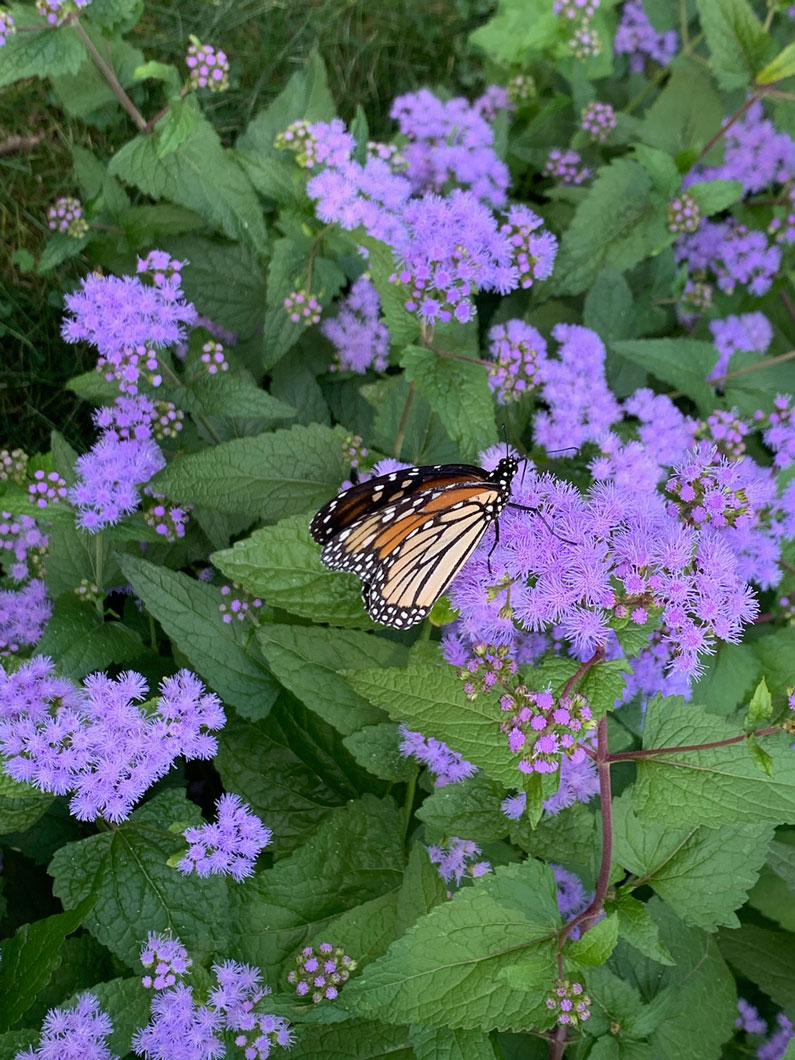
Blue mistflower (Conoclinium coelestinum)
Type of Plant: Perennial herbaceous wildflower
How to ID: Fuzzy clusters of lavender-blue flowers; opposite leaves; often forms colonies.
Habitat (highlighting within Boyd Hill Nature Preserve): Moist woodland edges, marsh edges and wet open areas.
Ecosystem Significance: Excellent nectar source for butterflies and bees.
Status: Native — vigorous/spreading
Edibility: Not edible.
Fun Fact: Its flowers look fluffy because they are composed almost entirely of tiny disk florets.

Frostweed (Verbesina virginica)
Type of Plant: Perennial herbaceous shrub-like wildflower
How to ID: Tall branching plant with large opposite leaves and white flower clusters; in cold weather, water can freeze into unusual ribbons along the lower stems.
Habitat (highlighting within Boyd Hill Nature Preserve): Woodland edges, hammocks and moist disturbed areas.
Ecosystem Significance: Important late-season nectar source.
Status: Native — can be vigorous
Edibility: Not edible.
Fun Fact: The strange ice formations around its stems inspired the name "frostweed."

Elliott's lovegrass (Eragrostis elliottii)
Type of Plant: Perennial bunchgrass
How to ID: Fine-textured grass forming clumps with delicate open seed heads.
Habitat (highlighting within Boyd Hill Nature Preserve): Dry-to-mesic flatwoods, open pine habitats and sandy ground.
Ecosystem Significance: Provides cover and seeds and contributes to the fine-grass fuel needed for fire-maintained ecosystems.
Status: Native
Edibility: Not edible.
Fun Fact: Its delicate seed head looks almost like a miniature cloud above the grass.

Purple lovegrass (Eragrostis spectabilis)
Type of Plant: Perennial bunchgrass
How to ID: Low clumps with airy purple-pink seed heads that appear as hazy clouds above the foliage.
Habitat (highlighting within Boyd Hill Nature Preserve): Dry sandy uplands, roadsides and open pine habitats.
Ecosystem Significance: Provides seed and cover and contributes to fire-maintained grassland structure.
Status: Native
Edibility: Not edible.
Fun Fact: The purple seed heads are particularly conspicuous when backlit by sunlight.

Bushy bluestem (Andropogon glomeratus)
Type of Plant: Tall perennial bunchgrass
How to ID: Tall upright stems topped with dense fluffy silver-gold seed heads; often forms large clumps.
Habitat (highlighting within Boyd Hill Nature Preserve): Wet flatwoods, marsh edges and moist open ground.
Ecosystem Significance: Provides cover, seeds and important fine fuel for prescribed fire.
Status: Native — can become dense
Edibility: Not edible.
Fun Fact: Its fluffy seed heads can make a wetland edge look almost silver in fall and winter.