herpetology chapter 3 pt 3 (exam 1)
5.0(1)
Studied by 22 people Call Kai
 Learn
Learn Practice Test
 Spaced Repetition
 Match
Match Flashcards
 Knowt Play
Card Sorting
1/20

Earn XP
Description and Tags
Last updated 4:15 PM on 2/11/24
Name | Mastery | Learn | Test | Matching | Spaced | Call with Kai | Chat |
|---|
No analytics yet
Send a link to your students to track their progress
21 Terms
1
New cards
caecilians are primarily found in what type of habitat
tropical habitats
\
mainly south america
\
mainly south america
2
New cards
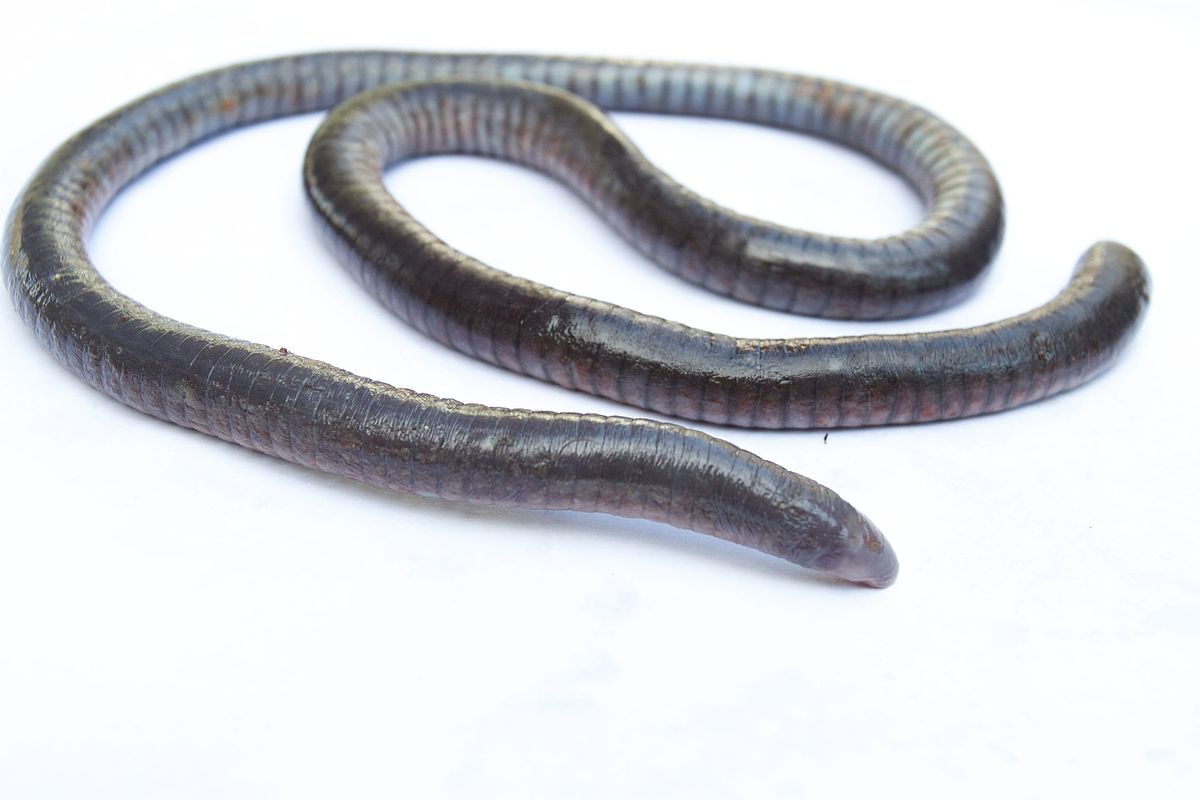
defining features of rhinatrematidae (3)
tailed caecilians (gymniophiona)
\
1. posesses a true tail
2. mouth is at/near tip of snout
3. primary, secondary, tertiary annuli
\
1. posesses a true tail
2. mouth is at/near tip of snout
3. primary, secondary, tertiary annuli
3
New cards
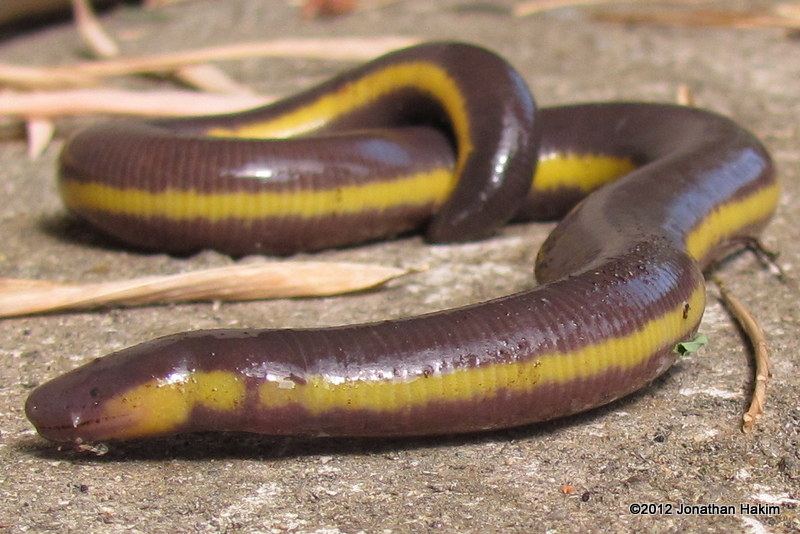
defining features of icthyophiidae (3)
asian tailed caecilians (gymniophiona)
\
1. posesses a true tail
2. mouth is at/near tip of snout
3. primary, secondary, tertiary annuli
\
1. posesses a true tail
2. mouth is at/near tip of snout
3. primary, secondary, tertiary annuli
4
New cards
defining features of scolecomorphidae (2)
buried eyed caecilians (gymniophiona)
\
1. zygokropaphic skulls, lack orbits
2. vestigial eyes attached to end of extended tentacles
\
1. zygokropaphic skulls, lack orbits
2. vestigial eyes attached to end of extended tentacles
5
New cards
defining features of typhlonectidae (4)
aquatic caecilians (gymniophiona)
\
1. highly aquatic
2. have compressed bodies and well developed dorsal fins on posterior body
3. have an accessory gas exchange organ called tracheal lung
4. zygokrotaphic skulls
\
1. highly aquatic
2. have compressed bodies and well developed dorsal fins on posterior body
3. have an accessory gas exchange organ called tracheal lung
4. zygokrotaphic skulls
6
New cards
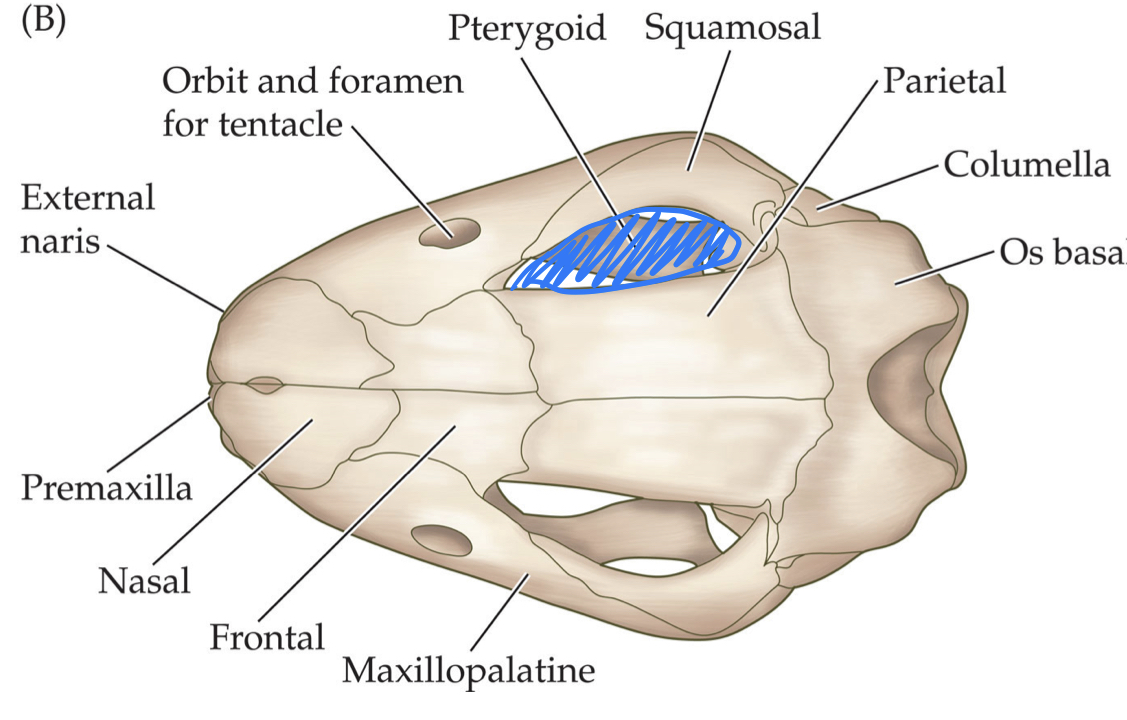
zygokrotaphic skull
skull with temporal region openings
7
New cards
morphology of gymniophiona (4)
1. tail small or absent
2. annuli present
3. skull heavily built, powerful jaws
4. wormlike body, limbless (no pectoral or pelvic girdles)
8
New cards
annuli of gymniophiona
most taxa have primary only
\
primary: 1 ring per vertebrae
\
primary: 1 ring per vertebrae
9
New cards
dermal scales of gymniophiona
in some species
\
pouches in dermis below annular groove
\
unique to these amphibians
\
pouches in dermis below annular groove
\
unique to these amphibians
10
New cards
vertebral column of gymniophiona (3)
1. atlas and 95-285 trunk vertebrae
2. no sacrum
3. all vertebrae (except atlas and last 3-6) have ribs
11
New cards
3 types of locomotion of gymniophiona
1. internal concertina
2. whole body concertina
3. lateral undulation
12
New cards
internal concertina
move vertebral column inside skin
13
New cards
whole body concertina
use muscles to press body against a tunnel
14
New cards
lateral undulation
move body side to side
15
New cards
tentacles of gymniophiona
paired tentacles with visibly present eyes
16
New cards
skull morphology (2)
1. stegokrotaphic skull
2. zygokrotaphic skull
17
New cards
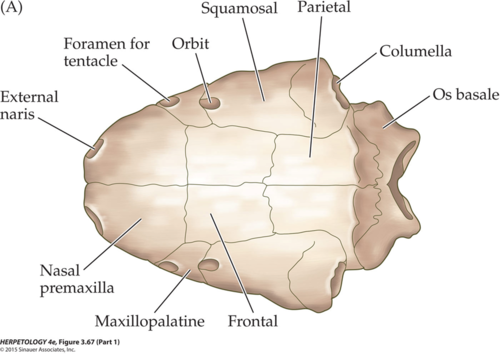
stegokrotaphic skill
no major openings
18
New cards
venom glands of gymniophiona
are above teeth
19
New cards
teeth of gymniophiona
most have sharp teeth
20
New cards
fertilization of gymniophiona (1)
all have internal with the phallodeum (extension of male cloaca)
21
New cards
development of gymniophiona
most direct/oviparity with some indirect/viviparity