Amino Acids
 Call Kai
 Learn
Learn Practice Test
 Spaced Repetition
 Match
Match Flashcards
 Knowt Play
1/37

There's no tags or description
Looks like no tags are added yet.
Name | Mastery | Learn | Test | Matching | Spaced | Call with Kai | Chat |
|---|
No analytics yet
Send a link to your students to track their progress
38 Terms
Every amino acid shares an identical backbone: H₂N-CH(R)-COOH.
You only need to memorize the unique R-group (side chain) attached to the central alpha-carbon.
Hydrophilic
(water loving) Having a strong affinity for, attracting, or readily dissolving in water.
Polar
a separation of electric charge across a chemical bond or a molecule, creating a positive end and a negative end. EX: If you have an atom with a higher electronegativity on one end of a bond, the electrons will flow in that direction (they are being pulled).

Polar Uncharged Side Chain
(Hydrophilic) an amino acid R-group that has an uneven distribution of electrical charge (polarity) but carries no overall positive or negative charge at normal cellular (physiological) pH
It contains electronegative atoms like oxygen, nitrogen, or sulfur (such as in hydroxyl –OH, thiol –SH, or amide –CONH₂ groups). This creates a dipole moment where electrons are pulled unevenly
Because they are polar, they readily form hydrogen bonds with water and other polar molecules. (Remember like-dissolves-like).
Hydrophobic
(water fear) tending to repel, not mix with, or fail to dissolve in water.
Nonpolar
a structure where electrical charges are distributed evenly because atoms share electrons equally or cancel out each other’s pull.

Nonpolar, Aliphatic Side Chains
(Hydrophobic) a specific group of amino acid side chains (the R-groups attached to an amino acid backbone) that repel water and consist entirely of simple carbon and hydrogen chains or rings without any permanent charge.
Aliphatic: The side chain is made of a hydrocarbon chain (carbon atoms bonded together in straight, branched, or non-aromatic ring structures, like a chain of CH2 or CH3 groups).
Side chain: The unique chemical tail attached to the central carbon of an amino acid that gives each amino acid its distinct personality.
The side chain does not mix well with water because water molecules prefer to bond with each other rather than with neutral hydrocarbon chains.
why this matters:
Protein folding: Because these side chains hate water, they try to hide away from the watery fluids inside and outside of cells.
Core stabilization: When proteins fold into their 3D shapes, these hydrophobic side chains cluster tightly together in the very center (the core) of the protein, away from water, which helps hold the protein stable.
Positively Charged side chains
the specific atomic groups (R-groups) on certain amino acids that carry a net electrical positive charge at normal biological pH levels.
Why they matter in proteins:
Water solubility: Because they carry a charge, they love water (hydrophilic) and usually sit on the outer surface of a folded protein.
Ionic Bonds: They attract negatively charged side chains (like aspartate or glutamate).
DNA Binding: Their positive charge allows proteins (such as histones) to bind tightly to negatively charged DNA backbones.
Negatively Charged side chains
the specific atomic groups (R-groups) on certain amino acids that carry a net electrical negative charge at normal biological pH levels (7.4).
Why they matter in proteins:
Salt Bridges: They form strong ionic bonds with positively charged side chains (like lysine or arginine) to lock a protein's 3D structure into place.
Surface Hydration: Because they are highly polar and charged, they are hydrophilic (water-loving) and typically sit on the outside of proteins interacting with water.
Enzyme Activity: Their negative charge allows them to hold onto positive metal ions which many enzymes need to function and catalyze reactions.
Aromatic Side Chains
specific atomic groups (R-groups) on amino acids that contain a cyclic, planar ring structure with alternating double bonds, known as a benzene ring.
why they matter in proteins:
Hydrophobic Core: Because these large rings dislike water, they usually bury themselves deep inside the center of a protein, driving the folding process.
UV Light Absorption: The electron clouds in these rings absorb ultraviolet (UV) light. Scientists use this exact property to measure protein concentration in a lab by shining UV light at 280 nm through a sample.
Stacking Interactions: The flat faces of these rings can stack on top of each other (called π-π stacking), creating unique stabilizing forces within a protein structure or when binding to other molecules.
(A) Name, abbreviation, side chain and description?
Alanine (Ala, A)
Side chain: -CH₃
Description: The foundation block; a single methyl group.
Nonpolar, Aliphatic Side Chains (Hydrophobic)

(C) Name, abbreviation, side chain and description?
Cysteine (Cys, C)
Side chain: -CH₂-SH
Description: Visually identical to Serine, but with a sulfur atom swapping out the oxygen to form a thiol (-SH) group.
Polar, Uncharged Side Chain (Hydrophilic)

(G) Name, abbreviation, side chain and description?
Glycine (Gly, G)
Side chain: -H
Description: The simplest amino acid; side chain is just a single hydrogen atom.
Nonpolar, Aliphatic Side Chains (Hydrophobic)

(H) Name, abbreviation, side chain and description?
Histidine (His, H)
Side chain: -CH₂-Imidazole Ring
Description: A carbon spacer linked to a 5-membered imidazole ring that features two nitrogen atoms capable of shifting charge.
Positively Charged Side Chains (Basic)

(I) Name, abbreviation, side chain and description?
Isoleucine (Ile, I)
Side chain: -CH(CH₃)-CH₂-CH₃
Description: An isomer of Leucine. The branching methyl group shifts closer to the backbone.
Nonpolar, Aliphatic Side Chains (Hydrophobic)

(L) Name, abbreviation, side chain and description?
Leucine (Leu, L)
Side chain: -CH₂-CH(CH₃)₂
Description: An extended version of Valine. It adds a carbon spacer (-CH₂-) right before the V-shape branch.
Nonpolar, Aliphatic Side Chains (Hydrophobic)

(M) Name, abbreviation, side chain and description?
Methionine (Met, M)
Side chain: -CH₂-CH₂-S-CH₃
Description: A straight 2-carbon chain ending in a thioether sulfur linked to a final methyl group.
Nonpolar, Aliphatic side chains (Hydrophobic)

(P) Name, abbreviation, side chain and description?
Proline (Pro, P)
Side chain: Imprinted ring back to the backbone nitrogen
Description: A rigid structure where a 3-carbon chain loops around and binds directly to the backbone nitrogen, forming a unique 5-membered ring.
Nonpolar, Aliphatic Side Chains (Hydrophobic)

(S) Name, abbreviation, side chain and description?
Serine (Ser, S)
Side chain: -CH₂-OH
Description: Think "hydroxy-Serine." It is an Alanine base with a terminal hydroxyl (-OH) group attached.
Polar, Uncharged Side Chains (Hydrophilic)

(T) Name, abbreviation, side chain and description?
Threonine (Thr, T)
Side chain: -CH(OH)-CH₃
Description: A branched structure with a hydroxyl (-OH) group and a methyl (-CH₃) group splitting off the same carbon.
Polar, Uncharged Side Chains (Hydrophilic)

(V) Name, abbreviation, side chain and description?
Valine (Val, V)
Side chain: -CH(CH₃)₂
Description: Forms a distinct V-shape made of three carbons branched onto the Alanine base.
Nonpolar, Aliphatic Side Chains (Hydrophobic)

( R ) Name, abbreviation, side chain and description?
Arginine (Arg, R)
Arginine (R) -> Think "A-R-ginine"
Side chain: -CH₂-CH₂-CH₂-NH-C(NH₂)=NH₂⁺
Description: A 3-carbon chain attached to a resonance-stabilized guanidinium group containing three nitrogen atoms.
Positively Charged Side Chains (Basic)

(F) Name, abbreviation, side chain and description?
Phenylalanine (Phe, F)
Phenylalanine (F) -> Think "Fenylalanine"
Side chain: -CH₂-C₆H₅
Description: An Alanine base attached directly to a bulky phenyl (benzene) ring.
Aromatic Side Chains (Ring Structures)

(Y) Name, abbreviation, side chain and description?
Tyrosine (Tyr, Y)
Tyrosine (Y) -> Think "tYrosine"
Side chain: -CH₂-C₆H₄-OH
Description: Exactly identical to Phenylalanine, but with an extra hydroxyl (-OH) group fixed to the bottom of the ring.
Aromatic Side Chains (Ring Structures)

(N) Name, abbreviation, side chain and description?
Asparagine (Asn, N)
Asparagine (N) -> Think "As-N-aragine"
Side chain: -CH₂-CONH₂
Description: The uncharged amide version of Aspartate; the negative oxygen (-O⁻) is swapped out for an amino group (-NH₂).
Negatively Charged Side Chains (Acidic) & Their Amide Derivatives

(Q) Name, abbreviation, side chain and description?
Glutamine (Gln, Q)
Glutamine (Q) -> Think "Glu-Q-tamine"
Side chain: -CH₂-CH₂-CONH₂
Description: The uncharged amide version of Glutamate; the negative oxygen (-O⁻) is swapped out for an amino group (-NH₂).
Negatively Charged Side Chains (Acidic) & Their Amide Derivatives

(D) Name, abbreviation, side chain and description?
Aspartate (Asp, D)
Aspartate (D) -> First alphabetically by name, gets the first letter alphabetically (D).
Side chain: -CH₂-COO⁻
Description: A 1-carbon spacer ending in a negatively charged carboxylate group.
Negatively Charged Side Chains (Acidic) & Their Amide Derivatives
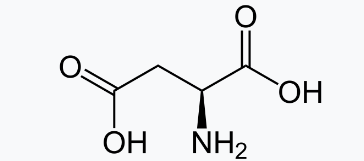
(E) Name, abbreviation, side chain and description?
Glutamate (Glu, E)
Glutamate (E) -> Second alphabetically by name, gets the next letter alphabetically (E).
Side chain: -CH₂-CH₂-COO⁻
Description: Visually identical to Aspartate, but with a longer 2-carbon spacer before the terminal carboxylate group.
Negatively Charged Side Chains (Acidic) & Their Amide Derivatives

(K) Name, abbreviation, side chain and description?
Lysine (Lys, K)
Lysine (K) -> "L" is taken by Leucine. K comes right before L in the alphabet. Think "K-Lysine".
Side chain: -CH₂-CH₂-CH₂-CH₂-NH₃⁺
Description: A long, flexible 4-carbon chain acting as a leash for a terminal, positively charged amino group.
Positively Charged Side Chains (Basic)

The Obvious Ones (11 Acids): The code is simply the first letter of the name.
Alanine (A)
Cysteine (C)
Glycine (G)
Histidine (H)
Isoleucine (I)
Leucine (L)
Methionine (M)
Proline (P)
Serine (S)
Threonine (T)
Valine (V)
The Phonetic / "Sounds-Like" Ones (5 Acids):
Arginine (R) -> Think "A-R-ginine"
Phenylalanine (F) -> Think "Fenylalanine"
Tyrosine (Y) -> Think "tYrosine"
Asparagine (N) -> Think "As-N-aragine"
Glutamine (Q) -> Think "Glu-Q-tamine"
The Acidic "D and E" Pair (2 Acids):
Aspartate (D) -> First alphabetically by name, gets the first letter alphabetically (D).
Glutamate (E) -> Second alphabetically by name, gets the next letter alphabetically (E).
The Outliers (2 Acids):
Tryptophan (W) -> Think "Twryptophan" or a "Windshield wiper". Tryptophan has a bulky double-ring system that visually resembles a W.
Lysine (K) -> "L" is taken by Leucine. K comes right before L in the alphabet. Think "K-Lysine".
Nonpolar, Aliphatic Side Chains (Hydrophobic)
Glycine (Gly, G)
Side chain: -H
Description: The simplest amino acid; side chain is just a single hydrogen atom.
Alanine (Ala, A)
Side chain: -CH₃
Description: The foundation block; a single methyl group.
Valine (Val, V)
Side chain: -CH(CH₃)₂
Description: Forms a distinct V-shape made of three carbons branched onto the Alanine base.
Leucine (Leu, L)
Side chain: -CH₂-CH(CH₃)₂
Description: An extended version of Valine. It adds a carbon spacer (-CH₂-) right before the V-shape branch.
Isoleucine (Ile, I)
Side chain: -CH(CH₃)-CH₂-CH₃
Description: An isomer of Leucine. The branching methyl group shifts closer to the backbone.
Proline (Pro, P)
Side chain: Imprinted ring back to the backbone nitrogen
Description: A rigid structure where a 3-carbon chain loops around and binds directly to the backbone nitrogen, forming a unique 5-membered ring.
Methionine (Met, M)
Side chain: -CH₂-CH₂-S-CH₃
Description: A straight 2-carbon chain ending in a thioether sulfur linked to a final methyl group.
Polar, Uncharged Side Chains (Hydrophilic) Amino Acids
Serine (Ser, S)
Side chain: -CH₂-OH
Description: Think "hydroxy-Serine." It is an Alanine base with a terminal hydroxyl (-OH) group attached.
Threonine (Thr, T)
Side chain: -CH(OH)-CH₃
Description: A branched structure with a hydroxyl (-OH) group and a methyl (-CH₃) group splitting off the same carbon.
Cysteine (Cys, C)
Side chain: -CH₂-SH
Description: Visually identical to Serine, but with a sulfur atom swapping out the oxygen to form a thiol (-SH) group.
Aromatic Side Chains (Ring Structures) Amino Acids
Phenylalanine (Phe, F)
Side chain: -CH₂-C₆H₅
Description: An Alanine base attached directly to a bulky phenyl (benzene) ring.
Tyrosine (Tyr, Y)
Side chain: -CH₂-C₆H₄-OH
Description: Exactly identical to Phenylalanine, but with an extra hydroxyl (-OH) group fixed to the bottom of the ring.
Tryptophan (Trp, W)
Side chain: -CH₂-Indole Ring System
Description: A carbon spacer linked to a massive double-ring system (a fused benzene and pyrrole ring structure).
Positively Charged Side Chains (Basic) Amino Acids
Lysine (Lys, K)
Side chain: -CH₂-CH₂-CH₂-CH₂-NH₃⁺
Description: A long, flexible 4-carbon chain acting as a leash for a terminal, positively charged amino group.
Arginine (Arg, R)
Side chain: -CH₂-CH₂-CH₂-NH-C(NH₂)=NH₂⁺
Description: A 3-carbon chain attached to a resonance-stabilized guanidinium group containing three nitrogen atoms.
Histidine (His, H)
Side chain: -CH₂-Imidazole Ring
Description: A carbon spacer linked to a 5-membered imidazole ring that features two nitrogen atoms capable of shifting charge.
Negatively Charged Side Chains (Acidic) & Their Amide Derivatives Amino Acids
Aspartate (Asp, D)
Side chain: -CH₂-COO⁻
Description: A 1-carbon spacer ending in a negatively charged carboxylate group.
Glutamate (Glu, E)
Side chain: -CH₂-CH₂-COO⁻
Description: Visually identical to Aspartate, but with a longer 2-carbon spacer before the terminal carboxylate group.
Asparagine (Asn, N)
Side chain: -CH₂-CONH₂
Description: The uncharged amide version of Aspartate; the negative oxygen (-O⁻) is swapped out for an amino group (-NH₂).
Glutamine (Gln, Q)
Side chain: -CH₂-CH₂-CONH₂
Description: The uncharged amide version of Glutamate; the negative oxygen (-O⁻) is swapped out for an amino group (-NH₂).