Electoral systems
0.0(0)
Studied by 5 people Call Kai
 Learn
 Practice Test
 Spaced Repetition
 Match
 Flashcards
 Knowt Play
Card Sorting
1/6

Earn XP
Description and Tags
7 Terms
1
New cards
Why do we care about elections?
They reveal ==democratic preferences== (good system if you can vote your actual opinions)
==Democratic legitimacy== (may erode if profound disagreement with the rules, cf capitol)
==Accountability== (knowing who is your representant so has to defend your interests)
==Democratic legitimacy== (may erode if profound disagreement with the rules, cf capitol)
==Accountability== (knowing who is your representant so has to defend your interests)
2
New cards
Electoral rules
translatesvotesintoseats
inevitably creates distortions
inevitably creates distortions
3
New cards
Non-proportional
Winner takes all, first past the post / %%single member plurality%%
%%Majority rule:%% 50%+1 vote, actual majority support (french election)
If more than 2 ppl: run off (multiple rounds) or preferencial voting (RV/AV, aka ranking)
%%Majority rule:%% 50%+1 vote, actual majority support (french election)
If more than 2 ppl: run off (multiple rounds) or preferencial voting (RV/AV, aka ranking)
4
New cards
Proportional
^^Allocate seats according to a proportion of votes^^
Single transferable vote ^^(STV^^)
Party list
^^Multimember districts^^
purest proportionality = Israel
Single transferable vote ^^(STV^^)
Party list
^^Multimember districts^^
purest proportionality = Israel
5
New cards
Pros & Cons
^^Proportional:^^ cons= ^^too much hastle^^, ^^more instable^^ pros= more parties so ^^better representation^^
%%Non proportional%%: cons= %%less representative%%, %%no geographical issues or specific partie%%s pros= %%simple%%
Solution: hybridsystem → Mixed member proportional (MMP) ex: GERM’s Bundestag w/1/2 seats FPTP and the rest w/ proprotional party list or where 1 chamber is FPTP and the other Proportional (cf Australia)
6
New cards
Problem of incentives
For voters: @@strategic@@ vote, not @@wanting to go@@ vote
For parties: @@split up@@ in proportional setting (coalitions = @@unstable)@@, rewards @@regionalism@@ in CAN
For parties: @@split up@@ in proportional setting (coalitions = @@unstable)@@, rewards @@regionalism@@ in CAN
7
New cards
Effective vs actual number of parties
Duverger’slaw: SMP/FPTP leads to bipartism while PR leads to multipartism
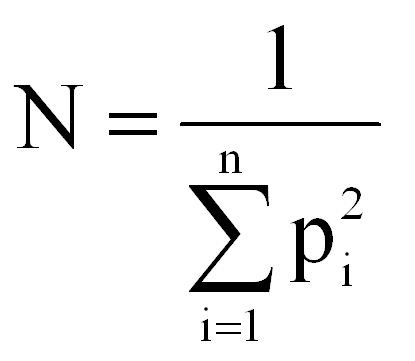
effectivenrbofparties (1979, Laasko)
effective= the ones that wouldactuallystandachance
PB: CAN has way more parties (fed+prov) than is expected
effectivenrbofparties (1979, Laasko)
effective= the ones that wouldactuallystandachance
PB: CAN has way more parties (fed+prov) than is expected