Chapter 11.1: The Regulation of Gene Expression Occurs at Multiple Levels
 Call Kai
 Learn
 Practice Test
 Spaced Repetition
 Match
 Flashcards
 Knowt Play
1/8

9 Terms
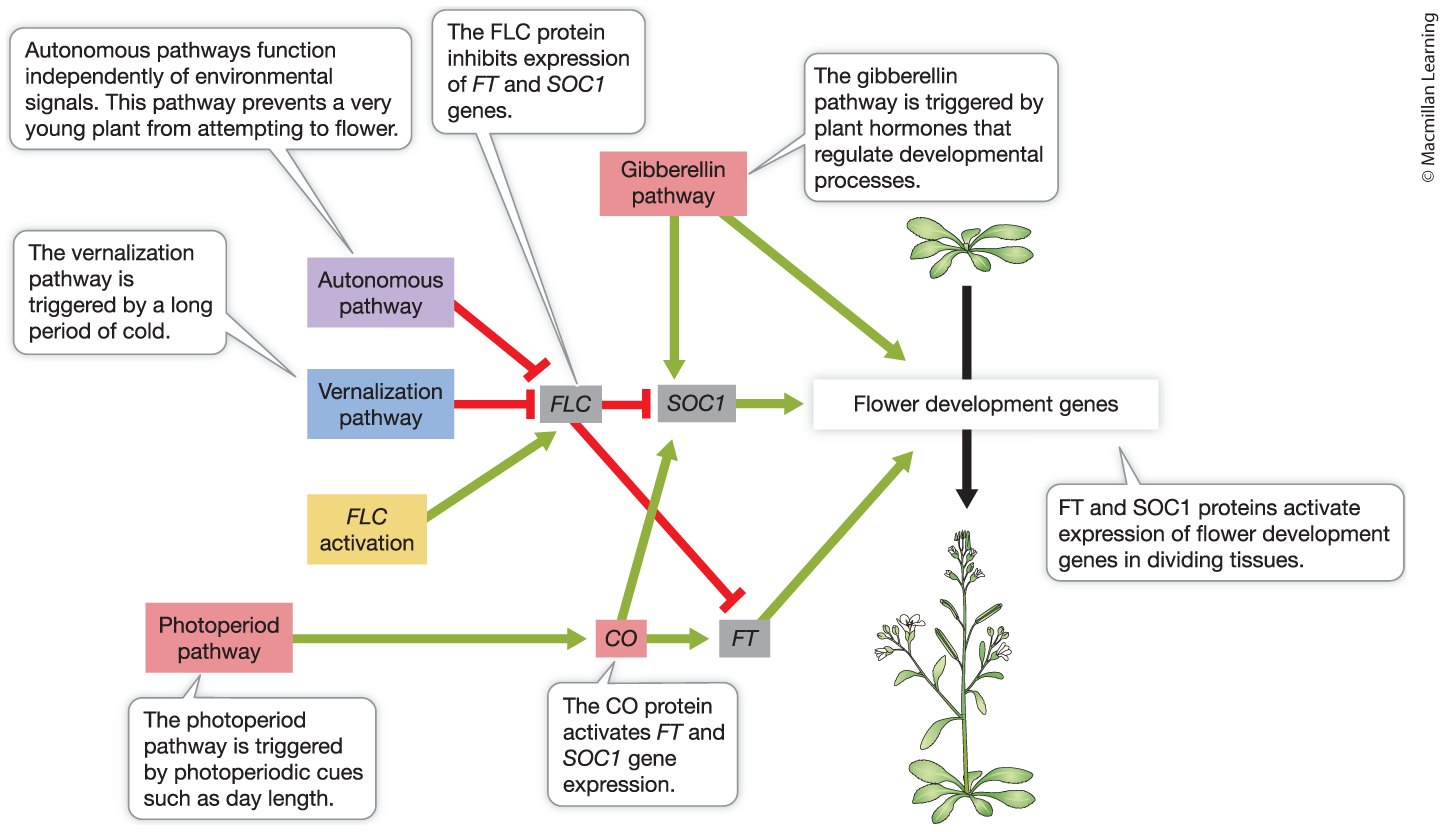
Regulatory networks
Collections of interacting regulators that determine the expression level of a gene
Allows for multi-faceted gene expression
Transcription regulation
The most common type of regulation due to the need for energy conservation
Inducers
Compounds that stimulate the transcription of specific inducible genes
Includes genes required in particular conditions, such as those for triglyceride synthesis given high glucose levels
Generally control catabolic pathways
Repressors
Compounds that reduce the transcription of specific repressible genes
Includes genes that are normally expressed with reduced functionality when the product is present, such as synthesizers of nonessential amino acids
Generally control anabolic pathways
Constitutive genes
Genes that are expressed most of the time at a constant rate in all cells
Includes genes required for protein synthesis, such as tRNAs and ribosomal proteins

Transcription factors
Regulatory proteins that control whether a gene is active; includes repressors and activators
Type of activation does not imply repressibility or inducibility, as both kinds may apply

Negative regulation
A type of regulation where a transcription factor binds to a specific site to reduce or prevent transcription
Transcription factor serves as a repressor

Positive regulation
A type of regulation where a transcription factor binds to a specific site to increase transcription
Transcription factor serves as an activator
DNA binding domain
The region in a protein that is able to bind to a particular sequence of DNA
Enables recognition of specific sequences by transcription factors