Animal Behavior Exam 4
 Call Kai
 Learn
 Practice Test
 Spaced Repetition
 Match
 Flashcards
 Knowt Play
1/33

There's no tags or description
Looks like no tags are added yet.
34 Terms
foraging models can fail because animals are not _____
omniscient, they dont have perfect knowledge of the environment, they may need to sample but that means sometimes they are not optimal ex. Smith and Sweatmans Great Titmice
Smith and Sweatmans Great Titmice
let titmice into an aviary with high and low density patches
if there were enough to satisfy their hunger they should have only been in the high density one but they spent some time in other patches (should have been 100%)
next day removed highest patch, and they went to second highest patch, quickly turned to next best patch so had to have known that the second best patch was the second best
foraging models arent optimal because animals dont have calculus and computers
they may have been programmed to use simple rules of thumb taht lead to an approximation of the optimal behavior predicted by scientists ex. brockmanns great golden digger wasp
brockmanns great golden digger wasp
they go for katydids, they will occasionally take over an abandoned burrow and not dig their own
can save a lot of time and effort by taking an available one
often an abandoned burrow isnt actually abandoned the other ones just gone so they will fight it out when they cross over
ex. if one puts 3 and one puts 1 and you need 5 to feed the grub, for both it would be beneficial to seal off the nest
would they fight equally hard or would the one who put more fight harder?
rule of thumb is stick them in until its got 5, “concord fallacy” → you should keep putting resources in because youve already put so much in (the wasps ahve already put so much in so they keep putting resources in)
so confused dr burk sucks at explaining
brockmanns experiment how to digger wasps make nest

anti predator behavior categories
solitary vs. social
primary (prevents predator from making attack makes location difficult, makes one look like non prey, increases search time) vs. secondary (after predator begins attack, makes capture difficult or stops attack increases handling time)
go back and rewatch the moth stuff slide2 and 3
primary defenses
crypsis (camoflauge) (peppered moths, grasshoppers)
countershading (sharks dark on top and light on bottom and backswimmers which swim upside down and have opposite, gulls)
specific object resemblence (masqarade or mimesis) ex. walking sticks, sea dragons that look like seaweed
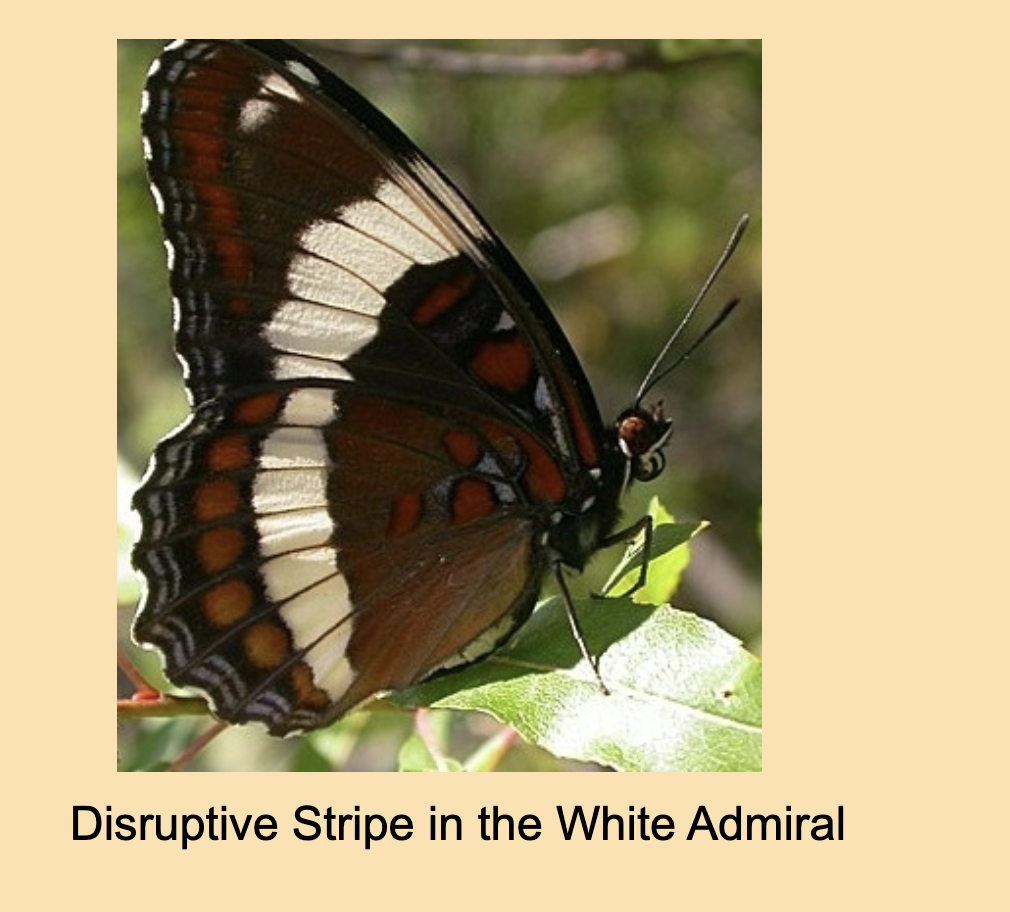
disruptive coloration (butterflies, zebras) to break up outline of butterfly to make it harder to catch
removal of clues of ones presence (egg shell removal, petiole cutting, feces removal, cryptic begging calls that are hard to locate)
cryptic toad
blends in with rocks, primary defense
peppered moths
match background primary defense

grasshoppers experiment

being in the right place matters, if your green green background, brown against brown background
how does a grasshopper know what color it is, they look at their front legs and what they are standing on
concealment vs. conspicuousness

if your not edible want to make that clear and have a clear outline
white admiral disruptive stripes
why do zebras have stripes?
breaks up the horse outline from biting flies who can spread deadly diseases
tingergens eggshell experiment
took gulls eggs and put them in different locations from broken eggshells

broken eggshells closer to next increased predation risk and was a cue to crows to look for nest
ballestic defication in skipper caterpillars
GO BACK AND LOOK IT UP
anti predator modification of chick begging calls
the ones that nest in the trees have lower frequencies than ones on the ground who have more confusing calls
. disperse widely
temporal avoidance: nocturnal animals generally, desert cicada, defensive conspiciousness FINISH
desert cicada sweats!
example of temporal avoidance
dont start calling until its 105 F because when 104 F the wasps go home
they sweat and have pores that evaporate which allows them to stay cool
defensive conspicuousness 3 types
aposematism (warning colors, displays, sounds, scents)
mullarian mimicry (protected model and mimic aka two dangerous species)
if everyone looks the same then only need to have one bad experience and all others are protected
batesian mimicry (protected model and vulnerable mimic aka non dangerous mimcing dangerous)
bad experience with posionous species keeps you safe
aposematic example
mullarian mimicry: blister beetles that mimic monarchs bc both are poisionous
mutillid wasp
they dont fly but bite and sting which is really bad, white and reddish orange like monarch and the blister beetles
spotted skunk
does handstand to show that its gonna get sprayed aposmatic mimicry
heliconious butterflies
they feed on poisonous plants as caterpillars
experiment with heliconius butterflies

when you paint them black they got eaten more to show that the contrast colors do work
upland melanic mimics
only one of the types of butterflies is posiounous the rest arent
monarch and viceroy
both are posionous, mullarian mimics NOT batesian, make their own poision rather than from caterpillar poison (in our part of the world viceroys are actually more poisonous than monarchs)
wasp mimic
hoverfly, hornet moth, wasp beetle all look like wasps
king snake
batesian

has popped up a couple times in evolution through convergent evolution
secondary defenses
once attack has begun
caution/vigilence (stickleback, dugongs)
pursuit deterrence signals
escape behavior: speed, “protean” behavior (show unpredictable behaviors so they dont learn how to catch you), refuges (disappear)
physical/chemical defenses
startle displays (eyespots, hisses)
misdirection behavior (false eyes, detachable body parts, deception displays)
Interspecific defenses
exploitation (monarchs, hedgehogs)
mixed flocks? (baboons good eyesight and zebras good smell)
ants and other insects (acacia trees dont get fed on, and plant sucking insects which give ants access to food and ants protect plant from other predators)
why do thompsons gazelles stot?
pursuit deterrence signal, cheetah usually gives up with stotting but doesnt when it doesnt (they only stot when cheetah is far away)
anolis lizard push ups
lizards do push ups to show how fit they are to predators
pronghorn antelope facts
second fastest of all land animals (40 mph for a long time)
have an insane VO2 max, 7x the aerobic capacity known for most runners, nothing can catch a running pronghorn
why are pronghorns overengineered?
much faster than they need to be which is evolutionarily disadvantageous
they are one of the longest-surviving current mammal species
there used to be a north american cheetah, so needed it then and havent deevolved it yet
most animals have a 2:1 overcapacity in skills, pronghorns have 7x