USMLE Preclinical Review: Cardiovascular, Pharmacology, Embryology, and Behavioral Science
 Call Kai
 Learn
 Practice Test
 Spaced Repetition
 Match
 Flashcards
 Knowt Play
1/90

Earn XP
Description and Tags
Comprehensive vocabulary flashcards covering cardiovascular physiology, pharmacology, embryology, autonomic reflexes, endocrine signaling, psychiatric disorders, and cognitive assessment.
91 Terms

Point B on Left Ventricular Pressure Tracing
The point marking aortic valve opening, which occurs at the end of isovolumetric contraction when left ventricular pressure exceeds aortic diastolic pressure (~80mmHg); this valve is affected in aortic stenosis.
Nitrate-Induced Reflex Tachycardia
A compensatory sympathetic nervous system activation triggered by venodilation and decreased preload, which reduces cardiac output and leads to increased heart rate and contractility, thereby increasing myocardial oxygen demand.

Left Ventricular Myocardial Blood Flow Curve
A tissue perfusion pattern characterized by a sharp drop in blood flow during ventricular systole due to extravascular compression by contracting myocardium, followed by maximum perfusion during ventricular diastole.
Right Ventricular Myocardial Infarction
An acute ischemic event typically resulting from thrombotic occlusion of the right coronary artery, characterized clinically by hypotension, distended jugular veins, and clear lung fields with isolated right ventricular contractile dysfunction.
Stroke Volume (SV)
The volume of blood ejected by the ventricle during one contraction, calculated as end-diastolic volume minus end-systolic volume (SV=EDV−ESV).
Ejection Fraction (EF)
The percentage of blood pumped out of the ventricle with each beat, calculated as stroke volume divided by end-diastolic volume (EF=EDVSV).
Monday Disease
A clinical phenomenon seen in nitroglycerin manufacturing workers who develop nitrate tolerance over the workweek, lose tolerance over the weekend, and experience prominent vasodilation, tachycardia, dizziness, and headache ('Monday morning headache') upon re-exposure on Monday.
Dilated Cardiomyopathy Hemodynamics
A hemodynamic state resulting from impaired myocardial contractility, presenting on cardiac function curves as a downward shift of the cardiac output curve and an elevated right atrial pressure and end-diastolic volume.
First Aortic Arch
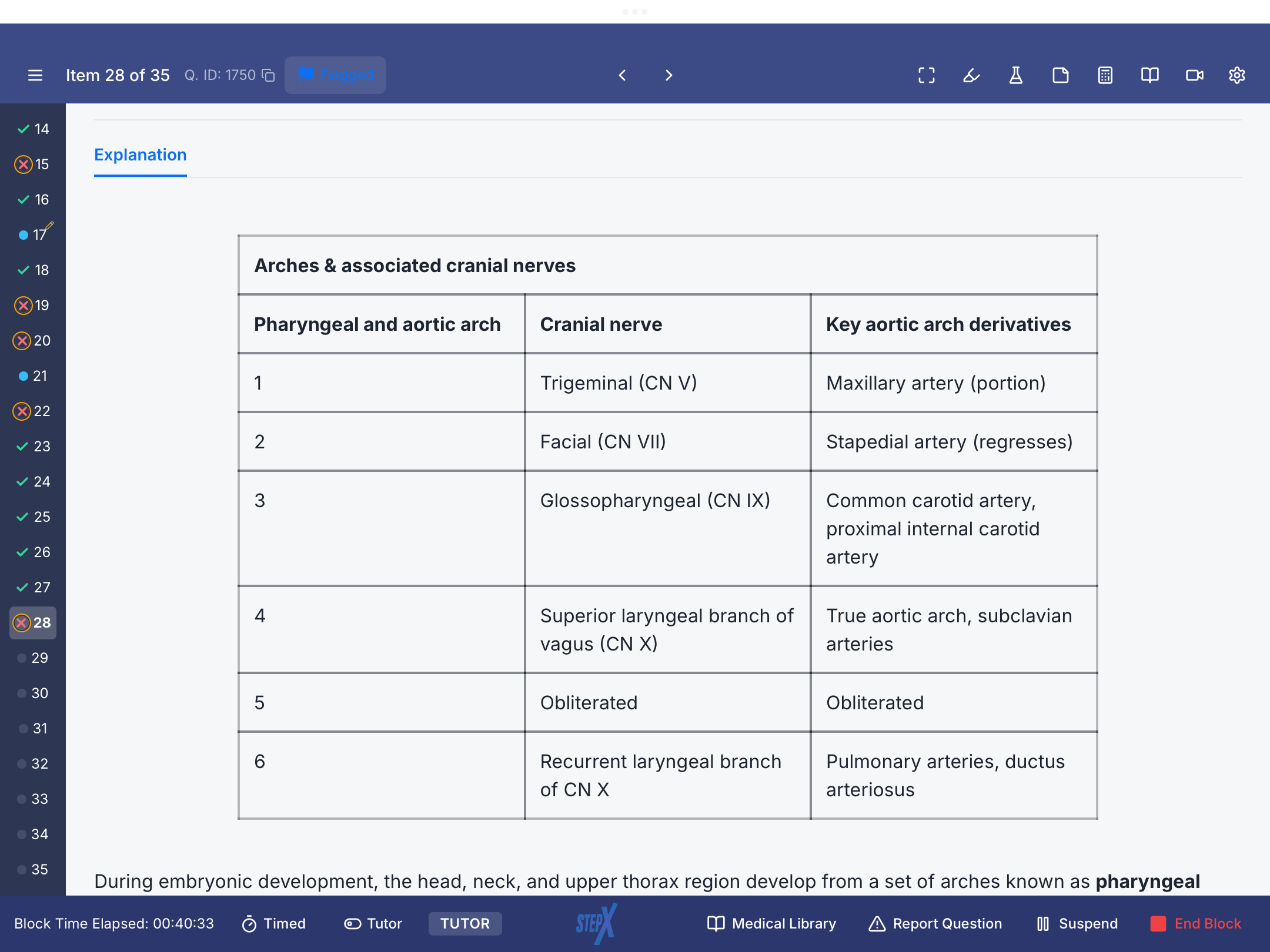
An embryonic pharyngeal arch vascular derivative associated with the trigeminal nerve (CN V) that develops into a portion of the maxillary artery.
Second Aortic Arch
An embryonic vascular arch associated with the facial nerve (CN VII) that gives rise to the hyoid artery and the stapedial artery (which later regresses).
Third Aortic Arch
An embryonic vascular arch associated with the glossopharyngeal nerve (CN IX) that develops into the common carotid artery and the proximal internal carotid artery.
Fourth Aortic Arch
An embryonic arch associated with the superior laryngeal branch of the vagus nerve (CN X) that develops into the true aortic arch on the left and the proximal right subclavian artery on the right.
Sixth Aortic Arch
An embryonic vascular arch associated with the recurrent laryngeal branch of the vagus nerve (CN X) that develops into the proximal pulmonary arteries and, on the left, the ductus arteriosus.
Truncus Arteriosus
A primitive heart tube structure present at 22 days of embryogenesis that gives rise to the aorta and the pulmonary artery.
Bulbus Cordis
A segment of the embryonic primitive heart tube that gives rise to the smooth portions of the left and right ventricles (aortic vestibule and conus arteriosus).
Primitive Ventricle
The embryonic heart chamber that gives rise to the trabeculated portions of both the left and right ventricles.
Primitive Atrium
An embryonic division of the developing heart tube that gives rise to the trabeculated parts of the right and left atria.
Sinus Venosus
The caudal inflow segment of the primitive embryonic heart tube that develops into the smooth part of the right atrium and the coronary sinus.
Hypertrophic Cardiomyopathy (Morphologic Profile)
A primary myocardial disorder characterized by asymmetric septal thickening, a decreased ventricular cavity size, preserved contractile function, and impaired diastolic function.
Restrictive Cardiomyopathy (Morphologic Profile)
A cardiomyopathy characterized by normal or increased ventricular wall thickness, normal or decreased ventricular cavity size, preserved contractile function, and marked impairment of diastolic filling.
Cardiac Conduction Velocity Hierarchy
The sequence of electrical impulse propagation speed through myocardial tissues, proceeding from fastest to slowest as: Purkinje system > Atrial muscle > Ventricular muscle > AV node (mnemonic: 'Park At Venture Avenue').
Starling Equation for Capillary Fluid Flow
The biophysical formula governing transcapillary fluid movement: Flow=NP×Kf, where net pressure is defined by NP=(Pc−Pi)+(Πi−Πc).
Capillary Filtration Coefficient (Kf)
The capillary wall water permeability and surface area constant, which increases during tissue injury from toxins, infections, or burns, facilitating edema formation.
Total Peripheral Resistance (TPR) Formula
The hemodynamic formula representing systemic vascular resistance: TPR=COΔP=COMAP−RAP, where MAP is mean arterial pressure, RAP is right atrial pressure, and CO is cardiac output.
Carotid Sinus Massage
A clinical maneuver that increases stretch and perceived pressure at the carotid baroreceptors, increasing afferent firing to the solitary nucleus and leading to reflexive decreases in heart rate and blood pressure.
Carotid Sinus Occlusion
A procedure that decreases stretch and perceived blood pressure at the carotid sinus, leading to reduced afferent baroreceptor discharge and a reflexive increase in sympathetic tone, heart rate, and blood pressure.
Transection of Glossopharyngeal Nerve (CN IX)
Surgical interruption of the afferent baroreceptor pathway from the carotid sinus, which mimics severe hypotension and results in reflex elevation of both heart rate and blood pressure.
Statins
Lipid-lowering drugs that inhibit HMG-CoA reductase, producing significant reductions in LDL (↓↓) and triglycerides (↓); major adverse effects include hepatotoxicity and muscle toxicity.
Ezetimibe
A lipid-lowering agent that inhibits intestinal cholesterol absorption, lowering circulating LDL; carries an increased risk of hepatotoxicity when administered concurrently with statins.
Bile Acid Sequestrants
Lipid-lowering agents that bind and prevent the reabsorption of bile acids in the intestine to decrease LDL; side effects include nausea, bloating, cramping, and impaired absorption of drugs and fat-soluble vitamins.
Niacin
A lipid-lowering agent that decreases fatty acid release, VLDL synthesis, and HDL clearance, leading to marked increases in HDL (↑↑) and reductions in LDL; adverse effects include facial flushing, pruritus, hepatotoxicity, and hyperuricemia/gout.
Fibrates
Lipid-lowering medications that activate PPAR-α and decrease VLDL synthesis, producing marked decreases in serum triglycerides (↓↓) and moderate increases in HDL; adverse effects include muscle toxicity and gallstones.
Fish Oil / Omega-3 Fatty Acids
Lipid-modifying supplements that decrease VLDL synthesis and apolipoprotein B synthesis, primarily lowering triglycerides and elevating HDL, with a fishy taste as a common side effect.
Direct Effects of Growth Hormone
Physiological actions directly mediated by growth hormone itself rather than IGF-1, specifically consisting of decreased cellular glucose uptake and stimulation of lipolysis.
Indirect Effects of Growth Hormone
Somatic and growth-promoting actions of growth hormone mediated downstream via insulin-like growth factor 1 (IGF-1), including linear bone growth, increased muscle mass, and organomegaly.
cGMP Second Messenger Pathway
An intracellular signaling cascade used by vasodilators including atrial natriuretic peptide (ANP), brain natriuretic peptide (BNP), and nitric oxide (NO).
JAK/STAT Pathway
A non-receptor tyrosine kinase signaling cascade employed by cytokines, bone marrow hematopoietins, prolactin, and growth hormone.
Concentration (Mental Status Examination)
A cognitive domain clinically evaluated by having the patient recite the months of the year backwards or perform serial subtractions.
Executive Function (Mental Status Examination)
A high-level cognitive domain assessed clinically by instructing the patient to draw a clock face displaying a specifically requested time.
Visual-Spatial Testing
A cognitive assessment task that evaluates parietal lobe function by instructing the patient to copy overlapping, intersecting pentagons.
Permissiveness
A pharmacologic principle in which a hormone exerts no direct biological effect on its own but must be present to allow another agent to exert its full maximal effect (e.g., cortisol enabling norepinephrine's vasoconstrictive effect).
FDA-Approved Pharmacotherapies for Alcohol Use Disorder
A group of three medications approved to reduce the risk of relapse in alcohol dependence: disulfiram (Antabuse), naltrexone, and acamprosate.
Opioid Withdrawal Syndrome
A substance withdrawal state marked by nausea, vomiting, abdominal cramping, diarrhea, and muscle aches, with physical exam findings of mydriasis, yawning, piloerection, lacrimation, and hyperactive bowel sounds.
Stimulant Withdrawal ('Crash')
A withdrawal syndrome following discontinuation of cocaine or amphetamines, presenting with hypersomnia, increased appetite, profound psychomotor retardation, and severe depression without focal physical exam abnormalities.
Dipeptidyl Peptidase-4 (DPP-4) Inhibitors
Oral antidiabetic agents that prolong endogenous incretin (GLP-1 and GIP) activity, thereby enhancing glucose-dependent insulin secretion and lowering glucagon levels in type 2 diabetes mellitus.
Clanging
A thought and speech disturbance in psychiatric disorders where word association is driven by rhyming and phonetic similarities rather than logical meaning (e.g., 'The cow said how he had to bow').
Perseveration
A symptom of cognitive or thought dysfunction characterized by repeating words, phrases, or ideas persistently past the point of context or utility.
Word Salad
A severe form of disorganized speech composed of an incomprehensible and chaotic string of words lacking semantic meaning and syntax.

Diabetic Cataract Polyol Pathway
A metabolic sequence wherein excess glucose is converted to sorbitol by aldose reductase (consuming NADPH and promoting oxidative stress), and sorbitol is slowly converted to fructose by sorbitol dehydrogenase, causing sorbitol accumulation, osmotic injury, and lens opacification.
Favorable Prognostic Factors in Schizophrenia
Clinical characteristics associated with improved disease course in schizophrenia, including older age of onset, female sex, acute onset with an identifiable precipitant, predominantly positive symptoms, no family history of psychosis, and short duration of untreated symptoms.
Oppositional Defiant Disorder (ODD)
A disruptive childhood behavioral disorder characterized by a recurrent pattern of irritable mood, argumentative or defiant behavior, and vindictiveness toward authority figures, without violating the basic rights of others.
Conduct Disorder
A severe pediatric behavioral disorder characterized by a repetitive pattern of violating basic social norms and rights of others, manifesting as aggression toward animals, property destruction, theft, or deceit.
Disruptive Mood Dysregulation Disorder (DMDD)
A childhood mood disorder marked by severe, persistent irritability between episodes along with frequent, temper tantrums that are grossly disproportionate in intensity or duration to the situation.
Tissue-Specific Metabolic Effects of Insulin
The cellular responses triggered by insulin binding its tyrosine kinase receptor, leading to inhibition of hepatic gluconeogenesis and stimulation of glucose uptake in skeletal muscle and adipose tissue.
Left Ventricular Pressure Tracing: Point B
The exact point corresponding to aortic valve opening, where left ventricular pressure rises above aortic diastolic pressure (approximately 80mmHg), initiating rapid ventricular ejection and volume decline.
Nitrate-Induced Reflex Tachycardia
A compensatory activation of the sympathetic nervous system caused by a pronounced reduction in preload and cardiac output, leading to increased heart rate and contractility that undesirably increases myocardial O2 demand.
Left Ventricular Myocardial Blood Flow Curve
A tissue perfusion pattern characterized by a dramatic reduction in blood flow during ventricular systole (due to extravascular mechanical compression of subendocardial microvessels by high intraventricular pressure) followed by peak perfusion during diastole.
Isolated Right Ventricular Infarction
Myocardial necrosis confined strictly to the right ventricle without left ventricular involvement, occurring after proximal occlusion of the right coronary artery in individuals with left coronary artery dominance.
Stroke Volume and Ejection Fraction Formulas
Cardiovascular metrics where Stroke Volume is defined as SV=End-diastolic volume (EDV)−End-systolic volume (ESV), and Ejection Fraction is defined as EF=EDVSV.

Monday Disease
Industrial toxicity in workers manufacturing nitroglycerin (NTG); chronic weekday exposure produces pharmacologic tolerance, but weekend abstinence leads to loss of tolerance, causing Monday re-exposure to trigger severe vasodilation, tachycardia, dizziness, and headache.

Dilated Cardiomyopathy
A form of nonvalvular systolic heart failure characterized by normal ventricular wall thickness, increased ventricular cavity size, and generalized hypokinesis, commonly following viral myocarditis.
Sixth Aortic Arch Derivatives
Embryonic vascular structures that form the proximal pulmonary arteries and, on the left side, the ductus arteriosus, which can remain patent postnatally as patent ductus arteriosus (PDA).

Third and Fourth Aortic Arch Derivatives
The third arch derives the common carotid artery and proximal internal carotid artery; the fourth arch derives the aortic arch on the left and the proximal right subclavian artery on the right.
Pharyngeal Arch Cranial Nerve Pairings
Embryologic head and neck structures paired with specific cranial nerves: Arch 1 with CN V, Arch 2 with CN VII, Arch 3 with CN IX, Arch 4 with the superior laryngeal branch of CN X, and Arch 6 with the recurrent laryngeal branch of CN X.

Primitive Heart Tube (22 Days)
The early embryonic heart composed of the truncus arteriosus (aorta, pulmonary artery), bulbus cordis (smooth LV/RV), primitive ventricle (trabeculated LV/RV), primitive atrium (trabeculated atria), and sinus venosus (smooth right atrium, coronary sinus).
Hypertrophic Cardiomyopathy
A primary nonvalvular cardiomyopathy characterized morphologically by asymmetric septal thickening, decreased ventricular cavity size, normal contractile function, and impaired diastolic filling.
Restrictive Cardiomyopathy
A nonvalvular cardiomyopathy characterized by normal or increased ventricular wall thickness, decreased or normal cavity size, preserved contractile function, and markedly impaired diastolic compliance.
Cardiac Conduction Velocity Hierarchy
The relative speed of electrical transmission across cardiac tissues arranged from fastest to slowest: Purkinje system > Atrial muscle > Ventricular muscle > AV node (mnemonic: "Park At Venture Avenue").
Microvascular Fluid Flow (Starling Forces)
The formula governing fluid transudation across capillaries: Flow=(NP)Kf=[(Pc−Pi)+(Πi−Πc)]Kf, where edema results from increased Pc, decreased Πc, increased Kf, or increased Πi.

Total Peripheral Resistance (TPR) Formula
The systemic vascular resistance calculated from the systemic pressure gradient divided by cardiac output: TPR=COΔP=COMAP−RAP.

Carotid Sinus Massage
A physical maneuver that increases stretch on the carotid sinus baroreceptor to simulate elevated arterial pressure (↑BP), transmitting afferent impulses via CN IX to cause reflex decreases in heart rate and blood pressure (↓HR,↓BP).
Carotid Sinus Nerve Severance (CN IX)
Transection of glossopharyngeal afferent fibers from carotid baroreceptors, eliminating baseline inhibitory firing so the brainstem perceives low blood pressure (↓BP), triggering sympathetic outflow that increases heart rate and blood pressure (↑HR,↑BP).
Statins
Lipid-lowering pharmacologic agents that inhibit HMG-CoA reductase to markedly lower LDL (↓↓LDL) and decrease triglycerides; significant adverse effects include hepatotoxicity and muscle toxicity.
Niacin
A lipid-modifying agent that decreases fatty acid release, VLDL synthesis, and HDL clearance to strongly raise HDL (↑↑HDL) and lower LDL; associated with flushing, pruritus, hepatotoxicity, and hyperuricemia/gout.
Fibrates
Antihyperlipidemic drugs that activate PPAR-alpha to suppress VLDL synthesis and dramatically lower triglycerides (↓↓Triglycerides); key adverse effects include muscle toxicity and gallstones.
Bile Acid Sequestrants
Lipid-lowering agents that prevent reabsorption of bile acids in the intestine to lower LDL; common adverse effects include nausea, bloating, cramping, and impaired absorption of drugs and fat-soluble vitamins.

Growth Hormone Direct vs. Indirect Effects
Endocrine pathways where GH acts directly to decrease cellular glucose uptake and promote lipolysis, but acts indirectly via insulin-like growth factor 1 (IGF-1) to promote linear bone growth, muscle mass expansion, and organomegaly.
JAK/STAT Second Messenger Pathway
A non-receptor tyrosine kinase signaling cascade utilized by prolactin, growth hormone (GH), cytokines, and hematopoietic (bone marrow) factors.


Cognitive Testing: Concentration Domain
A bedside mental status examination element assessed clinically by having the patient recite the months of the year backwards.
Cognitive Testing: Executive Function Domain
A mental status examination element testing complex organization, abstraction, and planning by instructing the patient to draw a clock face set to a specifically requested time.
Permissiveness
A pharmacologic principle in which a substance (such as cortisol) has no direct intrinsic biological effect when given alone, but is required to enable another compound (such as norepinephrine) to produce its maximal vascular response.
FDA-Approved Alcoholism Medications
Three pharmaceutical agents approved to reduce the risk of relapse in alcohol use disorder: Disulfiram (Antabuse), Naltrexone, and Acamprosate.
Opioid Withdrawal Syndrome
Substance withdrawal characterized by nausea, vomiting, abdominal cramping, diarrhea, and muscle aches, accompanied on physical exam by dilated pupils, yawning, piloerection, lacrimation, and hyperactive bowel sounds.
Stimulant Withdrawal
Substance withdrawal seen after cessation of cocaine or amphetamines, presenting with increased appetite, hypersomnia, intense psychomotor retardation, and severe depression ('crash') without significant physical examination abnormalities.
Dipeptidyl Peptidase-4 (DPP-4) Inhibitors
Oral antidiabetic medications that enhance endogenous incretins (GLP-1 and GIP) to improve glycemic control by promoting increased glucose-dependent insulin release.
Clanging
A form of disorganized thought in which spoken words are linked by sound and rhyming associations rather than logical syntax or coherent meaning (e.g., 'The cow said how he had to bow').
Polyol Pathway
A metabolic cascade in which aldose reductase rapidly reduces glucose to sorbitol using NADPH (causing NADPH depletion and oxidative stress), while sorbitol dehydrogenase slowly oxidizes sorbitol to fructose, causing sorbitol accumulation, osmotic injury, and diabetic cataracts.
Good Prognostic Factors in Schizophrenia
Clinical factors associated with favorable long-term morbidity in schizophrenia, including later age of onset, female sex, acute onset with a clear precipitant, predominantly positive symptoms, and absence of a family history of psychosis.
Oppositional Defiant Disorder (ODD)
A pediatric behavioral disorder marked by an enduring pattern of anger, argumentative interactions, and defiance toward authority figures, distinct from behaviors involving physical cruelty or violation of major societal laws.
Conduct Disorder
A severe pediatric behavioral disorder characterized by repetitive actions that violate major societal norms and the rights of others, specifically featuring property destruction and aggression toward animals or people.
Insulin Receptor Tissue Effects
Receptor tyrosine kinase-mediated metabolic actions that suppress hepatic gluconeogenesis in the liver and trigger glucose transporter translocation and glucose uptake in skeletal muscle and adipose tissue.