Neurons
 Call Kai
 Learn
 Practice Test
 Spaced Repetition
 Match
 Flashcards
 Knowt Play
1/67

There's no tags or description
Looks like no tags are added yet.
68 Terms
____ are cell types of the nervou system
neurons
what establish the resting membrane potential
ion pumps and ion channels
what causes changes in voltage across a membrane
opening and closing of ion channels
changes in ____ induce signaling between neurons
voltage
what are two ways signaling can be achieved
direct passing of electrical current
intermediate chemically mediated step
what is the purpose of glia for neurons
provide essential support, protection, and maintenance for neurons.
are glia electrically active
NO
glia have a ____ membrane potential
negative
what are four types of glia cells
astrocytes
oligodendrocytes and Schwann cells
microglia
ependyma cells
what is the purpose of astrocytes
essential element of the blood brain barrier
what is the importance of the blood-brain barrier
limits compounds that can access the brain (protects from infection) but also limits therapeutic drug delivery to the brain
what are five ways to overcome the blood-brain barrier
small molecule optimization (modify properties to improve passive diffusion)
direct delivery (bypass BBB via olfactory delivery)
lipid carriers (encapsulate and deliver drugs)
receptor and antibody shuttles (antibodies that bind to transport systems)
focused ultrasound
which type of glia wrap many layers of membranes around axons
Schwann cells and oligodendrocytes
what does multiple sclerosis attack
myelin of neuron
what is the consequence of multiple sclerosis on neurons
electrical nerve impulses travel slowly, become scrambled, or stop completely,
what characterizes multiple sclerosis
scarring in the white matter tracts of brain
purpose of microglia
brain and spinal cord's primary defense and maintenance crew
which glia are considered phagocytotic cells
Microglia
what are the main signaling units of the nervous system
neurons
what are the 5 externally recognizable parts of neurons
soma (cell body)
axon
dendrites
presynaptic release sites
postsynaptic targets
where is most of a neuron’s organelles found in
soma (cell body)
what are the purpose of dendrites
highly branched extensions that receive signals from other neurons
what is the axon
longer extension that conducts electrical impulses away from the cell body
what are synapses
specialized junction that allows a neuron to pass an electrical or chemical signal to another neuron
what are the two kinds of synapses
electrical synapses
chemical synapses
what are dendrodendritic synapses
specialized connections where the dendrites of two different neurons communicate directly with each other
axon hillock
the cone-shaped region of a neuron’s cell body (soma) where it tapers and connects to the axon

what are held in the axon hillock
voltage gated sodium channels
action potential originates here
what is neuro-electricity
the electrical phenomena, voltages, and signals generated and used by the nervous system
what ion diffuses inside inside the cytoplasm and which diffuses out to the extracellular fluid
in - sodium
out - potassium
what is the membrane equilibrium potential of sodium? potassium?
sodium = + 60mv
potassium = - 90 mv
what determines the membrane potential inside and outside a cell
the ratio of ion concentrations inside vs out and not the absolute concentration of ions
is the resting membrane more permeable to sodium or potassium
potassium
how is the resting balance maintain around -70 mv
resting membrane is much more permeable to potassium than to sodium = potassium's outward diffusion dominates, keeping the resting membrane potential close to −70 mV rather than staying down at -90 mv (potassium resting potential)
compare the resting leak of potassium and sodium in a cell
abundant potassium leaks
sparse sodium leaks
resting membrane potentials are _____ (negative or positive)
negative
why does the membrane potential of potassium significantly outweigh sodium
the cell membrane has far more open potassium leak channels than sodium channels at rest
what would happen if the permeability to sodium were suddenly increase
sodium ions to rush into the cell, leading to depolarization of the membrane potential (making the inside of the cell more positive).
what are the stages of an action potential
resting stage
rising stage (depolarization)
peak
falling phase (repolarization)
Hyperpolarization
return to resting stage

what is the threshold potential required to send an action potential
about -55
what happens in the depolarization stage of an action potential
Reaching the threshold causes voltage-gated sodium (Na⁺) channels to open
positive sodium ions rush rapidly into the cell
influx of positive ions drives the membrane potential from its resting state (around −70 mV) up past zero to a peak
what kind of feedback loops are exhibited by action potentials
positive feedback during their rising phase (depolarization)
(Na⁺ ions rush into the cell, making the inside more positive = further depolarizes the membrane = causes even more voltage-gated Na⁺ channels to open)
negative feedback during their falling phase (repolarization)
(K⁺ ions flow out of the cell = removing positive charge = brings the membrane potential back down toward the resting state, often overshooting before stabilizing)
what happens in the repolarization stage of an action potential
The fast voltage-gated sodium channels close and become inactivated, stopping the influx of positive sodium ions
Slower voltage-gated potassium channels open in response to the depolarization
Positively charged potassium ions rush out of the cell down
loss of positive ions from the interior makes the inside of the cell negative again
why does Hyperpolarization happen
Delayed closing of potassium (K⁺) channels as these channels close slowly
how are sodium and potassium channels gated
voltage gated channels
why do membrane potential changes occur
because neurons contain ion channels that open or close in response to stimuli
how is energy stored in electrochemical gradients harvested
selectively altering membrane permeability to ions not at their electrochemical equilibrium
why can electrical signaling be fast
because ion channels can open and close quickly
why can’t you have consecutive action potentials across a neuron
cell goes through a phase of hyperpolarization where the inside of the cell becomes more negative than its normal resting state which would need a larger stimuli to start another action potential
what prevents action potentials from traveling backwards
, which is caused by the temporary inactivation of voltage-gated sodium (Na⁺) channels immediately behind the moving signal.
compare electrical and chemical synpases
An electrical synapse passes ionic current directly through physical gap junctions
chemical synapse converts electrical signals into chemical neurotransmitters to cross a fluid-filled gap
what kind channels does electrical signals travel down in an electrical synapses
channel made from connexons
how do you make a connexon
6 connexins
what does 1 connexon make
1 hemichannel
what does 2 connexons make
gap junction channel
can electrical synapses be ionotropic or metabotropic or both
NO - is not considered any of these
are chemical synapses ionotropic or metabotropic
can be either
compare ionotropic or metabotropic
ionotropic - ligand-gated ion channels made up of multiple protein subunits (typically three to five) that form a central pore
metabotropic (G-protein-coupled receptors) - single-unit, membrane-bound proteins that do not contain an ion pore
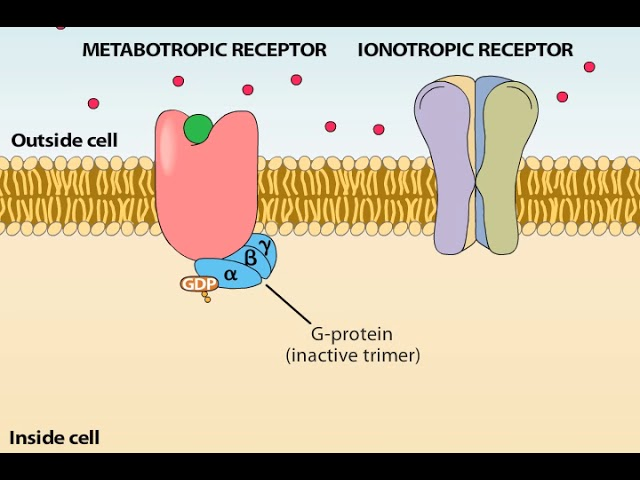
what are ionotropic and metabotropic receptors
the two primary neurotransmitter receptors
where is information transmitted from and where is it received
received - postsynaptic cell
transmitted - presynaptic cell
what are two ways a synaptic terminal of one neuron can pass information across the synapse
direct passage of electrical current via gap junction
chemical messengers (neurotransmitters)
is ionotropic or metabotropic fast? slow?
Ionotropic Receptors - Fast
Metabotropic Receptors - Slow
which type of receptor has an ion channel built into it
ionotropic receptor
how do ionotropic receptors work? Metabotropic Receptors work?
ionotropic receptor
A chemical messenger binds directly to binding site of the receptor.
binding causes an physical conformational change that open channel’s gate.
Ions rush through the pore down their electrochemical gradient.
Metabotropic Receptors
A neurotransmitter binds
triggers shape change that activates G-protein
activated G-protein dissociates and eventually open or close ion channels
why are Metabotropic Receptors slower
due to time needed for ligand to diffuse to receptor AND multiple chemical steps before channel is modified
does a Metabotropic Receptor or Ionotropic receptor last longer
Metabotropic Receptor
does Metabotropic Receptor or Ionotropic receptor modify the excitability of neurons
Metabotropic Receptor
is Metabotropic Receptor or Ionotropic receptor direct? indirect?
Ionotropic receptors use a direct mechanism
Metabotropic receptors use an indirect mechanism