Quantifying Infectious Disease / Methodology (Exam 1)
 Call Kai
 Learn
Learn Practice Test
 Spaced Repetition
 Match
Match Flashcards
 Knowt Play
1/32

There's no tags or description
Looks like no tags are added yet.
Name | Mastery | Learn | Test | Matching | Spaced | Call with Kai | Chat |
|---|
No analytics yet
Send a link to your students to track their progress
33 Terms
Parasites
40% of know species are parasitic
Parasites are unseen biodiversity
capture and dissect
traditional approach to look for parasites under a microscope
- to be effective you have to be thorough
hosts don't always need to be sacrificed
- swabbing frogs
- floating eggs in fecal samples
- dust ruffling
- blood samples
Opportunistic sampling
Majority of sampling
- ex. a dead oarfish washed up in CA and a parisitologically surveyed
small size of parasites can make it hard to distinguish species
Cryptic species
those who are difficult to distinguish morphologically
DNA sequencing
- if you extract DNA from a sample of host tissue you get all DNA present including parasite DNA if host was infected
Polymerase chain reaction (PCR)
- replicate og DNA
- by doing this many many times you can build up a chunk of DNA (essentially doubling)
- good for sequencing but be aware of contamination
- if parasite DNA was present in sample, amplicon will be formed by PCR and will be visible when stained --> assumes test is very sensitive
Sensitivity
proportion of infected individuals that test positive
low sensitivity = many false negatives
Specificity
proportion of uninfected individuals that test negative
low specificity = false positives
Benefits of PCR and Sanger Sequencing Approach:
- Only tiny amounts of parasite DNA/RNA necessary for detection
- Sequence data allows for easier ID than traditional morphology based methods
- Sequence data allows for phylogenetic relationships to be established and potentially population genetic analysis to be conducted
Limitations of PCR & Sanger sequencing approach:
- You still have to extract DNA from the right tissue
- Limited by sequences that already exist for comparison and primer design (to design primers you need a target)
- hard to sequence a large genome with PCR and Sanger Sequencing
Next generation sequencing
- new sequencing approach within the last 15 years
- massive increase in sequencing output (multiple genomes can be sequenced in much shorter amounts of time)
- reduction in cost
- reads are short and difficult to assemble

Next gen sequencing: how it works
- genomic DNA sheared to specific size
- sequence reaction samples are identified after pooling and binded to the flow cell which are ligated to the sheared DNA to make
challenge: whole genome gets broken and it's hard to put back together
- once you get short reads you can map them to your reference genome
Metagenomics
- next gen sequencing has allowed metagenomics
- ID of genes from multiple species in a single DNA sample
- ID is done by comparing sequences to database
Sequence capture
- RNA probes that match the parasite genome are mixed into the DNA sample --> bind to the parasite DNA and host DNA is washed away
- Used to sequence mitochondrial genome of P. falciparum from DNA extracted from teeth from graves from 1st - 2nd centuries CE in Italy
Selective whole genome amplification
- design primers that bind the parasite more often than the host, amplify whole genome with phi29 enzyme
Contamination
- makes it difficult to sequence the genomes of parasites and pathogens particularly those that cannot be cultured in vitro
- for parasites and pathogens the environment is often the host (ex. a liver or a spleen)
Community
Collection of species occurring in the same place at the same time
Assemblage
assemblage of birds or ants
Guild
group of organisms that live in the same place and feed on the same resources
Infracommunity
all parasite species infecting a single host individual
Component community
all parasite species infecting a single host species or population in a given area
compound community
all parasite species infecting all host species in a given area
Ecology
why organisms are distributed the way they are
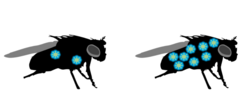
Abundance
number of individuals
Density
number of individuals per unit area of a species or population in a community
Parasitemia / infection density
Mean abundance of a parasite infection intensity is different within individual hosts
Measuring infection intensity/parasitemia:
Microscopy - just count em! (on body or under a microscope)
Quantitative PCR (pathogens) - PCR that every cycle of amplification takes a picture and measures florescence in your products
typically not all individuals in a host population are infected (infected/1 and uninfected/0)
binomial distribution
probability of "success" or infection: 1 or 0
assumptions:
1) hosts are independent samples from the population
2) each host has the same probability of infection
Prevalence
proportion of host individuals infected by a parasite
estimate of the probability of infection
variance
measure of spread of data around the mean
calculated as the average or the squared deviations from the mean
ratio of variance to the mean tells you about the distribution of parasites across host individuals
Poisson distribution
suggests random distribution of parasites among host individuals
Aggregated distribution
distributions of parasitemia (infection intensity) among host individuals where variance > mean
characteristic of macroparasite distributions

Negative binomial distribution
aggregated distributions are modeled using negative binomial distribution --> tells us the probability of a host having some number of parasites given
1) the mean number of parasites per use and
2) an aggregation of parameter k (aggregation parameter)
smaller k = more aggregated
bigger k = less aggregated (as 𝑘 → ∞ the distribution becomes Poisson)