Health policy & finance exam 1
 Call Kai
 Learn
Learn Practice Test
 Spaced Repetition
 Match
Match Flashcards
 Knowt Play
1/123

There's no tags or description
Looks like no tags are added yet.
Name | Mastery | Learn | Test | Matching | Spaced | Call with Kai | Chat |
|---|
No analytics yet
Send a link to your students to track their progress
124 Terms
define public policy
what the government chooses to do or not do
health policy
what the government chooses to do or not do regarding health or the pursuit of health
i.e. government action or inaction concerning health
healthcare policy
part of health policy specifically relating to the financing, organization, and delivery of care
what is the iron triangle of healthcare and what does it represent?
key concept in HEALTH POLICY that highlights the trade-offs in healthcare decisions... its difficult to improve more than one angle without negatively impacting the others
what are the angles of the iron triangle?
cost
quality
access

examples of how the iron triangle works
each angle has identical priorities, expand one and it compromises the other angles
1. high quality, accessible care is going to be EXTREMELY EXPENSIVE
2. accessible and cheap care will likely be low quality
its about finding the balance between cost, quality, and access
what is the paradox of healthcare in the US?
"The United States spends more on health care than any other nation in the world, yet it ranks poorly on nearly every measure of health status."
what is the only health measure we rank in the top third of and why?
life expectancy AFTER age 65 cuz Medicare kicks in girl
what is our national health expenditure?
4.5 trillion (chill vibe)

health expenditures as percent of GDP
1. the US is spending more money on healthcare than comparable nations
2. the amount of money is increasing overtime... an increasingly larger portion of GDP is going to HC overtime

describe healthcare spending in the US
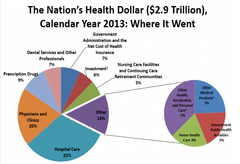
where does the 4.5T go?
1. 50% of our spending goes to hospital care and physician/clinical services
2. ~10% goes to prescription drugs
3. public health activities, nursing care/retirement facilities, dental, medical products, etc. make up the other 40%
how do the U.S. people perceive (self-rate) their health?
U.S. ON TOP!!!! (we ain't)
what explains this health paradox?
1. the pathways to better health do not generally depend on better healthcare
2. even in this instances in which healthcare is important, too many Americans do not receive it, receive it too late, or receive poor-quality care
how much does healthcare contribute to premature death?
10%
what contributes more to premature death than healthcare (>10%)?
1. behavioral patterns: 40%
2. genetic predisposition: 30%
3. social circumstances: 15%
maybe we should think of health policy more broadly than as just healthcare policy
what did the surgeon general suggest is more impactful to health than smoking, drinking, physical inactivity, etc.?
loneliness and lack of social connection which contribute to deaths of despair
perhaps addressing this issue with policy rather than focusing solely on healthcare could improve health.. wink wink
landmark healthcare QUALITY reports from the Institute of Medicine and their foci
1. To Err is Human: how to build a safer HC system and prevent MEDICAL ERRORS
2. Crossing the Quality Chasm: recognizing and identifying ALL (6) shortfalls in quality
what are the 6 attributes of quality care?
1. safety
2. effectiveness
3. patient-centered
4. timely
5. efficient
6. equitable
safe health care
injury-free care, not harming people
effective health care
evidence-based care, matching science to care
ex: if science says this drug improves care, we use it! if science says it dont help, we dont use it!
patient-centered health care
respectful of and responsive to patient preferences, needs, and values
people in control of their own care
timely health care
reduce wait times and especially harmful delays
efficient health care
waste-free care
ex: stop throwing out so much, stop ordering needless tests, and stop wasting ideas
equitable health care
quality does not vary by otherwise unrelated personal characteristics (gender, geography, race, ethnicity, socioeconomics)
Donabedian quality framework
structure influences process which influences OUTCOME!

structure in the Donabedian model
physical and organizational characteristics where healthcare occurs
examples of structural characteristics
1. staffing
2. education/licensure of the workforce
3. the literal built environment: the unit, transportation, and technology used
process in the Donabedian model
focus on the care delivered to patients
examples of process
clinical interventions
1. services
2. diagnoses
3. treatments
4. follow-up care
5. communication
outcome in the Donabedian model
effects of healthcare on the status of patients and populations
example of Donabedian model in action
two hospitals with the exact same sepsis protocol (SAME PROCESS) but different staff ratios and education (DIFFERENT STRUCTURE) yielded different rates of sepsis mortality
yes process influences outcome, but so does structure!!!
what does access to health care mean?
having the timely use of personal health services to achieve the best health outcomes
components of access to healthcare in the US
1. insurance coverage
2. services
3. timeliness
4. workforce
how does insurance coverage affect access?
coverage facilitates entry into the HC system
ex: uninsured people are less likely to receive medical care and more likely to have poor health status
health insurance contributes to what percentage of the 4.5T dollars we have to spend on health?
72%.. (thats a lawt)
uninsured adults vs. insured adults
uninsured adults are more likely to:
1. be worried about their ability to pay medical bills if they get sick or have an accident
2. delay or not get health or dental care due to cost
most adults are ____________________
insured.... thanks in part to Medicare in 60s and Affordable Care Act in 2010... but the percentage of insured has stopped growing in recent years...
how do services affect access?
having a usual source of care is associated with adults receiving recommended screening and prevention services
does being insured affect having a usual source of care?
yes, those that are insured are more likely to have a usual source of care
how does timeliness affect access?
Timeliness = ability to provide healthcare when the need is recognized
cost plays a big role in this... uninsured may delay care even when aware of illness/injury/condition
how does the workforce affect access?
workforce must have capable, qualified, culturally competent providers
what component plays the biggest influence in healthcare access?
insurance
cumulative population by cumulating spending curve
DESCRIBE IT

define asymmetric information
a common issue in healthcare!!! occurs when there is an imbalance in knowledge between the buyer (patient) and the seller (healthcare provider or, really, the insurer)
describe adverse selection
1. those with higher health risks are more likely to purchase insurance
2. healthier individuals opt out of insurance due to high costs
3. the risk pool worsens as a result, causing insurance premiums to rise
adverse selection is a result of...
asymmetric information
occurs when one party to a transaction takes advantage of knowing more than the other party
describe death spiral
the repetition of adverse selection drives more healthy individuals away with each cycle of rising costs, and potentially results in market collapse
what are the key assumptions of a free market/competition?
1. large number of buyers and sellers
2. homogenous products
3. no discrimination
4. perfect knowledge
define large number of buyers and sellers
how is this assumption challenged in HC?
large number of buyers and sellers yields competition... if there was only one buyer or one seller they would dictate price
there are not always a large number of sellers: consider hospital merger (ex: UPMC) that decr competition
define homogenous products
how is this assumption challenged in HC?
products/goods being sold are consistent no matter what seller you go to... this allows the buyer to purchase based on other variables (such as price)
HC products are often not homogenous, ex: there are many different ways to do a simple appendectomy!
define no discrimination
how is this assumption challenged in HC?
seller offers the same price to everyone!
there is significant price discrimination in HC and in the real world... this is an intentional deviation bc who doesnt love a coupon/discount?
define perfect knowledge
how is this assumption challenged in HC?
customer's have an understanding of the product they are buying and can thus make educated decisions on what product to buy from what seller
pts often lack perfect knowledge about their health and healthcare products/services
what is the purpose of the "three-legged stool" model?
the Affordable Care Act uses a 3-legged stool model to:
1. expand coverage
2. control costs
3. prevent adverse selection and death spirals
list the "legs" of the 3-legged stool
guaranteed issue
individual mandate
tax subsidies
guaranteed issue
federal requirement that a healthcare insurer allow individuals to enroll in the health plan regardless of pre-existing conditions
ex: ACA set federal minimum standards including protections for pre-existing conditions
individual mandate
requirement that individuals get health insurance or pay a tax penalty to the federal government
ex: ACA mandates getting health insurance but makes it easier by forcing employers to offer insurance and allowing young adults to stay on parents' plan until 26 (adult dependent coverage)
What does the ACA individual mandate directly address?
Adverse selection and death spiral
tax subsidies
help make health insurance affordable!
ex: ACA expanded Medicaid, set limits on monthly premiums, and caps on out-of-pocket spending
how does the three-legged stool relate to adverse selection?
The stool expands coverage (by force) to stabilize/strengthen the insurance market and counter adverse selection
List the provisions est. by the ACA to expand coverage and stabilize the market (I've already kind of gone over them...)
1. Adult dependent coverage
2. Limited employer mandate
3. Medicaid expansion
4. Insurance exchanges with subsidies
Describe Medicaid expansion please
Medicaid/CHIP entitlement extended to 133% of poverty line
describe healthcare exchanges
online marketplaces for purchasing insurance plans
ex: "pennie" = PA's health insurance exchange (states are req to have an exchange)
what do the federal minimum standards apply to...?
all insurance plans on the exchanges
how do healthcare exchanges relate to the free market mechanisms?
1. healthcare exchanges group insurance plans by cost and coverage organized in benefit TIERS
this increases HOMOGENEITY (homogenous product) since the buyer knows that all plans in the bronze tier, though distinct from the silver tier, will have similar characteristics
2. exchanges also must have plans that meet federal minimum standards... which increases both homogeneity and the customer's perfect knowledge of the product
So, the customer knows, regardless of which plan they get on the exchange, that it will come with the essential health benefits
what is the biggest employer in the U.S.?
healthcare
U.S. practicing physicians per 1000 population vs. other comparable nations
we have LESS practicing physicians by population compared to other nations
U.S. = 2.6 physicians per 1000 people
OECD38 = 3.6 physicians per 1000
U.S. practicing nurses per 1000 population vs. other comparable nations
we have MORE practicing nurses by population compared to other nations
U.S. = 12.0
OECD38 = 8.8
providers
health professionals responsible for:
1. evaluating
2. diagnosing
3. prescribing
examples of providers
1. physicians
2. advanced practice providers
3. psychologists
providers ______________________ for services
directly bill
nurse
1. RN (BSN/ADN/diploma) or LPN
2. paid hourly, do NOT directly bill for services
remuneration of doctors in U.S. vs. comparable countries
U.S. physicians: $252,480... 4.3x avg wage
U.S. surgeons (specialists): $294,520... 5.1x avg wage
the remuneration of doctors in U.S. is typically more than in comparable countries... in general, providers in all countries are making more than the avg wage
remuneration of nurses in U.S. vs. comparable countries
1.2x avg wage... for both U.S. and OECD32
note how directly billing for services HELPSSSS incr moneyyy
allied health professionals
someone who has received a certificate; associate's; bachelor's or master's degree; doctoral-level preparation; or post-baccalaureate training in a science related to health care and has responsibility for the delivery of health or related services :I
—complement the work of physician's, APPs, and nurses
can allied health professionals bill for their services???
some can
describe low skill/entry-level healthcare workers
1. do not require bachelor's degree
2. fastest growing sector of US employment
3. minority-female dominated
4. often low-paying jobs
5. often poor career ladder
examples of EHC jobs
1. community health workers
2. behavioral health peer support specialists
3. long-term care direct care workers (home care and residential care)
4. medical/dental/nursing assistants
5. licensed vocational nurses
6. respiratory therapist assistants
advanced practice providers
a GENERAL TITLE that describes individuals who have completed the advanced education and training that qualifies them to:
1. manage medical problems
2. prescribe and manage treatments
what is the minimum degree required for licensure for APPs?
masters
examples of APPs
1. physician assistants
2. nurse practitioners
describe physician's assistants
1. MASTERS
2. medical model
3. 2,000 clinical hours (MORE)
4. trained as medical GENERALISTS
5. derive SOP from physician supervisor
6. often in "PROCEDURAL" specialties
nurse practitioners
1. MASTER'S or DNP
2. nursing model
3. 1,000 clinical hours (less)
4. trained in a chosen health POPULATION FOCUS area: family, adult/gero, peds, women's health, or mental health
5. derive SOP from their own license and certification, working for full practice authority
6. often in "MEDICAL" specialties
inpatient healthcare settings
hospitals
describe inpatient healthcare
1. skilled nursing care
2. overnight care
3. tend to employ nurses, allied health workers, EHCWs, and APPs
4. physicians often not employed by the hospital
5. hospitals bill separately from providers' other services
outpatient (ambulatory care) healthcare settings
1. primary care offices
2. outpatient surgical centers
3. emergency departments
4. "convenience care"
—retail clinics
—urgent care
describe outpatient healthcare
generally BRIEF encounters w limited exam/testing
trends in provision of care (inpatient vs. outpatient)
there has been a steady shift towards outpatient care over inpatient care largely due to increase in outpatient ambulatory surgery centers
does this mean hospitals will eventually fade into the past?
no. hospital care is still significant, bringing in $1.27T in 2020... this trend just means that people who dont necessarily need inpatient tx are going to outpatient settings (good) and hospitals are being filled with those who tend to be very sick (good)
compare and contrast long-term care w other inpatient and outpatient settings
long-term care = CUSTODIAL care that is provided in a VARIETY OF SETTINGS (home, facilities, special care units)
inpatient/outpatient care = MEDICAL care that is provided outside the home in either a hospital or clinic/ED
what is custodial care?
maintain function or accommodate for decreased function
e.g. we are helping with activities of daily living, not diagnosing and treating illness
describe moral hazard
the incentive to take risks when an individual is protected from the consequences
ex: those who are uninsured are less likely to risk their health
what is insurance?
guarantee against possible loss in exchange for a premium
—risk is pooled!
describe pooled risk
assumes that if many low-risk people and a few high-risk people all pay premiums to the insurance system over many years, then there will be a pot of money that can be used to pay for major illnesses when they occur
What two things directly impact the risk pool?
Adverse selection and death spiral OF COURSE
what does "health insurance is HEALTHCARE insurance" mean?
health insurance guarantees against possible FINANCIAL loss related to healthcare, but NOT against loss of HEALTH
how do insurance companies control prices?
networks
what are networks?
a list of doctors, other health care providers, and hospitals that a plan contracts with to provide medical care to its members
those in the list are "in-network providers" or "network providers"
those NOT in the list are considered "out-of-network" (ex: going to AHN hospital with UPMC insurance plan)
how do insurance companies control consumption?
gatekeepers
what are gatekeepers?
people or policies that control access to healthcare services or insurance coverage
often, the primary care physician is the gatekeeper or first point-of-contact who decides what level of care the pt will receive next (i.e. specialist)
types of insurance plans
1. health maintenance organization (HMO)
2. point-of-service (POS)
3. preferred provider organization (PPO)
4. conventional indemnity
5. high deductible health plan