CHEM 111 3.1-3.5 (start to 3.6-3.7)
 Call Kai
 Learn
Learn Practice Test
 Spaced Repetition
 Match
Match Flashcards
 Knowt Play
1/26

Earn XP
Description and Tags
Vocab from 9/4 Lecture Notes
Name | Mastery | Learn | Test | Matching | Spaced | Call with Kai | Chat |
|---|
No analytics yet
Send a link to your students to track their progress
27 Terms
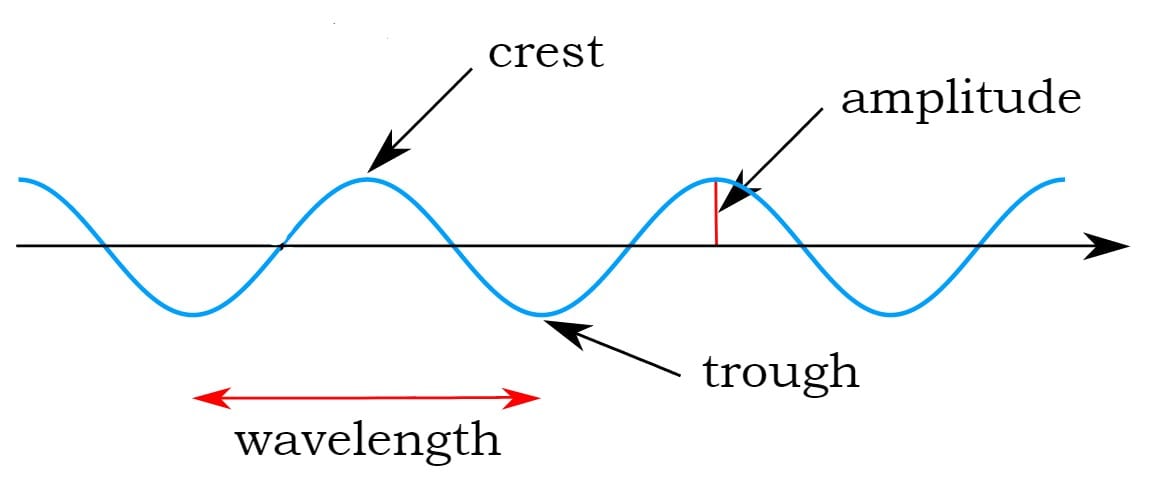
wavelength
distance between 2 consecutive peaks/troughs in a wave (meters)
shorter wave = higher frequency
frequency
number of successive wavelengths that pass a given point in a unit time (Hz or s^-1)

amplitude
½ the distance between the peaks + troughs

speed (C)
C = wavelength x frequency

constructive interference
maxima from both waves coincide
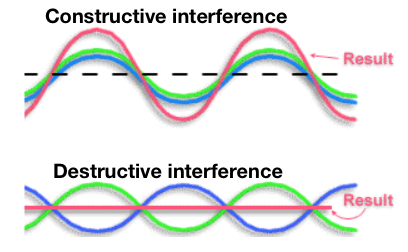
destructive interference
one maximum coincides with/ another minimum

photons
particles of light
E = hv
Plank’s constant (h)
relates energy of photon to its frequency
higher frequency = higher photon NRG
J x s
what does a line spectra show?
emission of light at wavelength SPECIFIC for a given atom
(electrical charge excites atom —> light is emitted)

wave-particle duality
light behaves both as a particle and a wave
so do other small particles (electrons + neutrons)
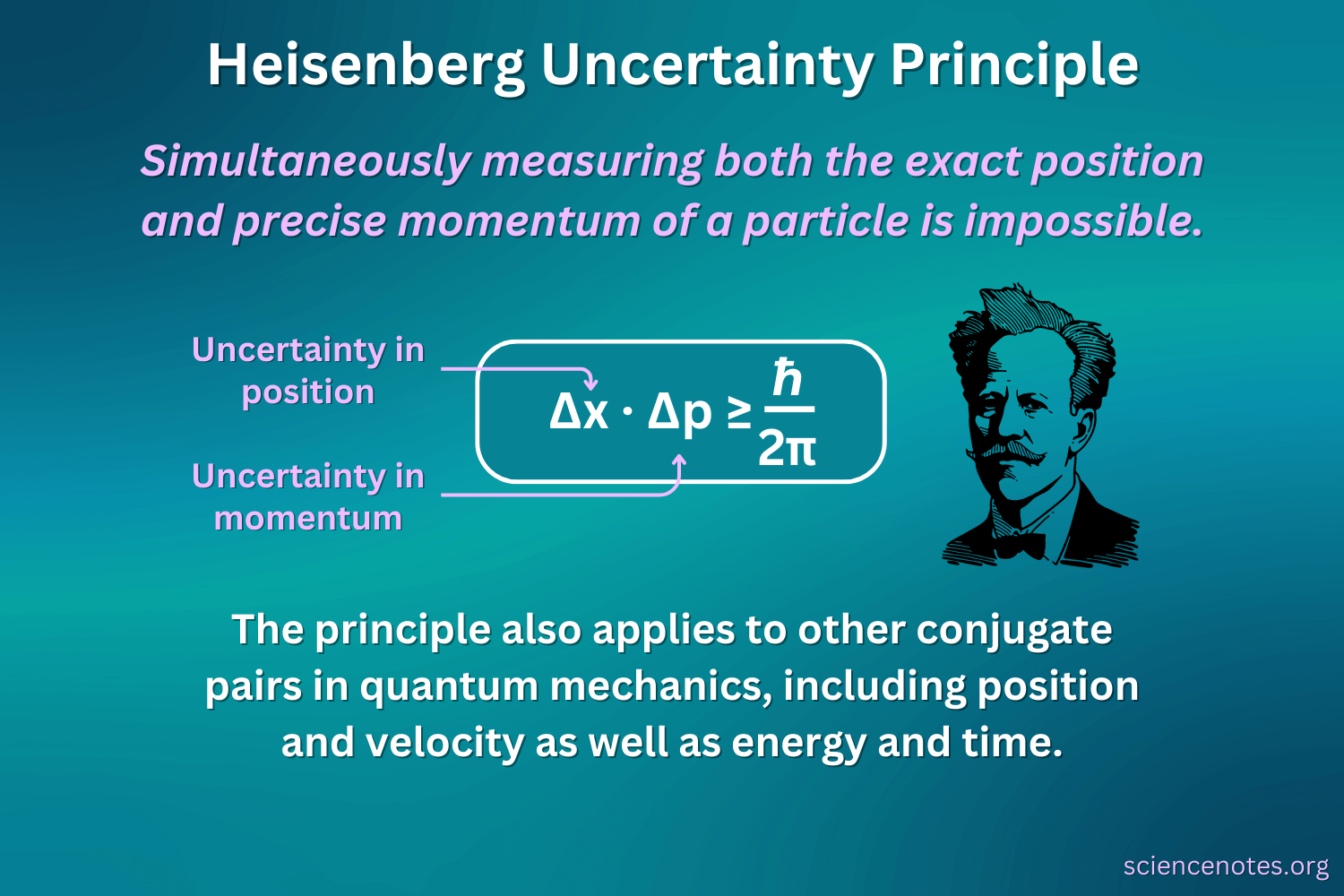
Heisenberg Uncertainty Principle
small particles moving fast do not have a definite position/speed
angular momentum quantum (ℓ)
integer that defines shape of the orbital
ℓ = n-1

magnetic quantum number (m)
specifies orientation of the orbital space

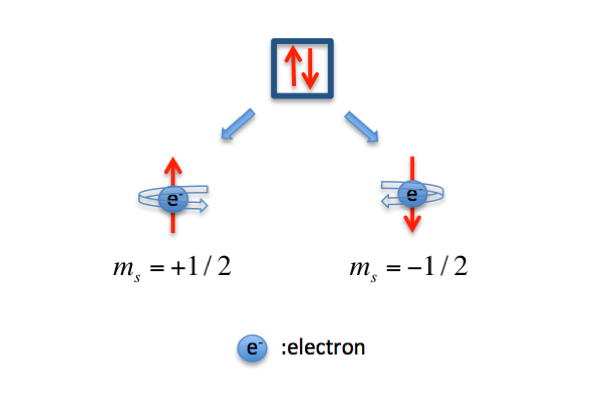
spin quantum number (ms)
describes 2 possible states
radial nodes
area around an atom’s nucleus where the chance of finding an e- is 0
e- wave function (ψ) = 0 at this instance
# radial nodes in an orbital = n - ℓ - 1
e- orbitals

shielding
e- in smaller orbitals/ closer to the nucleus = core e-
ex: 1s, then 2s + 2p
core e- shield outer e- from some nuclear charge
Pauli Exclusion Principle
no 2 e- in the same atom can have the same set of all 4 quantum #s
bc. . .
1 orbital holds 2 e- max
e- in the same orbital must have opposite spin
Aufbau Principle
lowest NRG orbitals are filled first

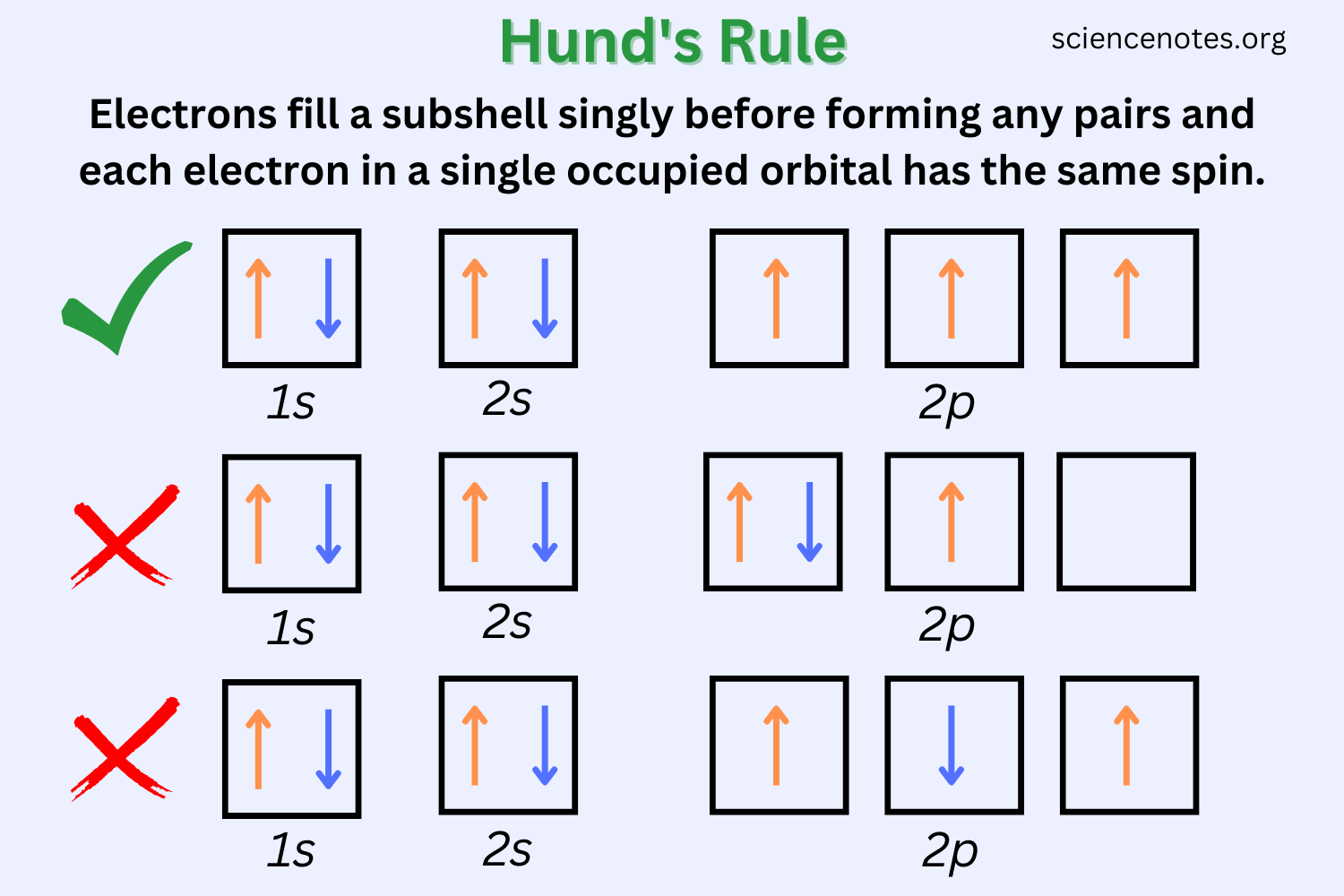
Hund’s Rule
e- want parallel spin in the same energy level/orbital w/o a being paired
e- only pair w/ opp spin when the lower orbital is full
valence e-
e- occupying the orbital in the outermost shell (largest n value)
core e-
e- occupying the inner most shell (lowest n level)
anion
- charged ion
forms when 1 or more e- are ADDED to an atom
larger than atom of same element at ground state
cation
+ charged ion
forms when 1 or more e- are REMOVED from an atom
smaller than atom of same element at ground state
isoelectronic
atoms w/ same e- configuration
ex: N3-, O2- : (1s²2s²2p6)
in this case Z determines size (greater nuclear charge = smaller radius)
1st Ionization NRG (IE1)
amount of NRG required to remove the outermost e- from an atom in ground state

IE2
NRG required to remove the 2nd outermost e-