Topic 4 (Intro to Organic Chem & Alkanes)
 Call Kai
 Learn
 Practice Test
 Spaced Repetition
 Match
 Flashcards
 Knowt Play
1/29

There's no tags or description
Looks like no tags are added yet.
Name | Mastery | Learn | Test | Matching | Spaced | Call with Kai | Chat |
|---|
No analytics yet
Send a link to your students to track their progress
30 Terms
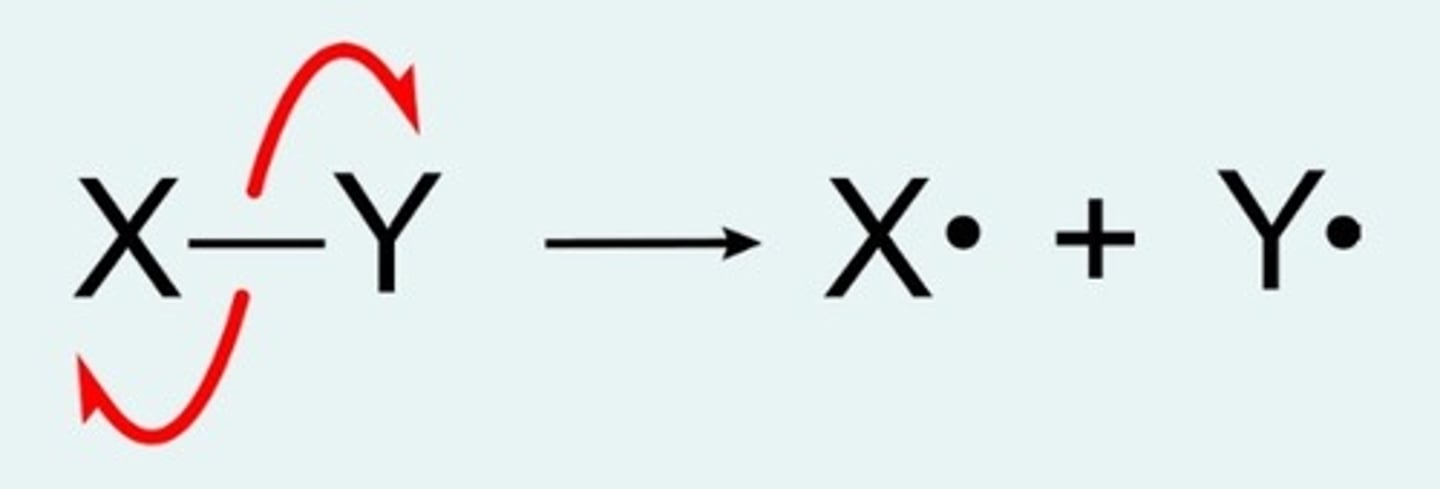
what is Homolytic fission?
- (breaking of a covalent bond where each atom receives one electron
- to form two free radicals

State the name of this organic compound
double bond has more priority than methyl so we count from left side
3,3,4-trimethylhexane ✅3,4,4-trimethylhexane ❌
NOTE → the priority goes like:
1) longest chain
2) Functional groups (Carboxyl acid, aldehyde, ketone, alcohol, alkene ........)
3) substituents (like methyl, ethyl , chloro, floro ....)
[also try to use low numbers/locants like
3,3,4-trimethylhexane ✅
3,4,4-trimethylhexane ❌]


name this organic compound
functional group (Double bond) is priority over substituents substituenty (i.e propyl)
[btw either side you end counting, there is propyl group]
dont forget the carbon on top of double bond!


name this organic compound
aldehyde is functional group and HIGH priority, so start counting from CH0

State the functional groups and name of Aldehydes
name- al (at the end)
functional group- R-CHO

state the functional groups and name of the following:
alkane:
alkene:
alcohol:
amine/amino group
alkane:
name- ane
functional group- C-C
alkene:
ene
C=C
alcohol:
- ol
- OH
amine:
- amine
- NH2
Give the suffix and functional group for carboxylic acid
carboxylic acid:
- anoic acid
- COOH

Give the suffix and functional group for ester
ester:
name → (alcohol)yl . (acid)anaote
functional group- COO

How many isomers are there of dibromopropane, C3H6Br2 ?

state the functional groups of methyl & ethyl
methyl:
- CH3
ethyl:
- CH2-CH3
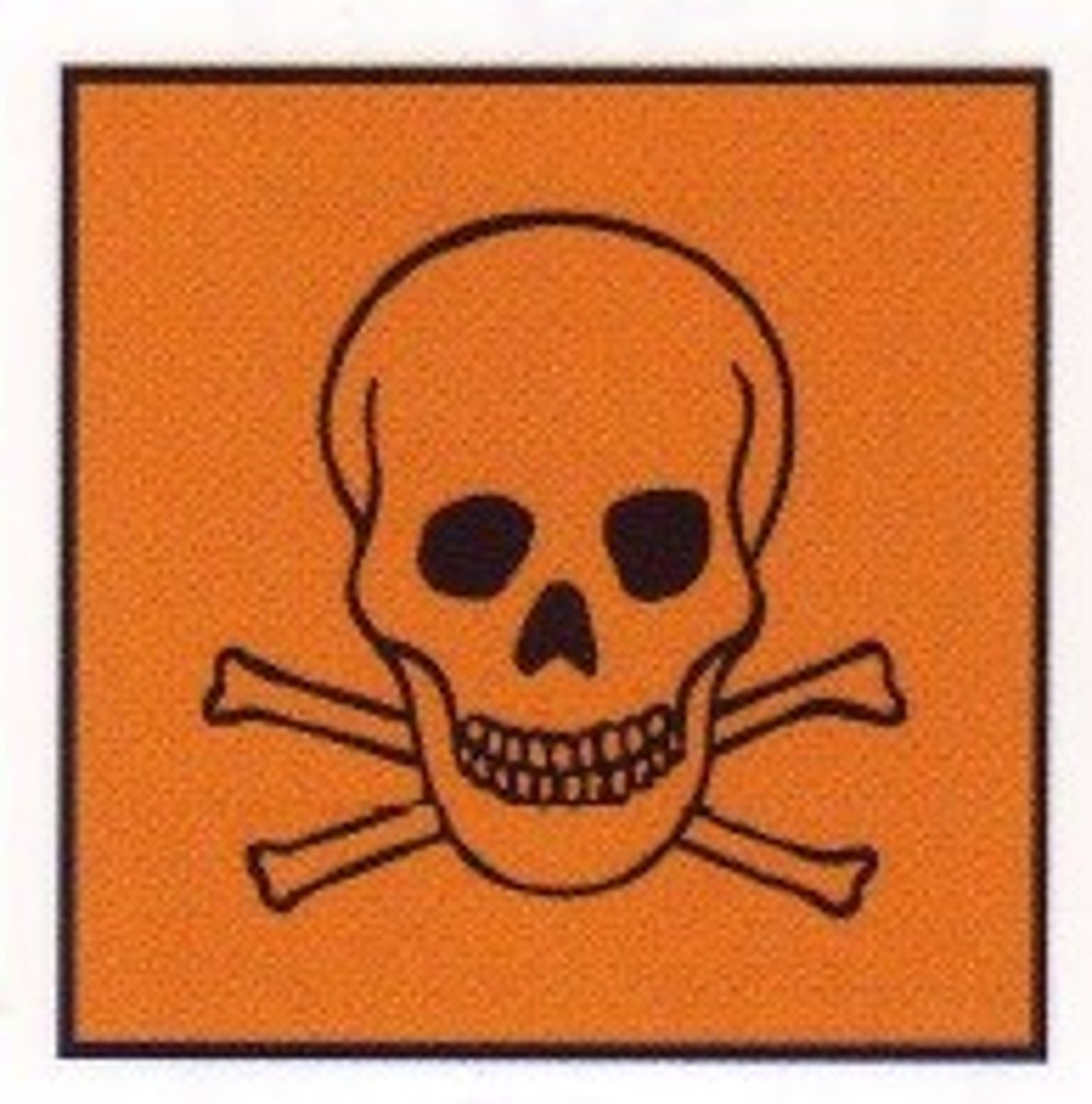
draw the symbol for toxic
what risk can it cause
- Could cause death if swallowed or inhaled
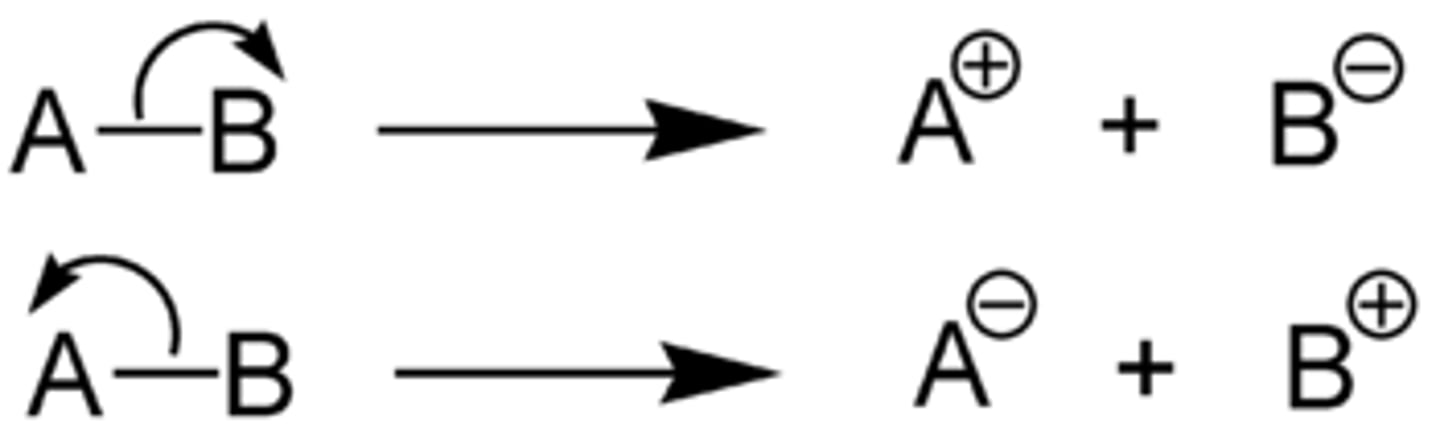
what is heterolytic fission
- (breaking of a covalent bond where) one atom gets both electrons
- to form one Anion and one Cation
(the most electronegative atom takes both electrons in the covalent bond)
general formula for alcohols

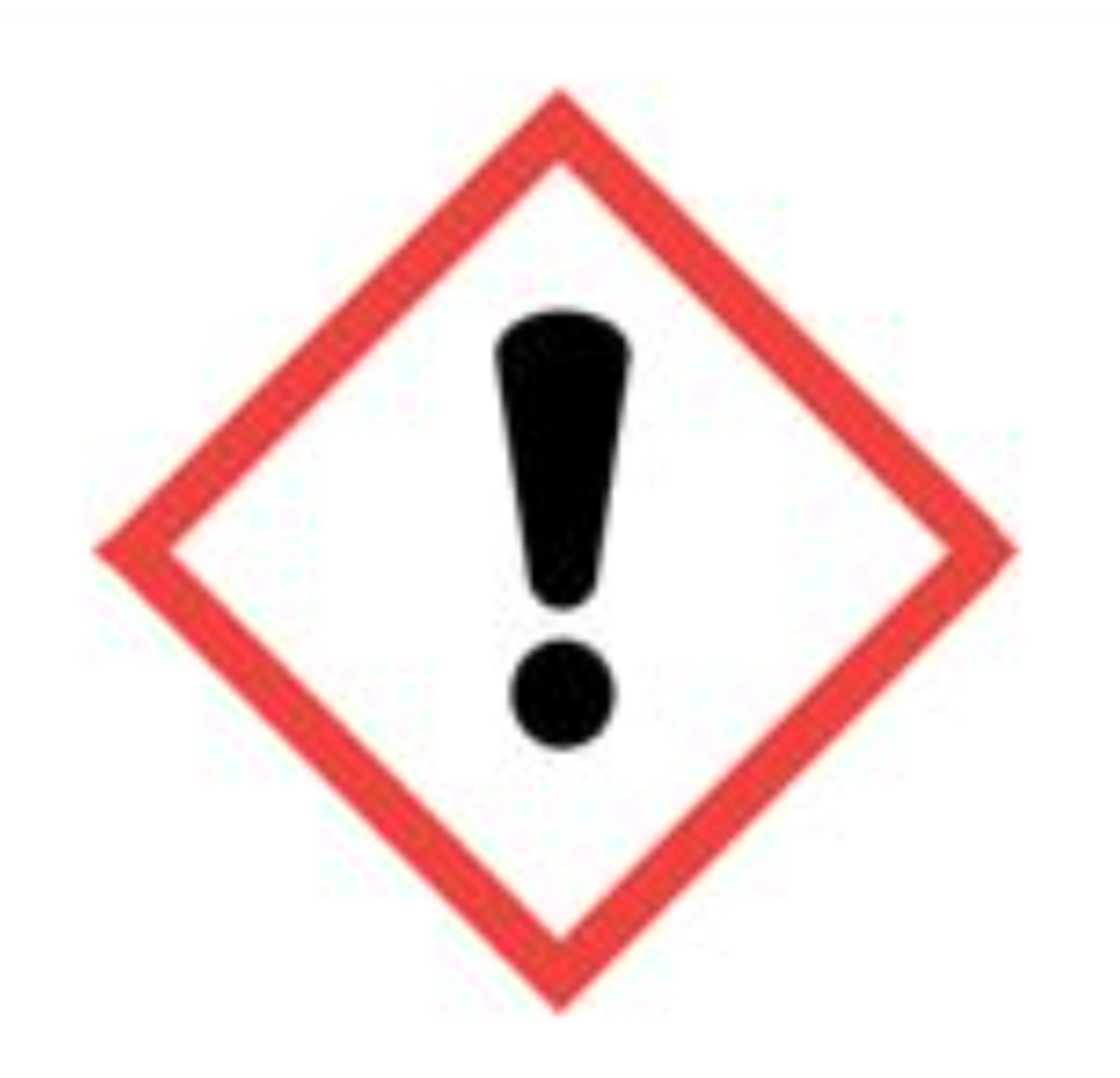
draw the symbol for moderate health hazard
what risk can it cause
- causes skin irritation (risk)
what is the general formula for cyclolakanes
CnH2n
what is free radical?
- a species with an unpaired electron
(HIGHLY reactive)
[ like it has 1 unpaired electron not a lone pair]
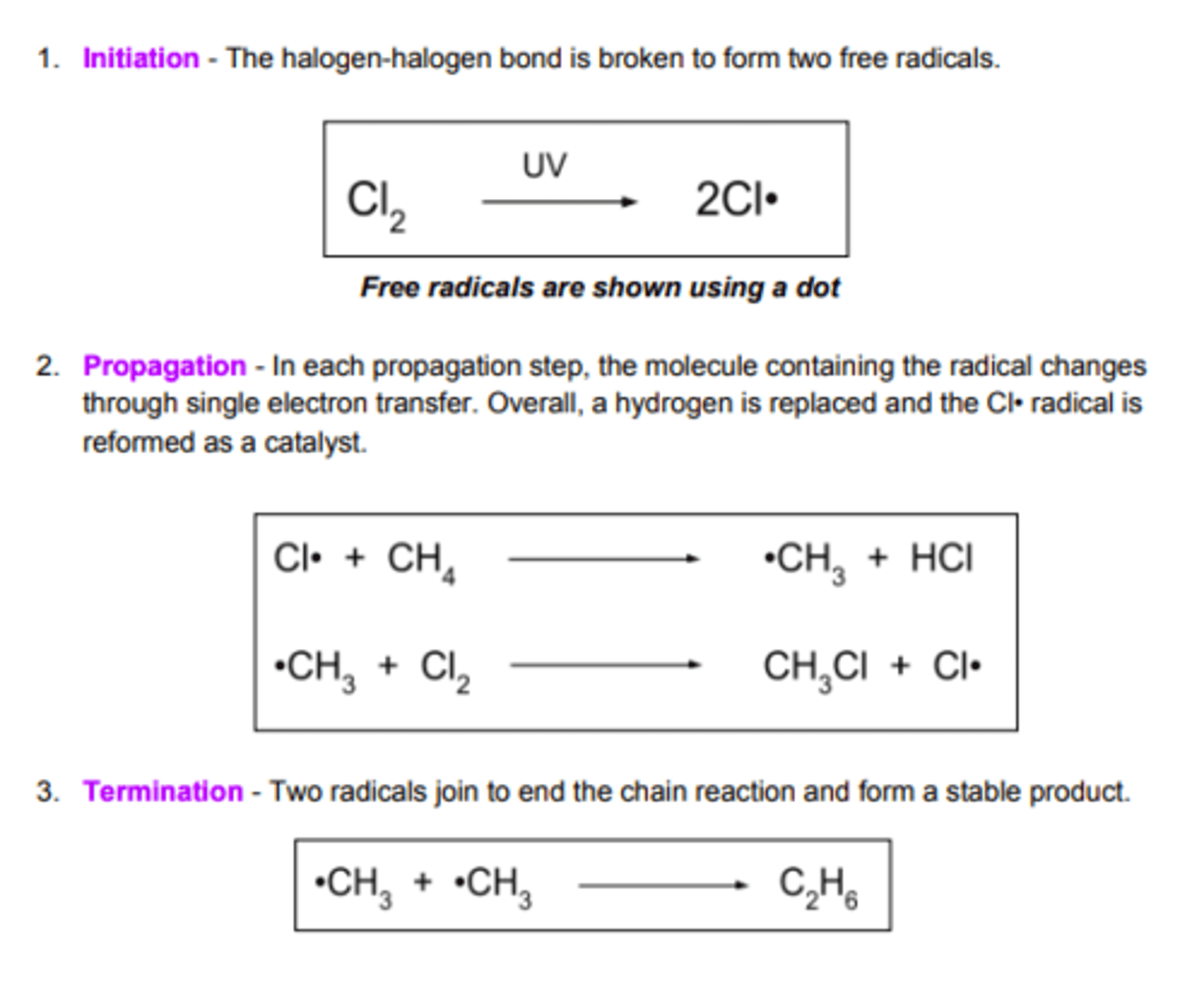
draw the symbol for serious health hazard
what risk can it cause
- causes breathing difficulty
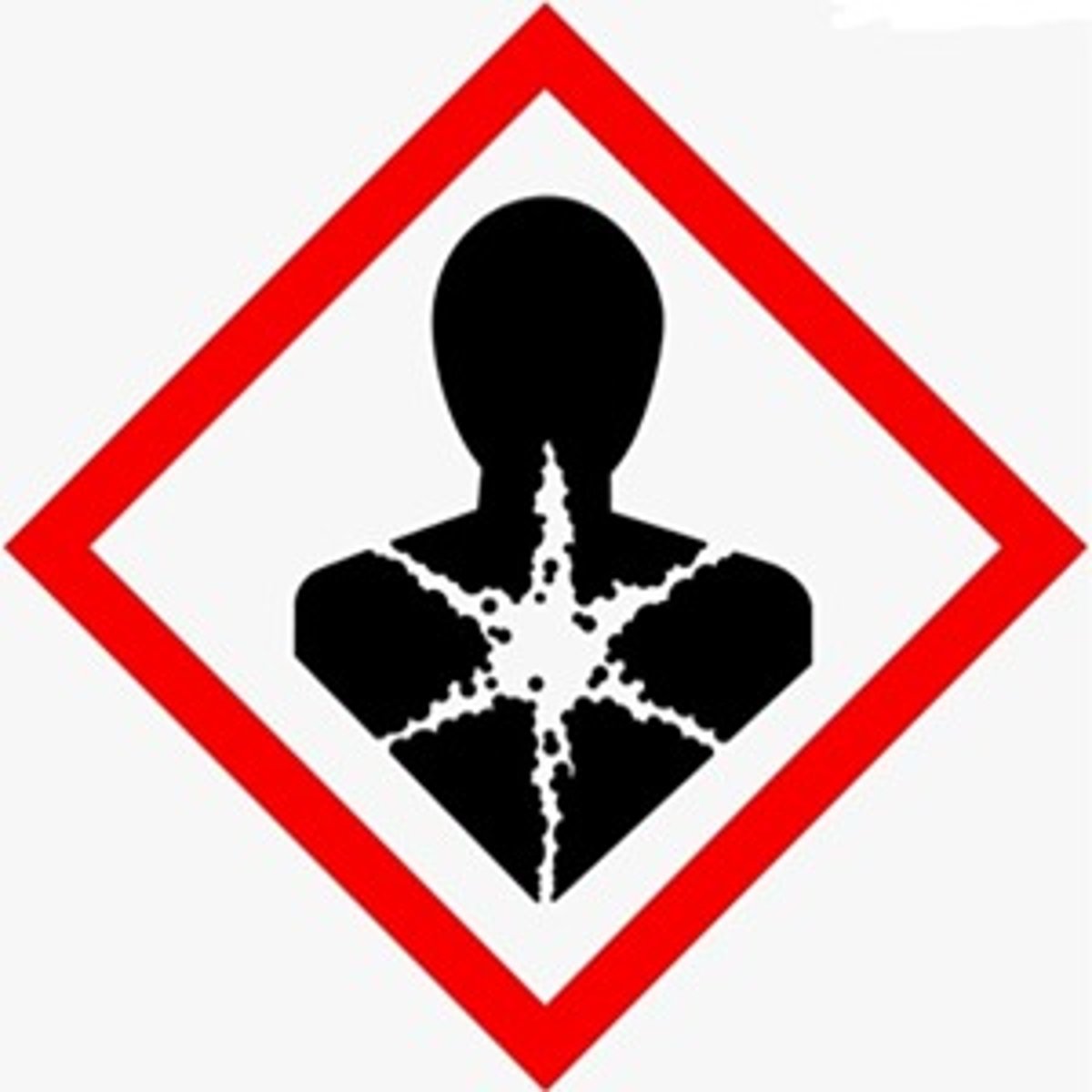
Heptane will react with chlorine in the presence of ultraviolet light to form a number of products
Write equations for the initiation, propagation and termination step for the formation of the product

what is the total number of structural isomers for hexane (C6H14)
- Hexane (C6H14) has 5 isomers
Give a reason why petrol should not contain a high proportion of heptane.
- heptane (is a straight chain alkane) so it will cause knocking which means petrol/heptane will not combust efficiently
NOTE:
straight chain alkanes are more likely to explode than combust when burned, known as knocking
thus straigh chain alkanes are reformed to form → branched alkane or cycloalkanes


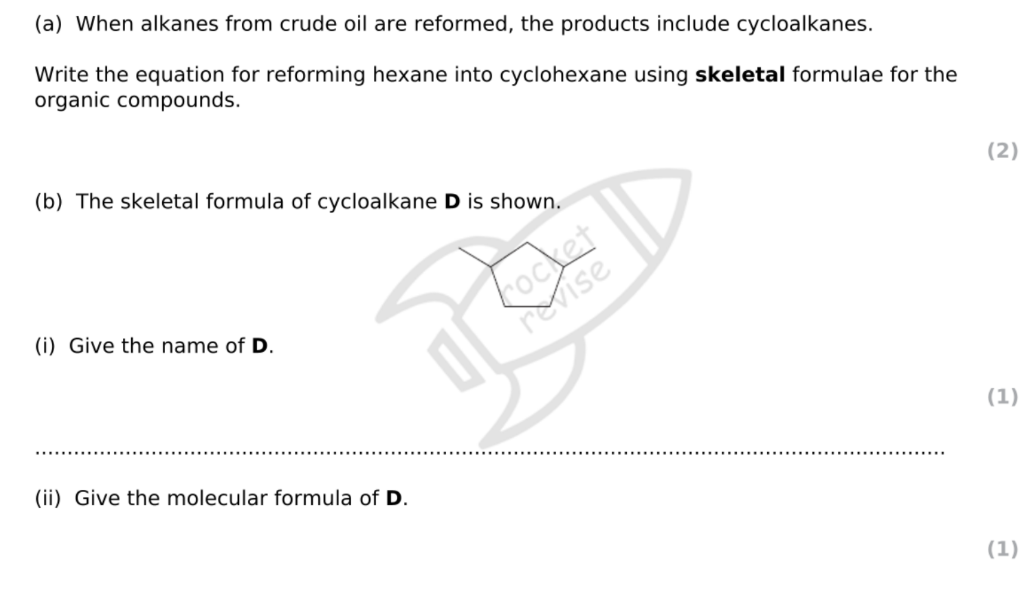


A cycloalkane, E, has a molar mass of 126 g mol-¹
Deduce the molecular formula of E.
C9H18

(a) Write the equations for the two propagation steps to form chlorocyclobutane.
Use C4H8 as the formula for cyclobutanelise
Curly arrows and state symbols are not required
(b) A small amount of a hydrocarbon forms in this reaction.
Deduce the skeletal formula of this hydrocarbon.
Justify your answer.
(b) justification: the two C4H7 . / cyclo-butyl radicals join together

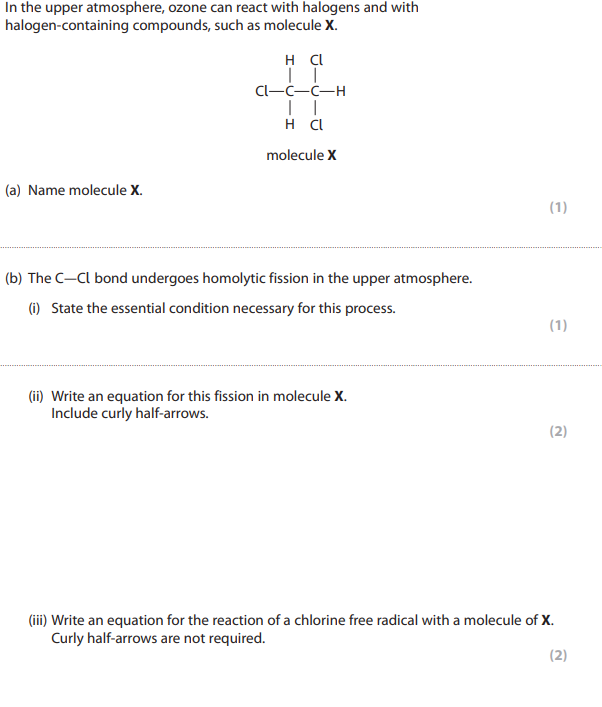
Give 2 environmental benefits of using electric cars.
Justify your answer.
- electric cars don't emit CO2 so they don't contribute to global warming
- they don't produce gases that may cause acid rain
Scientists never detect H2 amongst products of chlorination of methane. Suggest why?
- Because UV light does not have enough energy to break the C-H bond in methane
- so no H free radicals are formed, therefore H2 isn't formed
Explain why ethane doess't react with electrophiles & why it undergoes substitution but not addition (2marks)
- ethane doesn't have any electron-dense area
- it is an alkane with no double bond/pi bond so it can only undergo substitution
role of UV light in initiation step (2marks)
UV light provides the energy to break the Cl - Cl bond
to form chlorine free radical