LAB TEST
 Call Kai
 Learn
 Practice Test
 Spaced Repetition
 Match
 Flashcards
 Knowt Play
1/56

57 Terms
Name all 9 common phyla (in order from oldest to most recent)
• Porifera (> “spongebob”)
• Cnidaria (> “jellyfish”)
• Platyhelminthes
• Nematoda
• Mollusca (> “snails”)
• Annelida
• Arthropoda (> “beetle”)
• Echinodermata (> “starfish”)
• Chordata (> “dog”)
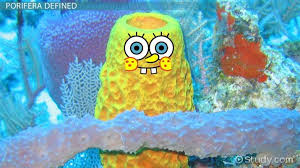
Porifera:
Body symmetry
Method/organ of gas exchange (diffusion, gills, lungs, tracheal, water vascular)
Mode of transporting materials within body (diffusion, open circ. Closed circ, water vascular)
Digestion Method (intra, extra cellular)
Type of gut (incomplete, complete, none)
Nervous system (Simple, cephalization, none)
Asymmetry (none) [ONLY ONE]
Diffusion
Diffusion
Intracellular [ONLY ONE]
None [ONLY ONE]
None [ONLY ONE]
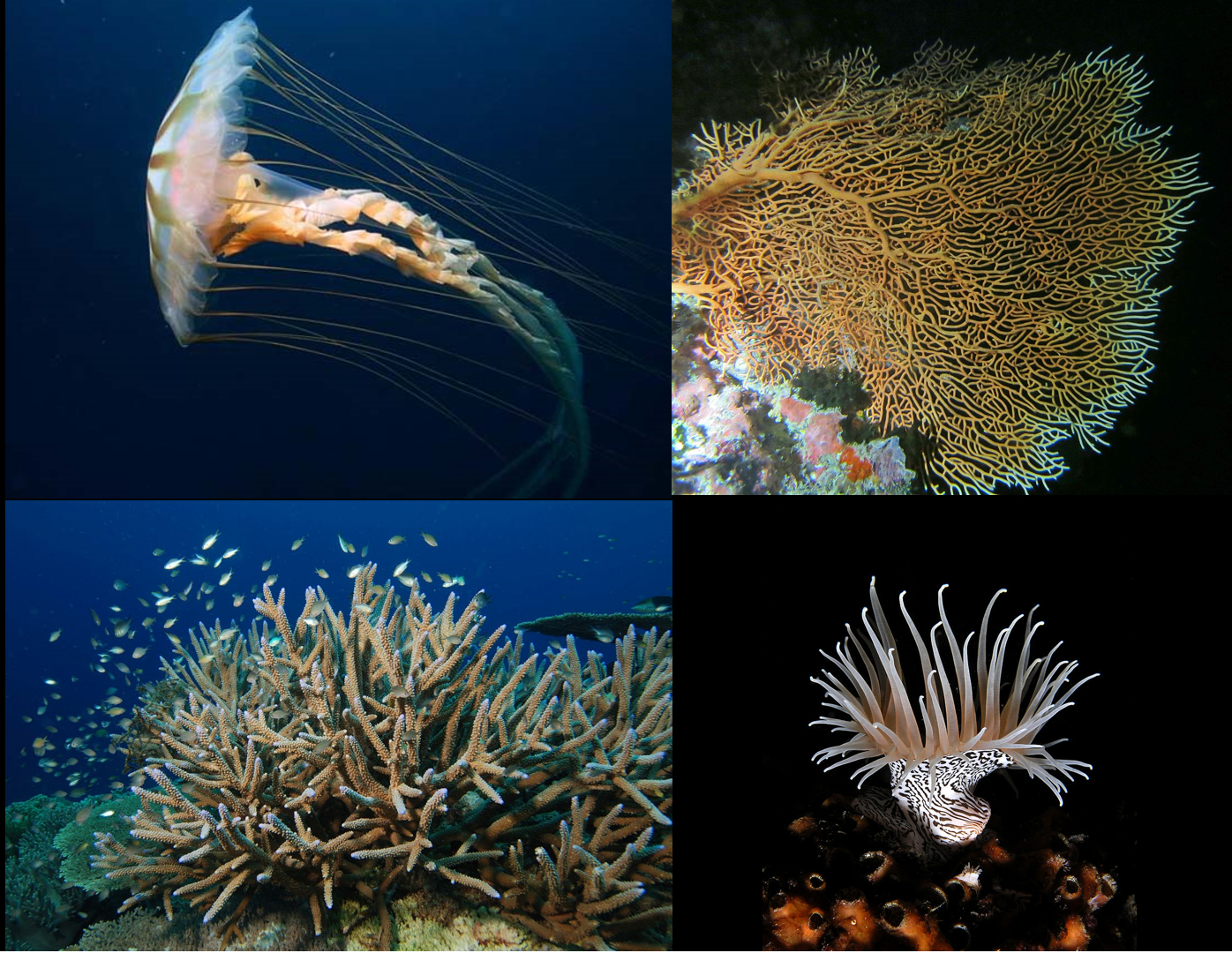
Cnideria:
Body symmetry
Method/organ of gas exchange (diffusion, gills, lungs, tracheal, water vascular)
Mode of transporting materials within body (diffusion, open circ. Closed circ, water vascular)
Digestion Method (intra, extra cellular)
Type of gut (incomplete, complete, none)
Nervous system (Simple, cephalization, none)
Radial (all directions) [LIKE ECHINODERMATA]
Diffusion
Diffusion
Extracellular
Incomplete (gut) [LIKE PLATYHELMINTHES]
Simple (ns)
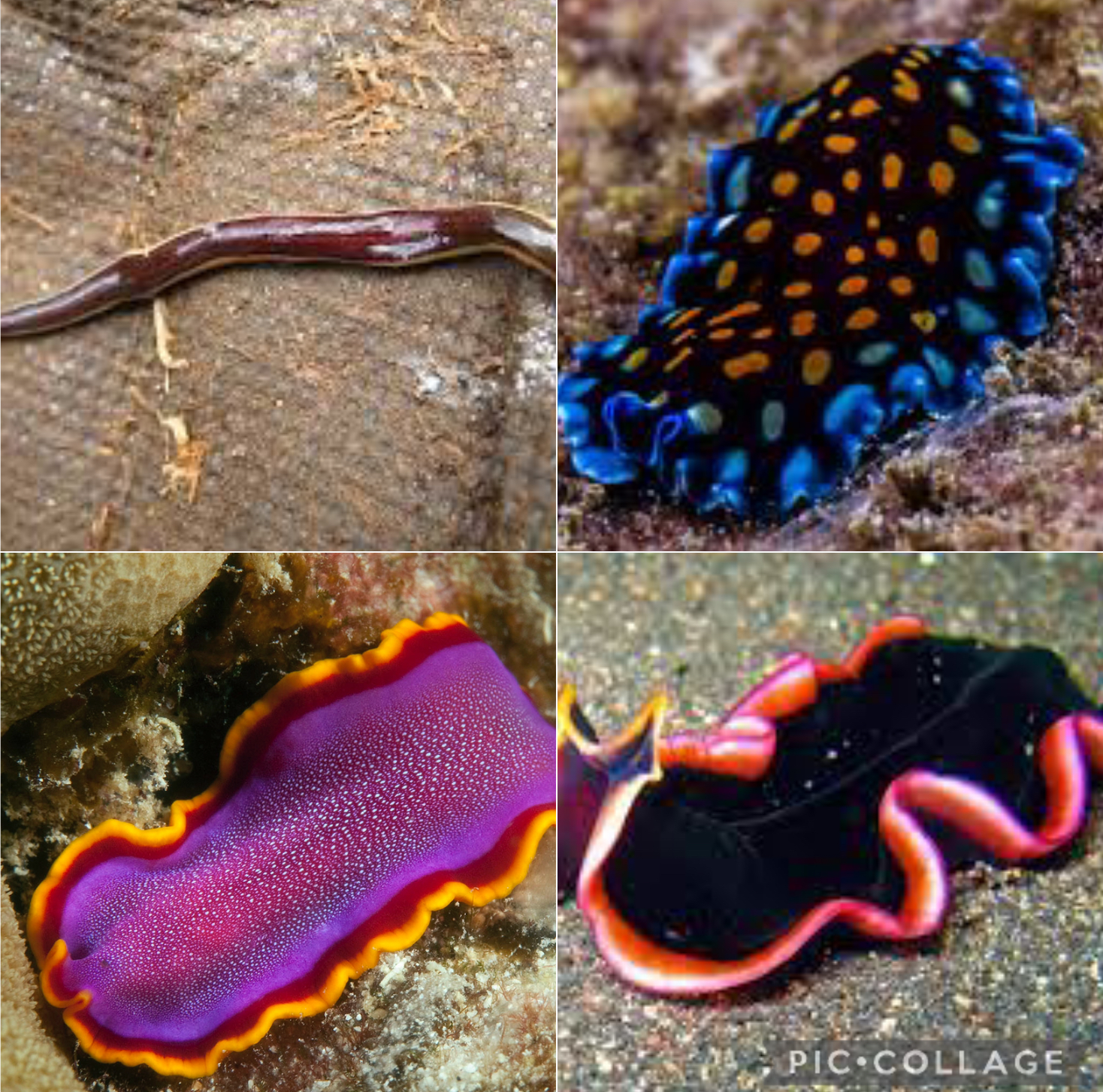
Platyhelminthes:
Body symmetry
Method/organ of gas exchange (diffusion, gills, lungs, tracheal, water vascular)
Mode of transporting materials within body (diffusion, open circ. Closed circ, water vascular)
Digestion Method (intra, extra cellular)
Type of gut (incomplete, complete, none)
Nervous system (Simple, cephalization, none)
Bilateral
Diffusion
Diffusion
Extracellular
Incomplete (gut) [LIKE CNIDERIA]
Simple (ns)
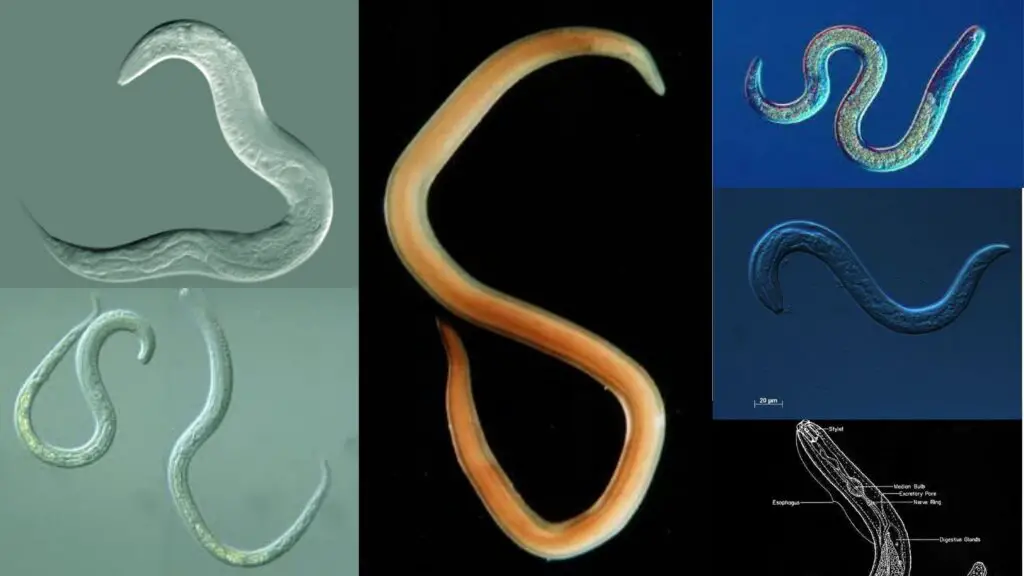
Nematoda:
Body symmetry
Method/organ of gas exchange (diffusion, gills, lungs, tracheal, water vascular)
Mode of transporting materials within body (diffusion, open circ. Closed circ, water vascular)
Digestion Method (intra, extra cellular)
Type of gut (incomplete, complete, none)
Nervous system (Simple, cephalization, none)
Bilateral
Diffusion
Diffusion
Extracellular
Complete (gut)
Simple (ns)
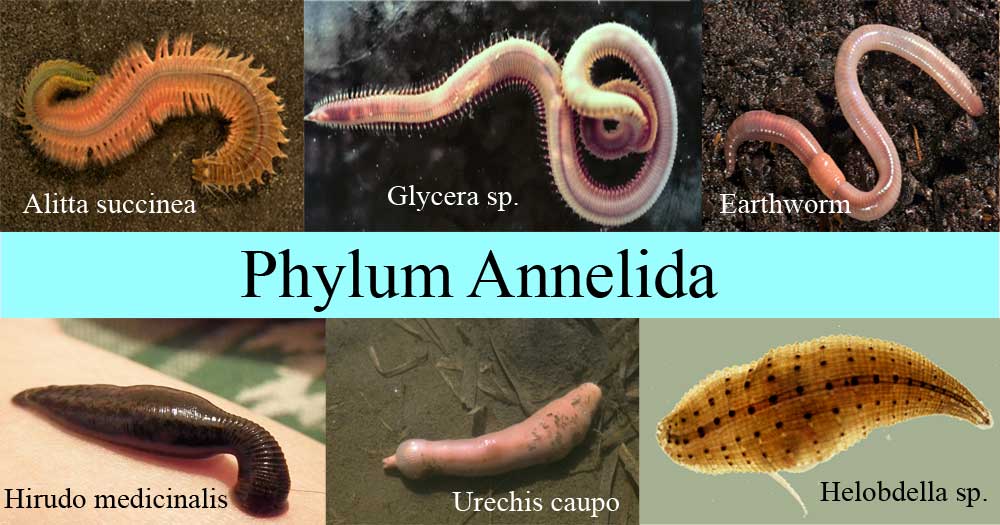
Annelida:
Body symmetry
Method/organ of gas exchange (diffusion, gills, lungs, tracheal, water vascular)
Mode of transporting materials within body (diffusion, open circ. Closed circ, water vascular)
Digestion Method (intra, extra cellular)
Type of gut (incomplete, complete, none)
Nervous system (Simple, cephalization, none)
Bilateral
Diffusion
*Closed circulatory system [LIKE CHORDATA]
Extracellular
Complete (gut)
Cephalization (ns)
Mollusca:
Body symmetry
Method/organ of gas exchange (diffusion, gills, lungs, tracheal, water vascular)
Mode of transporting materials within body (diffusion, open circ. Closed circ, water vascular)
Digestion Method (intra, extra cellular)
Type of gut (incomplete, complete, none)
Nervous system (Simple, cephalization, none)
Bilateral
*Gills and lungs [LIKE CHORDATA]
Open circulatory system
Extracellular
Complete
Cephalization
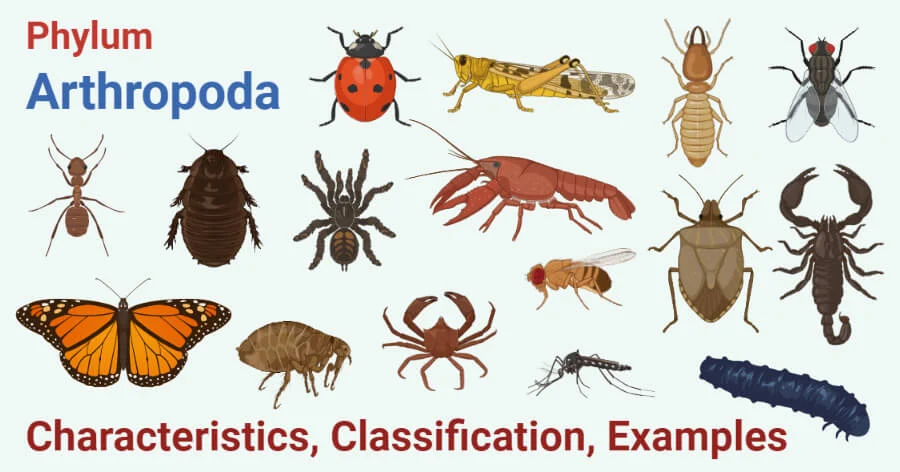
Arthropoda: (exoskeletons)
Body symmetry
Method/organ of gas exchange (diffusion, gills, lungs, tracheal, water vascular)
Mode of transporting materials within body (diffusion, open circ. Closed circ, water vascular)
Digestion Method (intra, extra cellular)
Type of gut (incomplete, complete, none)
Nervous system (Simple, cephalization, none)
Bilateral
*Gills and tracheal system [ONLY ONE]
Open circulatory system
Extracellular
Complete
Cephalization
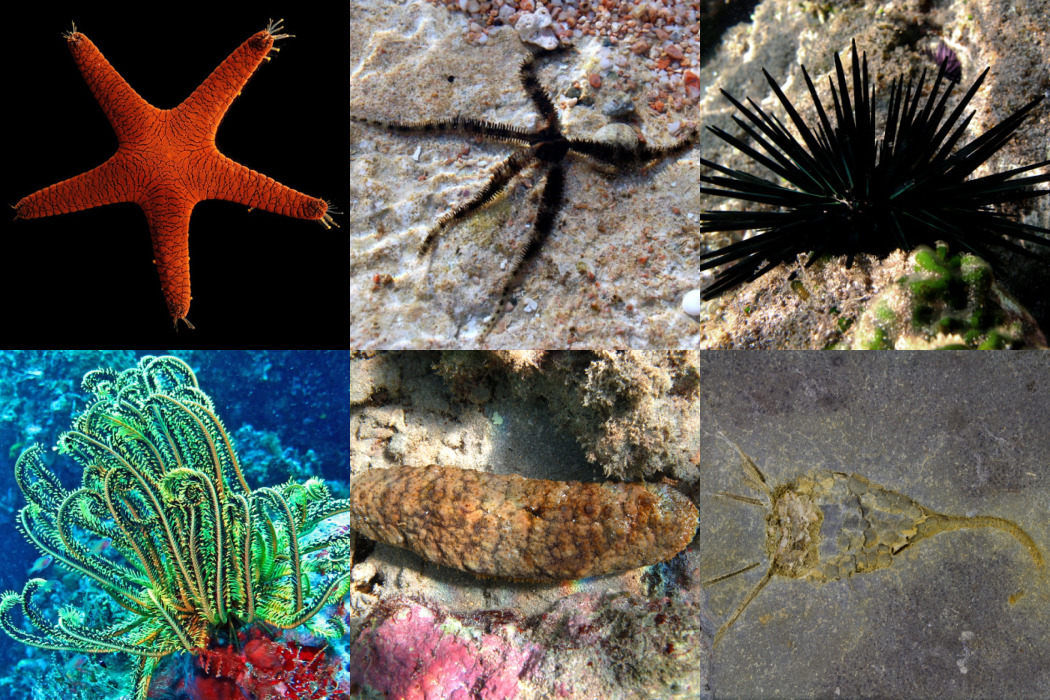
Echinodermata:
Body symmetry
Method/organ of gas exchange (diffusion, gills, lungs, tracheal, water vascular)
Mode of transporting materials within body (diffusion, open circ. Closed circ, water vascular)
Digestion Method (intra, extra cellular)
Type of gut (incomplete, complete, none)
Nervous system (Simple, cephalization, none)
*Radial [LIKE CNIDERIA]
*Water vascular system [ONLY ONE]
*Water vascular system [ONLY ONE]
Extracellular
Complete
Simple
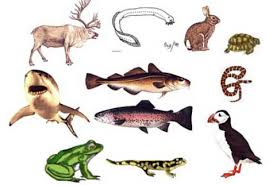
*Chordata:
Body symmetry
Method/organ of gas exchange (diffusion, gills, lungs, tracheal, water vascular)
Mode of transporting materials within body (diffusion, open circ. Closed circ, water vascular)
Digestion Method (intra, extra cellular)
Type of gut (incomplete, complete, none)
Nervous system (Simple, cephalization, none)
Bilateral
Gills and lungs [LIKE MOLUSCA]
Closed circulatory system [LIKE ANNELIDA]
Extracellular
Complete
Cephalization
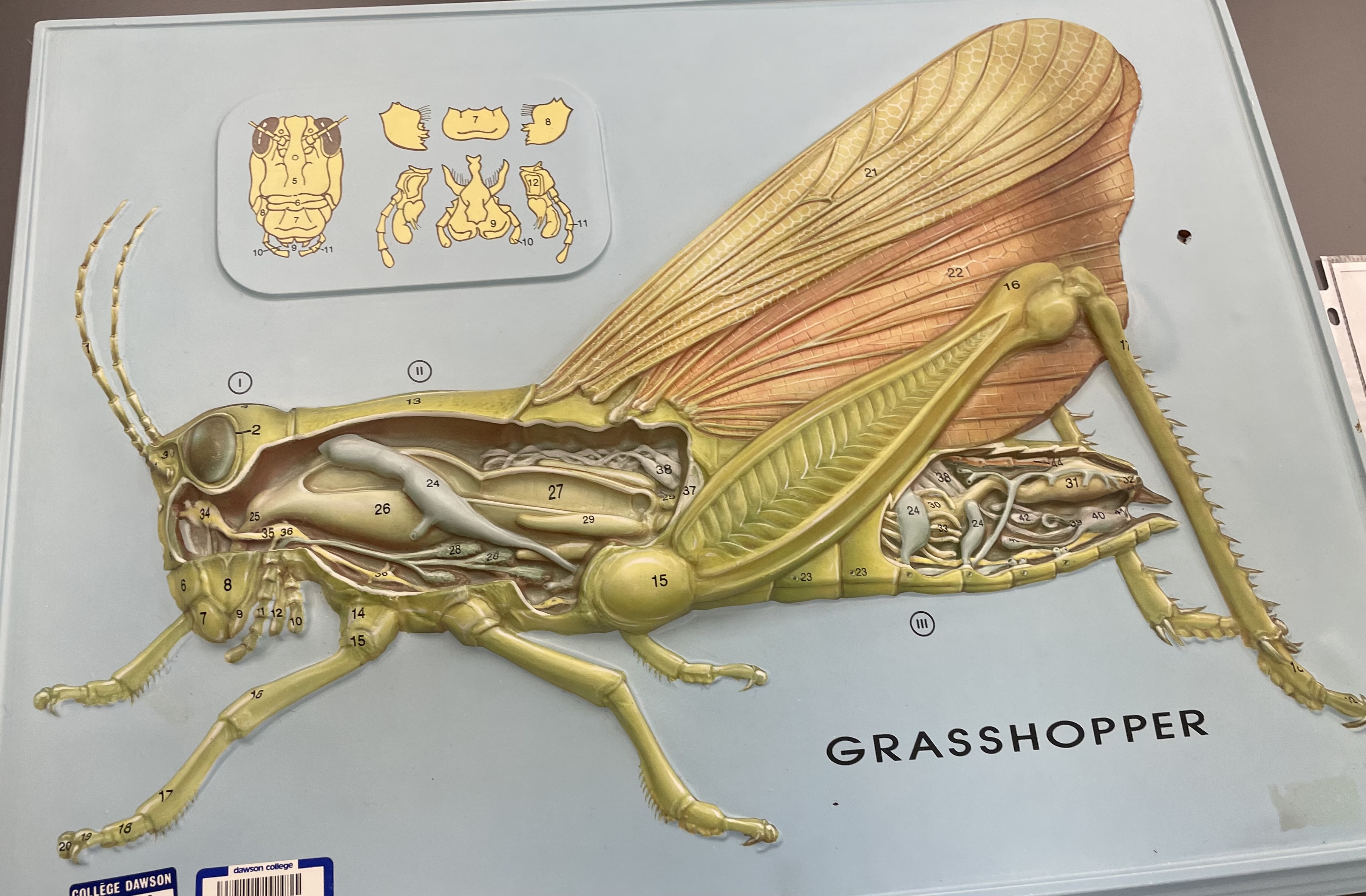
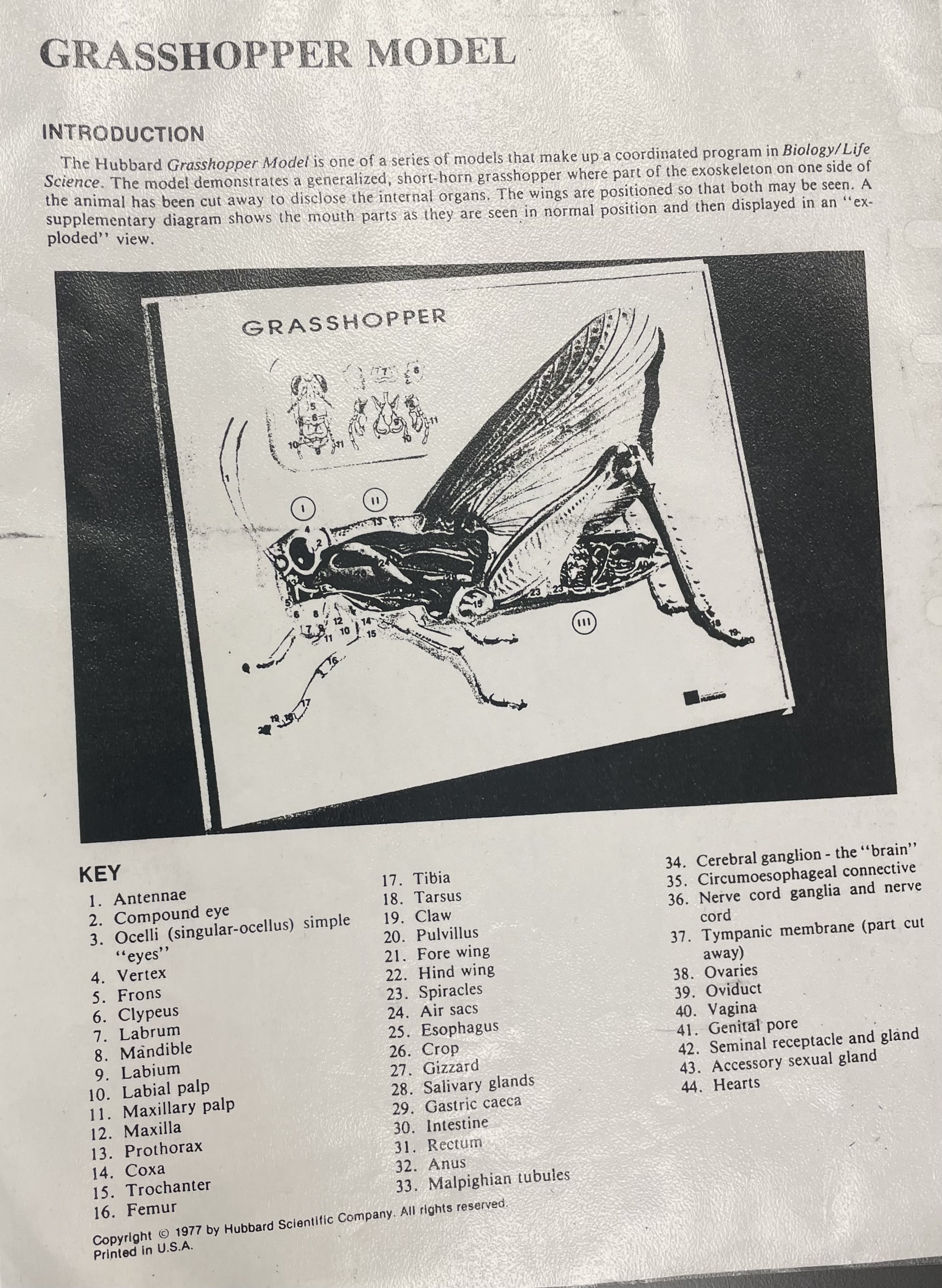
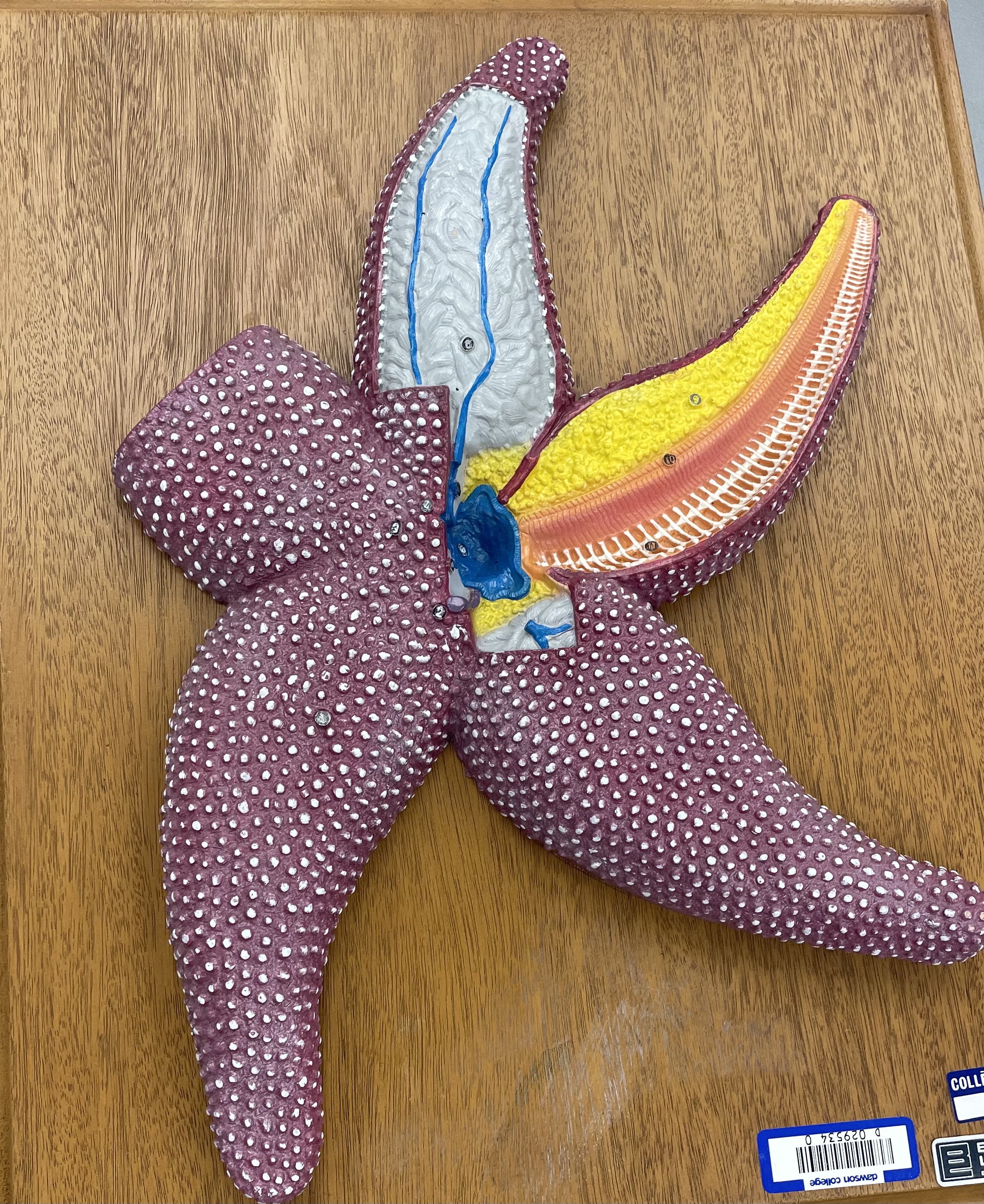
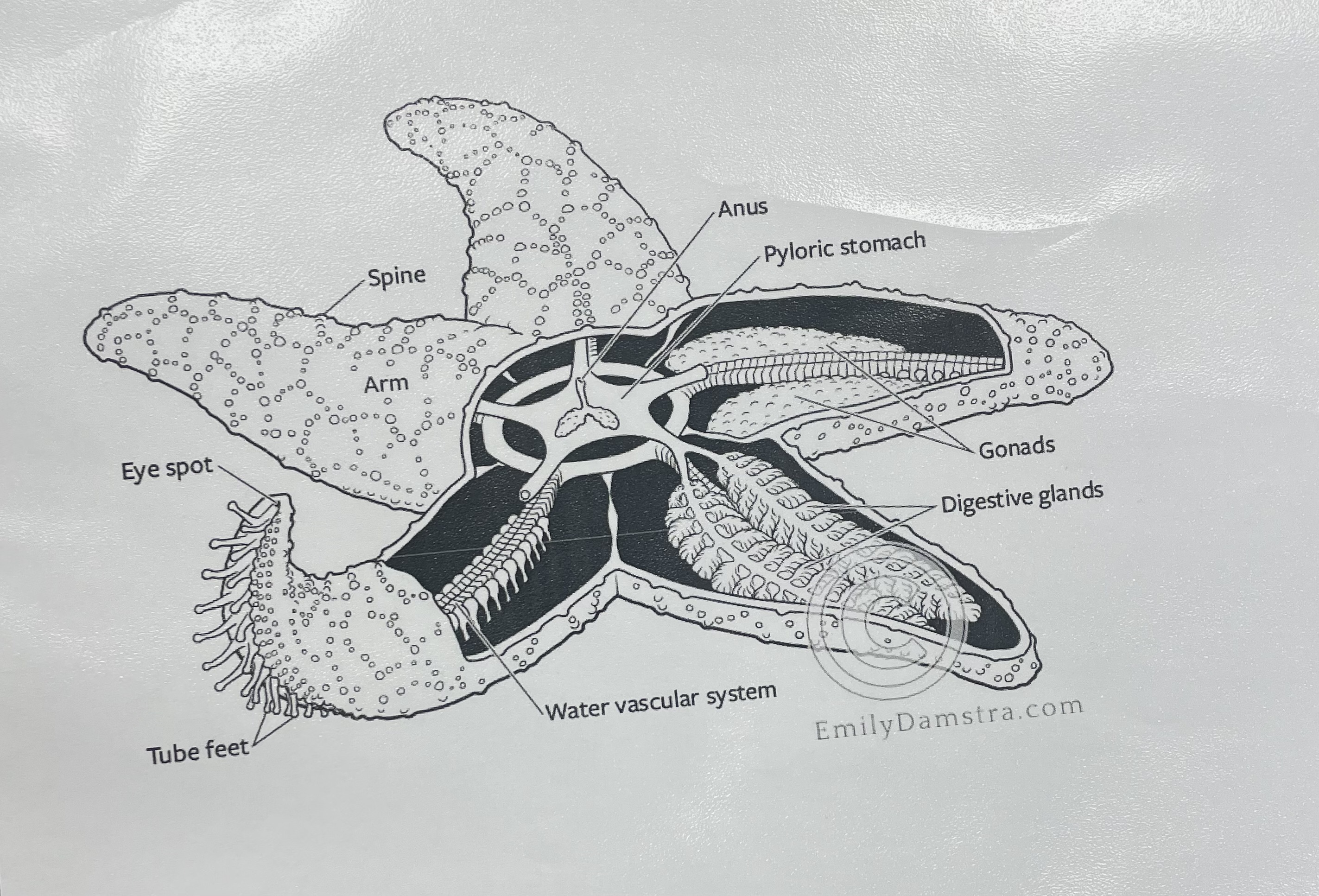
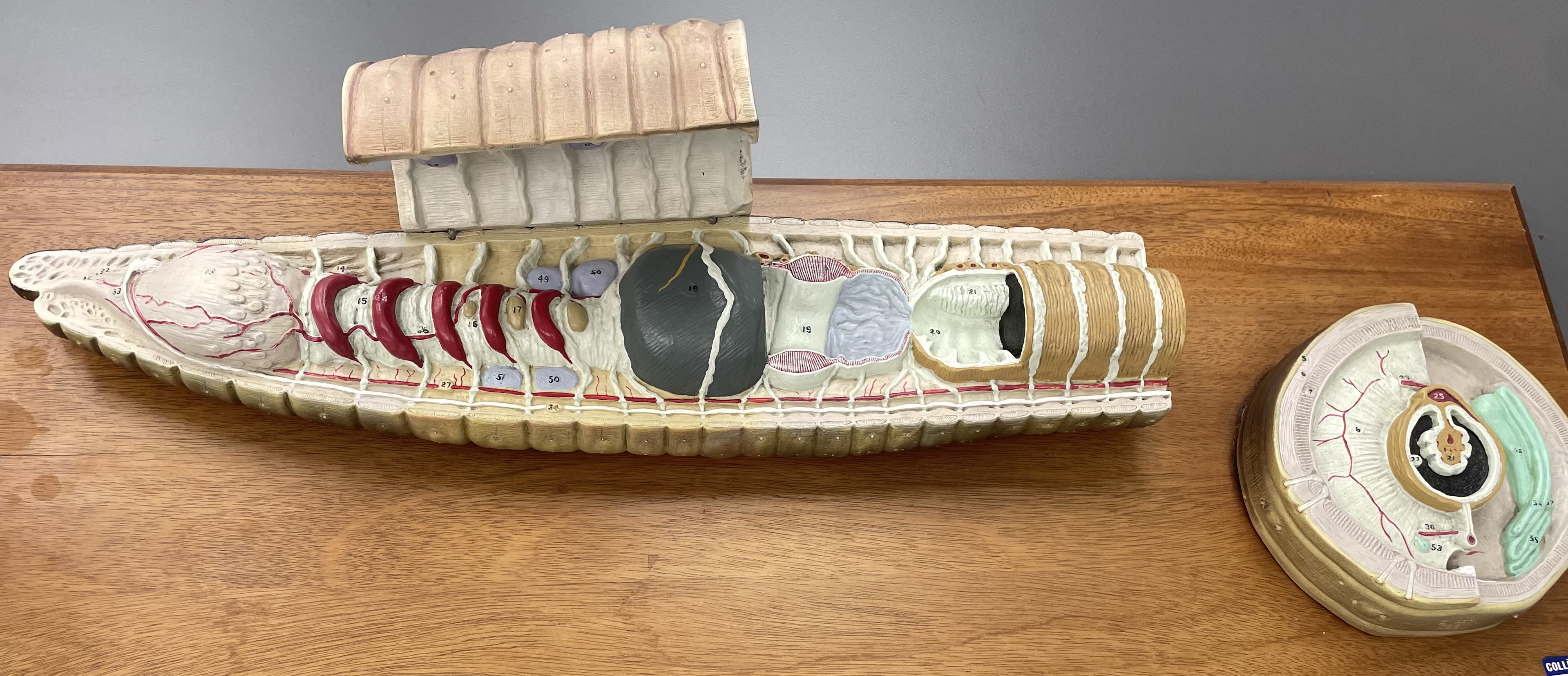
Cross Section (only focus on this for this card)
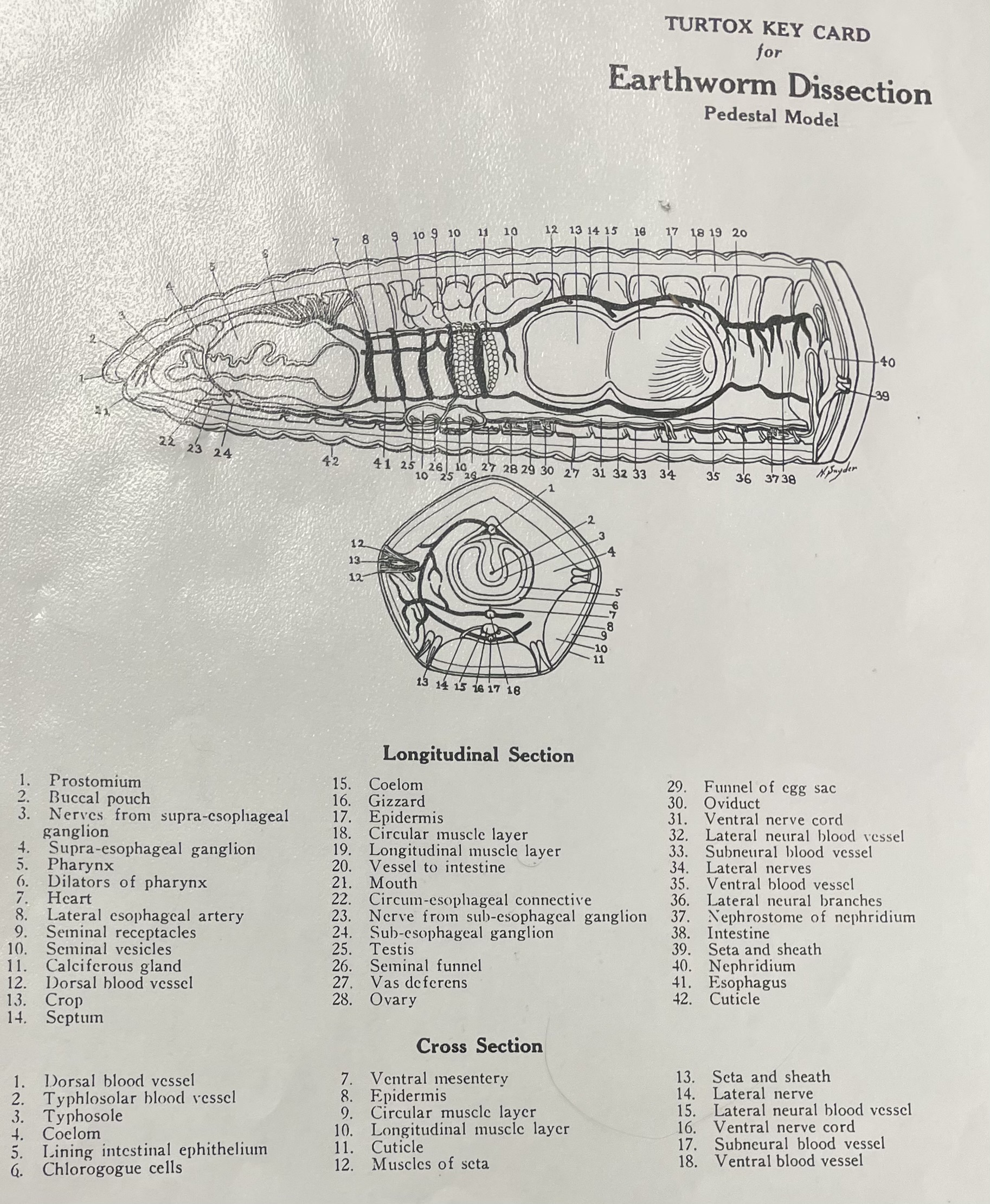
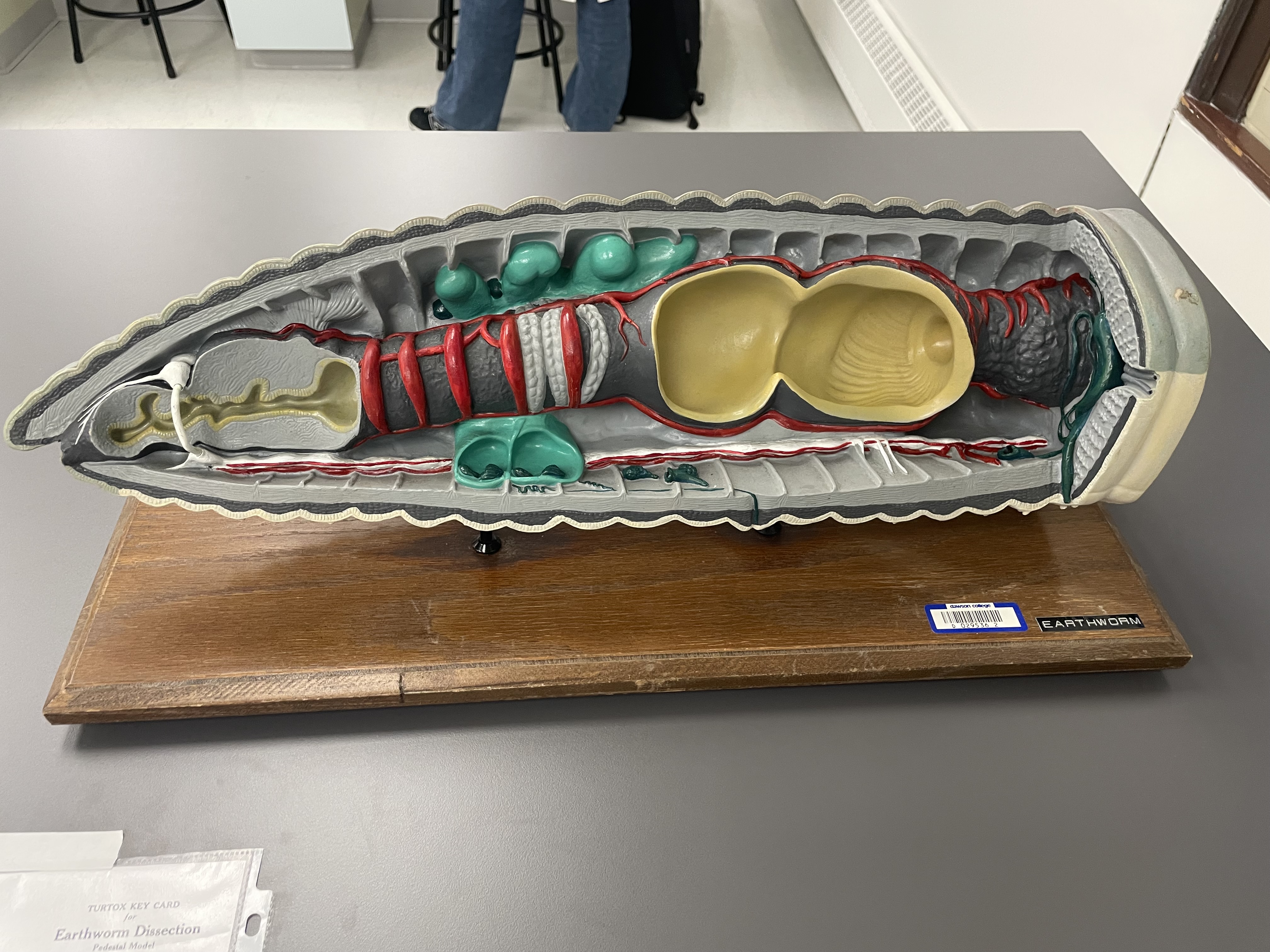
Longitudinal Section
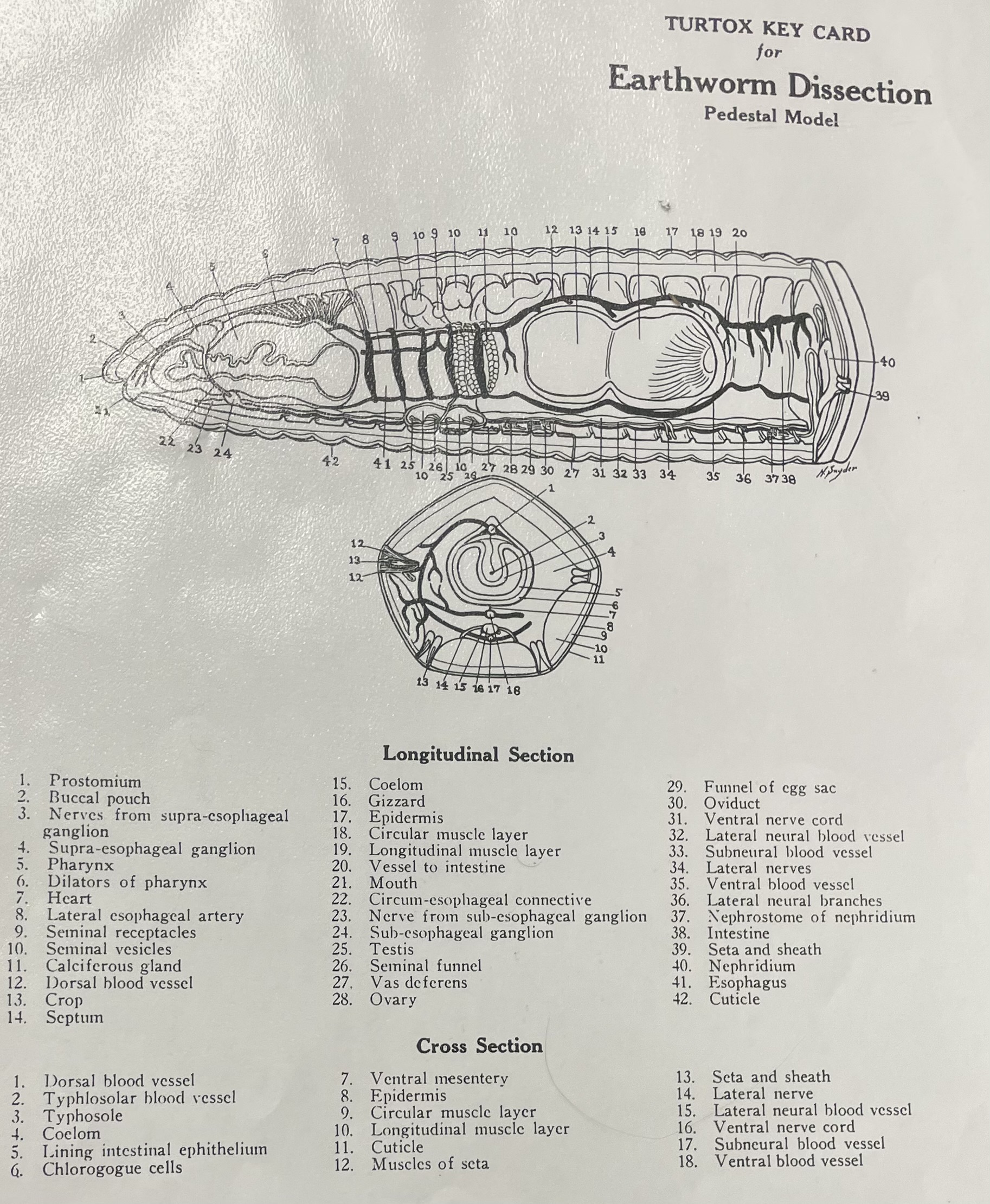
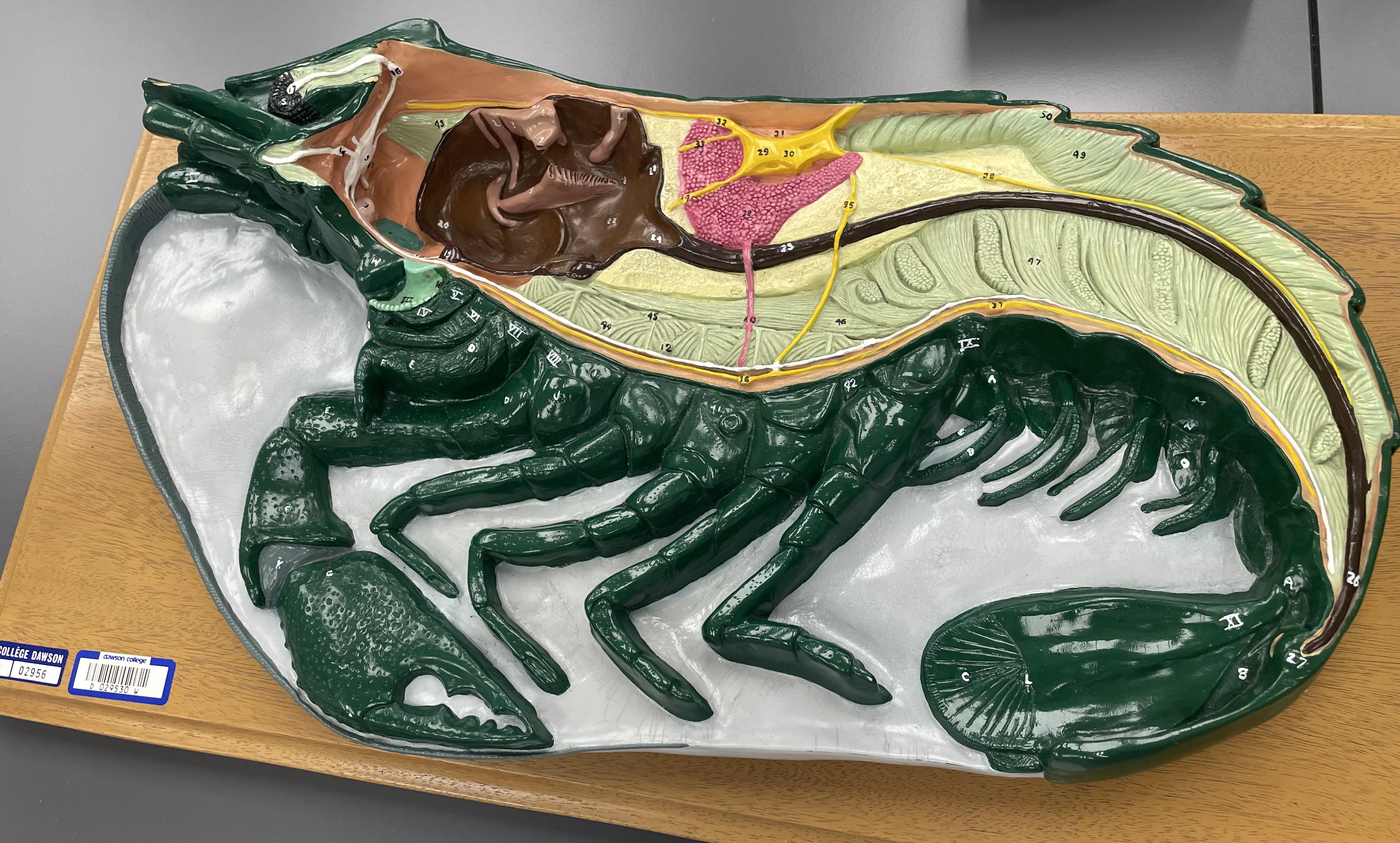
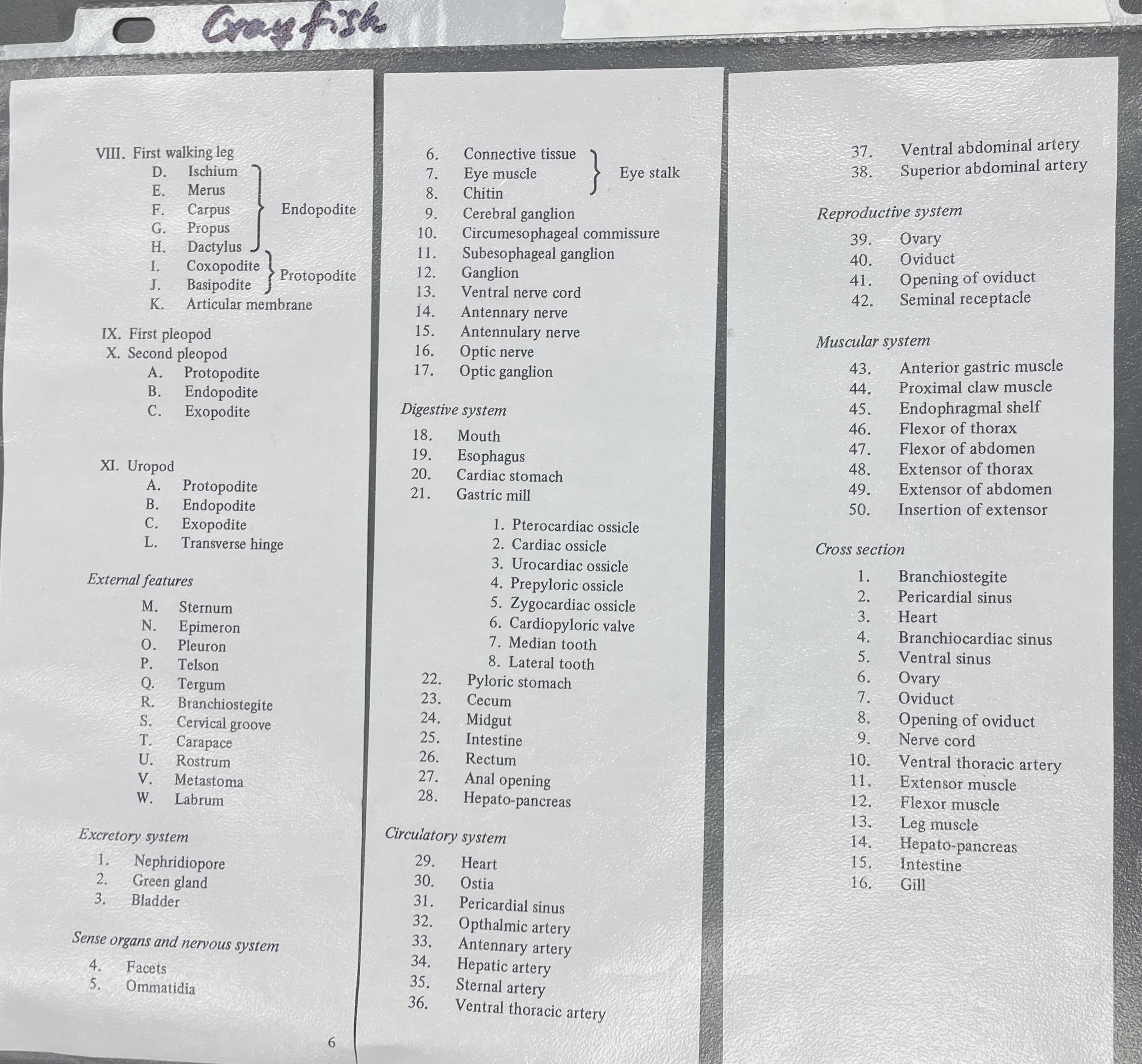
Cray fish
Name
1) This tissue section belongs to what kind of organism?
2) What structure(s) absorb sunlight? Identify and name it/ them.
3) Which structure prevents unwanted microbes from entering the organism?
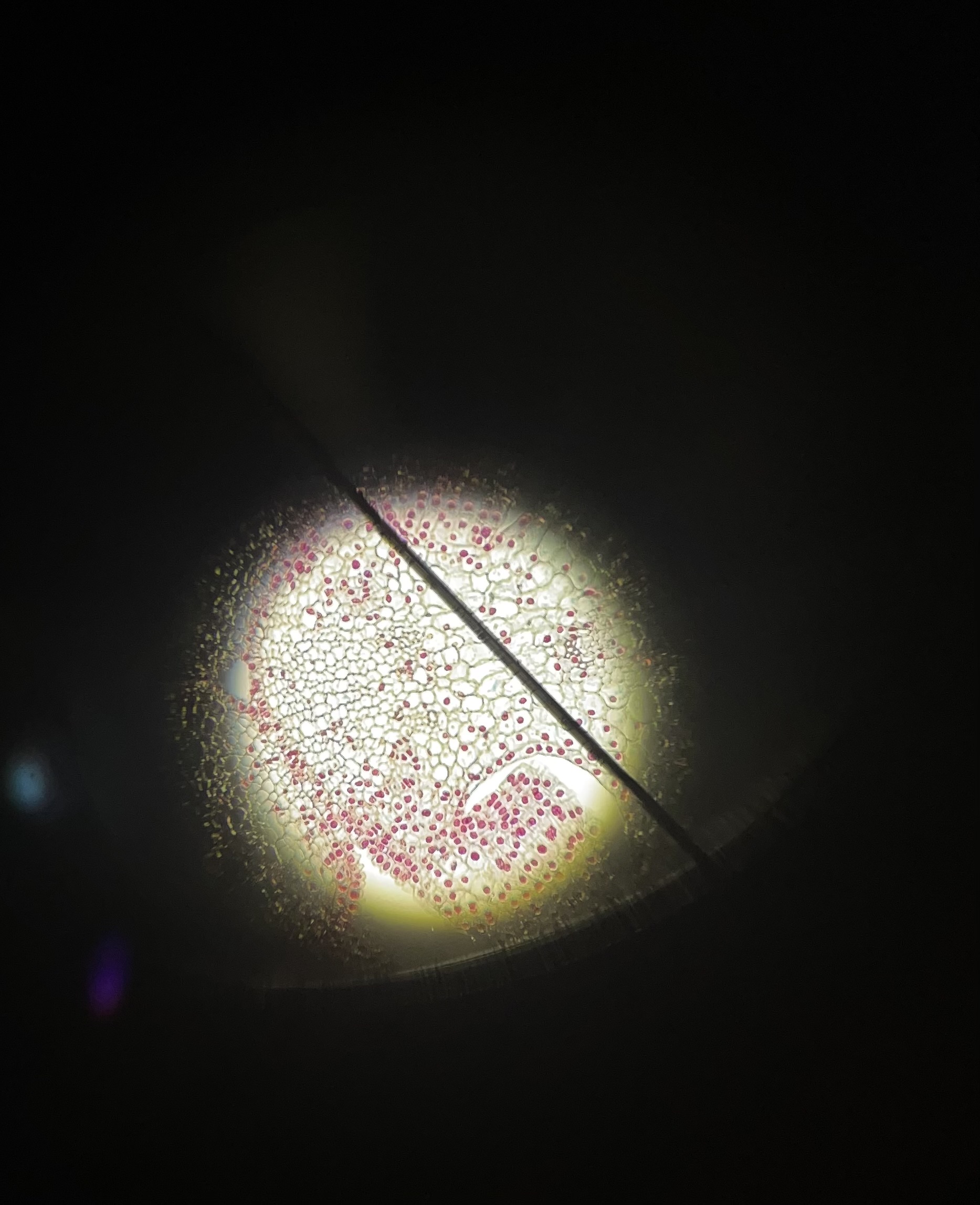
Lilium - ovary x.s. - megasporocyte
Plant, (angiosperm) Lilium
NO PHOTO - Leaves (in whole plant)
Cellulose
Epidermis with waxy cuticles (in whole plant)
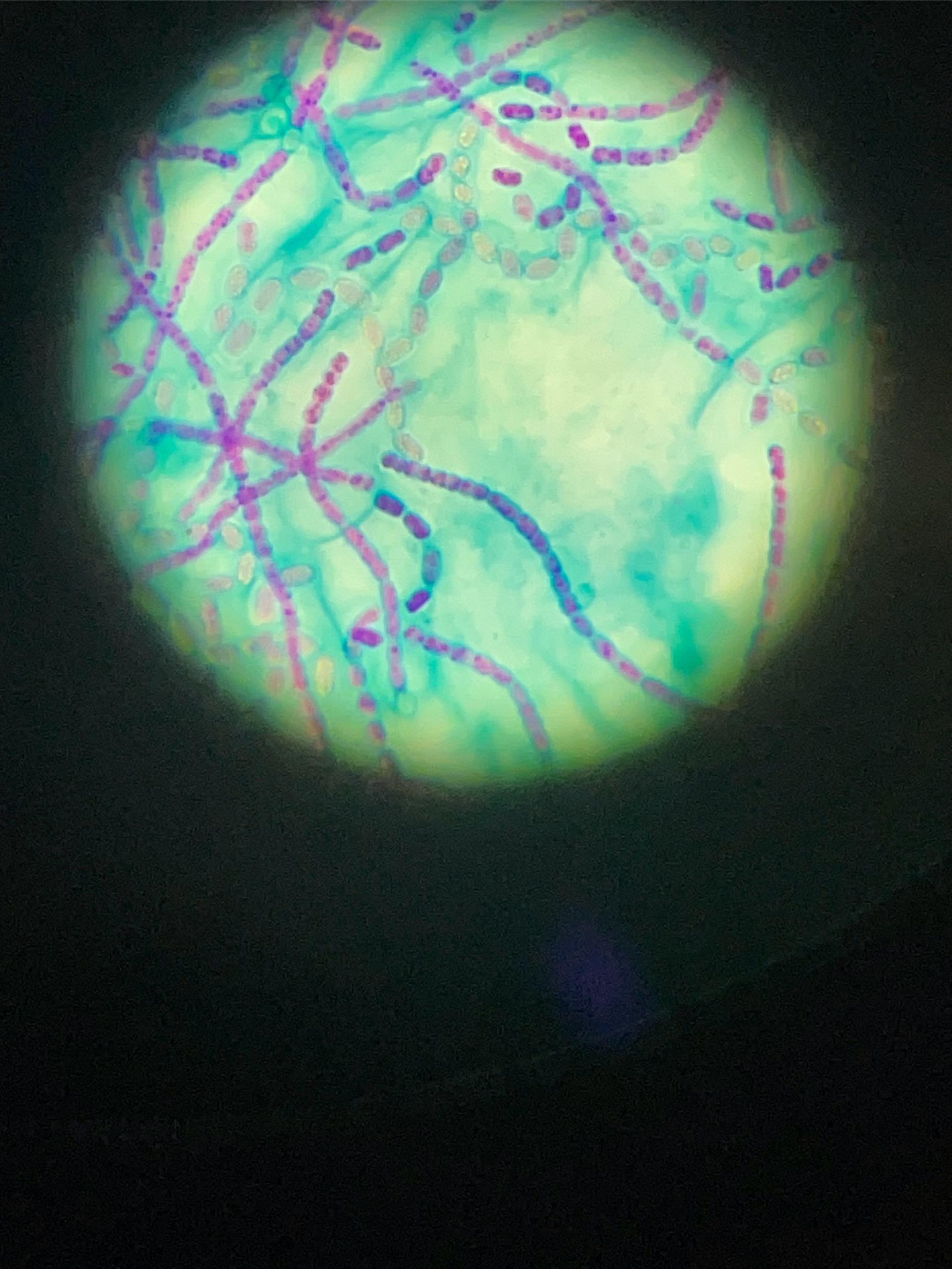
Name
1) This tissue section belongs to what kind of organism?
2) What structure(s) absorb sunlight? Identify and name it/ them.
3) Which structure prevents unwanted microbes from entering the organism?
Cyanobacteria, NOSTOC
Nostoc (Cyanobacteria genus)
Chlorophyll
Peptiglycen
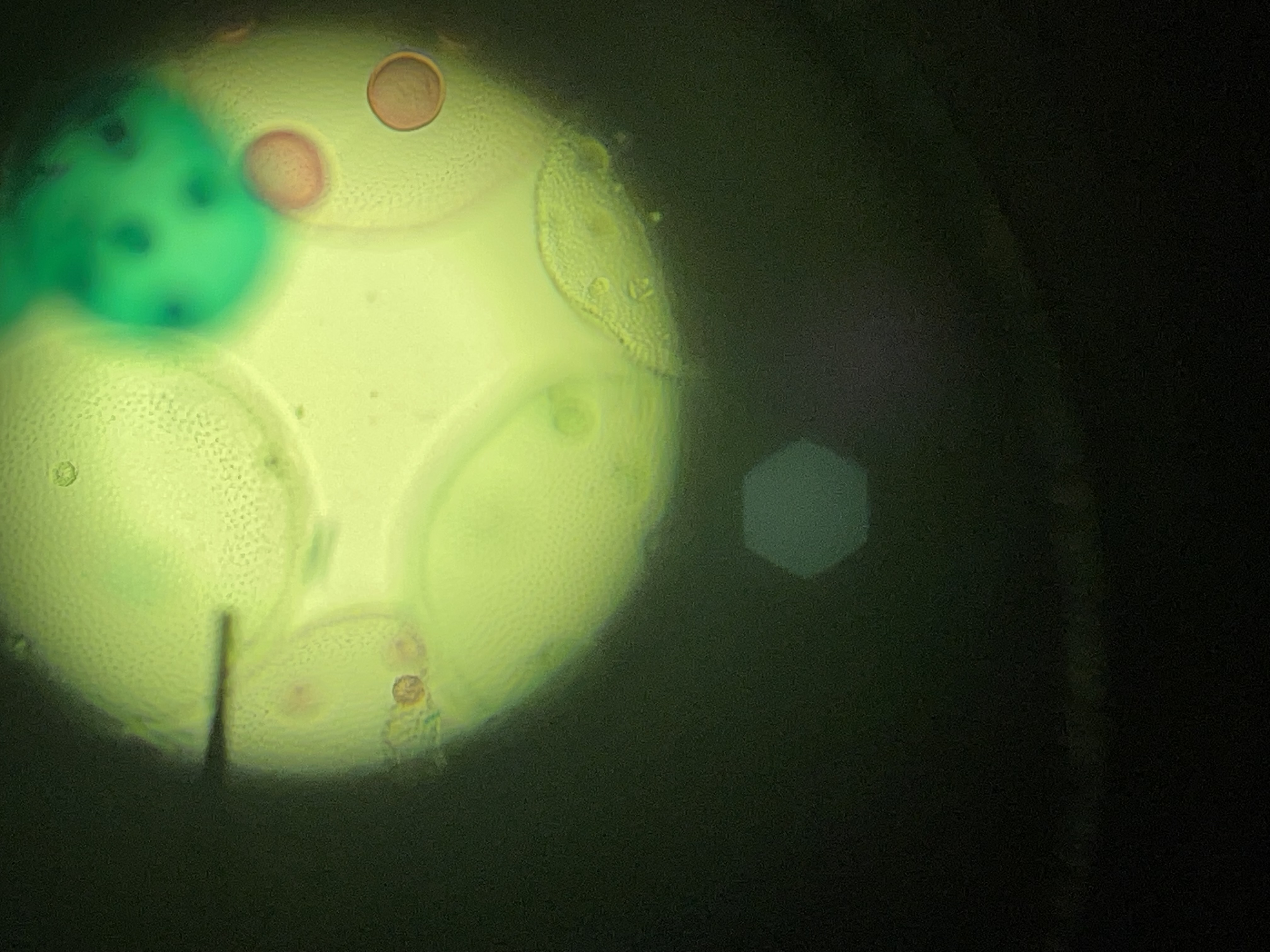
Name
1) This tissue section belongs to what kind of organism?
2) What structure(s) absorb sunlight? Identify and name it/ them.
3) Which structure prevents unwanted microbes from entering the organism?
Volvox
Volvox, green algae
Chlorophyll
Gelatinous cell wall
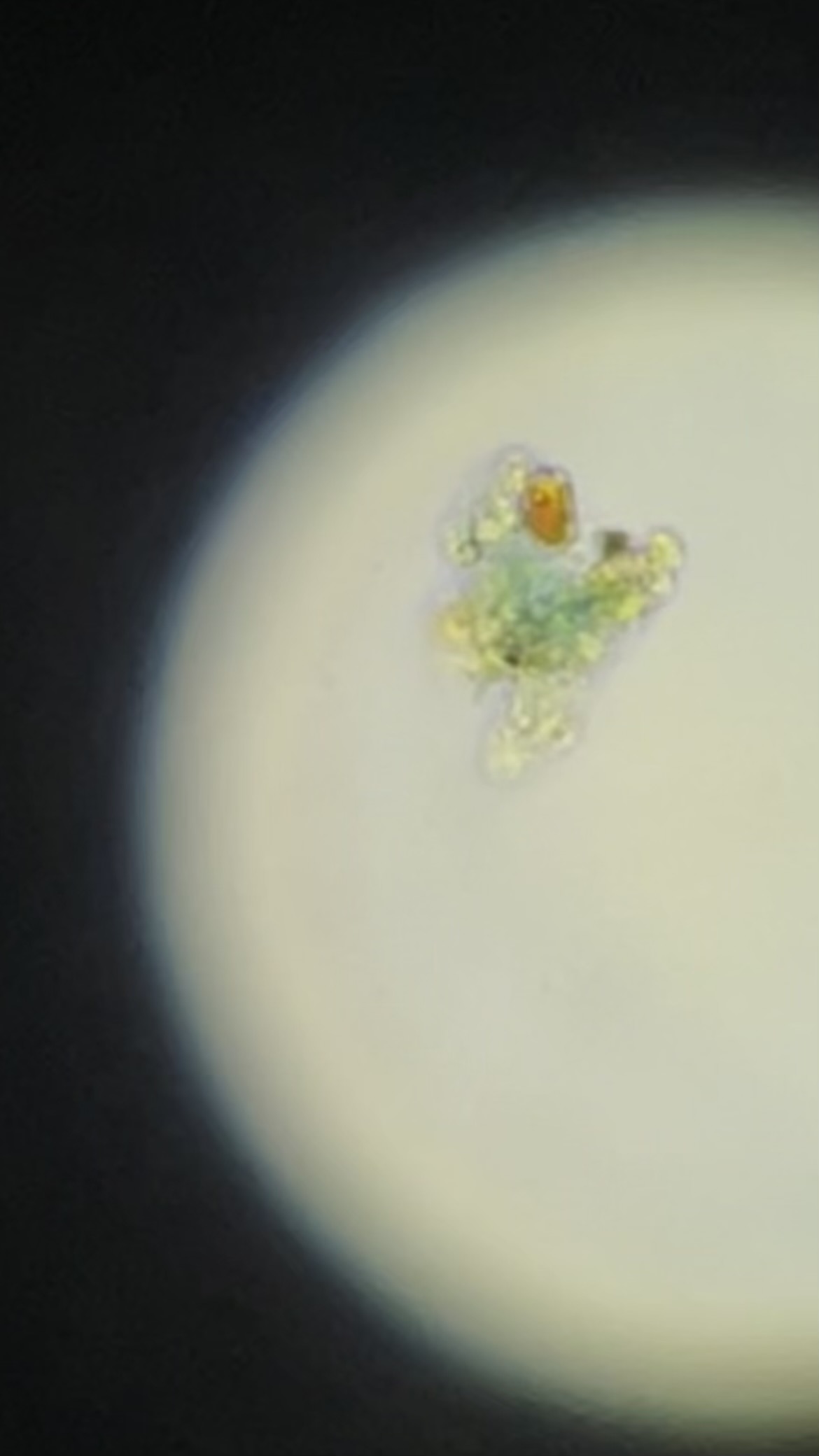
Name
1) This tissue section belongs to what kind of organism?
2) What structure(s) absorb sunlight? Identify and name it/ them.
3) Which structure prevents unwanted microbes from entering the organism?
Desmids - Mixed Species
Desmids, green algae
Chlorophyll
Cellulose
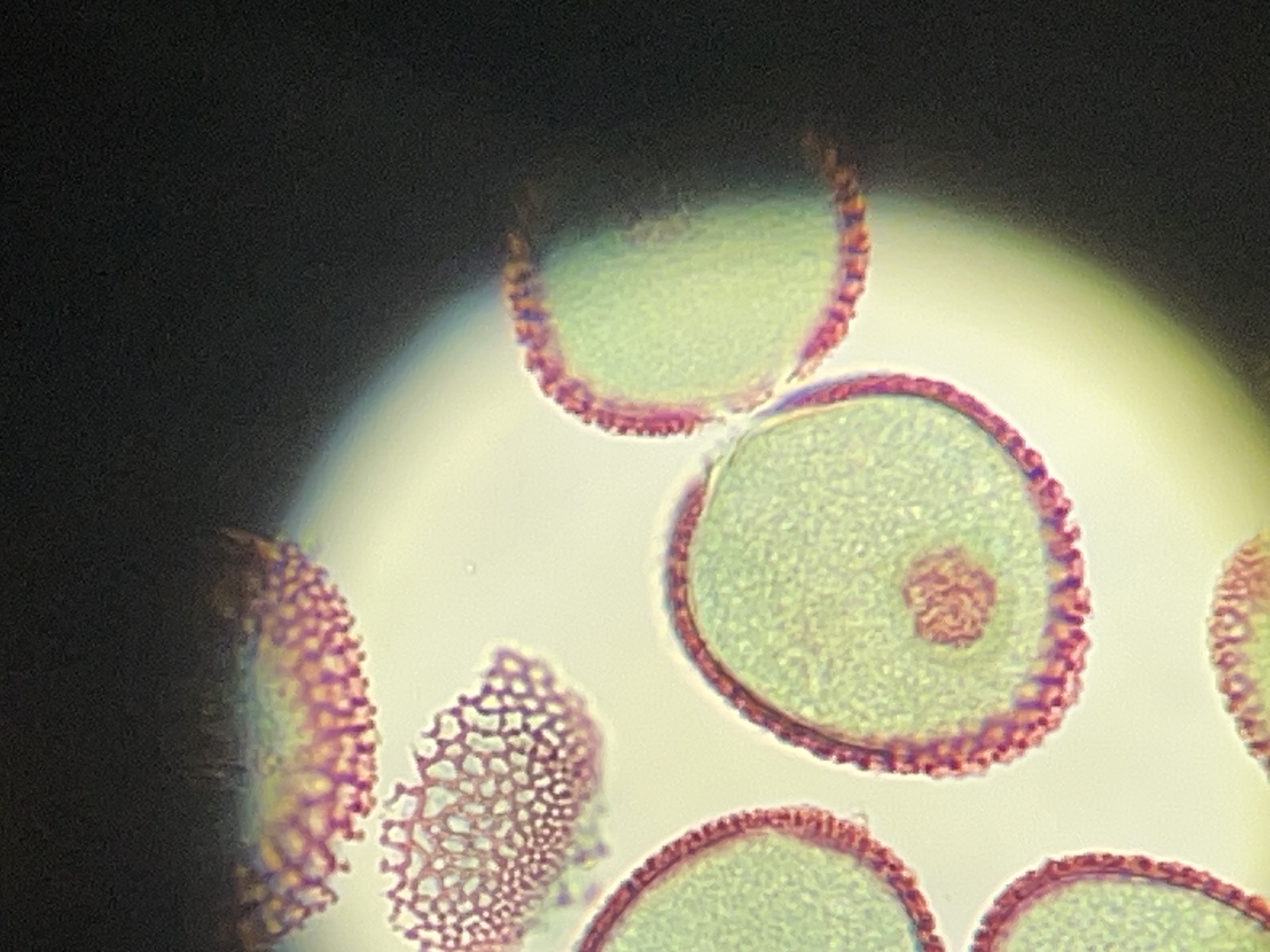
Name
1) This tissue section belongs to what kind of organism?
2) What structure(s) absorb sunlight? Identify and name it/ them.
3) Which structure prevents unwanted microbes from entering the organism?
Lilium, Anthers: 2- Nucleate (mature) pollen
Lilium (angiosperm)
NO PHOTO - Leaves (in whole plant)
Cellulose
Epidermis with waxy cuticles (in whole plant)
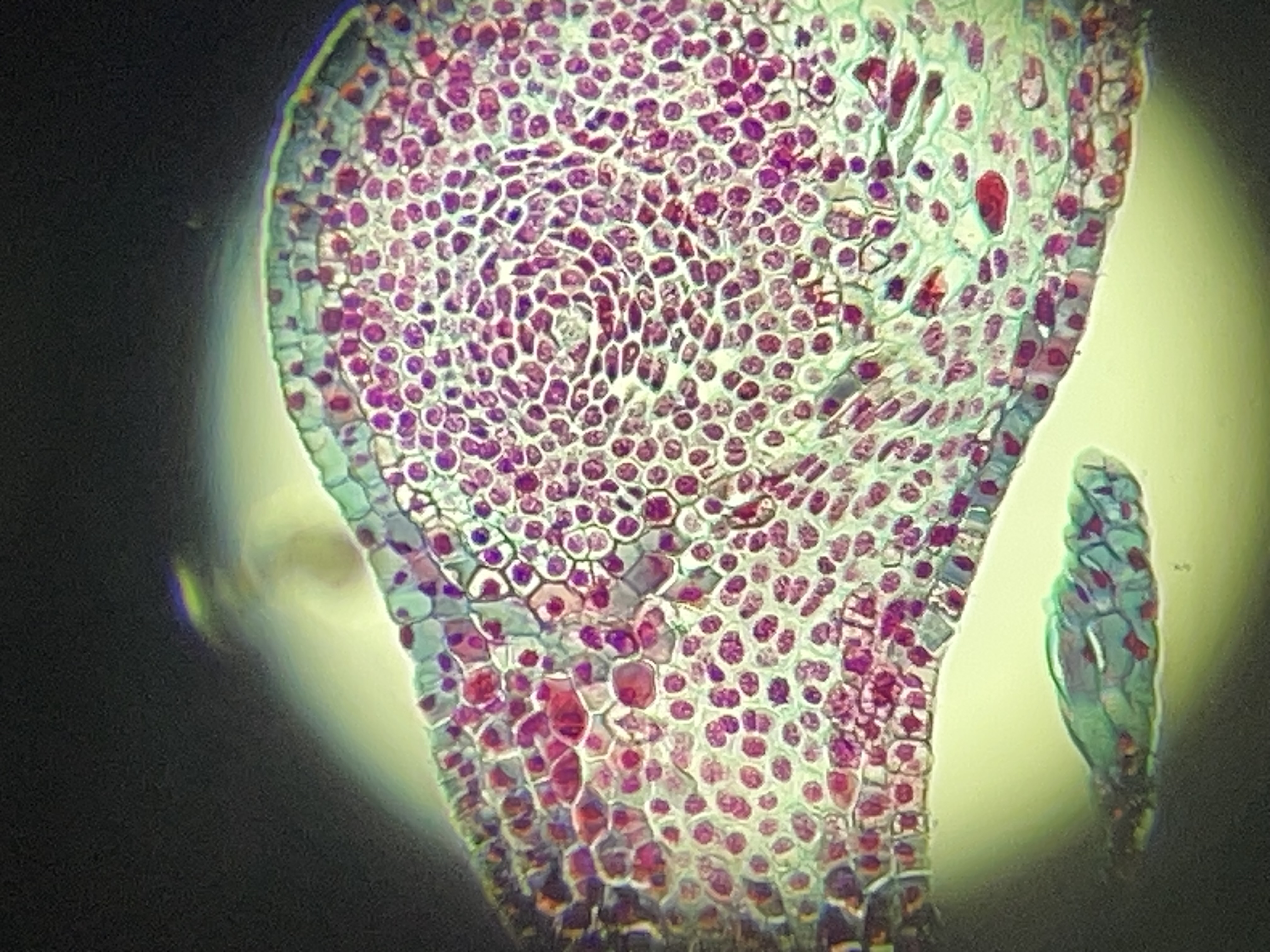
Name
1) This tissue section belongs to what kind of organism?
2) What structure(s) absorb sunlight? Identify and name it/ them.
3) Which structure prevents unwanted microbes from entering the organism?
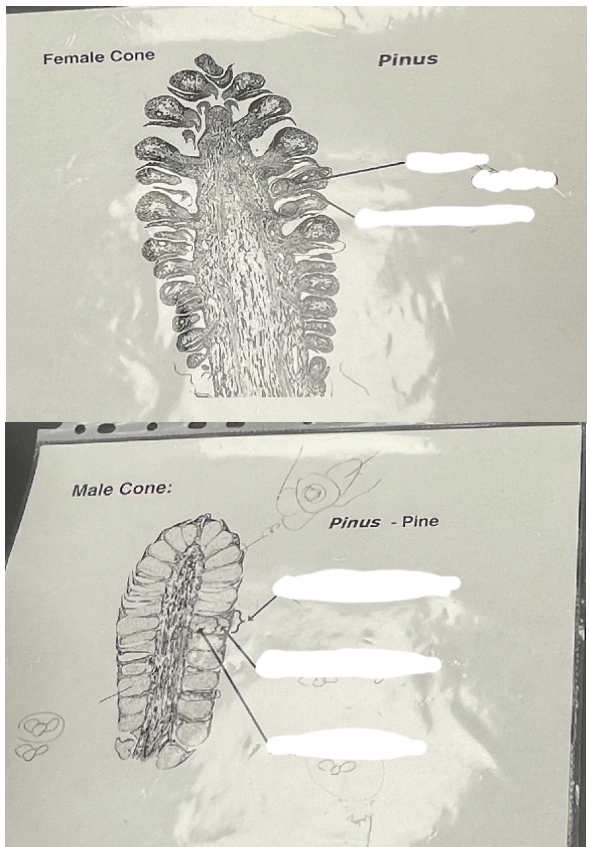
Pinus: Ovule - Megaspore mother cell and micropyle 4
[FEMALE PART]
Pinus (pine tree), gymnosperm, ovule
NO PHOTO - Pine needles > chloroplast (whole pine)
Cellulose
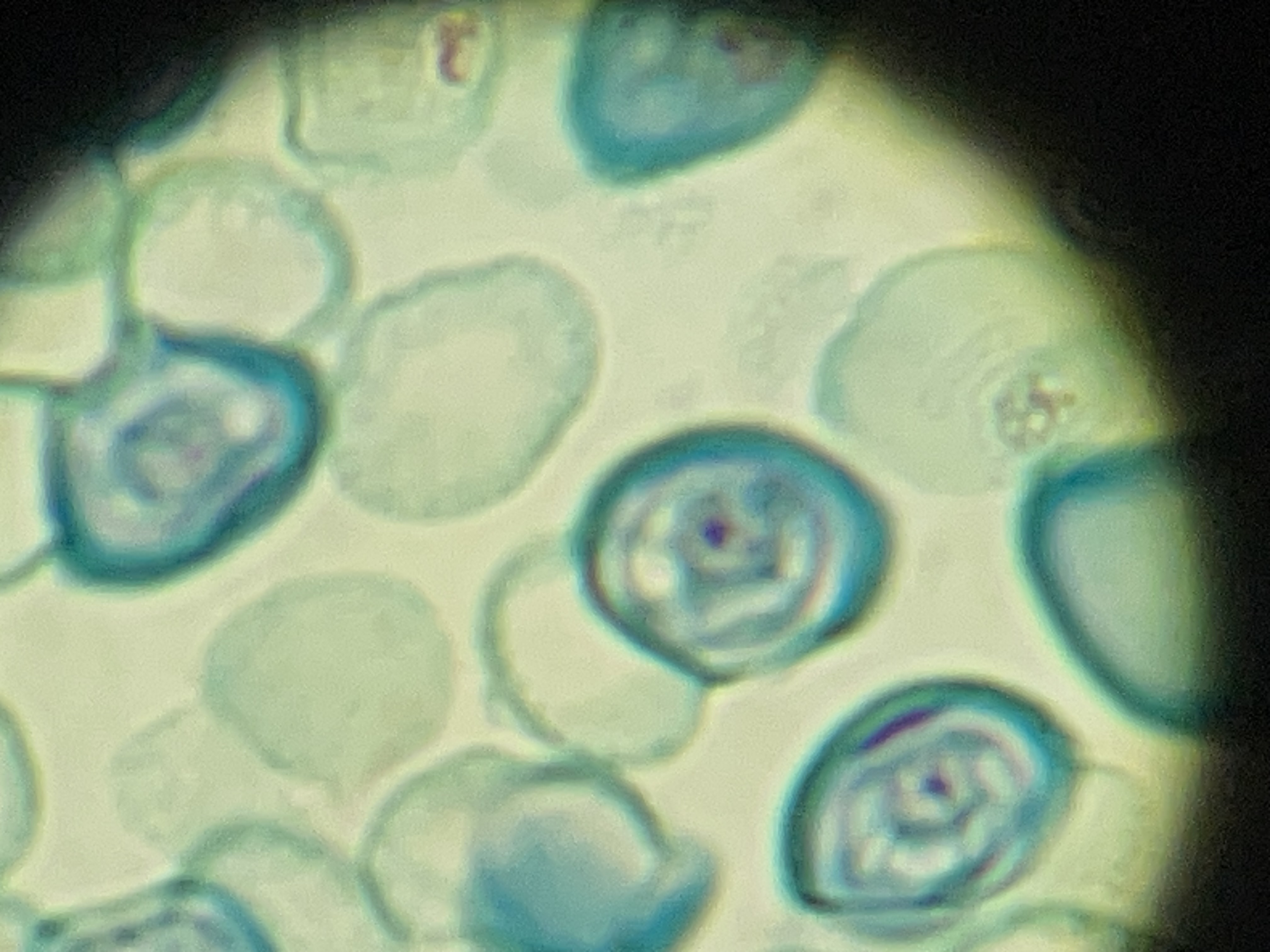
Name
1) This tissue section belongs to what kind of organism?
2) What structure(s) absorb sunlight? Identify and name it/ them.
3) Which structure prevents unwanted microbes from entering the organism?
Gymnosperm pollen grain
[MALE PART]
Gymnosperm (eg. Pinus)
NO PHOTO - Needles (whole plant)
Cellulose
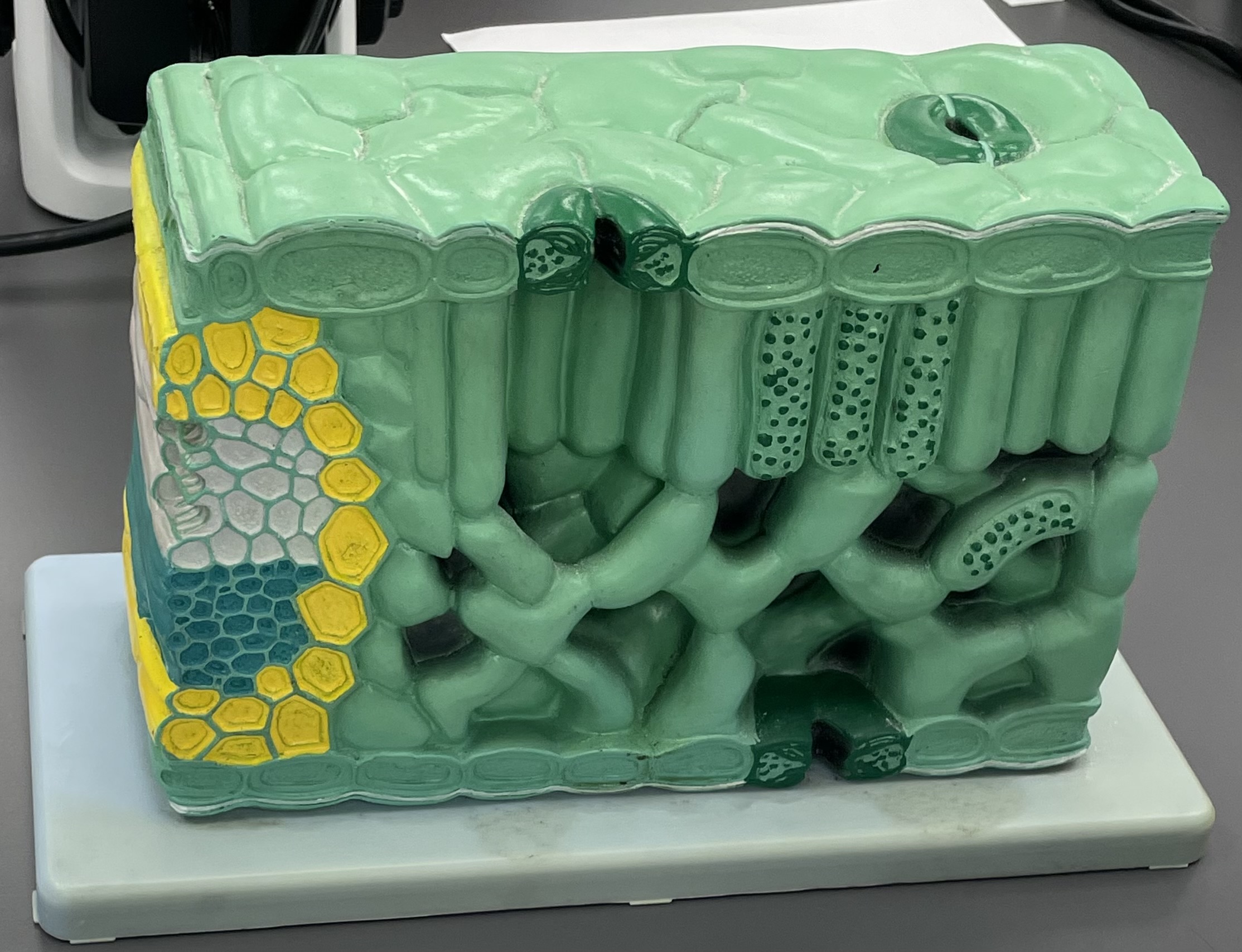
(Can use photo from next slide instead)
Name
1) This tissue section belongs to what kind of organism?
2) What structure(s) absorb sunlight? Identify and name it/ them.
3) Which structure prevents unwanted microbes from entering the organism?
Plant cell
Plant
Chloroplast
Cell wall
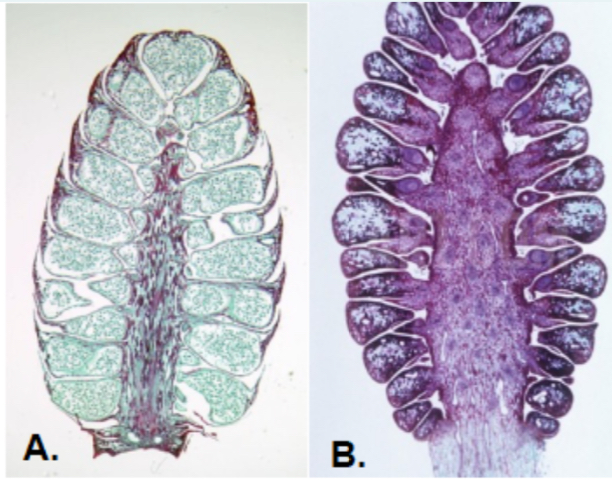
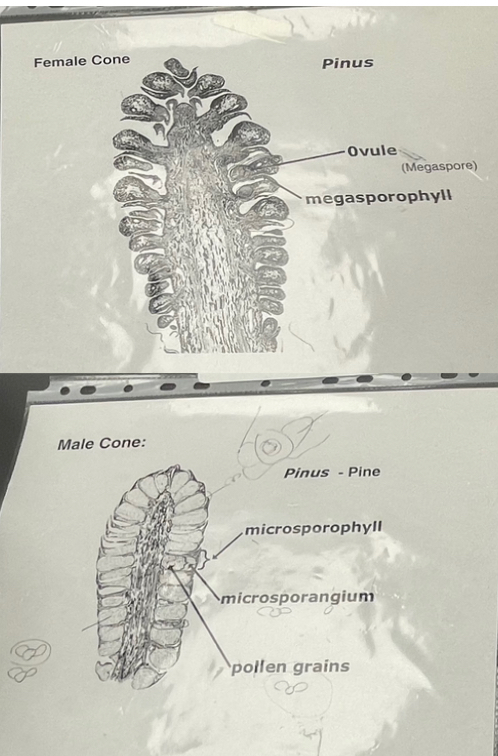
Identify whether the cone seen in the cross-section A. and B. under a microscope is male or female.
A : Male
B : Female
Pollen from the male cones of many gymnosperms have ______. What is the function of these pollen structures?
air bladders
Used to help the pollen float and travel great distance - uses air as a mechanism of pollination
What is the importance of seeds as an adaptation in gymnosperm (and angiosperms)?
Protect embryo
Provides temporary nourishment (for embryo)
Can be carried by wind
Reduce/eliminate dependance on water
Transportable plant
Name
1) This tissue section belongs to what kind of organism?
2) What structure(s) absorb sunlight? Identify and name it/ them.
3) Which structure prevents unwanted microbes from entering the organism?
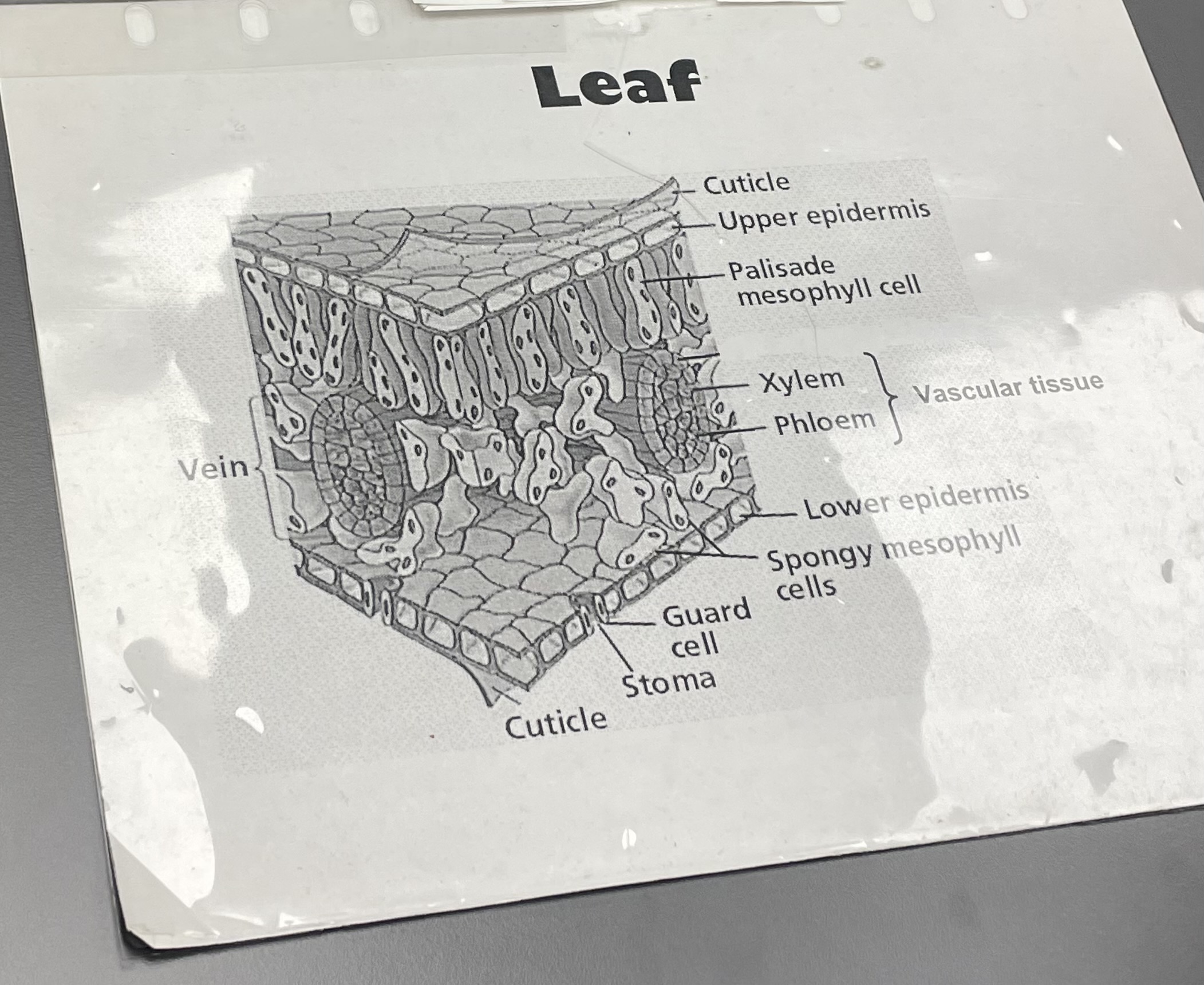
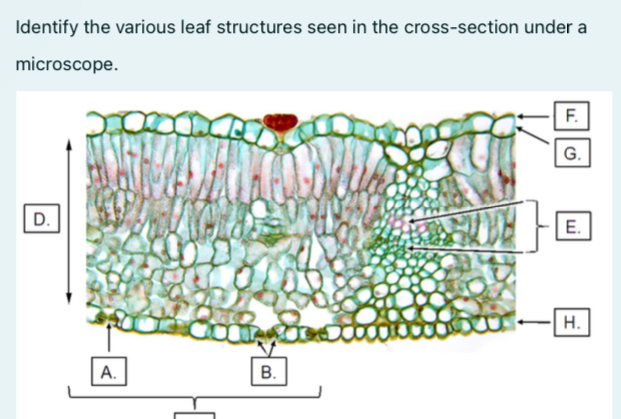
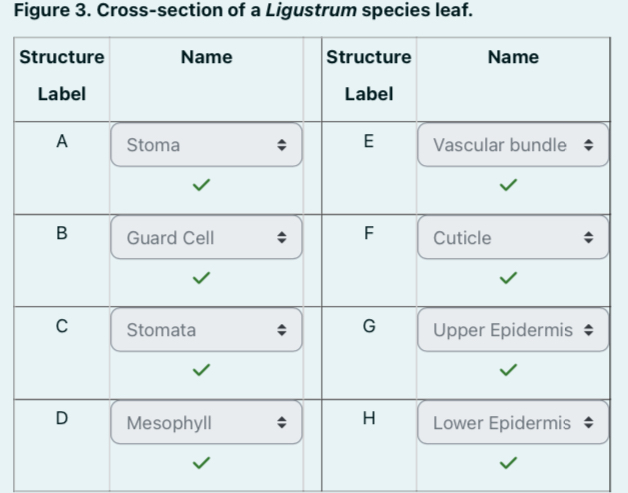
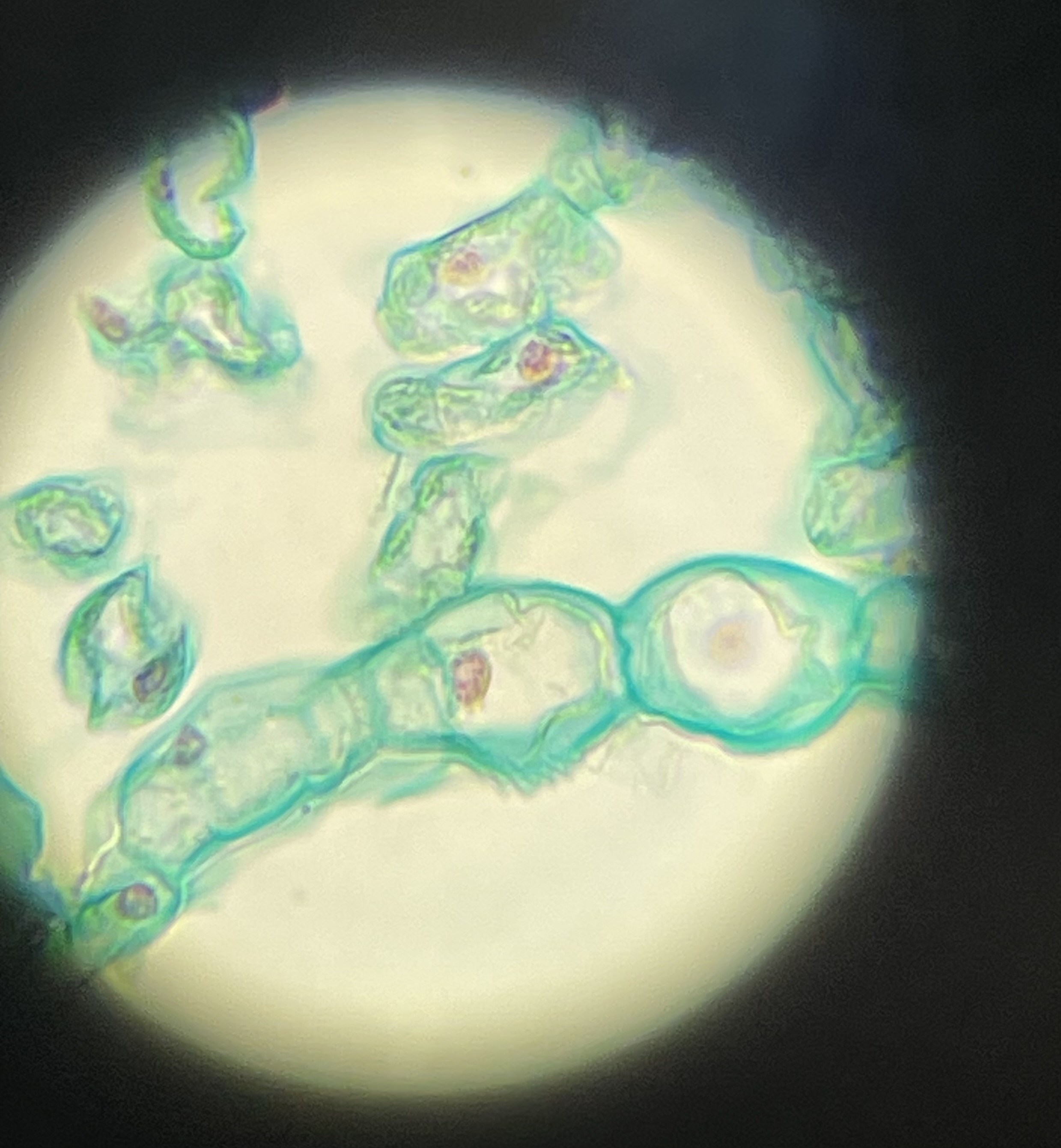
Ligustrum leaf, x.s.
Ligustrum leaf
Chlorophyll
Cellulose
Waxy Cuticle and epidermis
Name
1) This tissue section belongs to what kind of organism?
2) What structure(s) absorb sunlight? Identify and name it/ them.
3) Which structure prevents unwanted microbes from entering the organism?
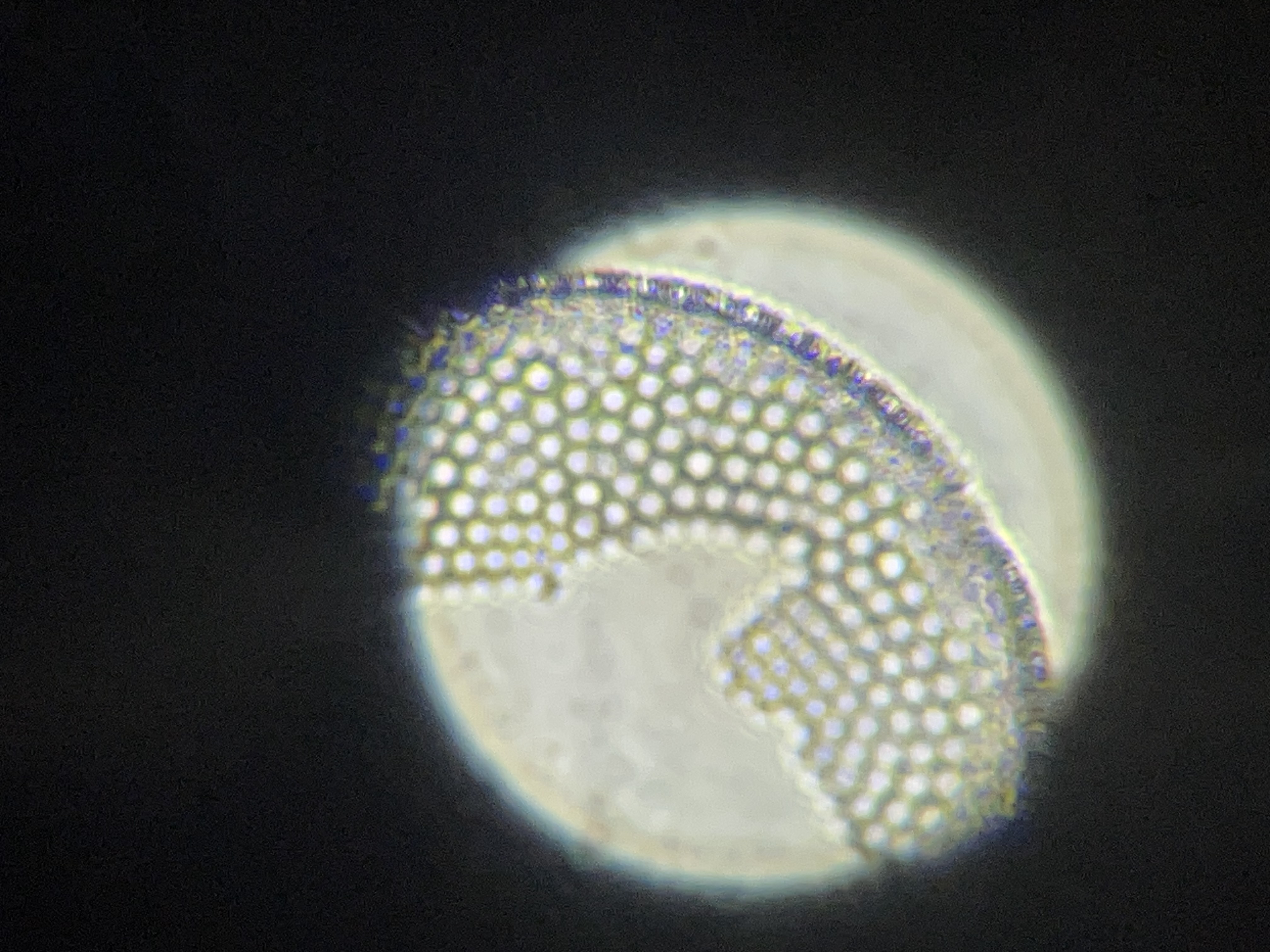
Diatom Mixed Species - (Protists)
Diatoms (protists)
Chlorophyll
Silica
Name
1) This tissue section belongs to what kind of organism?
2) What structure(s) absorb sunlight? Identify and name it/ them.
3) Which structure prevents unwanted microbes from entering the organism?
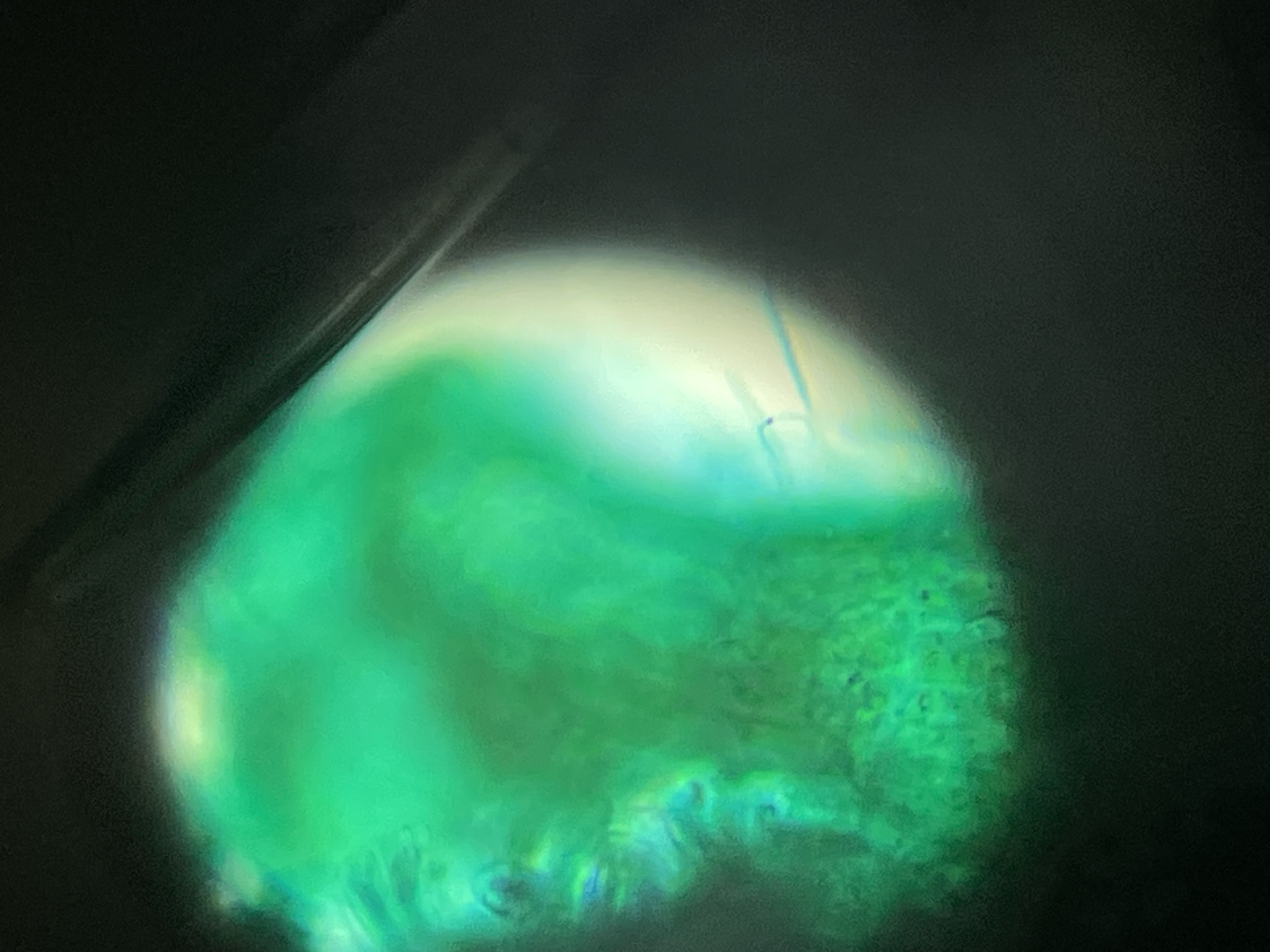
Polysiphonia Spermatangia - Red Algae
Polysiphonia (red algae)
Chloroplasts
Cellulose
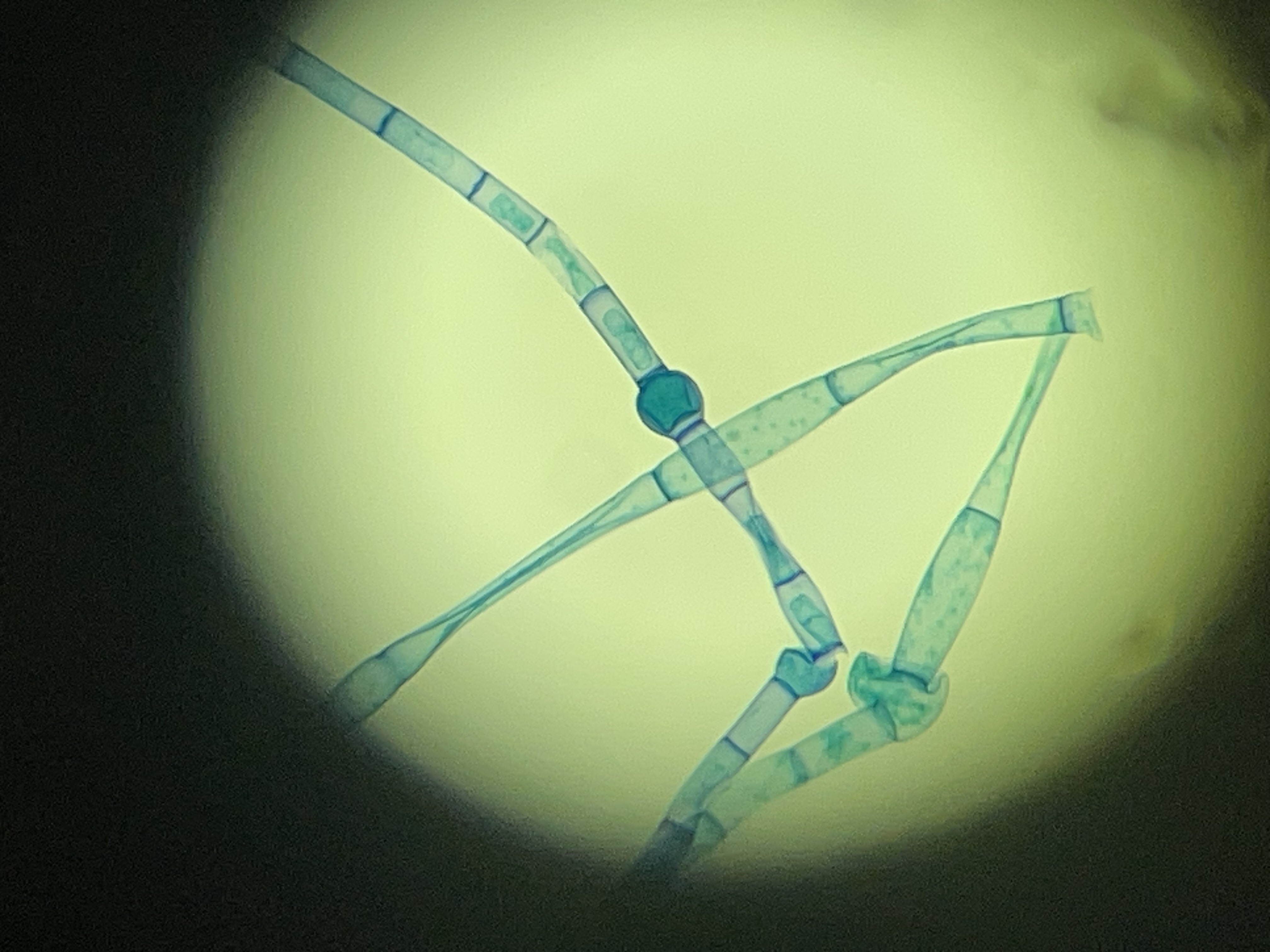
Name
1) This tissue section belongs to what kind of organism?
2) What structure(s) absorb sunlight? Identify and name it/ them.
3) Which structure prevents unwanted microbes from entering the organism?
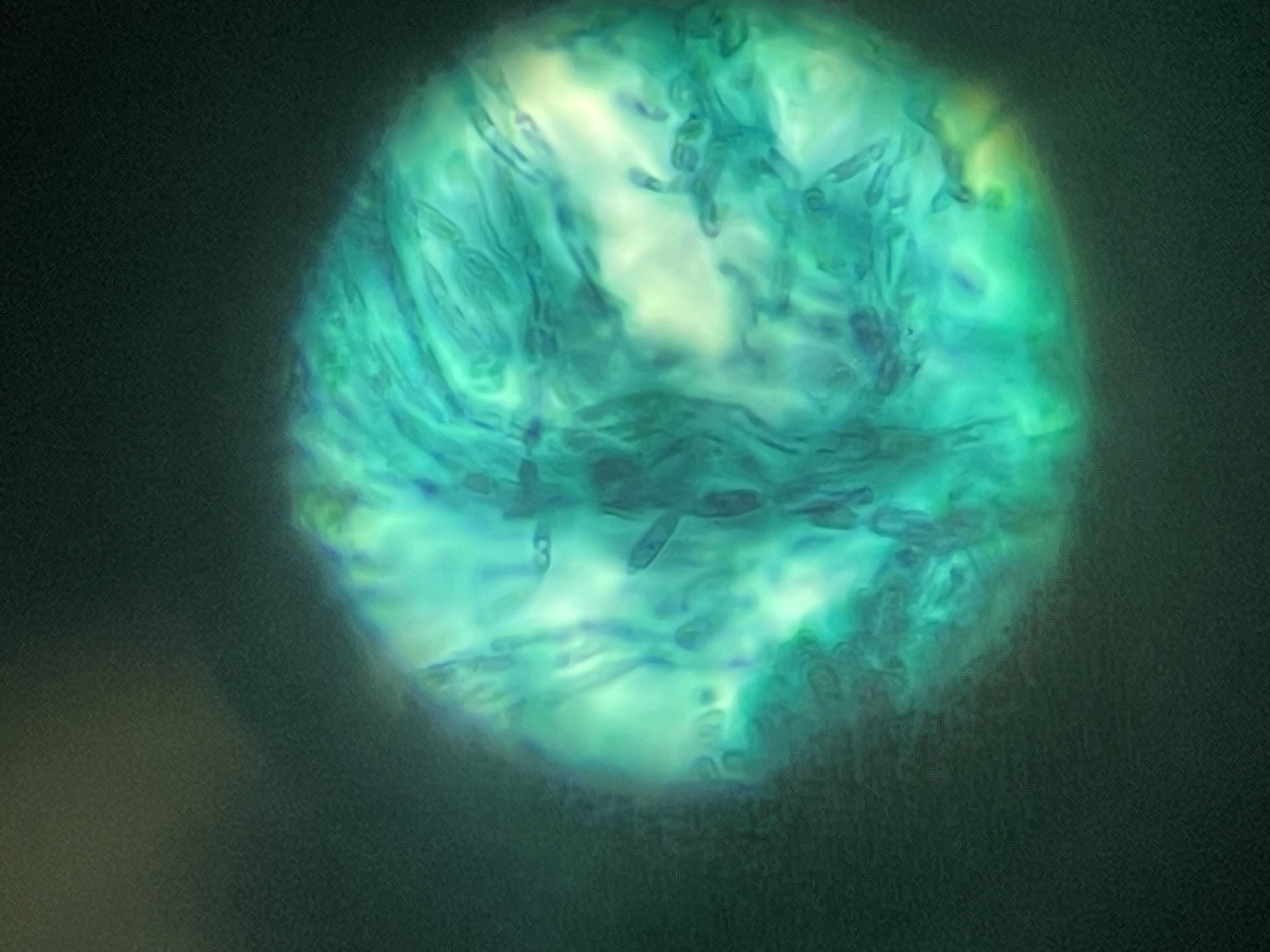
Oedogonium Macrandrous
Oedogonium Macrandrous (Green algae)
Chlorophyll a & b
Cellulose
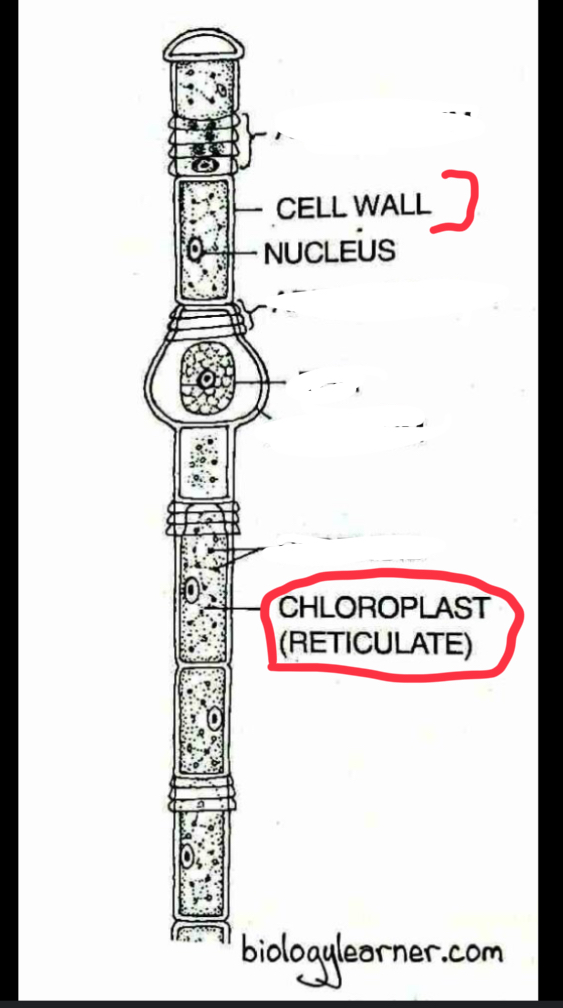
Name
1) This tissue section belongs to what kind of organism?
2) What structure(s) absorb sunlight? Identify and name it/ them.
3) Which structure prevents unwanted microbes from entering the organism?
Batrachospermum
Batrachospermum (Red algae)
(chlorophyll a)
Cellulose
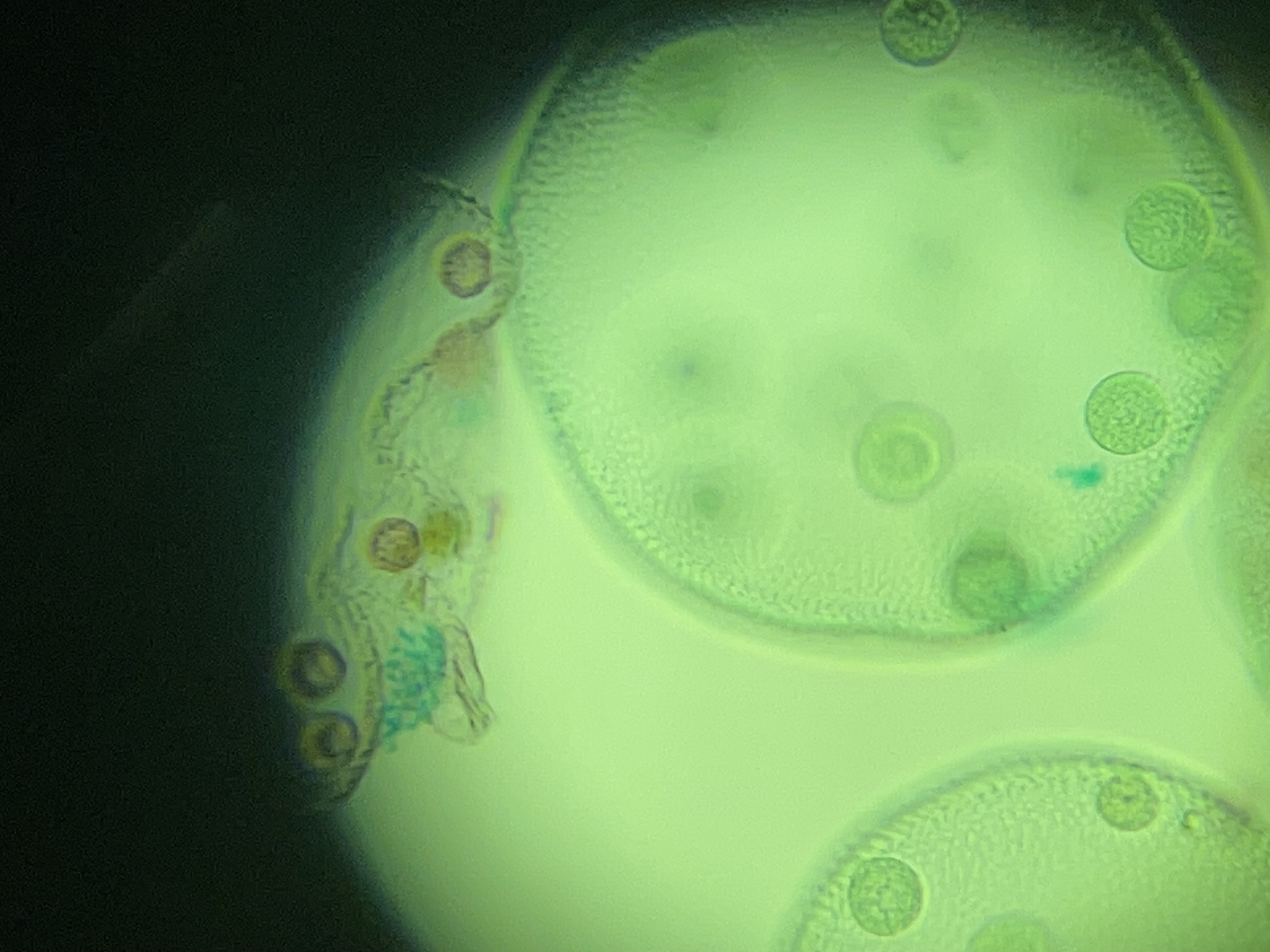
Name
1) This tissue section belongs to what kind of organism?
2) What structure(s) absorb sunlight? Identify and name it/ them.
3) Which structure prevents unwanted microbes from entering the organism?
Volvox
Volvox
Chloroplasts (chlorophyll a & b)
Gelatinous cell wall
Terrestrial vs Aquatic Ecosystems
• Terrestrial: more nutrients from diverse organic matter > higher variety of bacterial species
• Aquatic: nutrients often are limited. Always have more bacterial richness due to consistent nutrient distribution in water
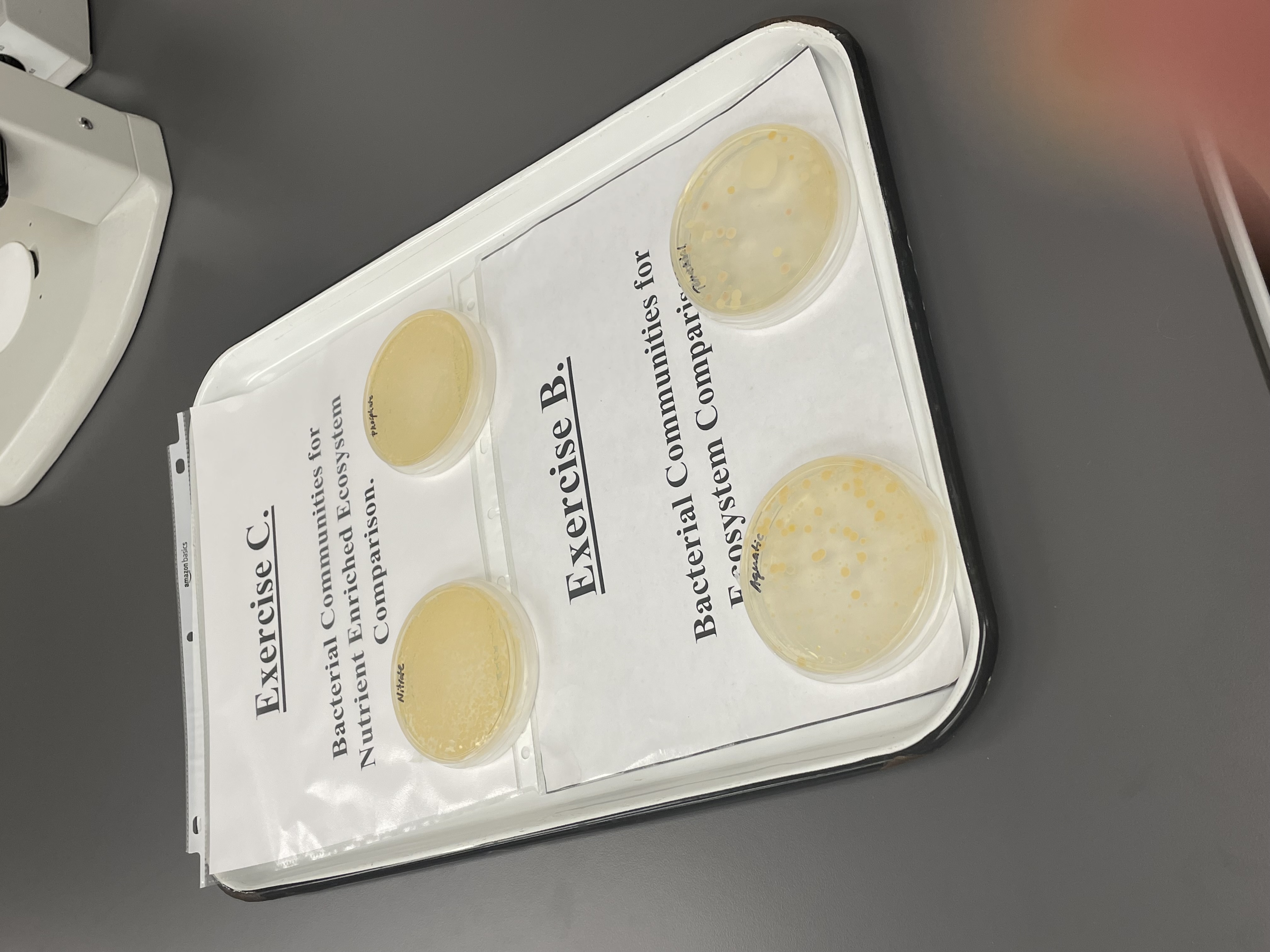
What are the ecological implications of Phosphates and Nitrates on bacterial community dynamics?
• ^ Phosphate concentrations can lead to the dominance of specific bacterial species = decreasing overall community diversity
• ^ Nitrate levels mostly enhance the activity of nitrifying bacteria without significantly impacting divversity
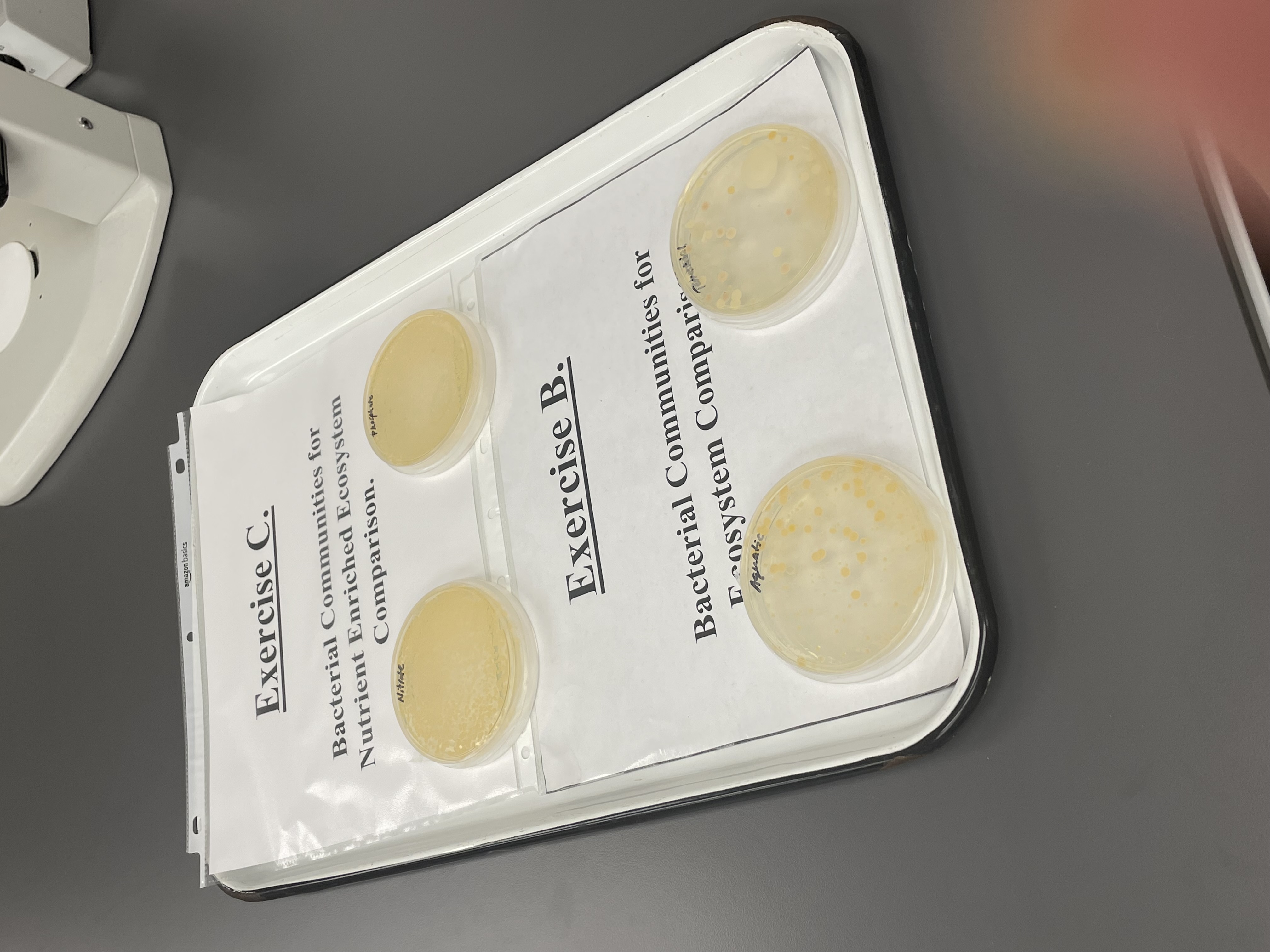
What is the primary ecological consequence of the synergistic impact of high phosphates and nitrates in aquatic environments?
The simultaneous increase in nutrient availability leads to significant algal blooms, which subsequently deplete oxygen levels and alter bacterial community structure
Starch agar test results should be positive or negative for the following bacterial species?:
E. coli
B. subtilise
Negative (e. coli)
Positive (b. subtilis)
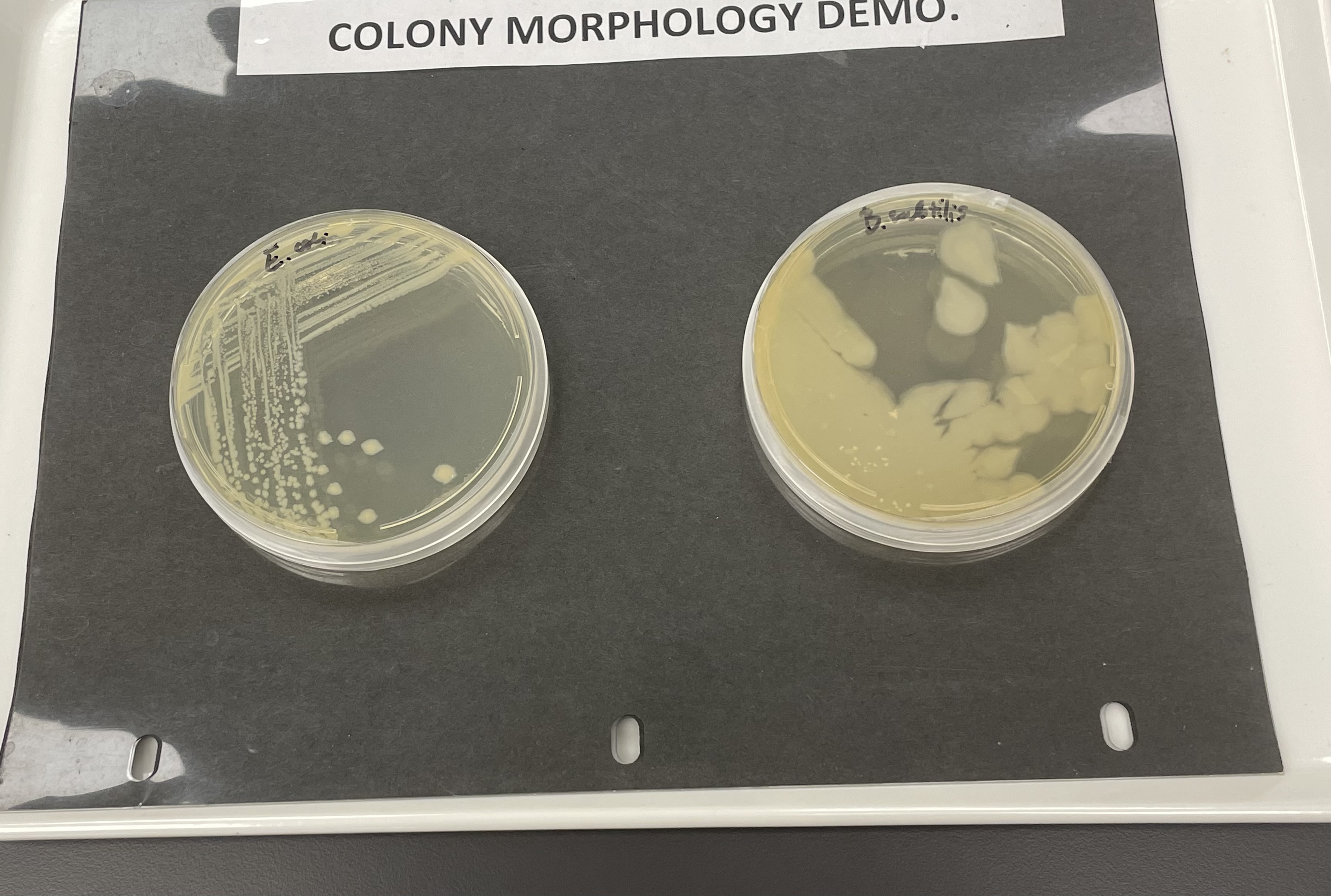
A positive test indicates that the bacterial species has a gene for and produces which *enzyme?
And what role does this enzyme play in bacteria’s *metabolism?
Amylase - it hydrolyse the glycosidic bonds in starch, converting complex carbohydrates (polymer) for storage.
The b subtilis was +, thus it is able to break down complex carbs
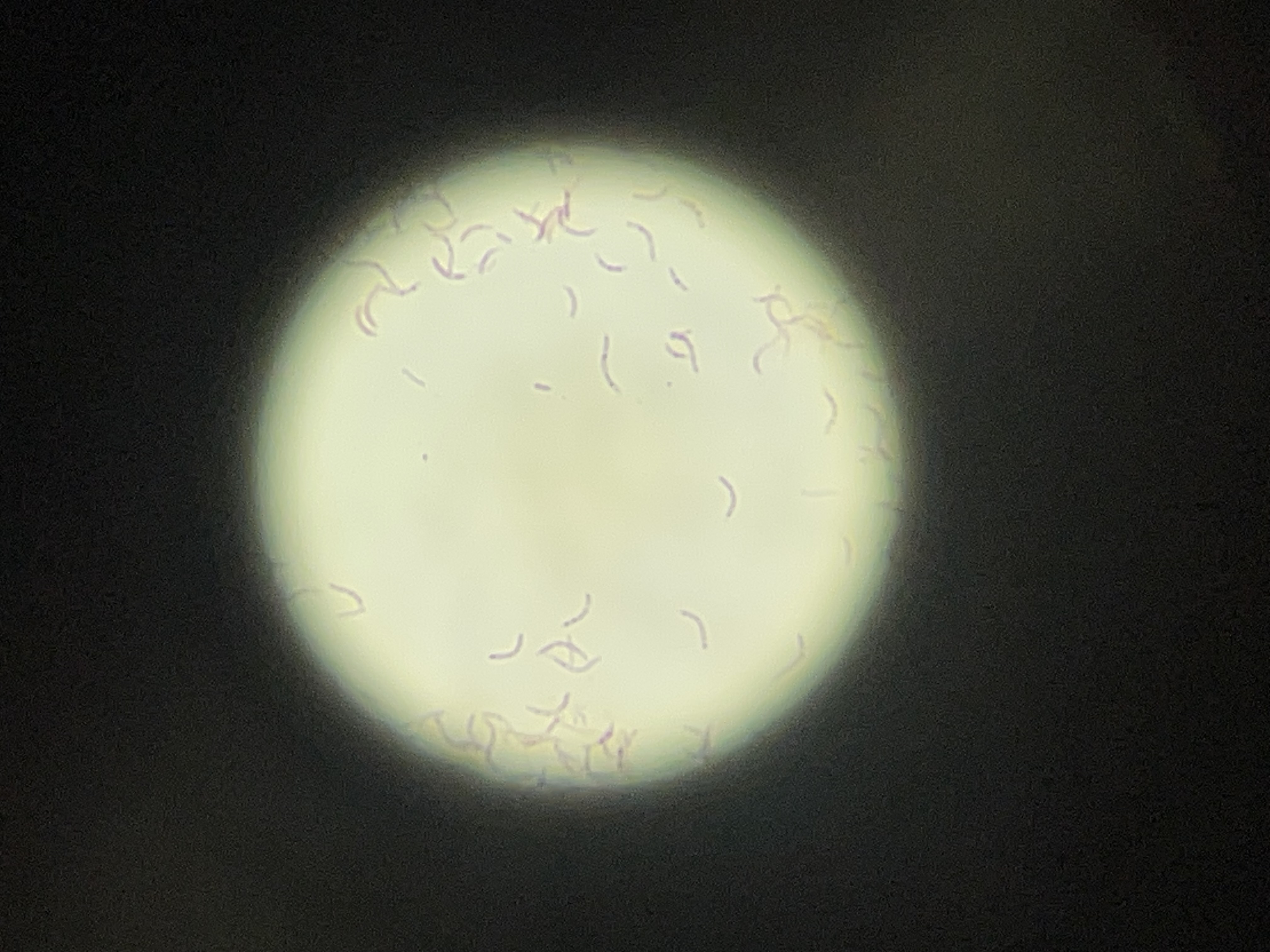
(123 questions?) - JUST NAME THE SHAPE AND ORGNAISM
Typical Bacteria Forms G ±
Spirillum shape
Bacteria
None?
Cell wall (peptiglycan)
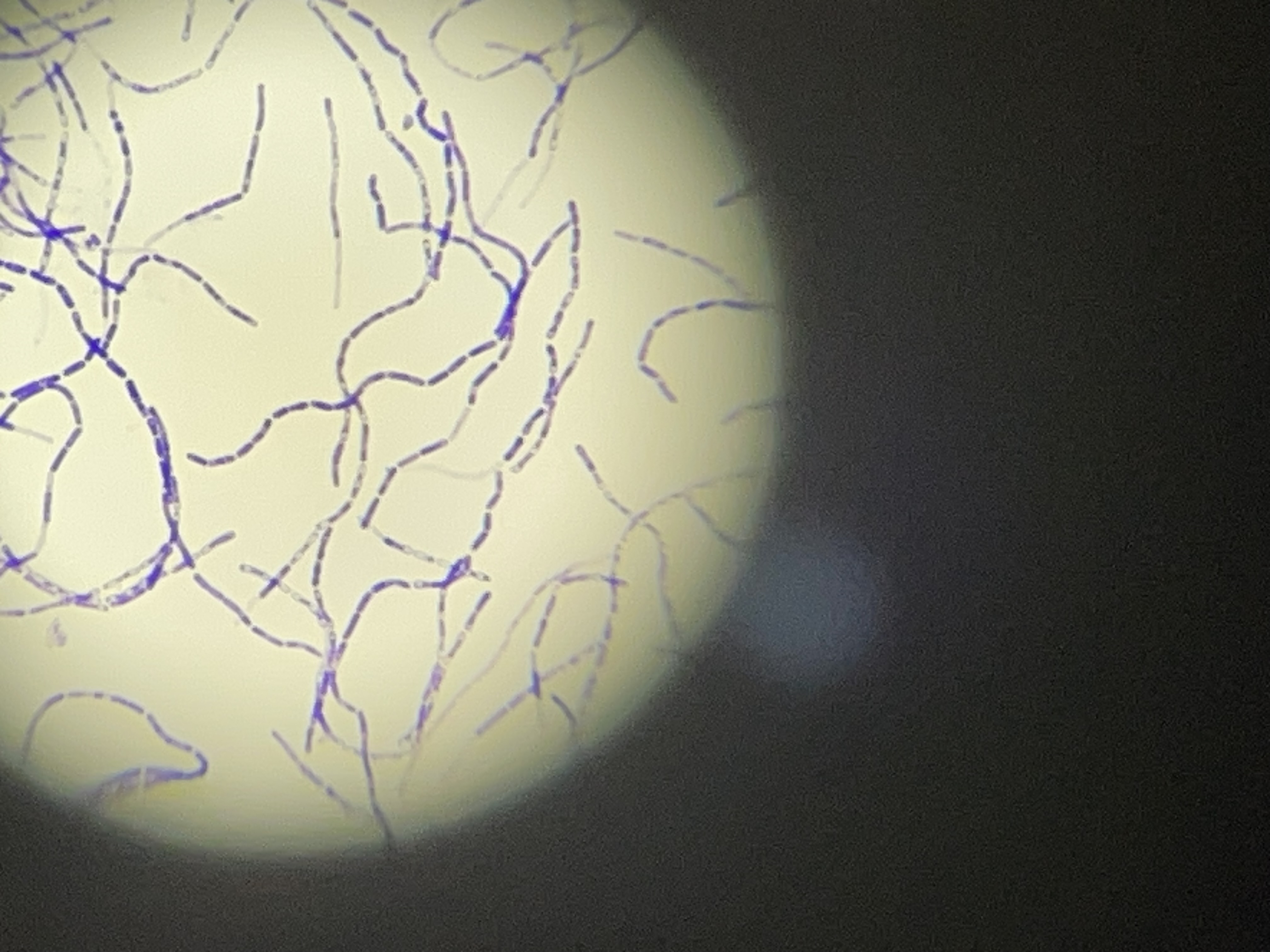
JUST NAME THE SHAPE AND ORGNAISM
Typical Bacteria Forms G ±
Bacillus shape
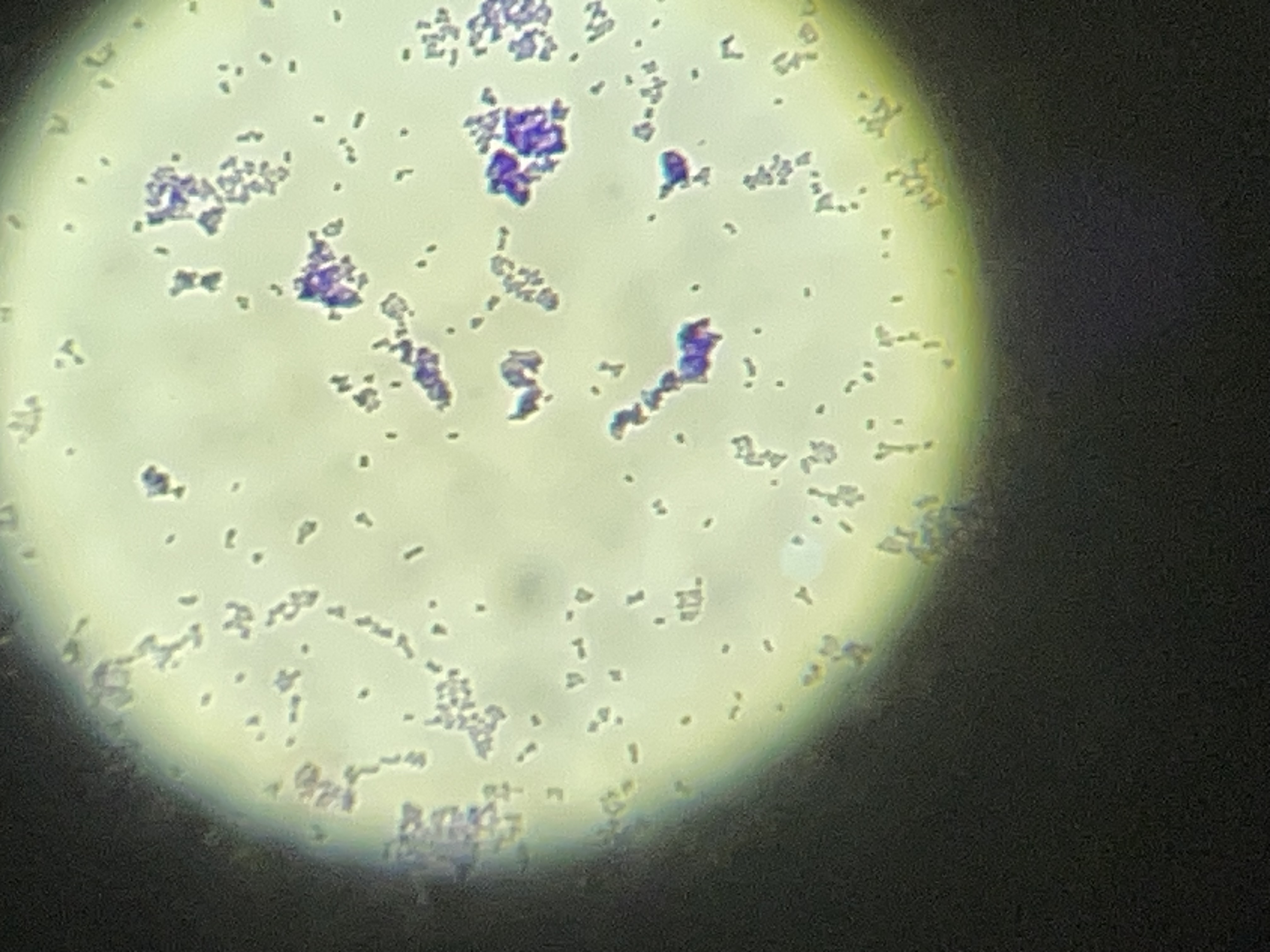
JUST NAME THE SHAPE AND ORGNAISM
Typical Bacteria Forms G ±
Coccus shape
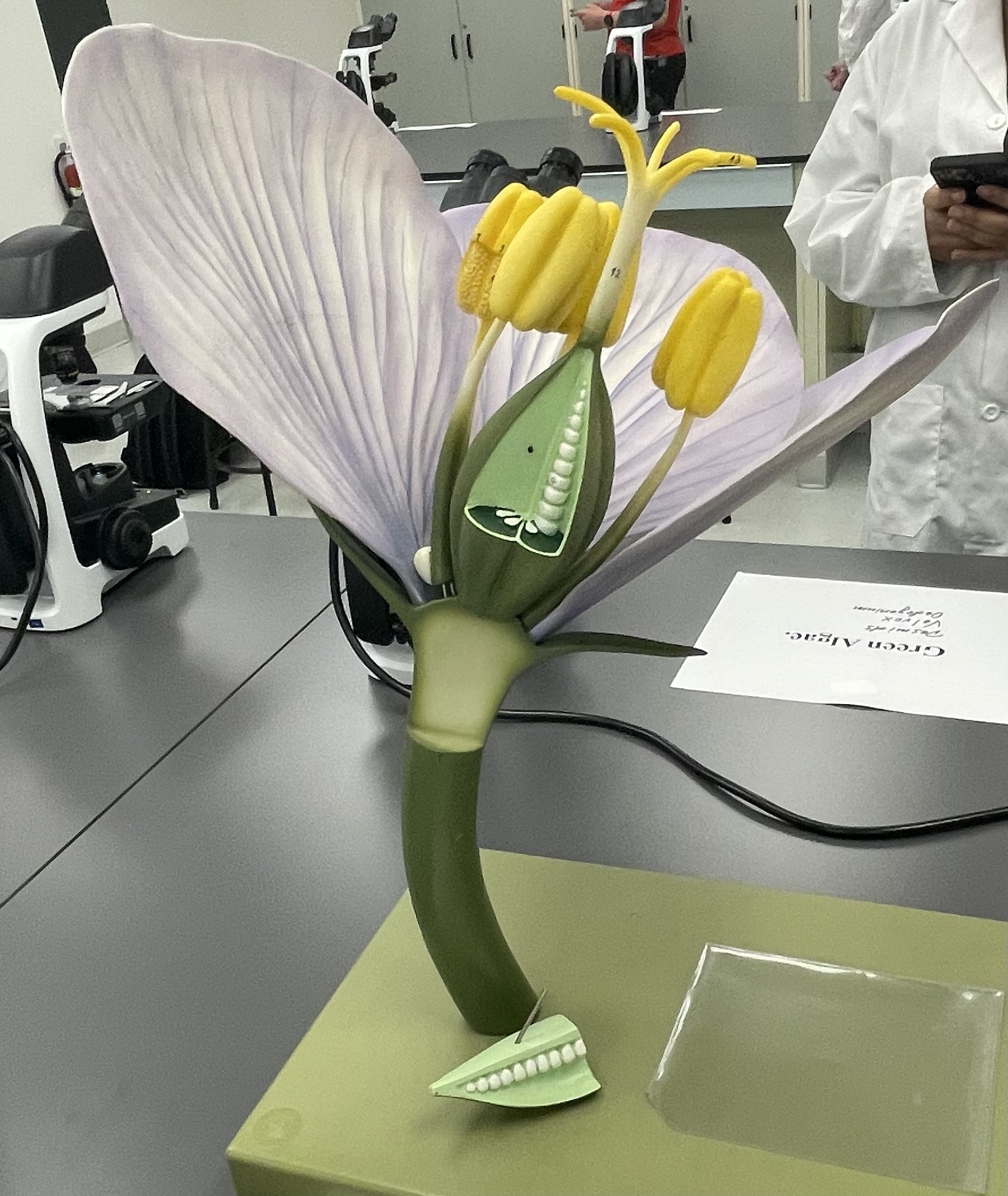
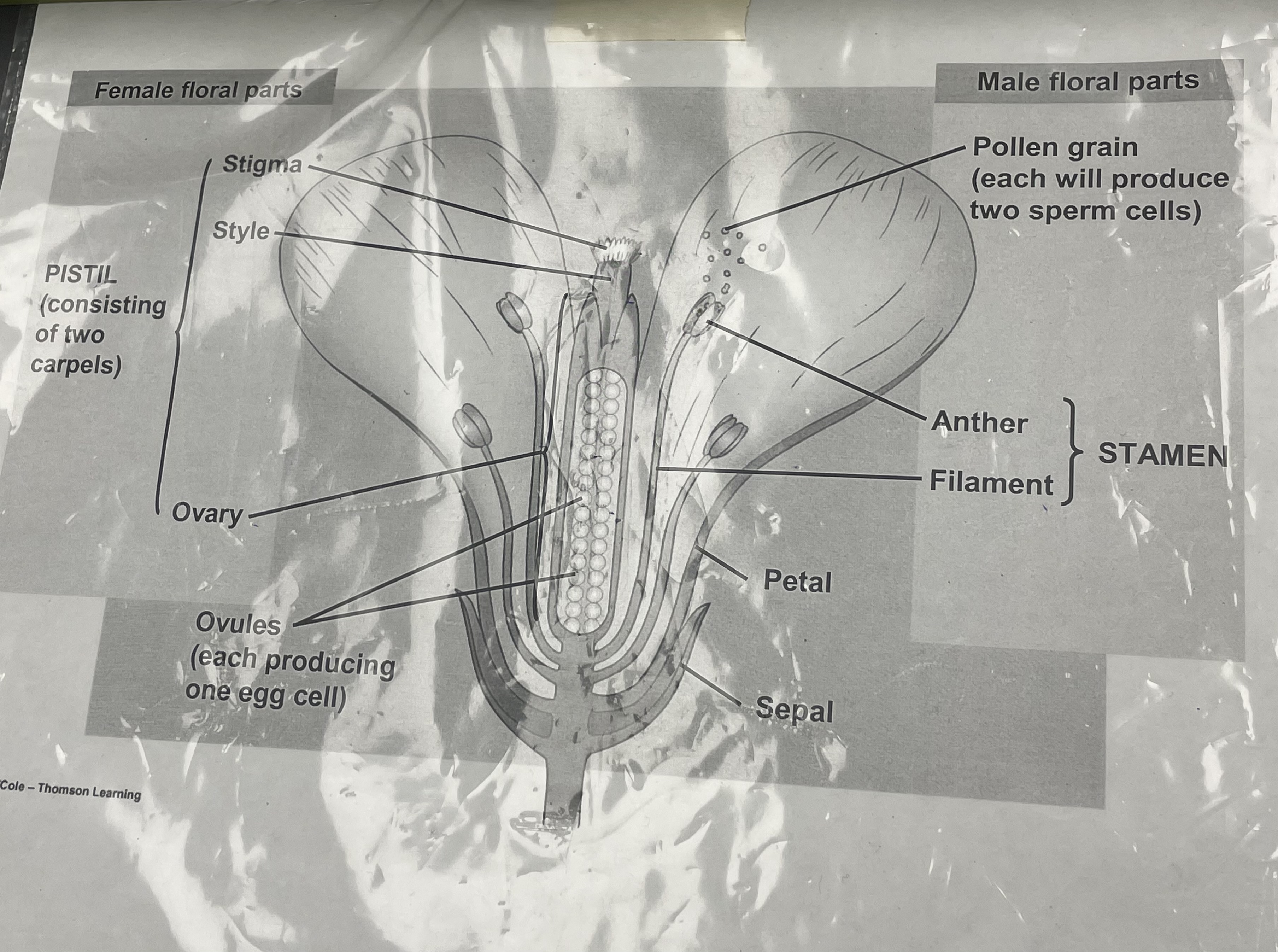
Flower parts (can insert another image)
What are the 2 main types of *growth media used to culture bacteria? Explain them
Broth (liquid medium) : produces cells that can reach very high cell concentrations, offers a uniform culture condition for the growth of bacteria, allows bacteria to grow at varying oxygen levels
*Agar (semi-solid medium): isolate a pure bacterial colony from a mixture of bacteria, determine colony characteristics of microorganisms and culture a film of bacteria referred to as a lawn.
What do you call the technique that does this stuff: prevents microbes from unintentionally being released into environment, *prevent sterile solutions and cultures from becoming contaminated by unwanted microorganisms in the lab, creates a barrier between the microorganisms in the environment and the sterile cell culture.
Aseptic Technique
3 things that characterize bacteria:
Colony level
Cell level
Molecular level
Colony level - what’s colony morphology?
Different types of bacteria colonies - characteristics include: shape, colour and surface texture
Cell shape - Name the bacterial arrangements based on the following descriptions:
Round/circular
Long/pill-like
Spiral/ curved
Coccus
Bacillus
Spirillum
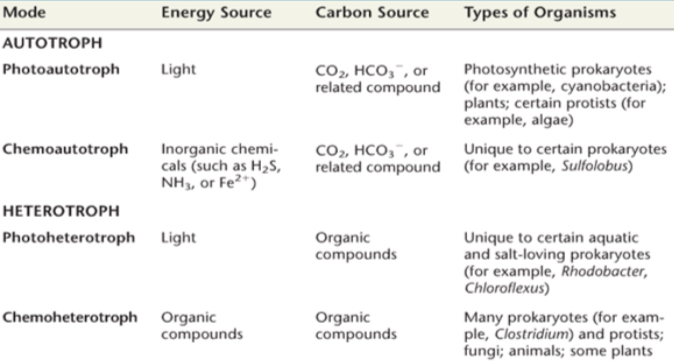
Molecular level - what are the 4 nutritional modes?
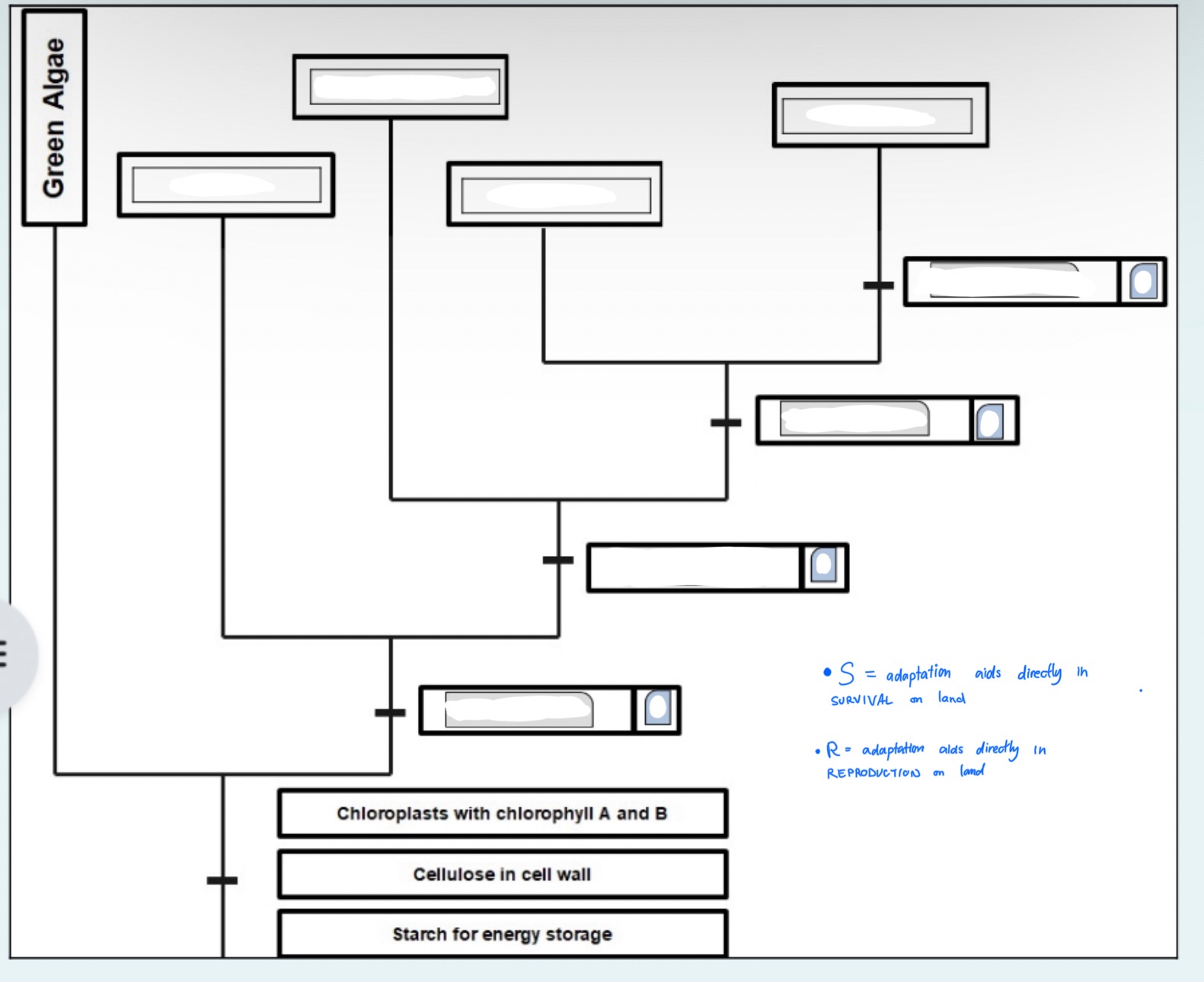
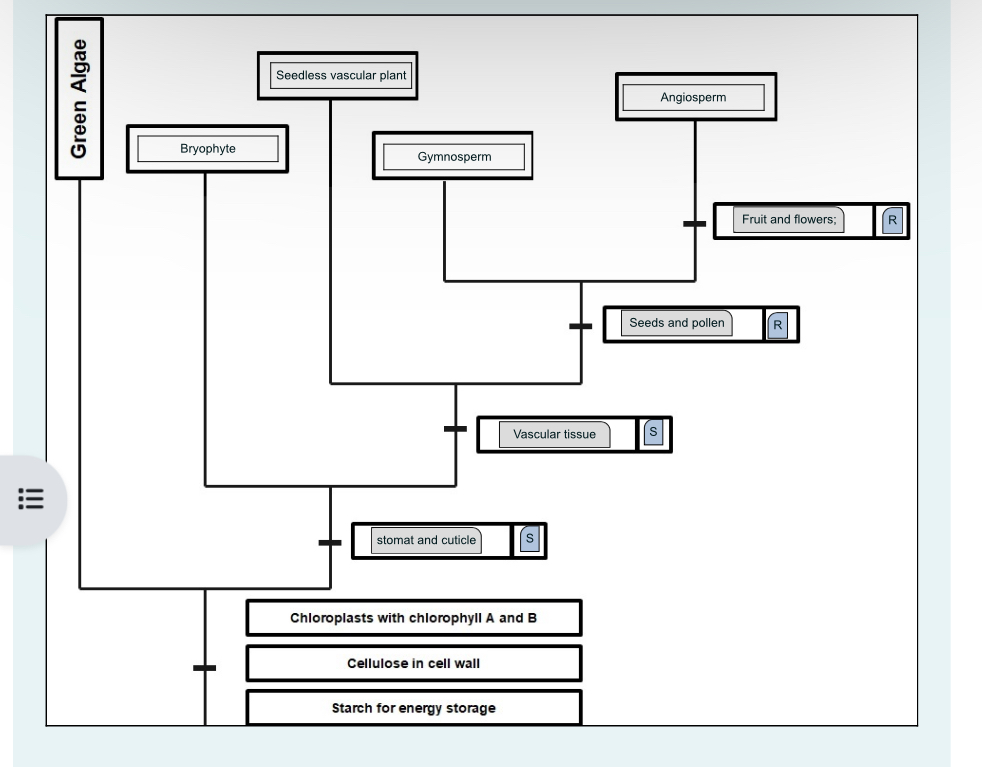
Green Algae (ex: chlorophta):
Cell wall (yes or no)?
Type of cell wall
Motility structure (i.e. flagella, cilia)
Yes
Cellulose
Flagella
Red Algae (ex: Rhodophyta):
Cell wall (yes or no)?
Type of cell wall
Motility structure (i.e. flagella, cilia)
Yes
Cellulose
No motility structure
Diatoms (ex: Bacillariophyceae):
Cell wall (yes or no)?
Type of cell wall
Motility structure (i.e. flagella, cilia)
Yes
Silica
No motility structure
Cyanobacteria (ex: Nostoc):
Cell wall (yes or no)?
Type of cell wall
Motility structure (i.e. flagella, cilia)
Yes
Peptiglycan
No motility structure
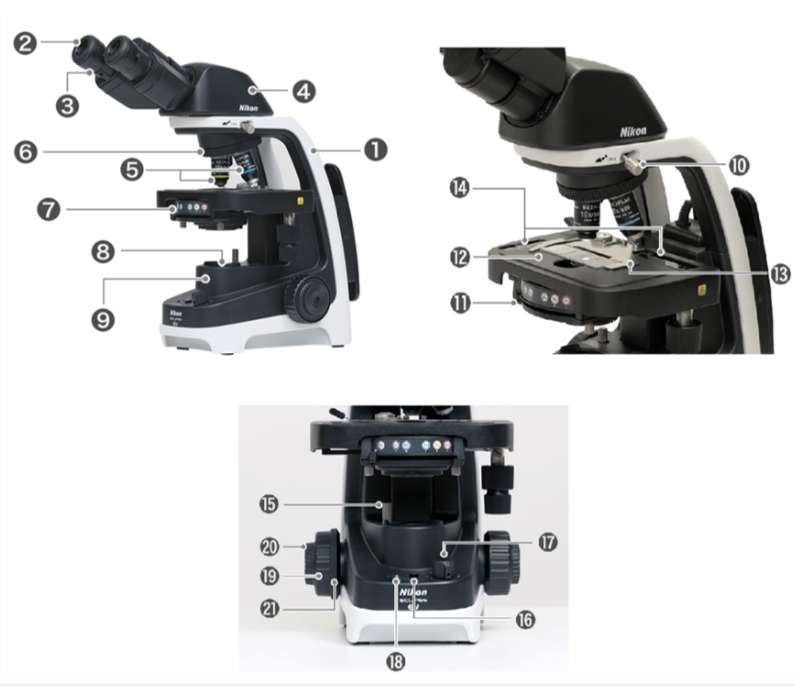
Name the parts of the Light Microscope
2, 5, 6, 7, 19, 20
Also: 1= arm
13 = mechanical stage holder
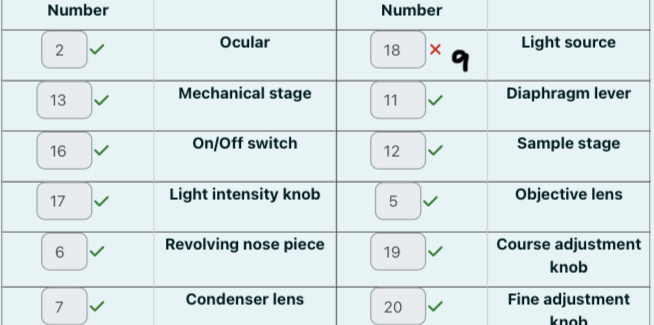
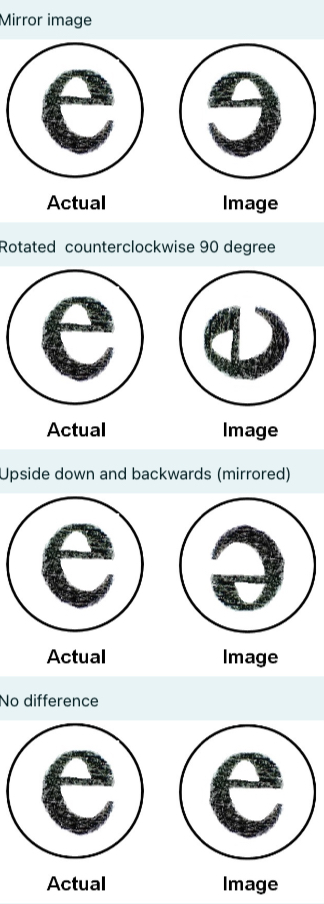
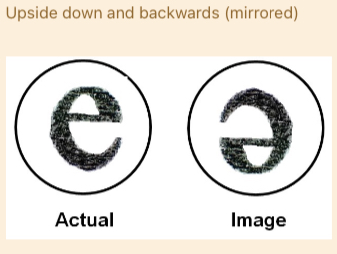
What is the orientation of the actual specimen and the magnified image you see under the microscope?
OBJECTIVE magnification =
4x
10x
40x
What is the: A. OCULAR magnification & B. TOTAL magnification
A.
10x
10x
10x
B.
40x
100x
400x