(MMI) Lecture 11 (Chapter 11)
 Call Kai
 Learn
 Practice Test
 Spaced Repetition
 Match
 Flashcards
 Knowt Play
1/70

There's no tags or description
Looks like no tags are added yet.
Name | Mastery | Learn | Test | Matching | Spaced | Call with Kai | Chat |
|---|
No analytics yet
Send a link to your students to track their progress
71 Terms

What is Microbial Growth?
The increase in number cells, not cell size. Includes population and colonies.
What are the requirements for microbial growth? (The categories)
Physical Requirements
Chemical Requirements
What are the physical requirements for microbial growth?
Temperature
pH
Osmotic pressure
What are the chemical requirements for microbial growth?
Carbon
Nitrogen, sulfur, and phosphorous
Trace elements
Oxygen
Organic growth

In terms of temperature how is it displayed on a graph?
There is…
Minimum growth temperature
Optimum growth temperature
Maximum growth temperature

Rank the organisms based on their growth dependent on heat.
Psychrophile
Mesophile
Thermophile
Hyperthermophile

Psychrophiles
Extremophilic microorganisms that thrive and reproduce in permanently cold environments, Grow best at 0-25oC and cause food spoilage.

Mesophile
An organism that grows best in moderate temperatures, typically between 20°C and 45°C (68°F and 113°F). Most typical disease causing microbes in this category,
Thermophile
Thermophiles are heat-loving microorganisms that thrive and grow optimally at exceptionally high temperatures, typically between 41°C and 122°C (106°F to 252°F).
Hyperthermophiles
an organism that thrives in extremely hot environments, growing optimally at temperatures of 80 °C (176 °F) or higher
0 to -30 degrees
There is no significant growth below freezing
0-5 and 5-15 degrees
Refrigerator temperatures; may allow slow growth of spoilage bacteria, very few pathogens
Many bacteria survive and may grow
15-55 degrees
DANGER ZONE. Rapid growth of bacteria; some may produce toxins
55-65
Very sow bacteria growth
65-130 degrees and above
Temperatures in this range destroy most microbes, although lower temperatures take more time
nMost bacteria grow between pH _____ and _____.
6.5 and 7.5, variations out of the range slow growth.
Moulds and yeasts typically grow optimally between pH ____ and ____.
5 and 6
Acidophiles
microorganisms that thrive in acidic environments, showing optimal growth at a pH of 5.5 or below, with extreme acidophiles preferring a pH of 3 or lower.
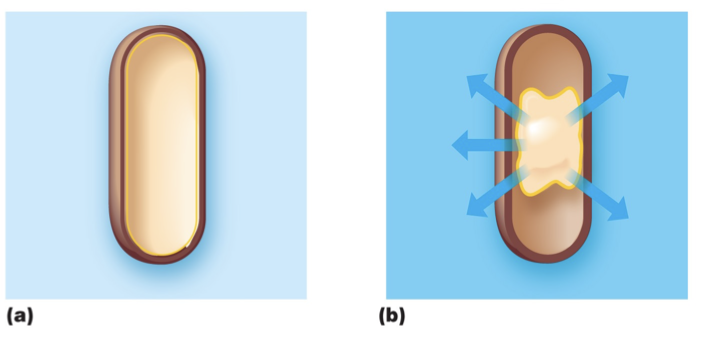
What is plasmolysis?
the process where a plant cell or bacterial cell loses water in a hypertonic solution causing the cytoplasm and plasma membrane to shrink and pull away from the rigid cell wall
What causes plasmolysis?
Hypertonic environments, or an increase in salt or sugar, cause plasmolysis
Extreme or obligate halophiles
require high osmotic pressure
Facultative halophiles
tolerate high osmotic pressure
Chemical Requirements (Carbon)
Structural organic molecules, energy source
Chemoheterotrophs use organic carbon sources
Autotrophs use CO2
Chemical Requirements (Nitrogen)
In amino acids and proteins
Most bacteria decompose proteins
Some bacteria use NH4+ or NO3–
A few bacteria use N2 in nitrogen fixation
Chemical Requirements (Sulfur)
In amino acids, thiamine, and biotin
Most bacteria decompose proteins
Some bacteria use SO42– or H2S
Chemical Requirements (Phosphorus)
In DNA, RNA, ATP, and membranes
PO43– is a source of phosphorus
Chemical Requirements (Trace Elements)
Inorganic elements required in small amounts
Usually as enzyme cofactors
A

Obligate Anaerobes
B

Microaerophiles
C

Facultative Anaerobes
D

Aerotolerant Anaerobes
E

Obligate Anaerobes
pH Environmental Classification of a Microorganism
Alkaliphile (Above pH 9)
Neutralophile (between pH 5 and pH 8)
Moderate acidophiles (between pH 3 and 5 pH)
Osmolarity Environmental Classification of a Microorganism
Halophile (High salt, greater than 2 M NaCl)
Halotolerant (up to 2 M NaCl)
Non Halophiles (up to 0.2 M NaCl)
Pressure Environmental Classification of a Microorganism
Barophile (at high pressure, greater than 380 atm)
Barotolerant (between 10 and 500 atm)
What are organic growth factors?
They are obtained from the environment
Examples include Vitamins, amino acids, purines, and pyrimidines

Steps of Bacterial Binary Fission
DNA Replication
Cell Elongation
Contractile Ring Formation
Septum Formation
Division
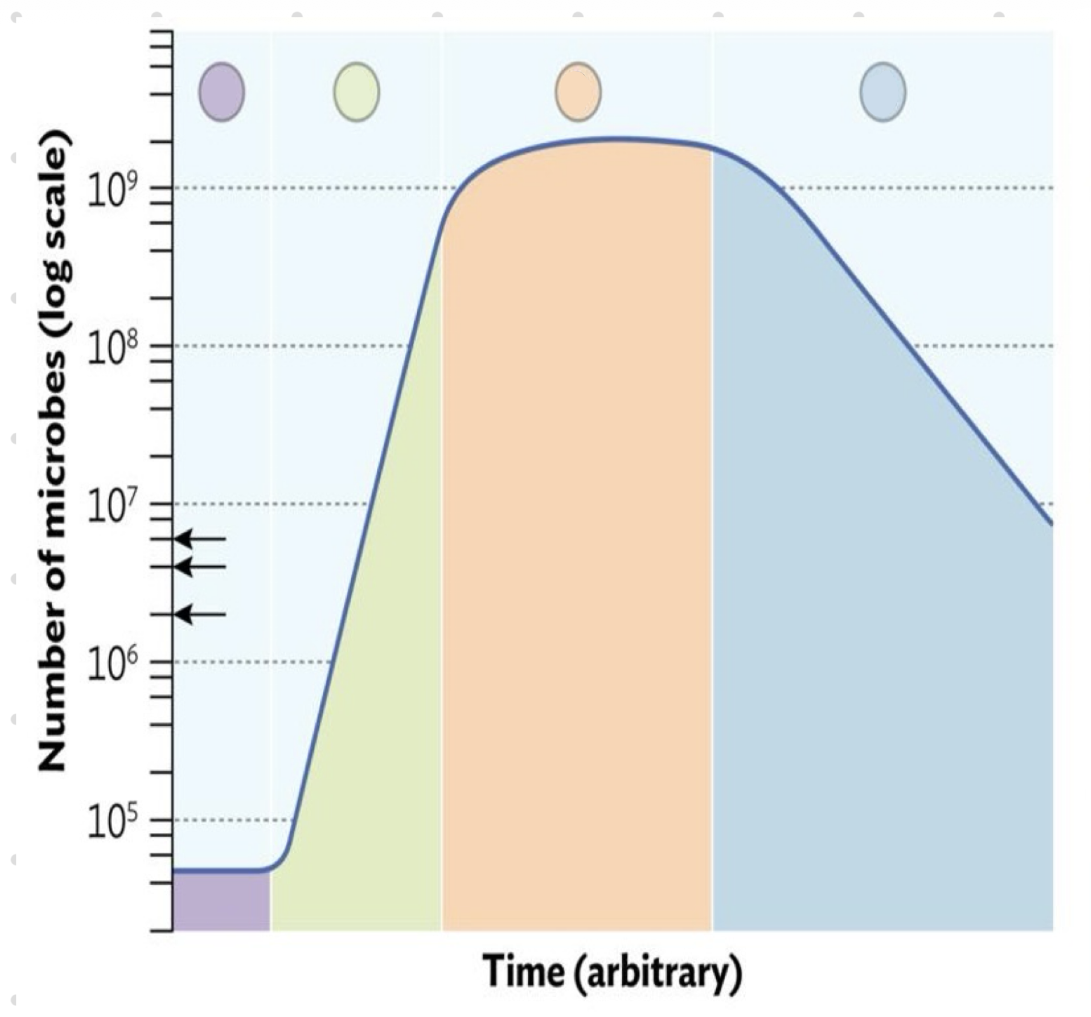
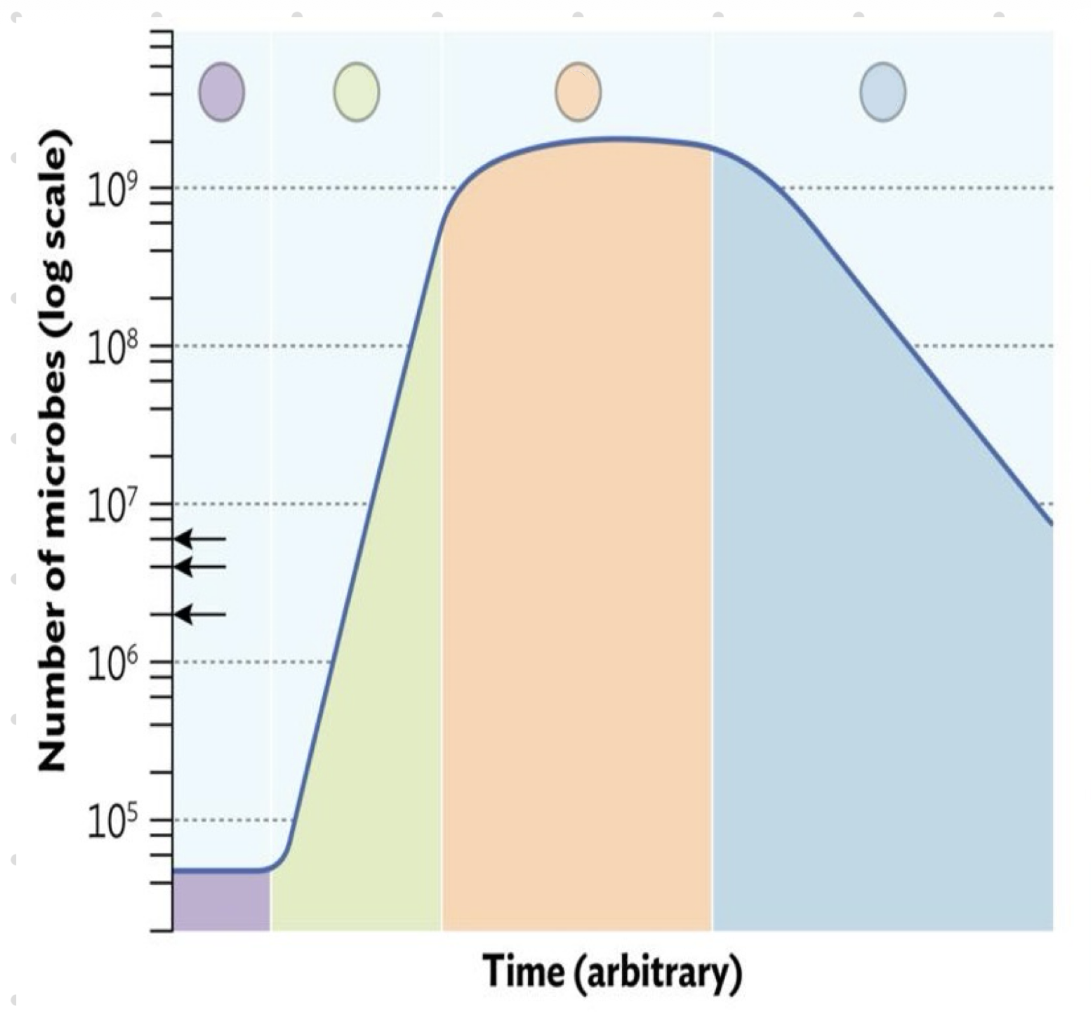
The Phases of Growth
Lag phase
Logarithmic (exponential) growth phase (log phase)
Stationary phase
Death phase

What is the lag phase?
The first. Bacteria are preparing their cell machinery for growth.

What is the log phase?
The second. Growth approximates an exponential curve (straight, on a logarithmic scale).
Why do microbiologists use logarithmic scales instead of arithmetic scales to graph bacterial growth during the exponential (log) phase?
Logarithmic Scale: Produces a clear, straight line that makes it easy to track the growth rate. (calculates exact generation (doubling) time
Arithmetic Scale: Produces a steep curve where early growth looks flat and late growth spikes off the chart. (makes early generations looks flat and late ones spike)
What is the Stationary phase?
The third. Cells stop growing and shut down their growth machinery while turning on stress responses to help retain viability.
What is the Death Phase?
Cells begin to die at an exponential rate.

What are Biofilms?
Microbial communities where cells are enclosed within an EPS (extracellular polymeric substance) what are widely found in nature.
Formation of Biofilms
Both bacteria and fungi form them, and bacteria are attracted to the community via chemical signals called quorum sensing
Why are Biofilms Clinically significant
They frequently grow on catheters and implanted medical devices.
Those formed by Candida albicans are resistant to common treatments, such as azole antifungal drugs.
What are two functional advantages for microbes living in a biofilm?
They are able to share nutrients.
They are sheltered from harmful environmental factors and host defenses.
Culture Medium
mixture of nutrients prepared to enable microbial growth
Inoculum
a small sample of microbes placed into the medium to initiate a culture
What are the key properties of agar?
a complex polysaccharide used as a solidifying agent for culture media (plates, slants, and deeps).
It is generally not metabolized by microbes, leaving the structure intact.
It liquefies at 100°C and solidifies at ~40°C.
Reducing Media
Contain chemicals that combine with O2 and remove it from air
Heated to drive off O2

Functions of the Gasket, GasPak envelope, and Catalyst
Gasket: It seals the lid of the jar, keeping atmospheric oxygen out.
GasPak envelope: It generates hydrogen and carbon dioxide
Catalyst: Hydrogen combines with oxygen to form water
BSL-3
Biosafety cabinets to prevent airborne transmission
Inhaled infectious particles
Primary pathogens (infect healthy hosts)
E.g. Coccidiodes fungus, Mycobacterium tuberculosis
BSL-4
sealed, negative pressure
Exhaust air is filtered twice
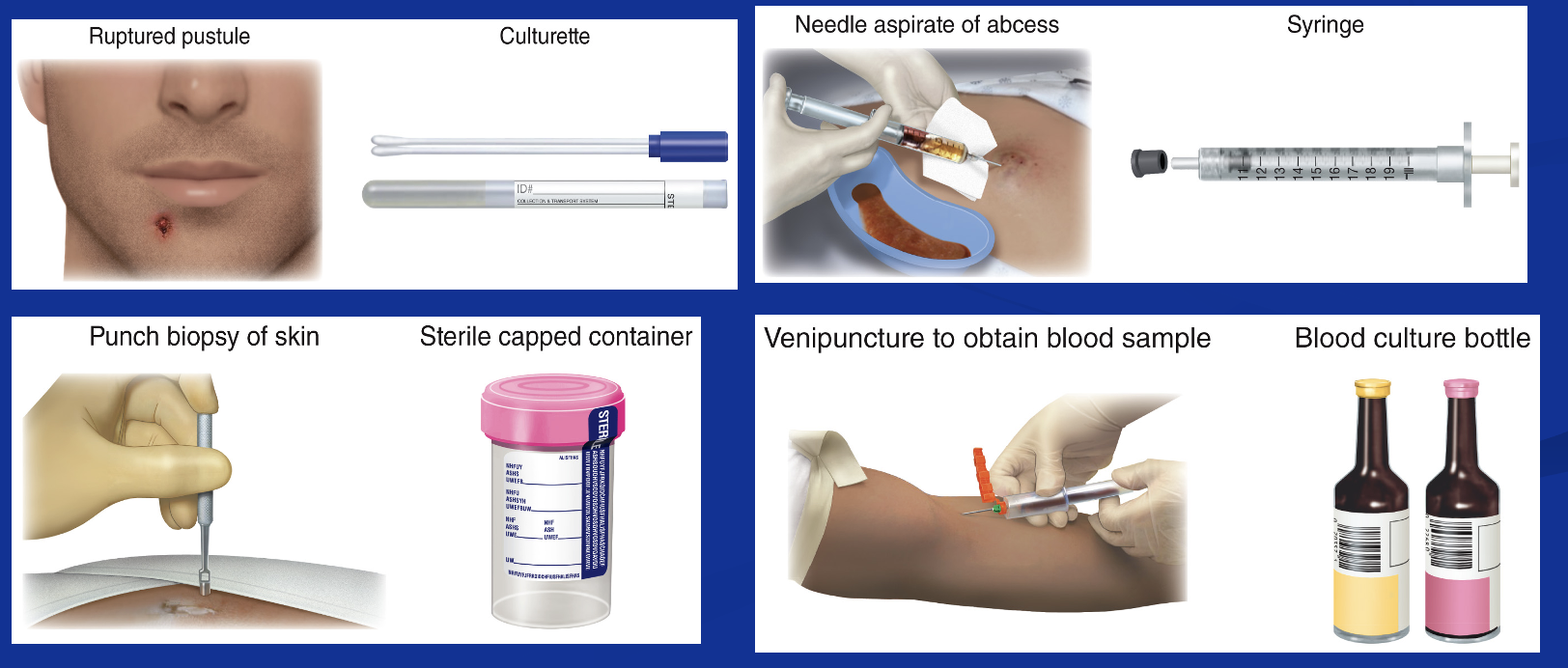
Cultures in Clinical Practice
Allow for accurate diagnosis and assist in developing treatment plans
Require proper specimen collection, transportation, culturing, and analysis

Differential Media
Used to distinguish colonies of different microbes (blood agar)

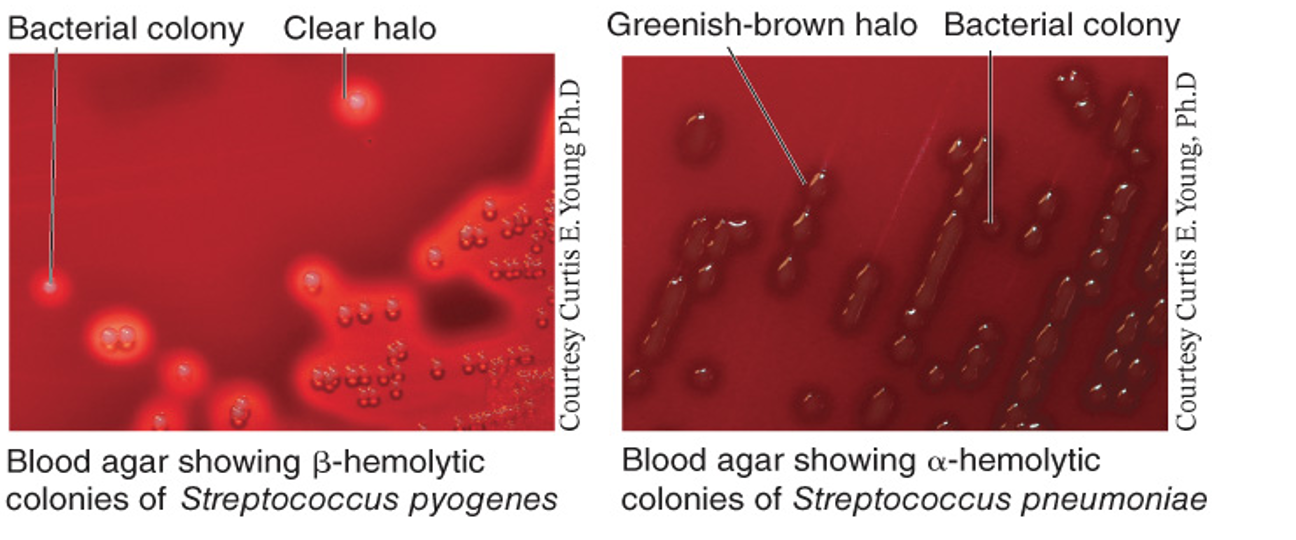
Streptococcus pyogenes
a common cause of “strep throat” produces a halo on blood agar plates as they secret an enzyme which lyses red blood cells (they are b-hemolytic)

Mannitol Salt Agar (Differential Media)
Bacteria which can metabolize (ferment) the mannitol produce acid
This acid can be detected by adding an indicator to the medium
(S. aureus)
Selective Media
Suppress growth of unwanted microbes and encourage growth of desired microbes
Bismuth Sulfite Agar

Bismuth Sulfite Agar
Used to isolate Salmonella typhi (typhoid)
Gram positive bacteria are inhibited
Most gram positive enterics also inhibted
S. typhi produces black colonies

Some media are both selective and differential
MacConkey medium
Only gram-negative bacteria grow (= selective)
Only bacteria that can use lactose (Lac+) produce red colonies (= differential)

When is the serial dilution and plate count method typically used?
It is used as a direct measurement of the number of microbes in a sample when there are very high numbers of microbes present

In a standard serial dilution, what volumes are transferred to achieve a 1:10 (10^-1) dilution step?
1.0 ml of the sample/inoculum is transferred into 9.0 ml of broth.
When reading early dilution plates, what does the abbreviation TNTC stand for?
Too numerous to count

What is the standard calculation formula to determine the concentration of bacteria in the original sample?
Number of colonies on the plate X the reciprocal of the dilution of the sample = number of bacteria/ml
When are Serial Dilutions and plate counts + Filtrations + haemocytometer used?
Serial dilutions and plate counts
Used when have high numbers in test sample
Filtration
Used when likely have low numbers in large test sample
Haemocytometer
Actual count of cells under a microscope

How does the filtration method quantify bacterial growth in a liquid sample?
Sample to be tested is passed through a filter with pores too small to enable microbes to pass
Filter then placed on a solid media plate (often selective in environmental testing) and incubated to allow colony formation
When using the filtration method to test a water sample, what do colonies that develop a green metallic sheen indicate?
Contamination by fecal material
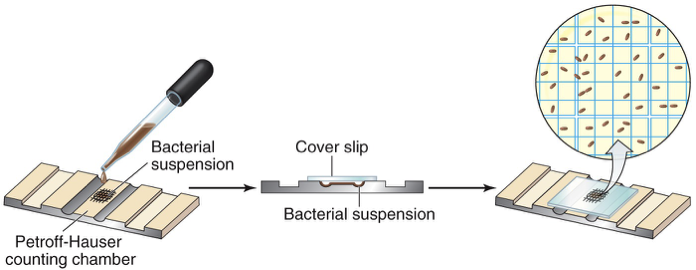
Direct cell count (haemocytometer)
Add (diluted) microbial suspension
Count number of cells in 4 x4 grid
Multiply by volume factor (usually 104) and any dilution factor to calculate actual cell numbers per ml
Indirect Measurements of Numbers of Microbes in a Sample
Turbidity
Metabolic activity
Dry weight

Estimation of bacterial numbers in a culture by spectrophotometry/turbidity.
When there are no bacteria in the medium, all the light passes through it (= zero absorbance)
Microbes in the culture block the light from reaching the detector
More blockage (absorbance) = more microbes