4 - Problem Solving and Intelligence (NOT INCLUDING TEXTBOOK)
 Call Kai
 Learn
Learn Practice Test
 Spaced Repetition
 Match
Match Flashcards
 Knowt Play
1/35

There's no tags or description
Looks like no tags are added yet.
Name | Mastery | Learn | Test | Matching | Spaced | Call with Kai | Chat |
|---|
No analytics yet
Send a link to your students to track their progress
36 Terms
intelligence
the cognitive ability of an individual to:
learn from experience
reason well
remember important info
cope w/ demands of daily living
2 strategies used to solve problems
deductive reasoning
inductive reasoning
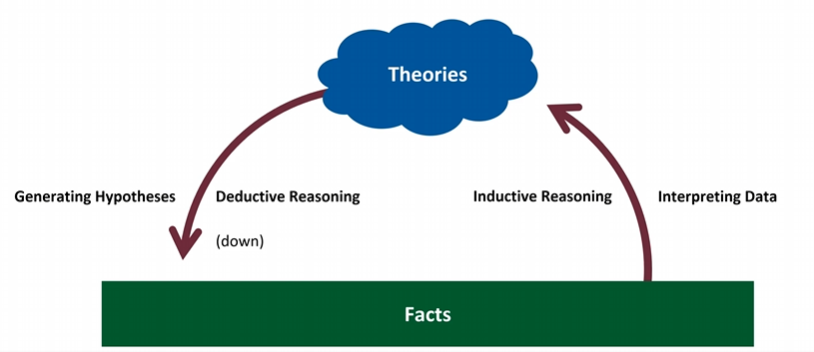
deductive reasoning
person works from ideas + general info to arrive at specific conclusions (make a hypothesis)
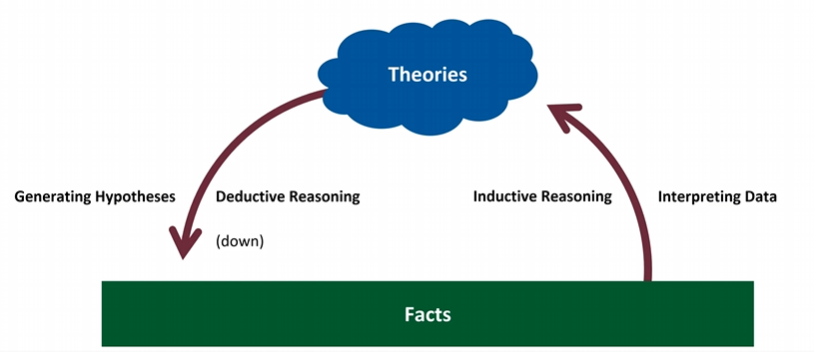
inductive reasoning
person works from specific conclusions to arrive at broader generalizations
insight problems
problems that test your ability to think outside the box
functional fixedness
difficulty seeing alternative uses for common objects
2 important qualities of a test
reliability
validity
reliability
the extent to which repeated testing produces consistent results
validity
the extent to which a test is actually measuring what the the researcher claims to be measuring
Francis Galton
attempted to measure intelligence by measuring participants’ reaction times
most popular intelligence tests today
weschler adult intelligence scale (WAIS)
weschler intelligence scale for children (WISC)
8 types of intelligence (Gardner)
verbal
mathematical
musical
spatial
kinesthetic
interpersonal
intrapersonal
naturalistic
does nature or nuture matter more?
they both the same level lwk
Flynn effect
raw IQ scores have been on the rise since 1932

schema
a mental framework for interpreting the world around us
assimilation
incorporating new info into existing schemas
accommodation
modifying existing schemas to fit incompatible info
4 stages of cognitive development
sensorimotor
pre-operational
concrete operational
formal operational
sensorimotor stage
0-2 years
child recognizes that they can make changes in environment
object permanence
object permanence
realization that objects continue to exist even when you can’t see them
occurs during sensorimotor stage
pre-operational stage
2-7 years
challenges of:
egocentrism
seriation
reversible relationships
conservation
seriation
ability to logically order a series of objects
challenge of pre-operational stage
3 mountains task
child sees display of 3 mountains
child is asked from a series of pictures “what would the mountains look like from the perspective of someone across the table?”
reversible relationships
sister is asked “do you have a little brother” and sister says yes
sister is asked “does your little brother have a sister” and sister says no
trouble in pre-operational stage
conservation
child sees 2 identical glasses of milk and is like “yeah its the same amount of milk”
child sees 1 glass poured into a slimmer, taller glass and is like “so the taller glass has more milk”
trouble in pre-operational stage

concrete operational stage
7-12 years
struggles with:
abstract thinking + reasoning
formal operational stage
12+ years
children develop a liking for video games + fantasy worlds
decalage
some children develop skills out of the original order
criticisms of Piaget’s theory
decalage
reliance on language abilities
confirmation bias
tendency to seek out info that supports our hypothesis (and ignoring info that doesn’t support it…bad thing)
how do you not get confirmation bias?
ask questions that eliminate other possible options/items instead of ignoring them and only focusing on your hypothesis
heuristic
mental shortcut used to solve problems quickly (and often correctly)
reduce effort and simplify decision making
availability heuristic
tendency to make rapid decisions based on the info that is most quickly available to us
e.g. we think of a lottery winner as someone who wins a very big jackpot, when in reality most people win small amounts, and its because big jackpots winners are publicized immensely (quicker for us to access)
representativeness heuristic
tendency to assume that what we are seeing is representative of the larger category we have in our mind
e.g. if you flip a coin 10 times and get heads 2 times and tails 7, you would automatically assume the next flip should be heads (to make the overall # of flips more random and not so heavily leaned towards tails), even though in reality there is an equal change of either happening


availability vs representativeness heuristic

anchoring