Biliary Disorder
 Call Kai
 Learn
 Practice Test
 Spaced Repetition
 Match
 Flashcards
 Knowt Play
1/134

There's no tags or description
Looks like no tags are added yet.
135 Terms

Where is the gallbladder located?
Right under the liver (RUQ). It is a pear-shaped sac.

Where is the pancreas located?
Below and behind the stomach (upper abdomen/epigastric region).
How do the cystic duct, common hepatic duct, and common bile duct connect?
The cystic duct leaves the gallbladder and joins the common hepatic duct to form the common bile duct, which then joins the pancreatic duct.

What is the ampulla of Vater?
The junction where the common bile duct joins the pancreatic duct; it opens into the duodenum.

What is the sphincter of Oddi?
The muscular valve around the ampulla of Vater that regulates the flow of bile and pancreatic secretions into the duodenum.
What are the two functions of the pancreas?
Exocrine (digestive enzymes secreted into the duodenum) and endocrine (insulin from the islets of Langerhans, which control blood sugar).
What does amylase digest?
Starch (carbohydrates).
What does trypsin digest?
Proteins.
What does lipase digest?
Fats.
Which part of the pancreas produces insulin?
The islets of Langerhans (endocrine function).
Can a person live without their gallbladder? Without their pancreas?
You can live without a gallbladder. You cannot live without a pancreas.
What organ makes bile, and what does the gallbladder do with it?
The liver makes bile; it travels through the hepatic duct to the gallbladder, which stores and concentrates it.
What are the two important functions of bile?
1) Digests (emulsifies) fats. 2) Acts as the vehicle for bilirubin to exit the body.
Where does bilirubin come from, and what does it do to stool?
From broken-down old red blood cells; it gives stool its brown color.
What triggers the gallbladder to release bile?
Chyme (the pulpy, fatty substance from the stomach) reaching the duodenum stimulates the gallbladder to contract and release bile.
What happens if bile can't get out (blocked duct)?
Bilirubin backs up → jaundice (skin, sclera), itching (pruritus), dark urine, and light/clay-colored stools; fats aren't digested → steatorrhea.
What is steatorrhea?
Greasy, fatty stool from fats not being digested (no bile or pancreatic enzymes reaching the duodenum). It can occur in acute or chronic pancreatitis and gallbladder disease.
What is acute pancreatitis?
A serious inflammatory process in which pancreatic enzymes are activated inside the pancreas instead of the duodenum, so the pancreas digests itself (autodigestion).
What is autodigestion?
Pancreatic enzymes destroy the pancreas's own tissue, causing inflammation, edema, fat necrosis, and hemorrhage.
What are the two major/most common causes of pancreatitis?
Gallstones (gallbladder disease — #1 in the US, more common in women) and alcohol (#2, more common in men).
What does the mnemonic "I GET SMASHED" stand for?
I = Idiopathic;
G = Gallstones;
E = Ethanol;
T = Trauma;
S = Steroids;
M = Mumps;
A = Autoimmune diseases;
S = Scorpion sting;
H = Hypertriglyceridemia & Hypercalcemia;
E = ERCP;
D = Drugs.
How can a gallstone cause pancreatitis?
The stone travels down the common bile duct and lodges at the sphincter of Oddi/pancreatic duct, blocking the release of pancreatic juices.
Which drugs can cause pancreatitis (per lecture)?
Sulfa drugs, protease inhibitors, steroids/corticosteroids, estrogen, diuretics (furosemide), HTN drugs (e.g., ACE inhibitors), immunosuppressants, and diabetes drugs.
A patient with pancreatitis says they don't drink alcohol. What should the nurse investigate?
Their medications (and other causes like gallstones). We treat the underlying cause.
Why don't we see mumps-related pancreatitis often?
Because of the MMR vaccine.
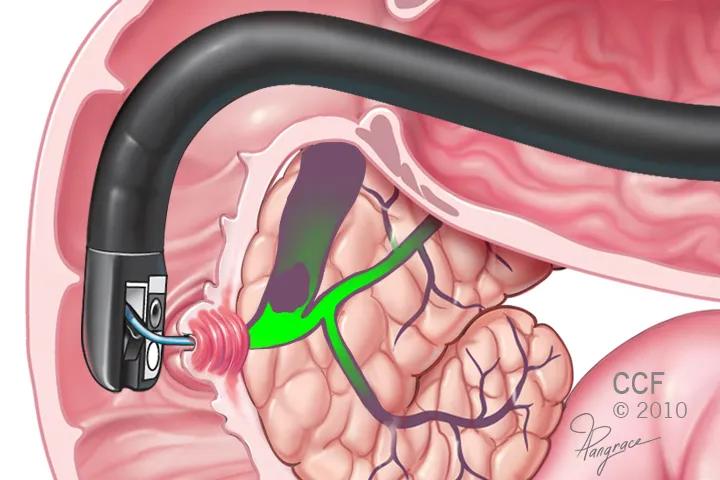
Can ERCP cause pancreatitis?
Yes — it is rare, but the procedure can irritate or damage the pancreas or pancreatic duct.
Describe the pain of acute pancreatitis.
Sudden, severe, unrelenting pain in the mid-epigastric area or LUQ that radiates to the back (also left flank or left shoulder).

What position gives the most relief in acute pancreatitis?
Fetal position (on side with knees flexed); also sitting up and leaning forward.
Why might a pancreatitis patient have jaundice?
A stone blocking the common bile duct keeps bilirubin from flowing out, so it backs up into the skin and sclera (with itching).

What is Cullen's sign?
Gray-blue bruising around the umbilicus (periumbilical). The instructor said it's the more common of the two signs.

What is Grey Turner's sign?
Gray-blue bruising of the flanks (between the last rib and the hip).
What causes Cullen's and Grey Turner's signs?
Blood-stained exudate seeping (hemorrhaging) from the pancreas — seen in severe cases. One or both may be present.
What vital sign changes are seen in acute pancreatitis?
Hypotension, tachycardia, and low-grade fever.
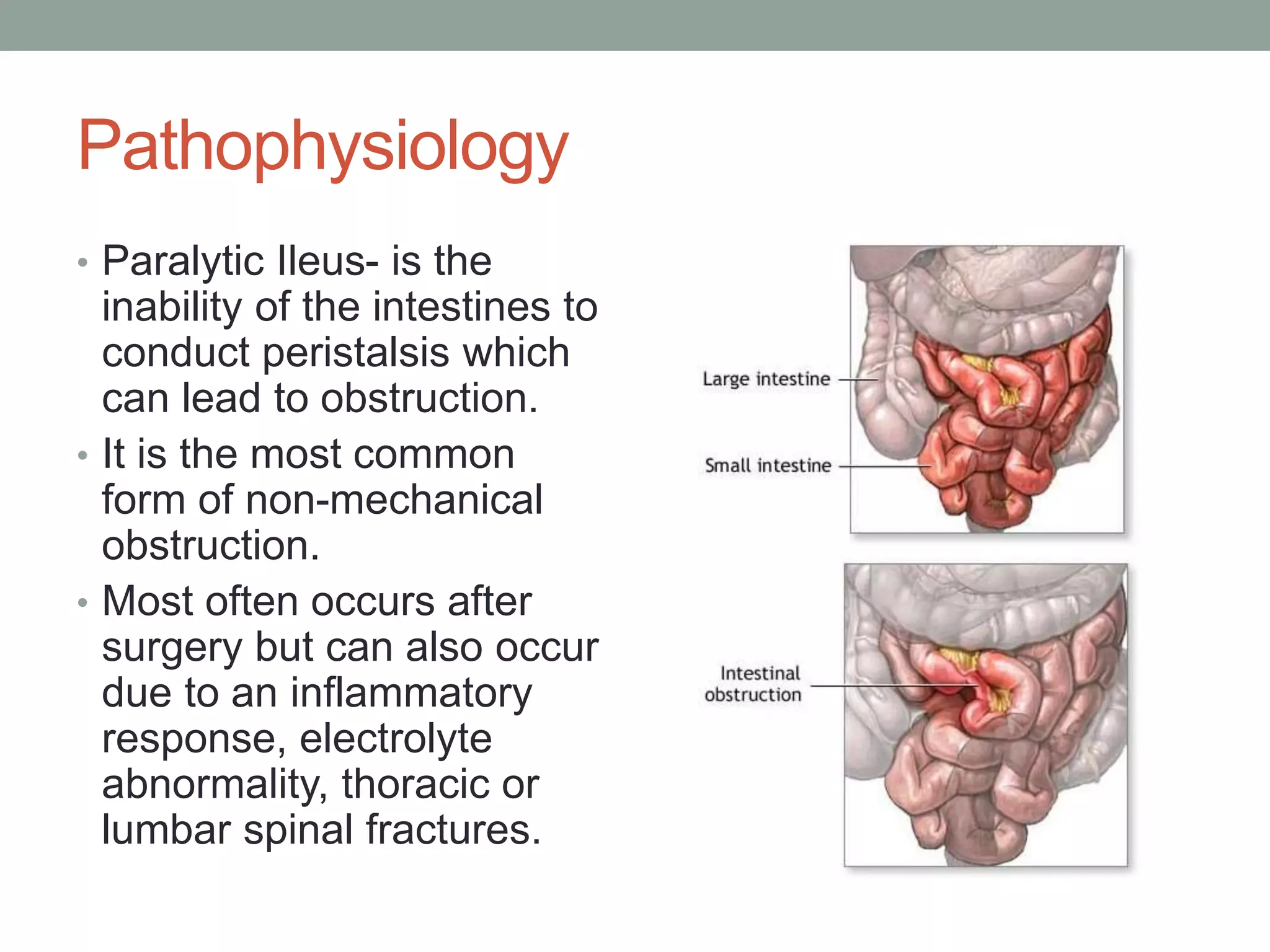
How does paralytic ileus present in pancreatitis?
Marked abdominal distention with decreased or absent bowel sounds.
Other manifestations of acute pancreatitis?
Nausea, vomiting, weight loss, abdominal tenderness and guarding.

What is a pancreatic pseudocyst?
A cavity filled with necrotic products and liquid secretions (plasma, pancreatic enzymes, exudates). It may perforate and cause peritonitis.
What is a pancreatic abscess, and how is it treated?
An infected pseudocyst (large fluid-filled cavity from extensive necrosis). Needs prompt surgical drainage to prevent sepsis.

What are the signs of a pancreatic abscess vs a pseudocyst?
Similar to a pseudocyst but with signs of infection — high fever and high WBC.
What respiratory complications can acute pancreatitis cause?
Pleural effusion, atelectasis, pneumonia, and ARDS.
What coagulation complications can acute pancreatitis cause?
Coagulation defects — pulmonary embolism and DIC (clotting factors used up → uncontrollable hemorrhage).
What type of shock can occur with acute pancreatitis, and why?
Hypovolemic shock — from fluid loss into the peritoneal cavity, hypotension, hemorrhage, or vessel rupture.
What are the primary lab tests for acute pancreatitis?
Serum amylase and serum lipase.
Per the lecture, which lab rises first in acute pancreatitis, and which next?
Serum amylase rises first, then serum lipase. Glucose also rises.
How long do amylase and lipase stay elevated in acute pancreatitis?
Amylase: rises early, stays up 24–72 hours. Lipase: rises within 24–48 hours, stays up for up to 2 weeks.
Why is lipase important in diagnosing pancreatitis?
It is more specific to pancreatitis — other disorders can affect amylase.
Which 3 labs should the nurse mainly monitor in acute pancreatitis?
Amylase, lipase, and glucose.
Why does serum glucose rise in pancreatitis?
The islets of Langerhans are damaged.
What other labs are elevated in acute pancreatitis?
WBC and urine amylase (also liver enzymes, triglycerides, bilirubin).
What imaging is used to diagnose acute pancreatitis?
CT with contrast (lights up the pancreas; good for pseudocysts and abscesses) and ultrasound (may be done first). Also ERCP and MRCP.

What is an ERCP?
Endoscopic Retrograde Cholangiopancreatography — a scope goes through the mouth, esophagus, stomach, and into the duodenum;
dye + x-ray show the ducts, and tools can grab stones or place stents.
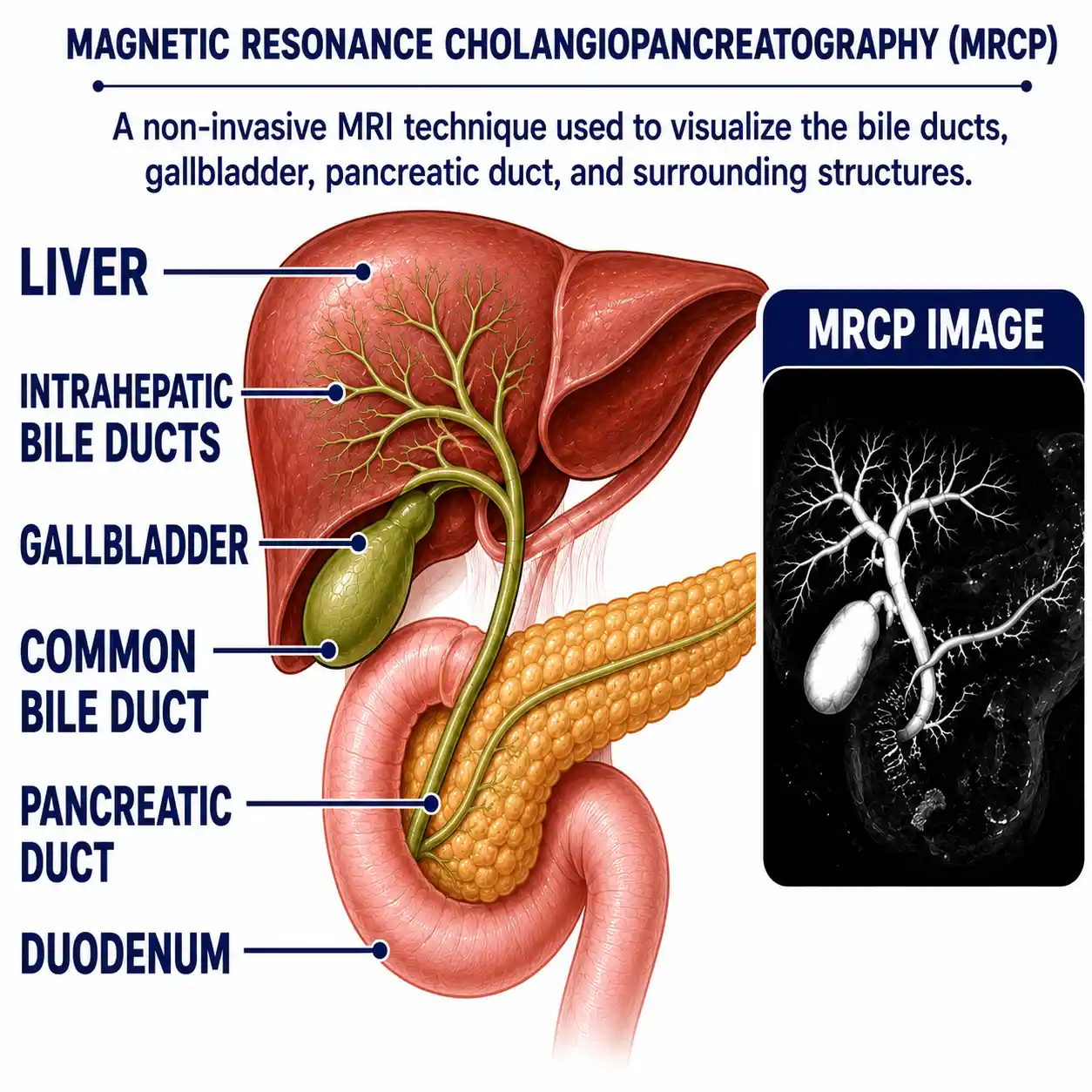
What is an MRCP?
Magnetic Resonance Cholangiopancreatography — non-invasive, no dye, uses MRI.
How long is a patient NPO before an ERCP?
8 hours.
Is the patient awake during an ERCP?
No — the patient is asleep.
What are the risks of ERCP?
Pancreatitis, bleeding, and infection.
What history questions are key for a pancreatitis patient?
Abdominal pain (severe, unrelenting, radiating to back), biliary problems, alcohol consumption, and previous abdominal procedures (including ERCP).
What is the order of abdominal assessment, and why?
Inspect → auscultate → palpate.
Palpate LAST so you don't move anything around and change bowel sounds.
What do you look for on inspection, palpation, and auscultation in pancreatitis?
Inspection: jaundice, Cullen's/Grey Turner's signs.
Palpation: tenderness, rigidity, guarding.
Auscultation: diminished bowel sounds.
What respiratory findings do you assess for in pancreatitis?
Adventitious or decreased lung sounds, dyspnea — especially crackles in the lower lobes.
Nursing assessment for acute pancreatitis
Respiratory assessment
Nutrition
Assess for hypercalcemia
Assess for hyperglycemia
Assess for fever and S/S of infection
Assess for Paralytic Ileus
What is the #1 nursing intervention for acute pancreatitis, and why?
STRICT NPO — eating or drinking stimulates the pancreas to release enzymes; we need to rest the pancreas.
A patient with acute pancreatitis asks, "Can I eat?" What is the answer?
No — strict NPO to rest the pancreas.
Why does a pancreatitis patient get an NG tube?
NG suction decompresses the stomach (vomiting) and reduces pancreatic stimulation/secretions.
What IV fluid is usually the choice for pancreatitis?
Lactated Ringer's (isotonic).
What are the fluid priorities in acute pancreatitis?
Rapid IV hydration with electrolyte replacement early — but don't over-hydrate. A Foley is placed to monitor strict I&O.
How is nutrition provided if pancreatitis continues past 24–48 hours?
Enteral (tube) feeding is the first choice; TPN for those who can't tolerate enteral (greater infection risk).
What diet is started after an acute pancreatitis episode?
Small, frequent meals; moderate to high carbohydrate; low fat; bland; no caffeine or alcohol.
Why is a high-carb diet used after pancreatitis?
Carbs don't stimulate the pancreas as much as fat does.
Which opioid should be avoided in pancreatitis, and why?
Morphine — it may cause spasm of the sphincter of Oddi.
Is there a drug that cures pancreatitis?
No. Treatment is symptom relief and treating the underlying cause.
What drug classes are used in acute pancreatitis?
Opioids (not morphine) for pain, and antacids/PPIs to decrease secretions.
What respiratory interventions are used in acute pancreatitis?
Oxygen; encourage turn, cough, and deep breathe at least every 2 hours.
What else must the nurse assess for during acute pancreatitis?
Hyperglycemia, fever and signs of infection (tachycardia, hypotension), and paralytic ileus.
What surgical interventions may be done for acute pancreatitis?
ERCP followed by laparoscopic cholecystectomy if caused by gallstones; exploratory laparotomy.
What is an exploratory laparotomy?
Surgery in which the abdomen is opened to examine the organs for injury or disease.
Post-op care after pancreatitis surgery?
Monitor drains for patency, maintain NG tube patency, skin care and dressing changes.
What is chronic pancreatitis?
A continuous, prolonged inflammatory and fibrosing process; the pancreas is progressively destroyed and replaced by fibrotic tissue.
Chronic obstructive vs nonobstructive pancreatitis?
Obstructive: associated with biliary disease (gallstones). Nonobstructive: associated with chronic alcohol use — the most common type.
What does chronic pancreatitis lead to over time?
Pancreatic insufficiency — the pancreas stops producing enough enzymes.
What are the causes of chronic pancreatitis?
Chronic alcohol use, cholelithiasis (gallstones), pseudocysts, trauma, and systemic disease (lupus, CF).

What are the clinical manifestations of chronic pancreatitis?
Abdominal pain (heavy, gnawing, burning, or cramping), steatorrhea, malabsorption with weight loss, mild jaundice, and dark urine.
How is steatorrhea formed?
Steatorrhea is the result of malabsorption of fats due to pancreatic insufficiency, where the pancreas fails to produce sufficient lipases necessary for fat digestion.
What labs are increased in chronic pancreatitis?
Serum bilirubin, serum alkaline phosphatase (ALP), and serum glucose.
How do amylase and lipase differ in chronic vs acute pancreatitis?
In chronic, they may be only slightly elevated or not at all (depends on fibrosis).
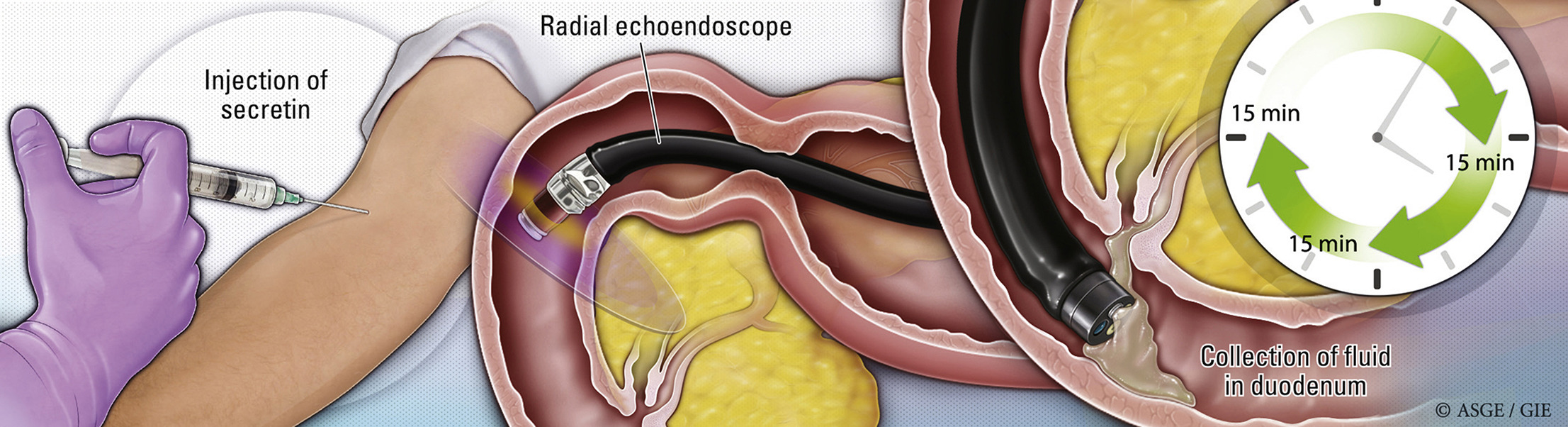
What is the secretin test?
A test of pancreatic exocrine function; a decreased volume of enzymes and bicarbonate after IV secretin indicates chronic pancreatitis.
What drug therapy is used for chronic pancreatitis?
Analgesia, pancreatic enzyme replacement, and insulin.
When are pancreatic enzyme replacements (e.g., pancrelipase) given, and why?
With meals or snacks — to help digest and absorb fat and protein.
What diet is recommended for chronic pancreatitis?
Small, bland, frequent meals low in fat.
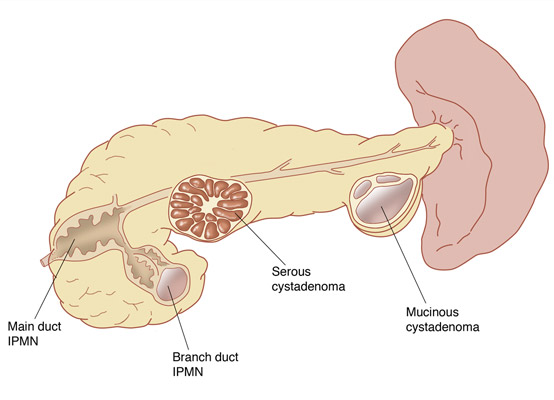
What surgical interventions are used for chronic pancreatitis?
Debridement of necrotic tissue in severe cases,
I&D of abscesses/pseudocysts,
cholecystectomy,
pancreatojejunostomy (Roux-en-Y), and ERCP with stent placement.
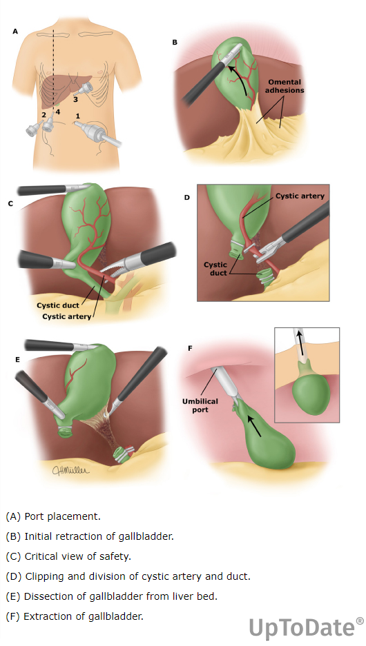

What is a Roux-en-Y (pancreatojejunostomy)?
A small pouch is made from the stomach and connected to the jejunum, bypassing the duodenum/pancreas area; the pancreatic duct is joined to the jejunum.
Why might ERCP stent placement be used?
For patients who keep forming stones (often genetic) — a stent in the common bile duct keeps it open.
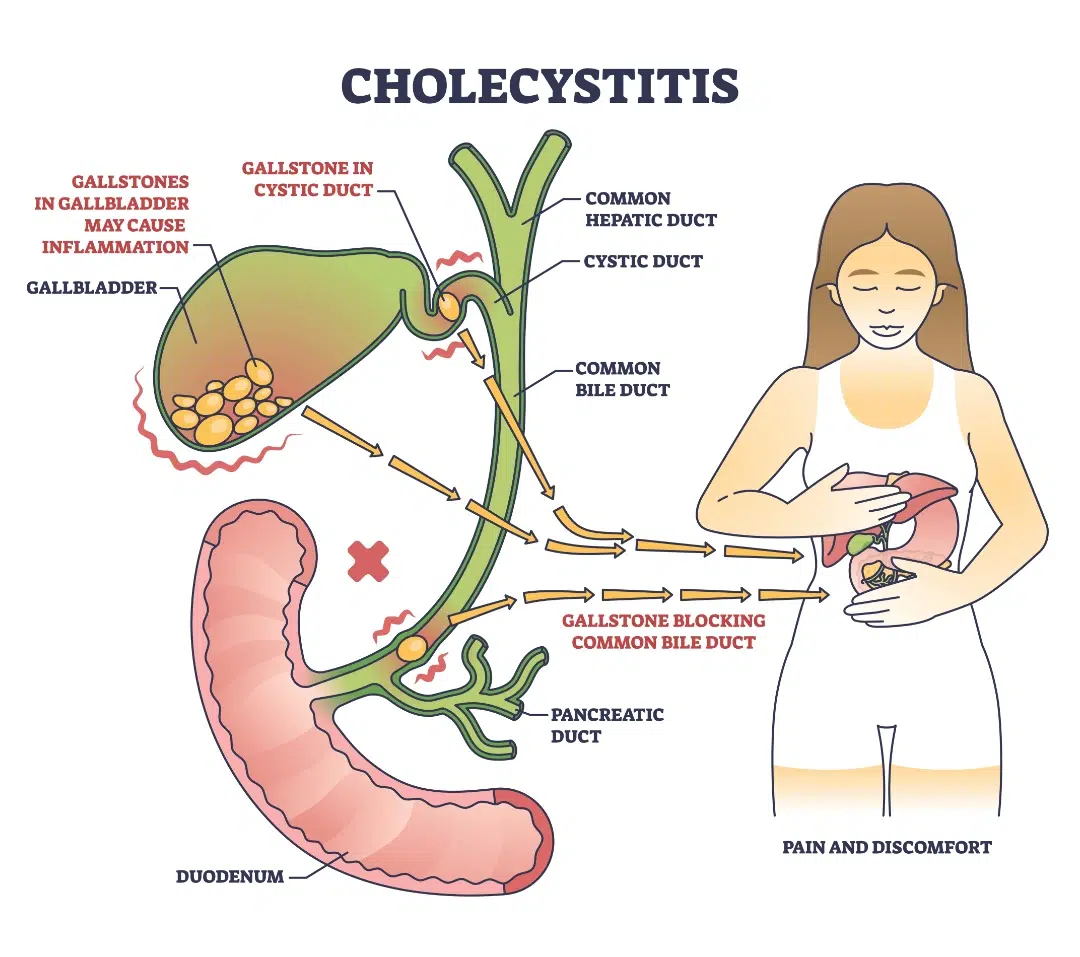
What is cholecystitis?
Inflammation of the gallbladder wall (chol = bile, cyst = sac).
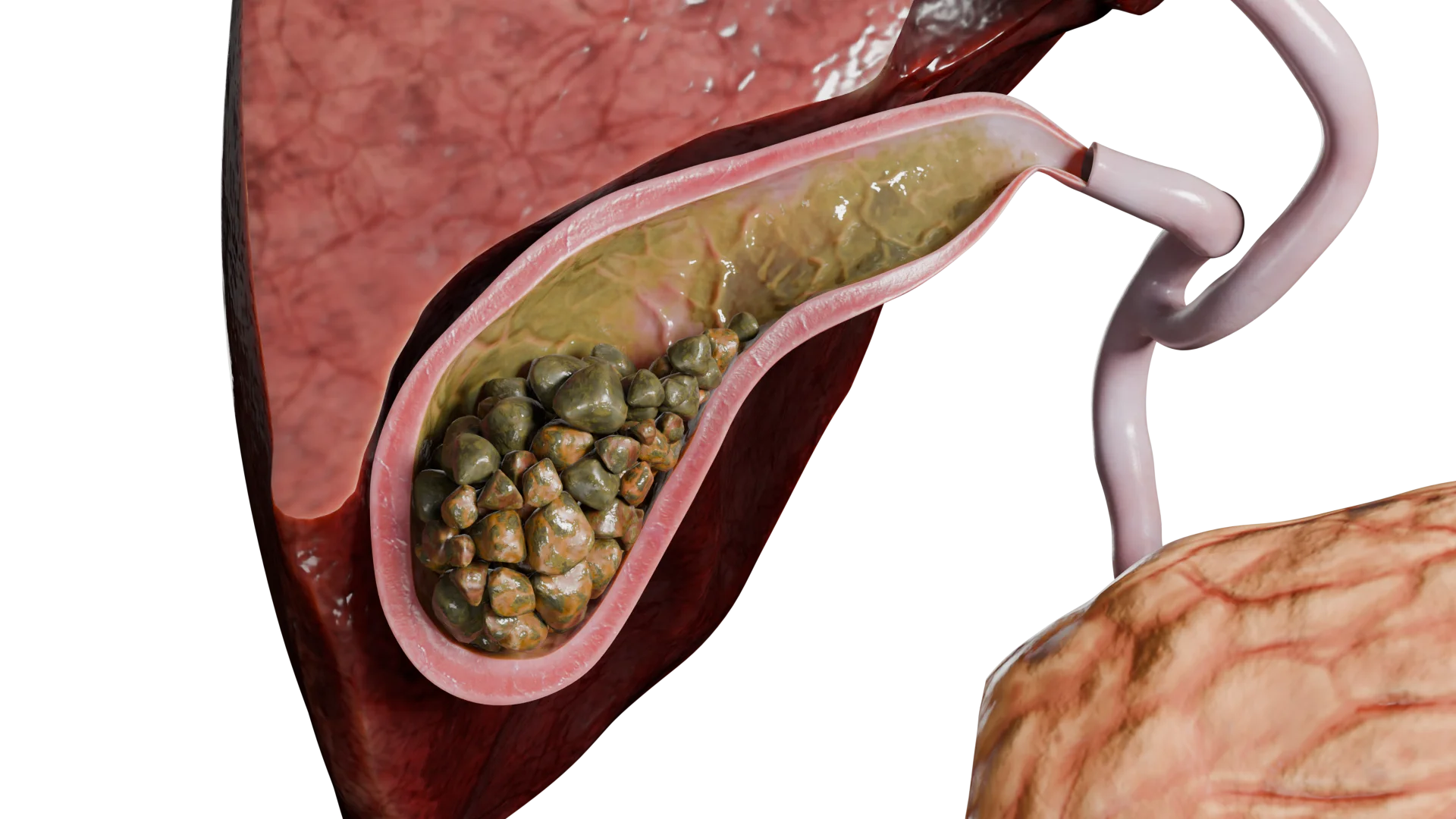
What is cholelithiasis?
Formation of stones (calculi) in the gallbladder or biliary duct system (chol = bile, lith = stone).
Can someone have cholelithiasis without cholecystitis?
Yes. They usually occur together, but stones can be present without inflammation.
How do gallstones form?
Bile stored in the gallbladder hardens into stone-like material (cholesterol and bile salts may play a role).
What is acute cholecystitis most commonly associated with?
Obstruction (by gallstones or biliary sludge). Perforation and abscess may occur.
What is acalculous cholecystitis?
Gallbladder inflammation WITHOUT gallstones — e.g., in patients who've been NPO on long-term TPN (gallbladder isn't stimulated) or after body trauma.
What is chronic cholecystitis?
Likely results from repeated acute episodes; ineffective bile emptying causes jaundice, pruritus, clay-colored stools, and dark urine, plus fat intolerance, dyspepsia, heartburn, and flatulence.
Why is a ruptured gallbladder so dangerous?
Infection spills into the abdominal cavity → risk of sepsis/SIRS.
Signs of a ruptured gallbladder?
Fever 100°F+, increased pulse, increased BP, increased WBC, dehydration, pain, decreased bowel sounds, rebound tenderness, board-like distended abdomen.
What are the 5 F's of gallbladder disease risk?
Fat, Forty, Female, Fertile, Fair (family history can substitute for forty).