memorize tonight
 Call Kai
 Learn
Learn Practice Test
 Spaced Repetition
 Match
Match Flashcards
 Knowt Play
1/20

There's no tags or description
Looks like no tags are added yet.
Name | Mastery | Learn | Test | Matching | Spaced | Call with Kai | Chat |
|---|
No analytics yet
Send a link to your students to track their progress
21 Terms
Name and describe the four main ways biodiversity supports ecosystem functions.
Complementarity:
each species uses resources differently, so the resource pool is most fully used by a diverse mix of species
Averaging or portfolio effect
Each species responds differently to disturbances
Functional redundancy:
when a species is lost, another species from the same trophic level or functional type can replace its function
Selection or sampling effect:
a more diverse community is more likely to contain the over-achiever species (e.g., most productive)
Alpha
local richness
beta
turnover (change) of species across space
gamma
regional (total) species diversity
primary succession example 1
Glacial retreat in Alaska, with the scouring from the glacier as disturbance. Lichens and mosses were early (pioneer) species, and spruce and hemlock trees as the climax.
primary succession example 2
Rocky intertidal boulder fields in S California. Disturbance due to boulders turning over. Ulva a green alga is early successional, and Gigartina, a red alga is late successional (climax)
secondary succession example 1
Salt marshes in New England, wave/tidal action as disturbance. Distlichis (spike grass) is early successional. Spartina (cordgrass) and Juncus (sedge) are the climax communities
secondary succession example 2
Pine forests after logging (the disturbance). Sphagnum moss was early successional and pine or mixed pine/deciduous forest was the climax community
facilitation example 1
Spruce colonization in Glacier Bay was aided by Dryas that increased soil nitrogen (etc.). Also in the same system alders increased Spruce germination through more organic matter, nitrogen and mycorrhizae
facilitation example 2
In salt marshes in New England Presence of Distichlis helped to shade the soil surface, thus decreasing salt accumulation and reducing stress for Juncus.
inhibition example 1
Spruce germination in Glacier Bay was inhibited Dryas and Alder presence and lower growth resulted, and more seed predation, effects were due to cover of other species and more seed predators present when other plants were present.
inhibition example 2
In Rocky intertidal boulder fields in S California, Ulva is able to inhibit other seaweed species, why doesn’t it always dominate? Through a series of further experiments, Sousa found that grazing crabs preferentially fed on Ulva, thus initiating a transition from the early Ulva stage to other mid-successional algal species
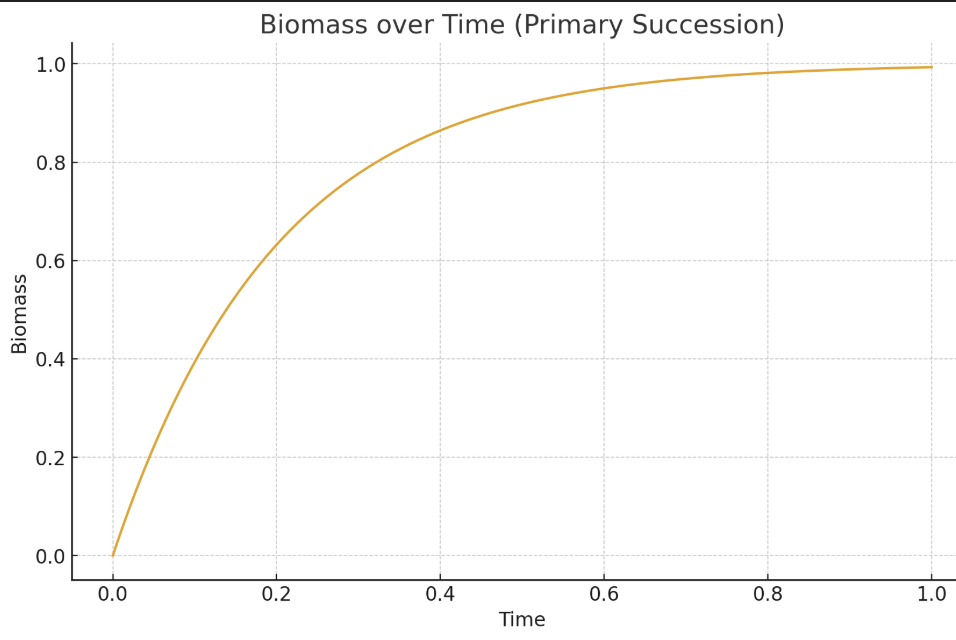
Biomass: increases to an asymptote
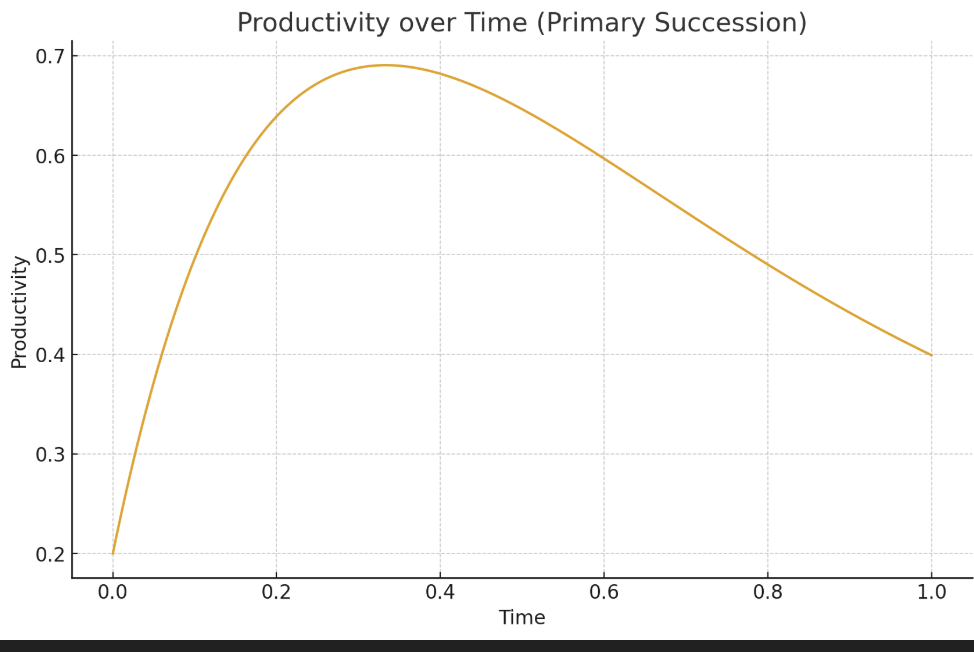
Productivity: increases to peak and either stays there or declines.
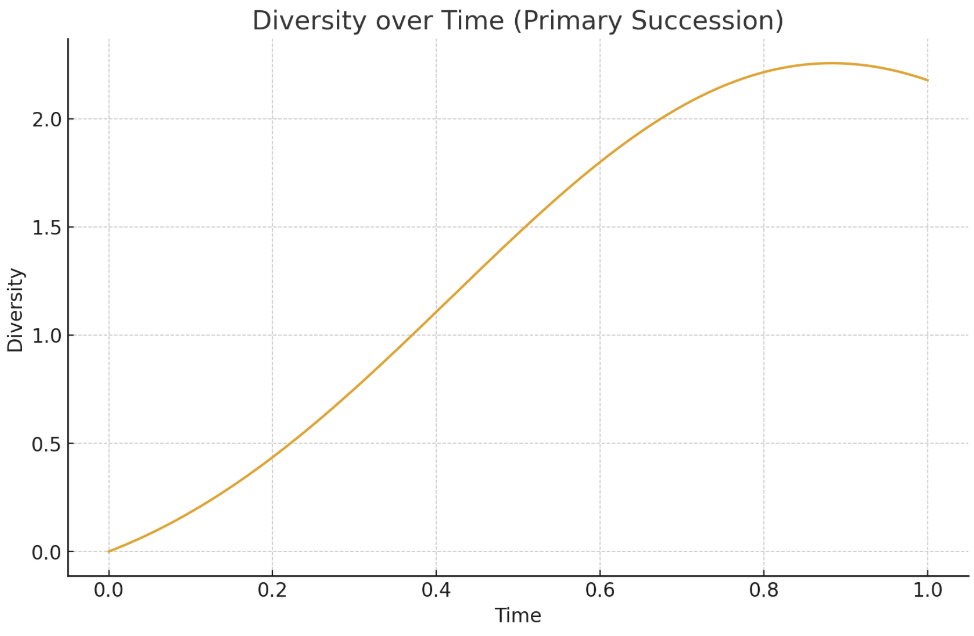
Diversity: increases to peak and either stays there or declines.
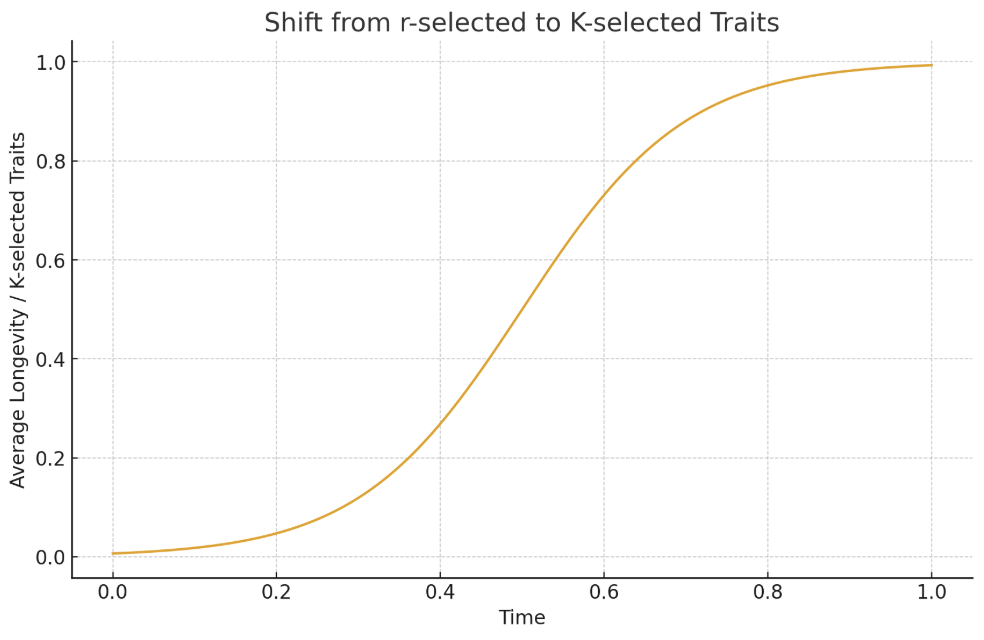
the average longevity (or other ‘K-selected’ trait) of species: increases from r to K selection as
time since disturbance increases
What is a climate envelope?
The set of suitable climatic conditions within which a species is found.
Describe an example of a policy mechanism (e.g., a treaty) that has helped slow climate change. How did it come about? Why was it possible?
Montreal Protocol, international agreement to reduce CFC and HCFC production and emissions that break down Ozone (a greenhouse gas) and reduce UV exposure. It was a voluntary agreement. It was possible because the chemistry was known and alternative compounds were available to CFC and HCFC’s.