AP Biology Unit 3.3 - Cellular Respiration and Fermentation
 Call Kai
 Learn
 Practice Test
 Spaced Repetition
 Match
 Flashcards
 Knowt Play
1/23

There's no tags or description
Looks like no tags are added yet.
24 Terms
Metabolism
The sum of all chemical processes that occur in an organism
Metabolic Pathway
Series of enzyme-mediated reactions by which cells build, remodel, or break down an organic molecule
Catabolism
Metabolic pathways that break down molecules, releasing energy.

Anabolism
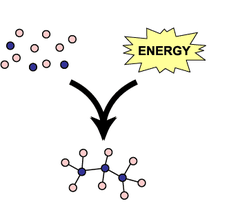
Metabolic pathways that construct molecules, requiring energy.
Anaerobic Glycolysis
Transformation of glucose to pyruvate when limited amounts of oxygen (O2) are available; occurs in cytoplasm of cells.
Alcoholic Fermentation
Form of anaerobic respiration (often carried out by yeast) that produces ethanol from pyruvate under low oxygen conditions

Pyruvate
Three-carbon compound that forms as an end product of glycolysis.
Lactic Acid Fermentation
Form of anaerobic respiration (often carried out during strenuous exercise) that produces lactate from pyruvate under low oxygen conditions

Lactate
Produced in muscles when glucose is broken down anaerobically during strenuous muscular activity
Ethanol
Alcohol formed by microbial fermentation of carbohydrates.
Facultative Anaerobe
Organism that can survive with or without oxygen
Obligate Anaerobe
Organism that cannot live in the presence of oxygen
Cellular Respiration
Overall pathway in which organic molecules are broken down to release energy for use by the cell

Mitochondria
Powerhouse of the cell, organelle that is the site of ATP (energy) production

Cristae
The folds of the inner membrane of a mitochondrion

Intermembrane Space
The fluid filled space between the inner and outer mitochondrial membranes

Matrix
The inner region of the mitochondrion, where the Krebs cycle occurs

Acetyl CoA
In the mitochondria, pyruvate is converted into this molecule, which then enters the Kreb's Cycle
Krebs Cycle
1st stage of aerobic cell respiration; pyruvate is converted into acetyl CoA, which is broken down into carbon dioxide and ATP; also called the Citric Acid Cycle

NADH
The reduced form of NAD+; an electron-carrying molecule that functions in cellular respiration
FADH2
The reduced form of FAD+; an electron-carrying molecule that functions in cellular respiration
Electron Transport Chain
Series of proteins through which electrons are passed to make ATP
Chemiosmosis
A process for making ATP by ATP Synthase using the energy stored in an electrochemical gradient of hydrogen ions.
ATP Synthase
Enzyme that catalyzes the reaction that adds a high-energy phosphate group to ADP to form ATP during chemiosmosis