Hematologic Disorders: Blood, Anemia, Leukemia, and Hemostasis
 Call Kai
 Learn
 Practice Test
 Spaced Repetition
 Match
 Flashcards
 Knowt Play
1/70

There's no tags or description
Looks like no tags are added yet.
71 Terms
What are the main components of the hematologic system?
Blood, bone marrow, spleen, and liver.

What are the primary functions of the hematologic system?
Transportation, regulation, and protection.
What is the normal pH range of blood?
7.35 to 7.45.
What is the average temperature of blood?
100.4 degrees Fahrenheit.
What percentage of blood is formed elements and plasma?
45% formed elements and 55% plasma.

What is the role of albumin in blood plasma?
Maintains osmotic pressure and regulates fluids and electrolytes.
What are globulins and their significance?
Globulins are plasma proteins, including immunoglobulins (antibodies) produced in the liver.
What is fibrinogen's role in the hematologic system?
Involved in blood coagulation (clotting).
What is hematopoiesis?
The process of blood formation of both plasma and formed elements.
Where does hematopoiesis occur in a fetus and after birth?
In the spleen and liver of a fetus; in red bone marrow after birth.
What are the two types of stem cells involved in blood cell formation?
Myeloid stem cells and lymphocyte stem cells.

What is the primary function of red blood cells (RBCs)?
Transport oxygen and carbon dioxide.

What is the average lifespan of a red blood cell?
Approximately 120 days.
What is erythropoiesis?
The synthesis of red blood cells (RBCs).

What stimulates the production of RBCs in response to hypoxia?
Erythropoietin (EPO) released by the kidneys.

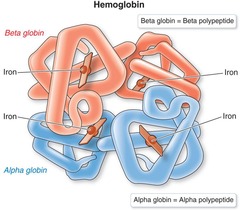
What is the significance of hemoglobin in red blood cells?
It is a protein that carries oxygen, requiring iron for binding.
What does the oxyhemoglobin dissociation curve represent?
The relationship between partial pressure of oxygen (PO2) and oxygen saturation of hemoglobin.

What does a 'shift to the right' in the dissociation curve indicate?
Decreased oxygen affinity due to increased CO2, decreased pH, or fever.
What are the three major categories of white blood cells (WBCs)?
Monocytes, lymphocytes, and granulocytes.

What is the function of monocytes?
Mature into macrophages and perform phagocytosis.
What is the role of lymphocytes in the immune system?
Provide long-term immunity; B cells produce antibodies.
What is hyperbilirubinemia?
An accumulation of bilirubin in the blood, which can lead to jaundice.
What is the normal range of red blood cells per microliter of blood?
4.5 to 6.0 million.
What are the three main types of granulocytes?
Basophils, eosinophils, and neutrophils.
What percentage of circulating WBCs do eosinophils represent?
1%-7%.
What is the primary role of eosinophils?
Elevate during parasitic infections and allergies.
What percentage of circulating WBCs do basophils represent?
Less than 2%.
What do basophils release to signal neutrophil migration?
Histamine.
What is the most common type of granulocyte?
Neutrophils.
What is the primary function of neutrophils?
Carry out phagocytosis and release enzymes to destroy microorganisms.
What is the normal range of WBCs per microliter of blood?
5,000 - 10,000.
What is leukopenia?
A low WBC count, typically less than 4,000 cells/microliter.
What is leukocytosis?
A high WBC count, typically above 11,000 cells/microliter.
What are the two main processes of hemostasis?
Primary hemostasis (platelet aggregation) and secondary hemostasis (fibrin formation).
What is the lifespan of platelets?
About 10 days.
What is thrombocytopenia?
A condition where platelet count is less than 100,000 per microliter.
What is thrombocytosis?
A condition where platelet count is greater than 750,000 per microliter.
What is the primary function of the lymphatic system?
To transport lymphocytes and macrophages, and return fluid, lipids, and proteins to the cardiovascular system.
What is the largest lymphoid organ?
The spleen.

What is the role of the thymus in the immune system?
It is where T lymphocytes mature.

What is anemia?
A reduction in the total number of erythrocytes in the blood or a decrease in hemoglobin.
What are common symptoms of anemia?
Fatigue, weakness, pallor, dyspnea, and tachycardia.
What is iron-deficiency anemia?
Anemia caused by a lack of iron.

What causes pernicious anemia?
A lack of intrinsic factor needed for B12 absorption.
What is aplastic anemia?
A condition where the bone marrow fails, leading to anemia, leukopenia, and thrombocytopenia.
What is sickle cell anemia?
A genetic disorder where erythrocytes are abnormally shaped, leading to various complications.

What is the typical treatment for iron-deficiency anemia?
Oral ferrous sulfate and correction of underlying causes.
What is the role of the liver in hematologic function?
It synthesizes coagulant and anticoagulant proteins and produces plasma proteins.

What is the function of lymph nodes?
To filter lymph and serve as the primary site for lymphocytes to battle antigens.
What is the significance of the term 'vaso-occlusive crises' in sickle cell anemia?
It refers to painful episodes caused by misshaped RBCs lodging in capillaries.
What is the role of macrophages in the immune response?
They help in the inflammatory response and fight infections.
What are the two types of problems associated with platelets?
Excessive bleeding and excessive clotting.
What is neutropenia?
A condition where neutrophils are less than 1,500/microliter, significantly impacting the body's ability to fight infections.
What is neutrophilia?
An elevation of neutrophils, defined as a neutrophil count greater than 7,000/microliter.
What are common causes of neutrophilia?
Bacterial infections, inflammation, smoking, chemotherapy, radiation, bone marrow cancers, autoimmune disorders, and spleen dysfunction.
What is eosinophilia?
An increase in eosinophils, defined as greater than 450/ul, often caused by allergy disorders and parasite infections.
What is monocytosis?
An increase in the number of monocytes, often seen following an infection where neutrophils have been depleted.
What is lymphocytosis?
An increase in the number of lymphocytes (B and T cells), commonly seen in viral infections.
What is lymphocytopenia?
A decrease in the number of lymphocytes (B and T cells), often due to destruction or immunodeficiency.
What are the types of leukemia?
Acute lymphoblastic leukemia (ALL), Acute myeloid leukemia (AML), Chronic lymphoid leukemia (CLL), and Chronic myelogenous leukemia (CML).
What is Hodgkin lymphoma?
A type of lymphoma that begins in the lymph nodes and is characterized by Reed-Sternberg cells.
What is non-Hodgkin lymphoma?
A type of lymphoma that is more common in Caucasians and can be aggressive or slow-growing.
What is multiple myeloma?
Cancer of plasma cells (B cells) characterized by excessive plasma cells in the bone marrow and multiple bone tumors.
What is the difference between a thrombus and an embolus?
A thrombus is a localized blood clot, while an embolus is a dislodged blood clot that travels through the bloodstream.
What is Virchow's Triad?
A set of three factors that increase the risk of thrombi: injury to blood vessel endothelium, abnormalities of blood flow, and hypercoagulability.
What is hemophilia?
An X-linked recessive bleeding disorder characterized by deficiencies in clotting factors VIII (Hemophilia A) or IX (Hemophilia B).
What are common symptoms of hemophilia?
Bleeding in joints, bruising, gastrointestinal bleeding, and hematuria.
What are antiplatelet drugs used for?
They are used to prevent arterial clots, with aspirin being the most common antiplatelet drug.
What are anticoagulants used for?
They are the main agents for preventing venous clots, with heparin and warfarin being common examples.
What factors can increase clotting?
Certain cancers, atherosclerosis, and atrial fibrillation.
What factors can decrease clotting?
Leukemia, recent infections, and autoimmune diseases.