Early Reading
 Call Kai
 Learn
 Practice Test
 Spaced Repetition
 Match
 Flashcards
 Knowt Play
1/58

There's no tags or description
Looks like no tags are added yet.
59 Terms
Word Lists
a list of words taken out of context and written or printed consecutively
Example.
Word lists will specifically require students to read the words without the help of context from a sentence or story, an important factor in determining their stage of word recognition.
Onset and Rime Production
the ability to hear and understand that the sound(s) before the vowel in a syllable is the onset, and the vowel and everything that comes after it in a syllable is the rime
Example.
In the word cat, the onset is /c/ and the rime is /at/
Conventional Spelling
know and use basic spelling rules and spell most words correctly
Early Reader (Stage of Reading Development)
early readers begin understanding that reading from the printed page needs to make sense – both from the pictures and from the print
Phonics / Graphophonemic Principle
using the relationship between symbols (letters and words) and sounds of a language to read and write
Letter Recognition
the ability to name the letters in the alphabet and identify the characteristics of each letter
Example.
Letter recognition requires direct instruction that connects the letter shape to the letter name.
Semantic Encoding
processing information by associating it with a story or meaning
Phoneme Substitution
the ability to substitute one phoneme for a different one
Example.
replace the first sound in 'bug' with 'r' . Rug
Phoneme Segmentation
the ability to break down a word into separate sounds, as they say and count each sound
Example.
How many sounds are there in the word bug? /b/ /u/ /g/? There are three.
Word Families
a group of words with a shared ending letter group/sound
Example.
back, black, stack, shack, quack, lack, tack
Phoneme Isolation
the ability to hear and recognize the individual sounds in words
Example.
What is the first sound you hear in dog? /d/
Morpheme
a combination of sounds that has meaning in speech or writing and cannot be divided into smaller grammatical parts; this includes prefixes and suffixes
Example.
write, cat, laugh, box
Phoneme Addition
the ability to make a new word(s) by adding a phoneme to an existing word
Example.
What new word can you make by adding a sound to the beginning of at? Bat, cat, rat, and sat.
Alphabetic Principle
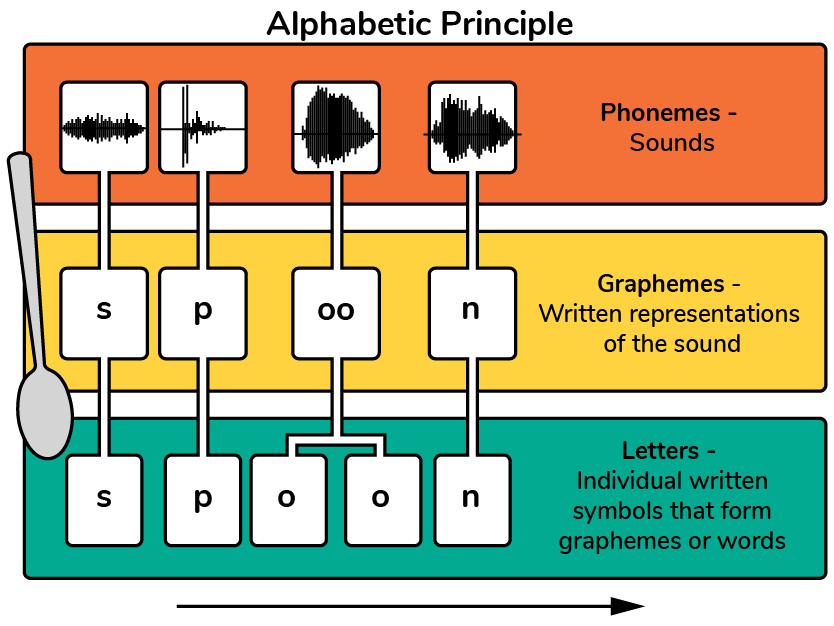
the understanding that there is a logical/systematic relationship between the sounds of spoken English and the letters and letter–patterns of written English
Vocabulary / Vocabulary Development
the ability to effectively know and use words in their listening, speaking, reading, and writing
Automatic Stage
the final stage of word recognition in which a person decodes fluently and knows many strategies to identify new words
Example.
Students in the automatic stage of word recognition are able to read fluently and with greater comprehension because their focus shifts more toward the meaning of the text as a whole and less on individual words.
Precommunicative Spelling
use scribble shapes and sometimes letter-like shapes for spelling words but are unable to make the forms
Partial Alphabetic Stage
a stage of word recognition in which students combine their limited alphabetic knowledge with context clues to read
Example.
a child sees a picture of a truck in a book about vehicles, locates a word that starts with 't' on the same pages, and says "truck"
Reading Fluency
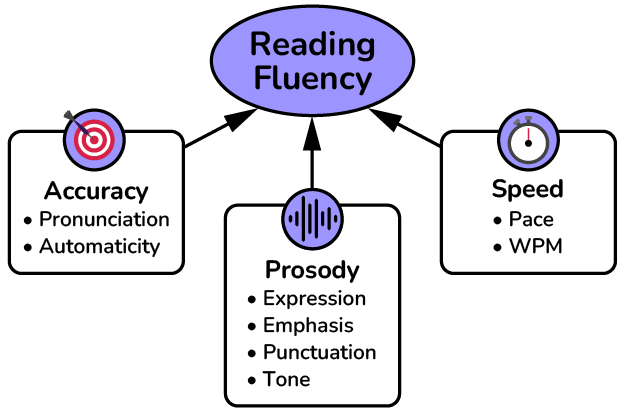
ability to read with appropriate speed, accuracy, and prosody
Semiphonetic Spelling
some letter awareness, but unable to use all letters in the word
Example.
"Play" is spelled p-a
Word Web
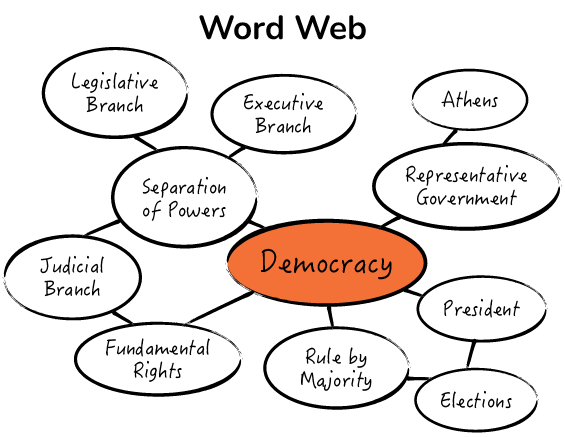
a form of scaffolding which helps students to understand and retain new words and concepts
Example.
During reading, as students encounter each word, they write down around the word different words or phrases that will help them remember the meaning.
Grapheme
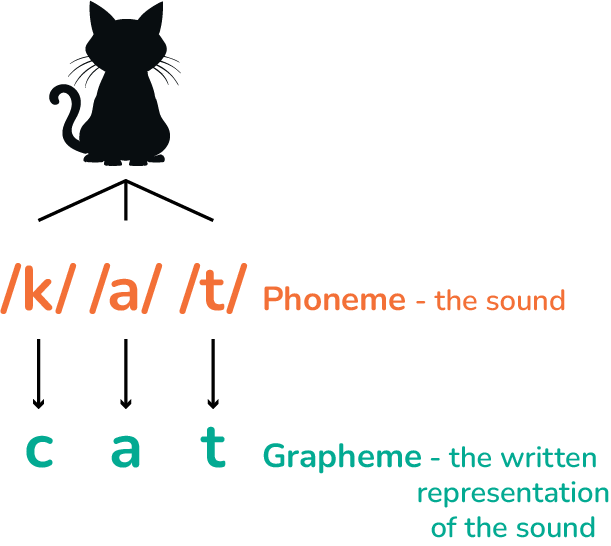
a written letter or a combination of letters that represents a single sound
Example.
"ph" makes a "f" sound
Homophones
words that are pronounced the same as another word but have a different meaning and may be spelled differently
Example.
carat, carrot, caret: to, too, two
Contraction (Semantics)
a shortened version of a word or group of words; the removed letters are replaced with apostrophes
Example.
do not becomes don't
Commonly Confused Words
words that have similar meanings, spellings, or pronunciations, leading to confusion during literacy development
Example.
new vs. knew; affect vs. effect
Phonological Awareness
the understanding and ability to hear individual words, syllables, and sounds in spoken language apart from print
Phonemic Awareness / Sound Awareness
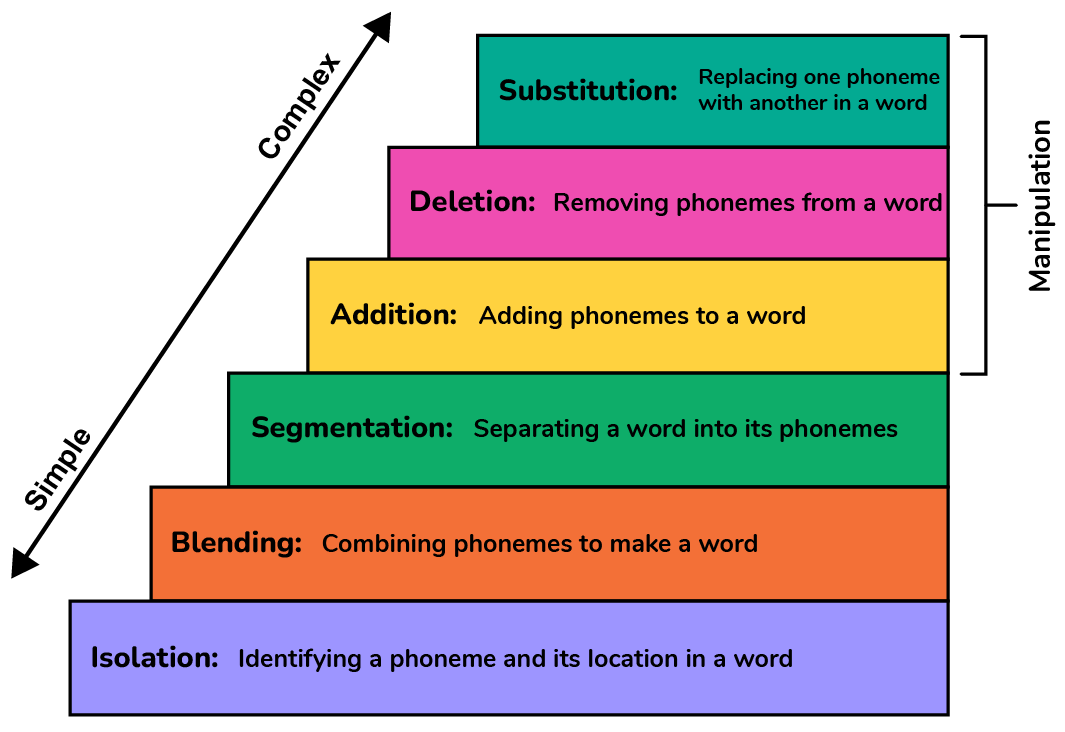
the ability to hear, identify, and re-create individual sounds in spoken words
Example.
A student can hear that /b/ makes first sound in the word blue.
Reading Comprehension
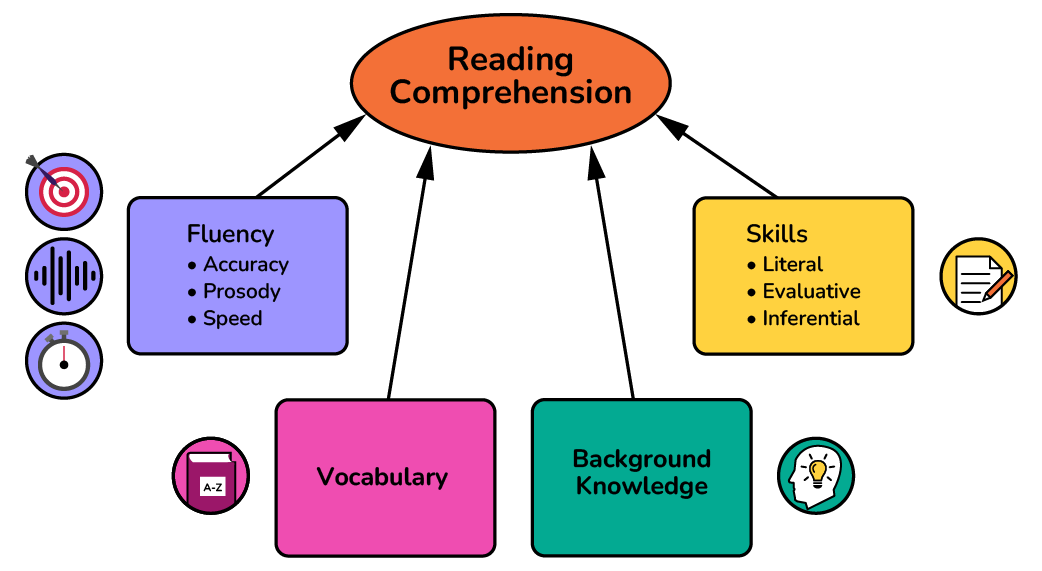
the ability to read a text and understand its meaning
Example.
Jessie read the book and was able to explain to me why the character lied in Chapter 3.
Syllable Awareness / Syllabication / Syllable Segmentation
the ability to hear individual parts/syllables of words
Example.
“Education” has four syllables “ed-u-ca-tion”
Prefix
a letter or letters at the beginning of a root word that changes its meaning
Example.
re, de, un
Transitional Spelling
use some conventional spelling but still misspell many irregular words
Word Awareness
knowing that individual words make up a sentence
Example.
“A brown cat jumped over the car.” has 7 words
Phoneme Deletion
the ability to recognize and understand a word or sound(s) that remain when a phoneme is removed
Example.
"What is bat without the /b/?" "at"
Emergent Reader (Stage of Reading Development)
when children understand that written language has meaning and gives messages
Language Acquisition
the process by which individuals learn a language
Phonology
the systematic organization of sounds in languages
Word Wall
an on-going bulletin board with terms used frequently in the classroom; words are often added as they are introduced
Pragmatics
the study of how we understand the meaning of language based on the situation it's used in
Pre-Alphabetic Stage
a stage of word recognition in which students have no working knowledge of the alphabetic system and "read" words based on memorizing what they look like
Example.
a child says "Wal-Mart" when passing the store's sign
Invented Spelling
child's attempt to spell based on best judgement
Syntax
rules that govern the construction of words in order to make phrases, clauses, and sentences
Consolidated Alphabetic Stage
a stage of word recognition in which students read by using memorized letter chunks, affixes, and syllables to read words
Example.
A student in this stage would not need to sound out each letter in a word like "reminder" but would decode it by breaking it into recognizable chunks, "re-mind-er."
Phoneme Blending
the ability to blend two sounds to make a word
Example.
Blend together these sounds to make a word: /b/ /a/ /t/ to form bat.
Oral Language
system that relates sounds to meanings through communicating by word of mouth
Alphabetic Knowledge
the ability to recognize, name, and write letters
Morphology
the study of forms of words, including affixes, roots, stems, and parts of speech
Example.
The word "bicycles" is made up of three individual morphemes. The prefix bi-, the stem cycle, and the suffix -s.
Full Alphabetic Stage
a stage of word recognition in which students use their full working knowledge of letter-sound correspondence to decode unfamiliar words letter-by-letter
Example.
a child comes across the word "desk" while reading and sounds it out "d-e-s-k"
High-Frequency Word
a word that appears often in grade-level text; can be decodable or irregular
Example.
Words like "and", "the", "as" and "it" are high-frequency words.
Suffix
letter or letters at the end of a root word that changes its meaning
Example.
s, es, ed, ing, ly, er, or, ion, tion, able, and ible
Language Experience Approach (LEA)
promotes reading and writing through the use of personal experiences and oral language; materials are learner-generated
Phoneme
the smallest individual sounds in a word
Example.
The word “bit” has three phonemes – b – i – t.
Etymology
the study of the origin and history of words
Phonetics
the sounds of human speech
Orthography
the standards present in a language's conventions
Example.
spelling, capitalization, punctuation, emphasis
Decoding
in reading out loud, being able to sound out words by breaking them into simple forms; in reading for comprehension, the understanding of how to read each letter or letter pattern in a word to determine the word's meaning
Phonetic Spelling
spell the way they hear the word pronounced
Example.
"Made" is spelled m-a-d.
Semantics
the study of word or symbol meaning
Example.
"love" which has many different meanings in English
literal vs figurative meaning of "Raining cats and dogs"
Early Fluent / Fluent / Proficient Reader (Stage of Reading Development)
readers recognize many words and can apply phonics and word analysis skills to figure out unfamiliar words
Rhyme Awareness / Rhyming
the ability first to hear words that rhyme and then to be able to produce a rhyme(s)
Example.
“Blue” and “Flew” rhyme