Speech and Hearing Exam 2
 Call Kai
 Learn
 Practice Test
 Spaced Repetition
 Match
 Flashcards
 Knowt Play
1/24

There's no tags or description
Looks like no tags are added yet.
25 Terms
A speaker produces two different vowels (/i/ as in "feet," and /u/ as in "boot") with the same fundamental frequency. What acoustic change is most likely observed?
Resonant frequencies of the vocal tract change
As human's grow from childhood to adulthood both their vocal tracts and vocal folds lengthen over time. What happens to the frequencies of the formants?
They lower because the vocal tract gets longer
Best definition of the source filter theory.
The configuration of the vocal tract determines which harmonics from the pressure wave generated by the vocal folds will be amplified or attenuated
What is the best definition of vital capacity?
Starting at resting expiratory end level, breathing in as much air as possible then breathing out as much air as possible
What is the purpose of an acoustic filter?
To change the amplitude of some frequencies in the wave
According to the Source Filter Theory, changing the shape of the vocal tract will change
the frequencies of formants
Why is it impossible to hum with your nose pitched?
Air is unable to escape and when oral/pharyngeal pressure equals subglottal pressure vocal fold vibration stops
Velopharyngeal insufficiency is a condition often caused by a cleft palate. Due to anatomical differences during development, a person with a cleft palate is not able to create a seal between the velum (soft palete) and the posterior pharyngeal wall (very back of the throat).
What types of sounds will someone with velopharyngeal insufficiency have difficulty with?
High pressure sounds ("d", "s")
In order to produce loud phonation the vocal folds must come together with more force. Which of the following is true regarding subglottal air pressure during loud phonation:
Subglottal air pressure will be higher in loud phonation compared to normal phonation
Speech rate refers to:
The speed at which speech is produced
Lexical stress changes what?
The grammatical category of the word

The phoneme highlighted in red is a
voiceless affricate

The phoneme highlighted in red is a
voiced glide

The phoneme highlighted in red is a
voiced fricative
While the lips are closed for the "p" phoneme, air pressure behind the lips is:
increasing
Why is phonation threshold pressure greater in connected speech compared to sustained phonation?
Connected speech has consonants which require more pressure
Changes in intonation can provide what?
context for the words the speaker says

The phoneme highlighted in red is a
voiced nasal
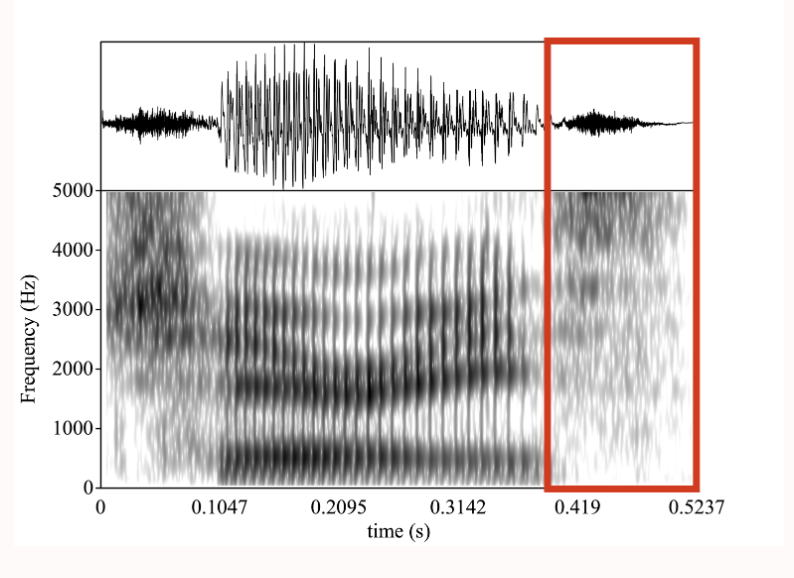
The phoneme highlighted in red is a
voiceless fricative
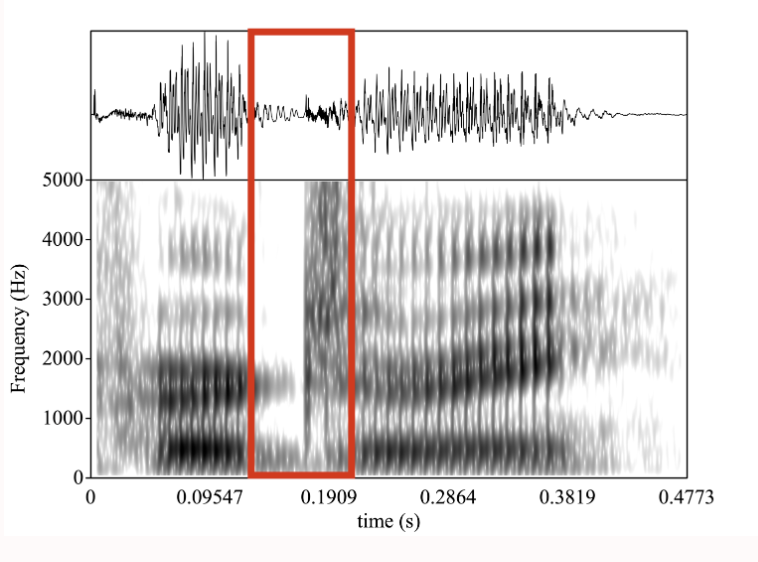
The phoneme highlighted in red is a
voiced affricate

The phoneme highlighted in red is a
voiced stop/plosive

The phoneme highlighted in red is a
voiceless stop/plosive
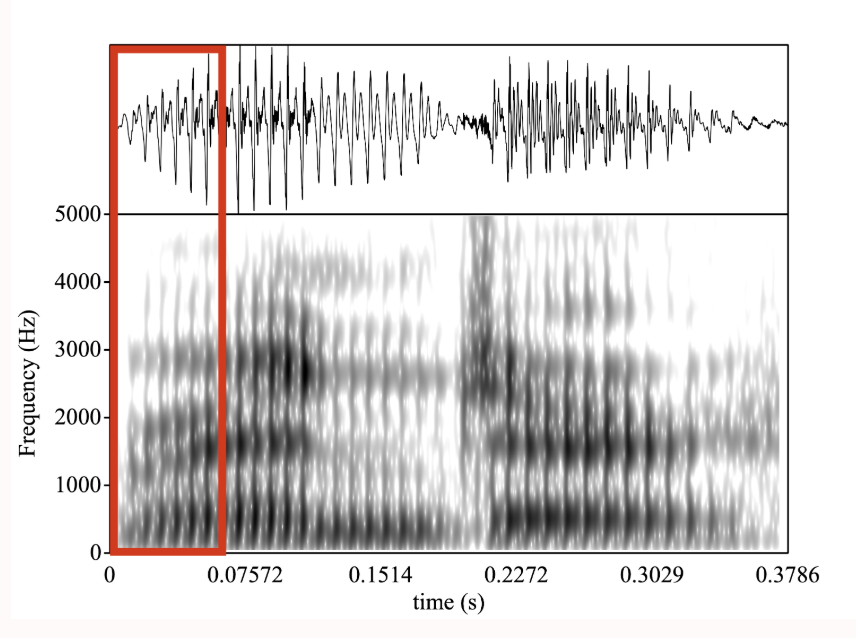
The phoneme highlighted in red is a
voiced liquid